Two Male Heads after the Antique, the Sons of Laocoön
SEE IT IN PERSON
Not currently on view
In the collection of Art Institute of Chicago, Chicago · as of July 2026
Discussion
FROM THE ART INSTITUTE OF CHICAGO’S CATALOG
Surviving drawings in other collections prove that Hendrick Goltzius studied firsthand the famed Laocoön group, an ancient Roman sculpture unearthed to great fanfare in the early 1500s. The monument was widely revered as an ideal representation of human torment, made more famous by printed representations. Goltzius created this red-chalk drawing at least a decade after his visit to Rome in 1591, employing specific motifs for his own expressive ends. Extracting the faces of Laocoön’s sons from the sculptural ensemble and reversing their left-to-right order, Goltzius blended the red chalk to emphasize the protruding volumes of the neck muscles. By applying greater pressure, he reinforced the contour lines of the figures, particularly around the sides of their faces.
Be the first to share your thoughts.
Sign in to join the discussion.
More by Hendrick Goltzius




More like this
 Style of Agostino Masucci — Sketches of Head, Hands, Shoulde
 Perugino (Pietro di Cristoforo Vannucci) — Study of the Head
 Raphael (Italian, 1483–1520) — Studies of a Seated Female, C
 Peter Paul Rubens — The Virgin Adored by Saints (recto); Stu
 Style of Donato Creti — Sketches of Two Male Heads in Profil
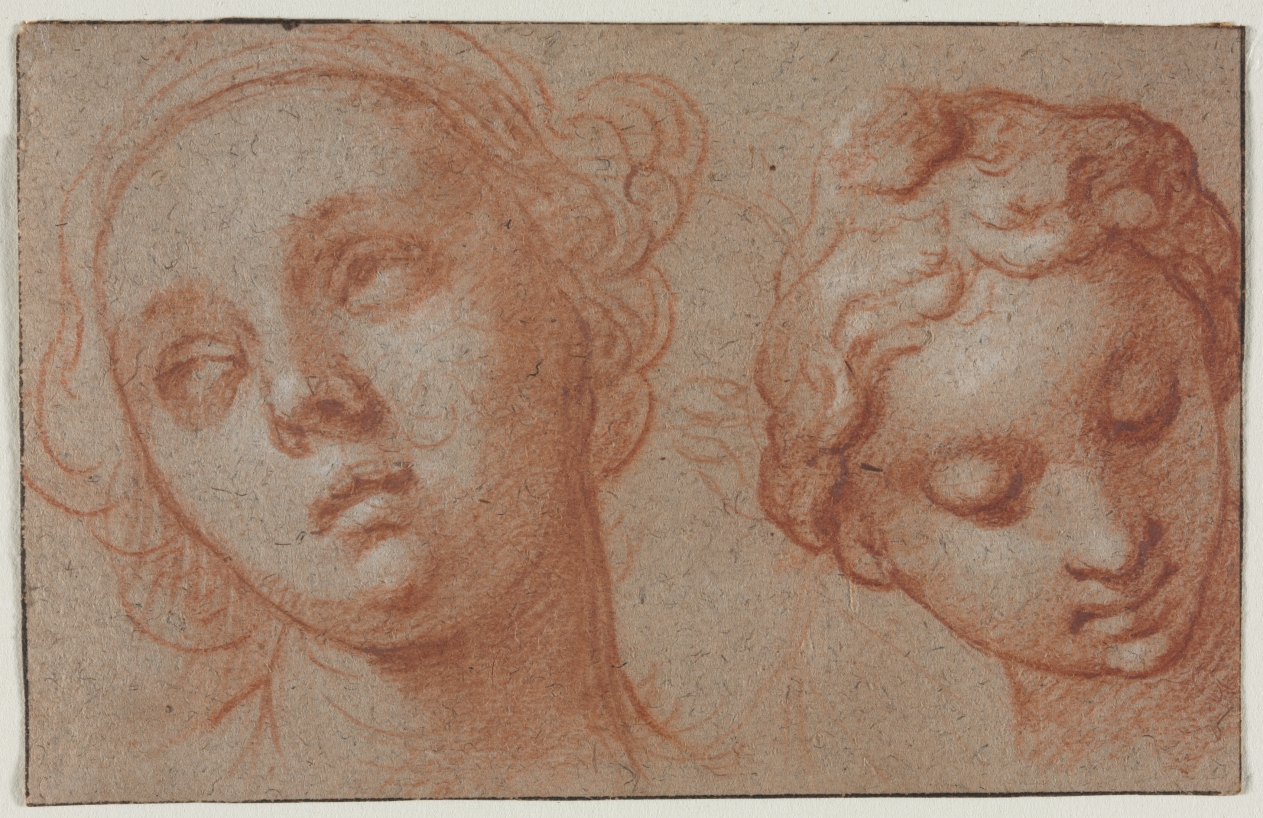 Abraham Bloemaert (Dutch, 1566–1651) — Two Female Heads
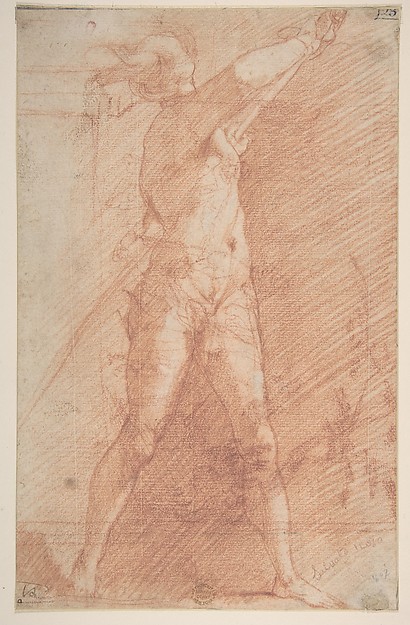 Francesco Montelatici ("Cecco Bravo") — Man Sheathing a Swor
 Giovanni Benedetto Castiglione — Two Heads
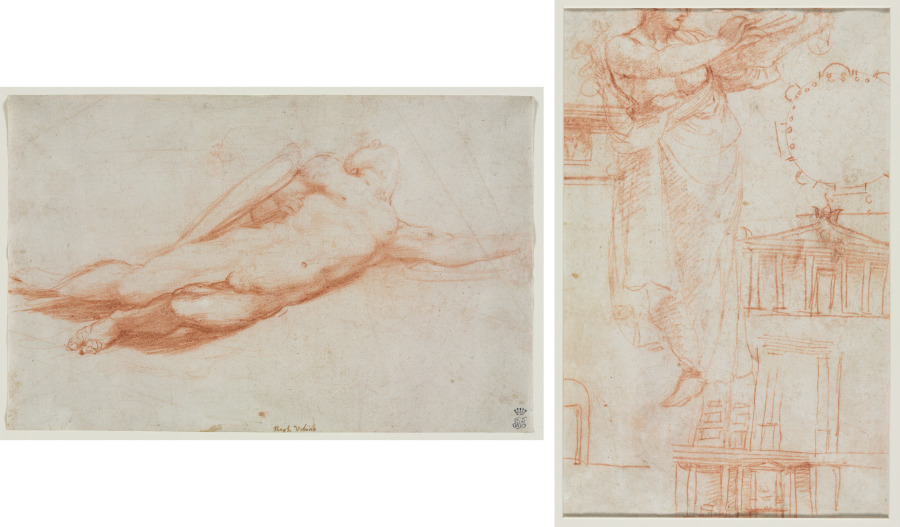 Correggio (Italian, 1489?-1534) — Study of a Fallen Soldier
 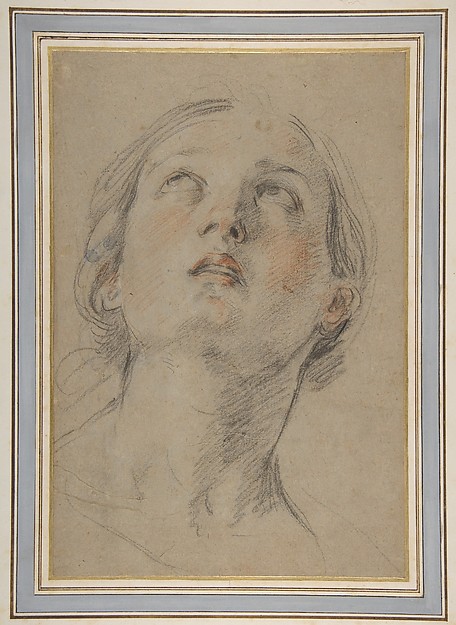 Guido Reni — The Head of a Woman Looking Up (Judith)
 Cherubino Alberti (Zaccaria Mattia) — Two Studies of a Seate
 Anonymous, Italian, Roman-Bolognese, 17th century — Studies