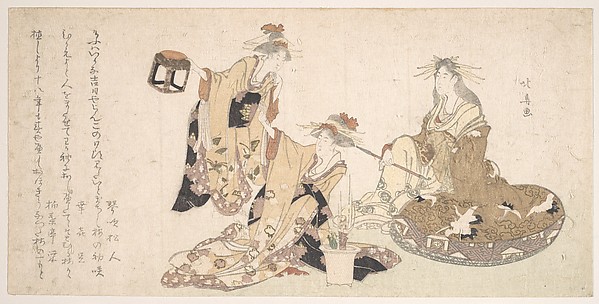
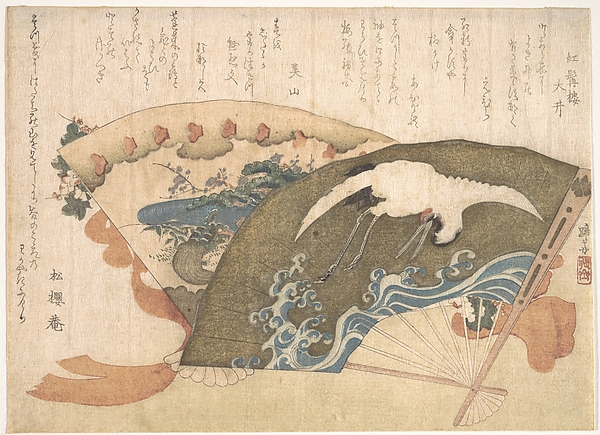
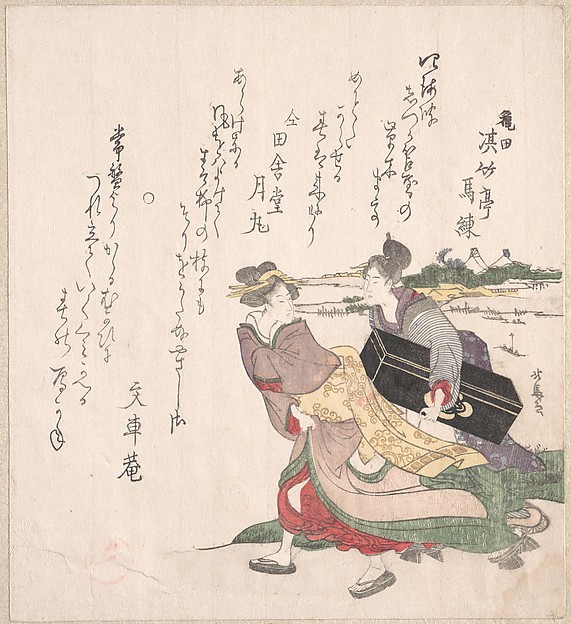
In the collection of Cleveland Museum of Art, Cleveland — check current display status with the museum.
FROM THE CLEVELAND MUSEUM OF ART’S CATALOG
Ukiyo-e artists and collaborating poets introduced imagery from classical literature to add layers of meaning to their work. Here, a courtesan pores over a letter from an admirer, and the poem next to her reads as follows: "Having been asked to stay over, / I stayed on—and for a good reason. / It’s way past midnight / and the lady is that (legendary implorer) Amagoi Komachi." Midnight was closing time in Yoshiwara, the licensed brothel district of Edo (now Tokyo). Amagoi, or “Praying for Rain,” Komachi refers to ninth-century poet Ono no Komachi—known for her compelling verse and great beauty—and one of her famous compositions.
Be the first to share your thoughts.
Sign in to join the discussion.
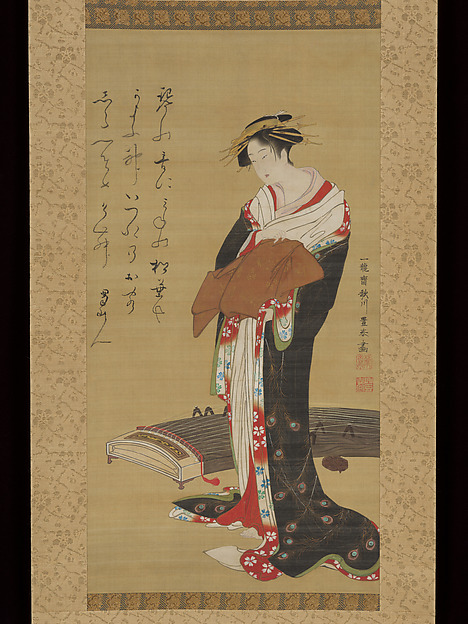 Utagawa Toyoharu|Shokusanjin (Ōta Nanpo) — 歌川豊春筆 蜀山人(大田 南畝)賛
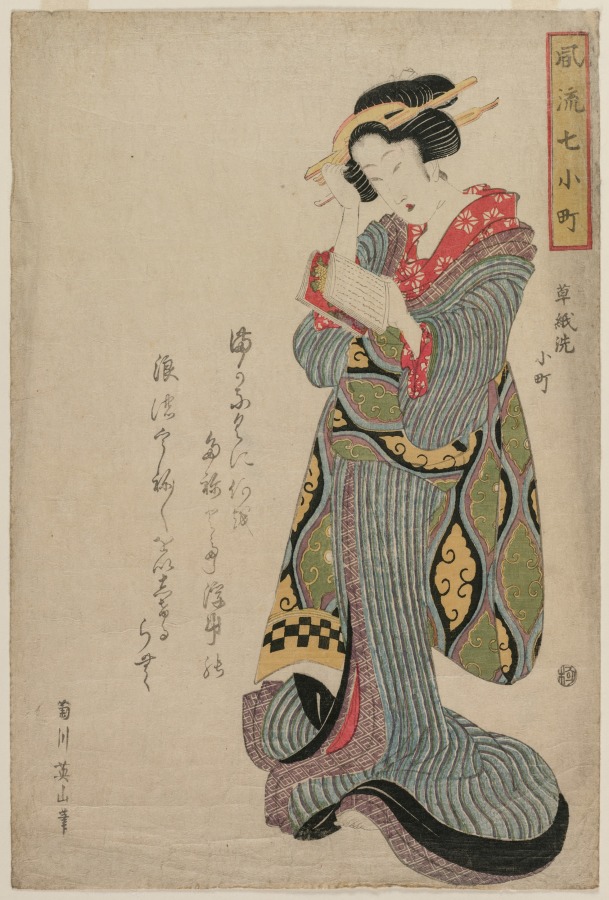 Kikukawa Eizan (Japanese, 1787–1867) — Komachi Washes the Bo
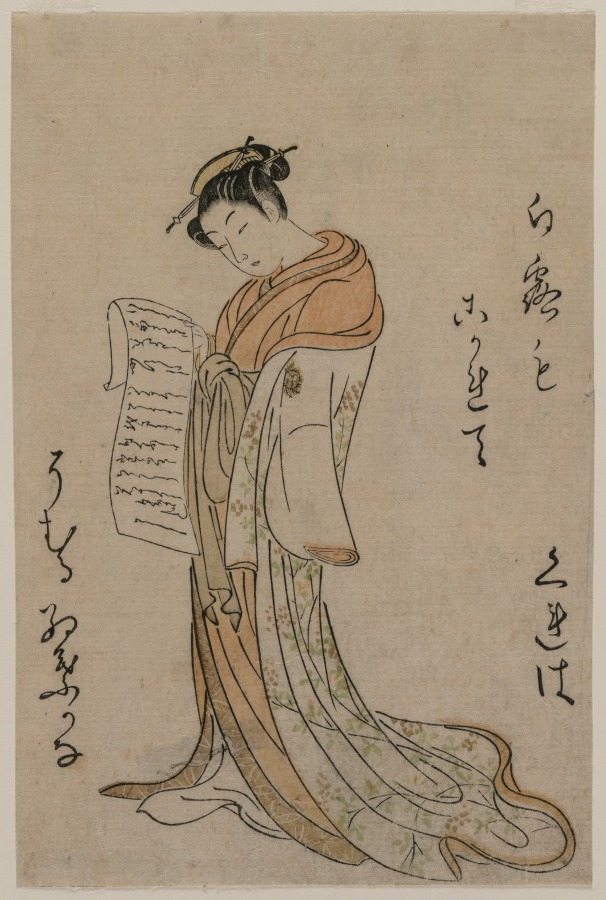 Suzuki Harunobu (Japanese, 1724–1770) — Kureha of Gakuiseya,
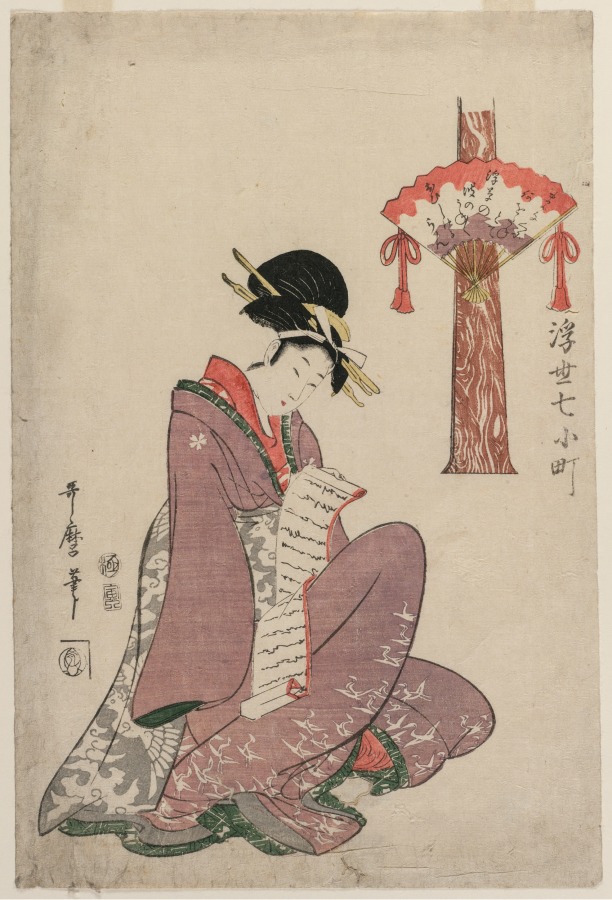 Kitagawa Utamaro (Japanese, c. 1754–1806) — Woman Reading a
 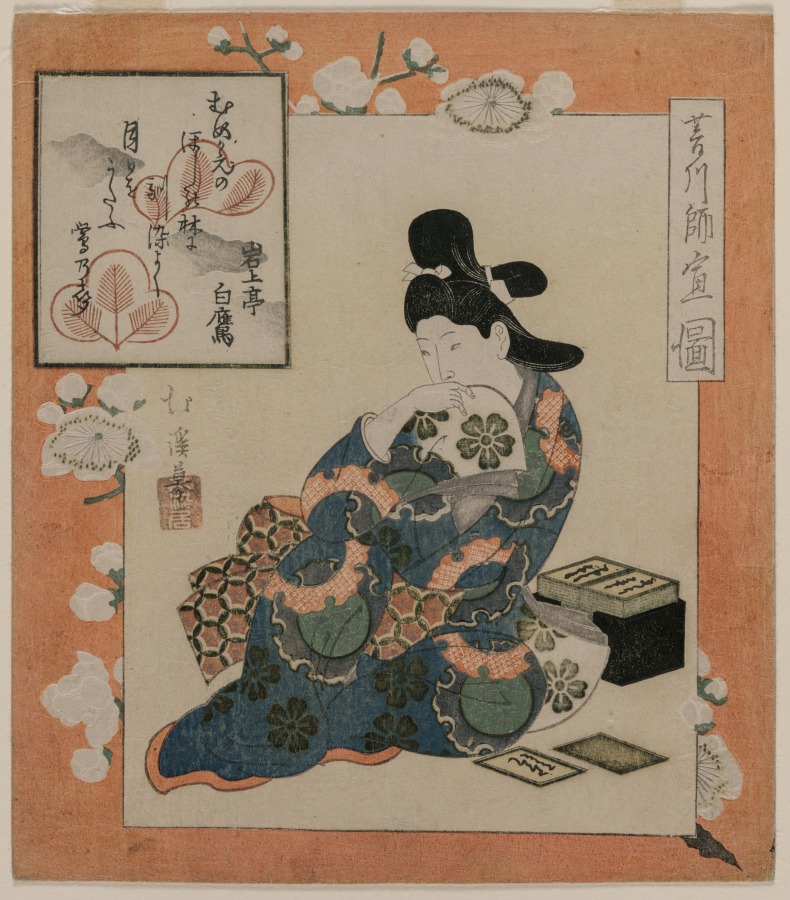 Totoya Hokkei (Japanese, 1780–1850) — A Picture by Hishikawa
 Hosoda Eishi — A Courtesan Reading a Letter
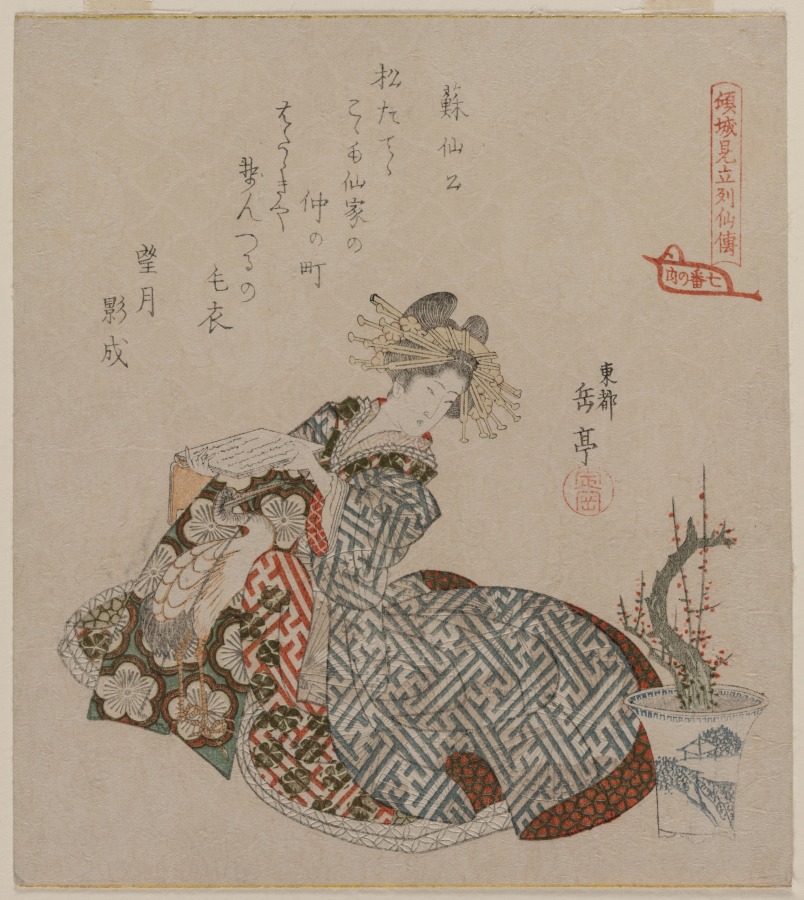 Gakutei Harunobu (Japanese, 1786(?)–1868) — Courtesan Readin
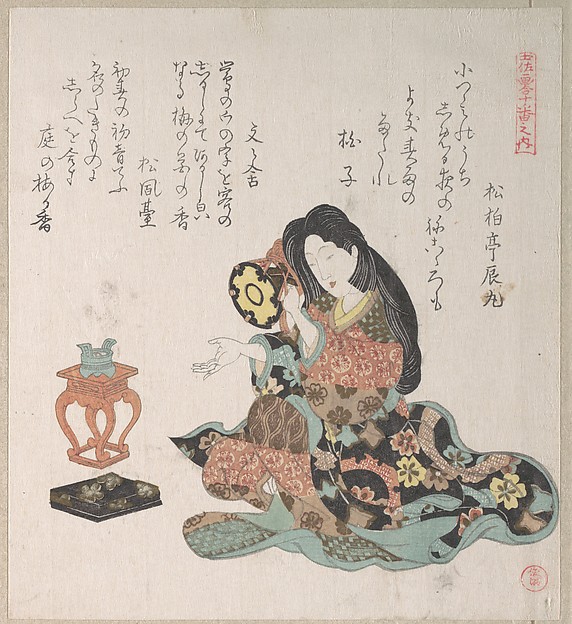 Kubo Shunman
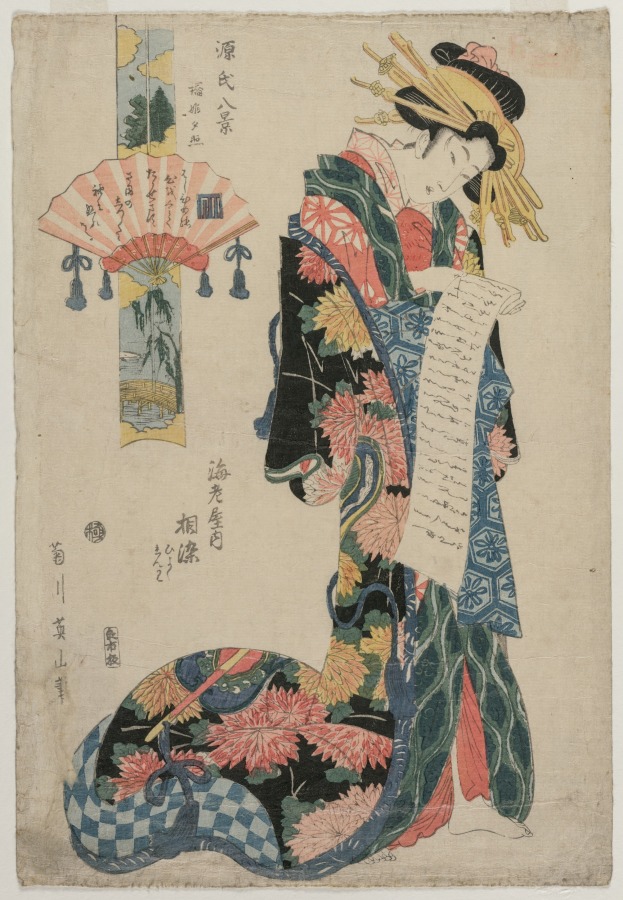 Kikukawa Eizan (Japanese, 1787–1867) — The Courtesan Aizome
 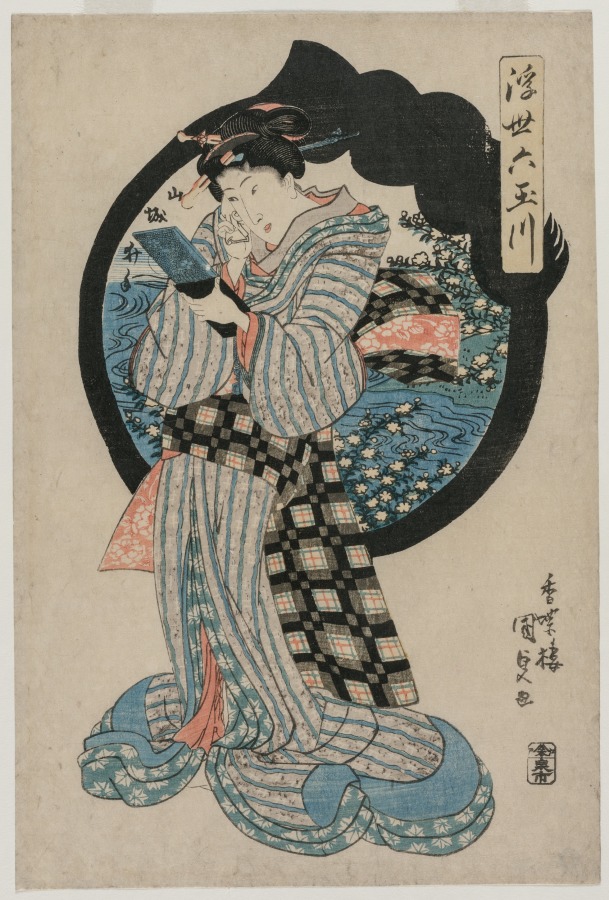 Utagawa Kunisada (Japanese, 1786–1865) — Woman with a Hand M
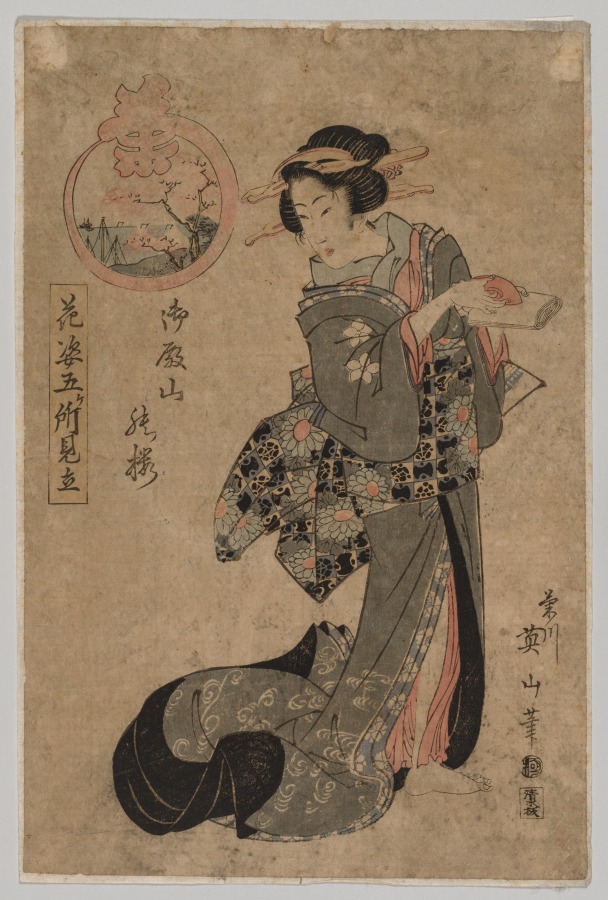 Kikukawa Eizan (Japanese, 1787–1867) — Courtesan with Sake C
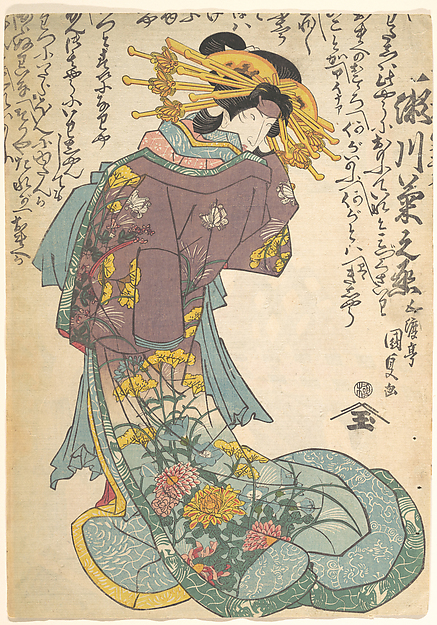 Utagawa Kunisada