Judith
SEE IT IN PERSON
● On view now — Gallery 207
Art Institute of Chicago, Chicago · verified July 2026
Discussion
FROM THE ART INSTITUTE OF CHICAGO’S CATALOG
Jan Sanders van Hemessen portrayed the Jewish heroine Judith as a muscular nude to be both admired and feared. When the Assyrian army threatened Judith’s people, the handsome widow saved them from slaughter by infiltrating the tent of the enemy general, Holofernes, to win his confidence and then behead him. Van Hemessen’s life-size interpretation reflects contemporary male ambivalence toward female agency. It celebrates Judith’s physical and moral strength but also foregrounds the sexuality that enabled her triumph, reproducing for viewers the aggressive beauty that caused her adversary’s demise. Judith was one of several religious and mythological figures featured in works hailing the power of women, a recurrent theme in northern Europe during the late Middle Ages and Renaissance. Van Hemessen was one of the chief proponents of a style, popular in the Netherlands in the first half of the sixteenth century, that was deeply indebted to the monumental character of classical sculpture, as well as to the art of Michelangelo and Raphael. Judith’s muscular body and her elaborate, twisting pose reflect these influences. Van Hemessen combined an idealized form with precisely rendered textures, as
Be the first to share your thoughts.
Sign in to join the discussion.
More by Jan Sanders van Hemessen
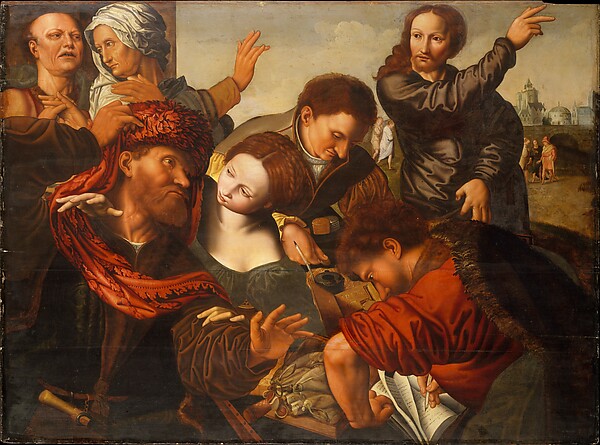
More like this
 Jan van Scorel — De stervende Cleopatra
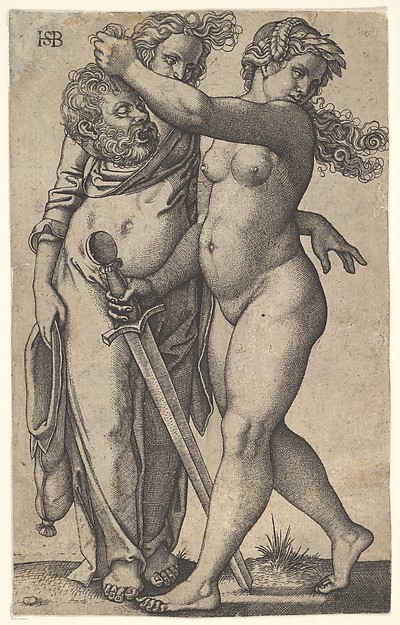 Sebald Beham — Judith walking to the left with the head of H
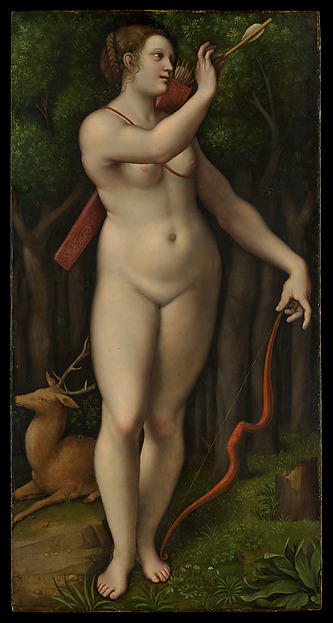 Giampietrino (Giovanni Pietro Rizzoli) — Diana the Huntress
 Lucas Cranach the Elder — Eve
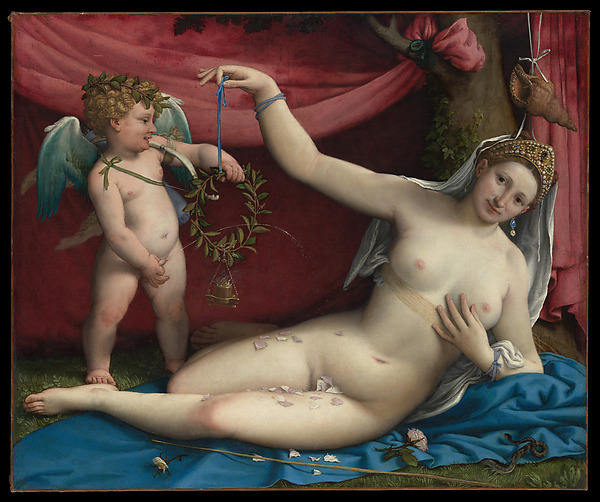 Lorenzo Lotto — Venus and Cupid
 Hans Sebald Beham — Judith Walking to the Left, and Her Serv
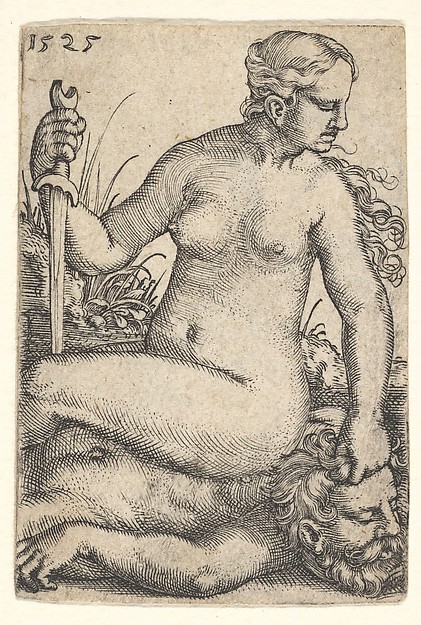 Barthel Beham — Judith, looking towards the right, seated nu
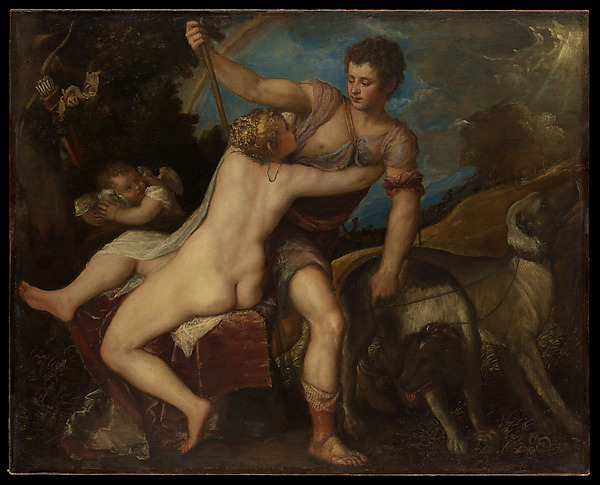 Titian (Tiziano Vecellio) — Venus and Adonis
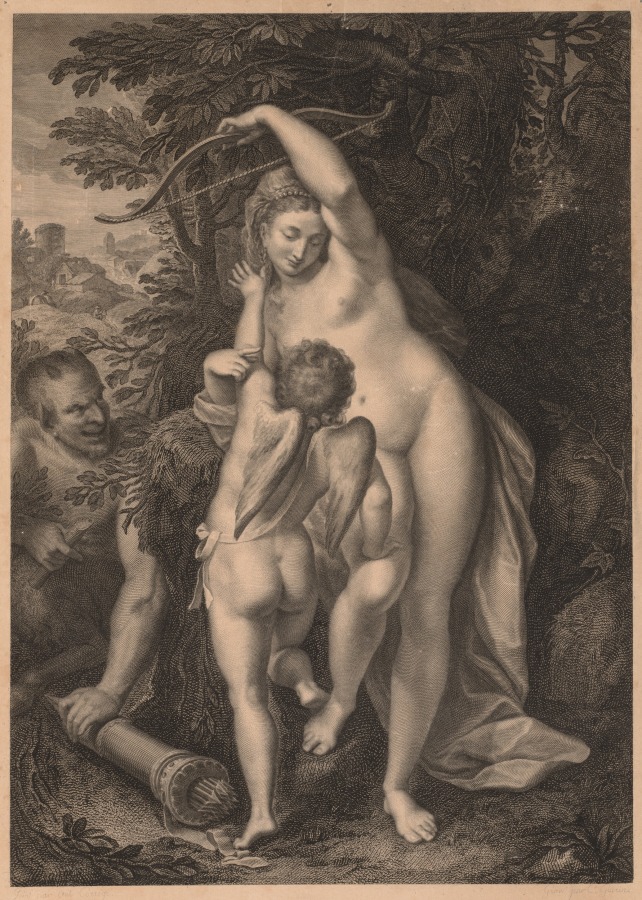 Christophe Guerin (French, 1758–1831) — L'Amour desarme
 Jan Saenredam — Venus and Cupid, from Three Goddesses
 Tintoretto — Tarquin and Lucretia
 Cornelis Cornelisz. — Venus, Cupid and Ceres