FROM THE CLEVELAND MUSEUM OF ART’S CATALOG
In southern China, farmers use water buffalos to help plow their fields, which children often tend. In Buddhist teachings, the subject of herding or taming an ox was used to illustrate the 10 steps to enlightenment, or spiritual awakening. A single image may be read as a metaphorical representation of the Chan process of attaining enlightenment, the difficulty of which was likened to that of finding a strayed buffalo. Here, a buffalo is watered by a boy, another takes a bath in the pond. Chan paintings introduced to Japan were often remounted to fit them into niches for display ( tokonoma ), which explains the painting’s current format.
Source ↗︎
Be the first to share your thoughts.
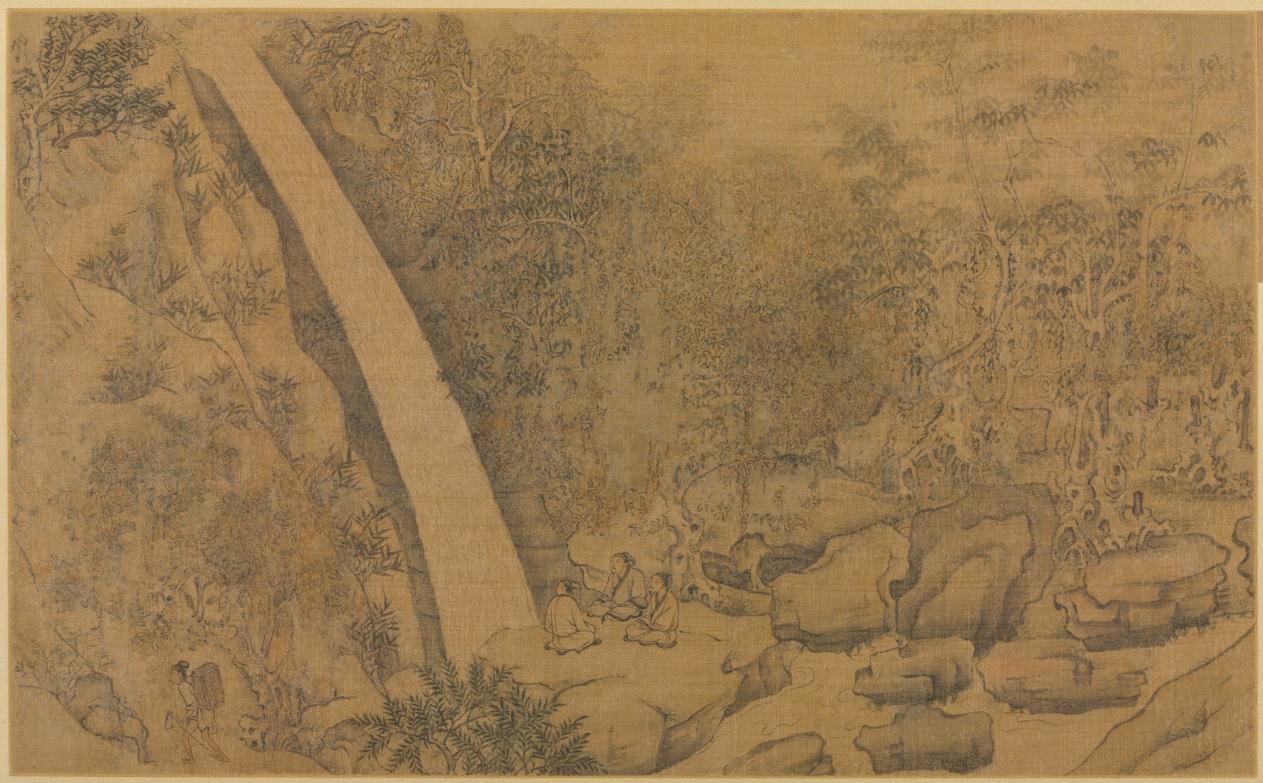 Li Gonglin (Chinese, c. 1049–1106) — Dwelling in the Longmia
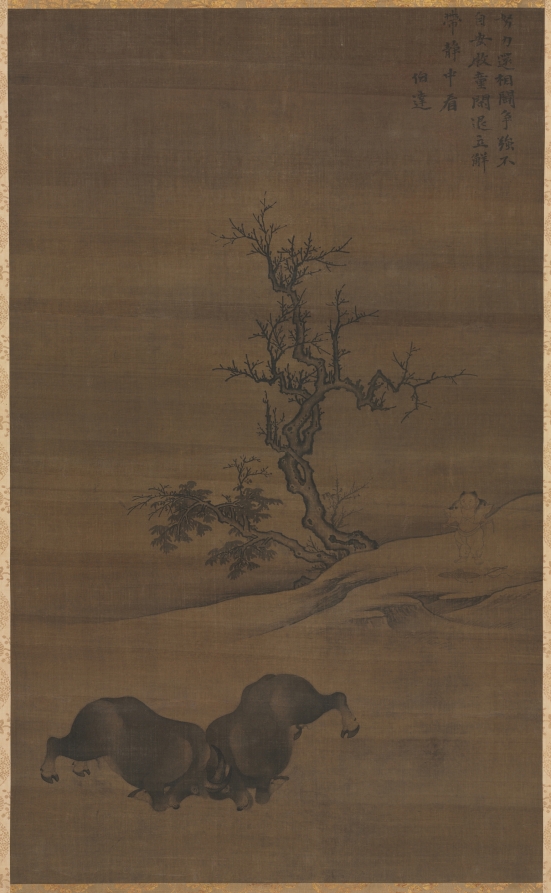 Guo Min (Chinese, mid-late 1200s) — Herdboys and Buffalo in
 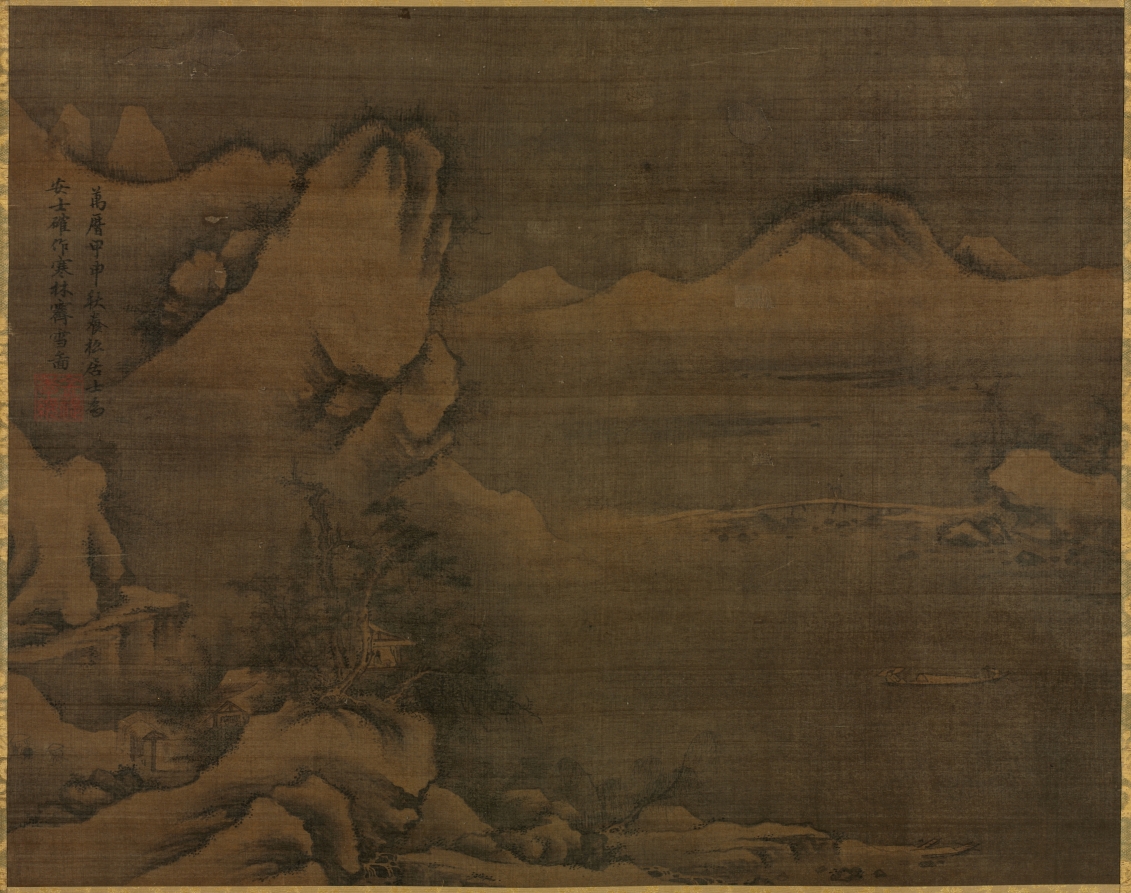 Kim Si (Korean, 1524–1593) — Snowscape with Figures
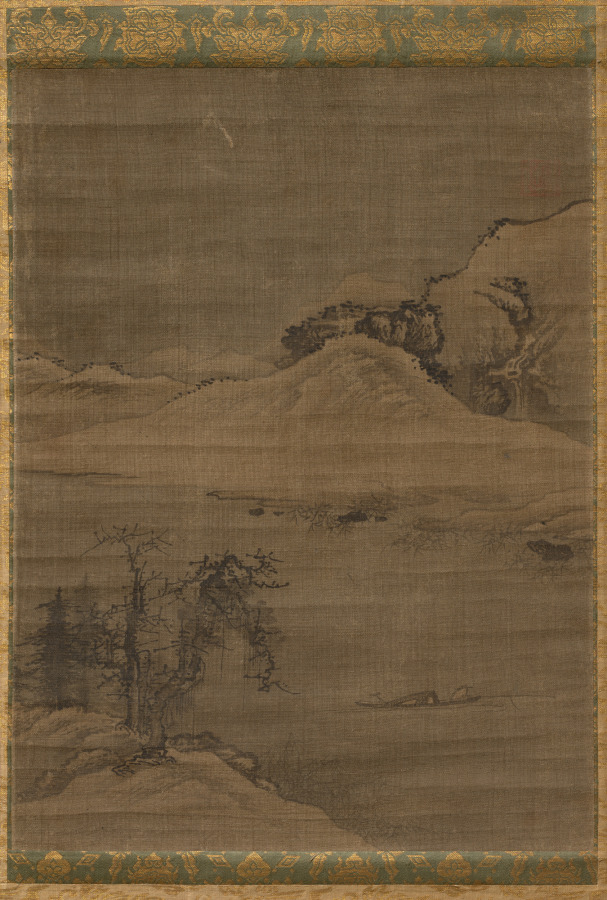 Yi Bul-hae (Korean, active 1500s) — Landscape with Fishermen
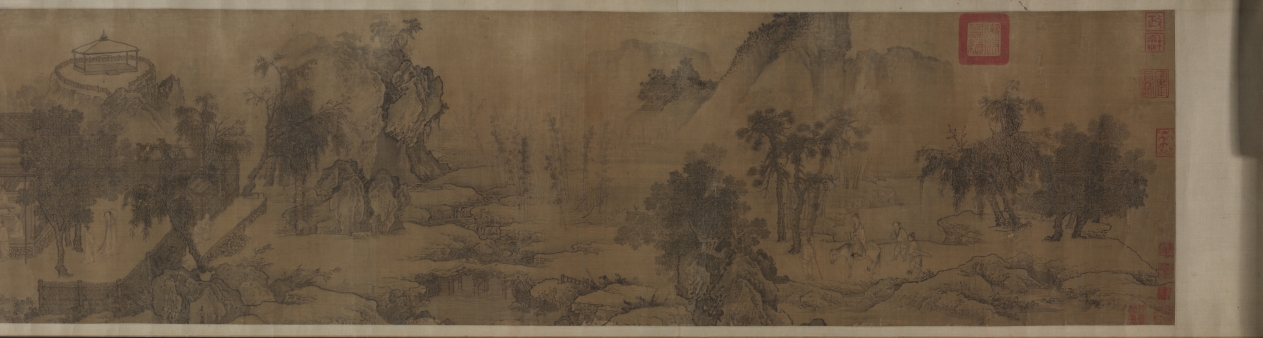 Tao Yuanming's Return Home
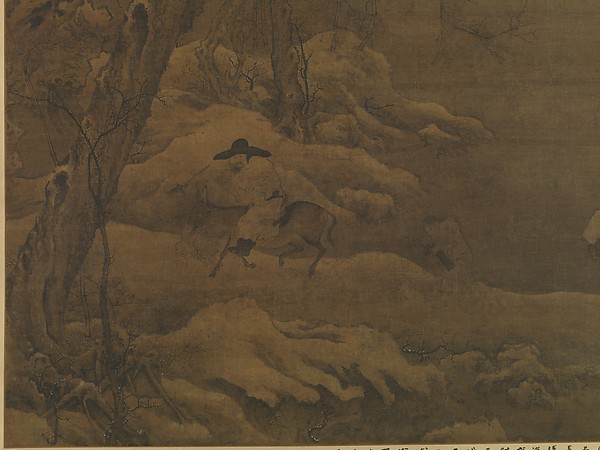 Unidentified artist|Li Cheng — 宋 佚名 倣李成 寒林策驢圖 軸|Traveler
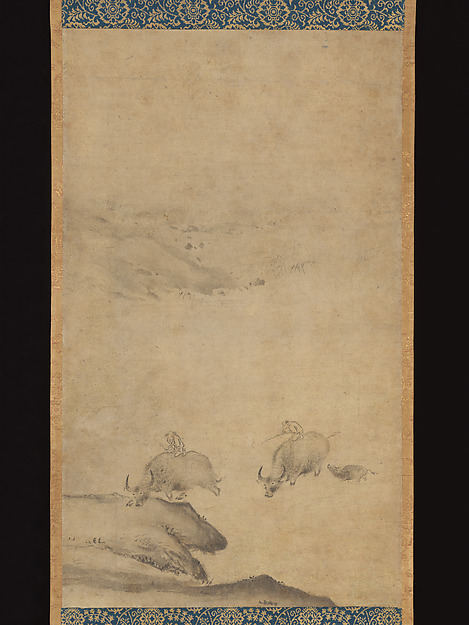 Kaō — 伝可翁筆 牧童図|Herdboys and Buffalos
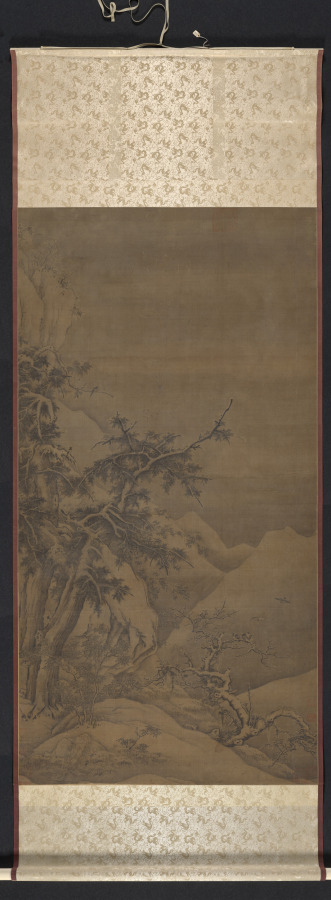 Gao Tao (Chinese, 1100s) — Birds in a Grove in a Mountainous
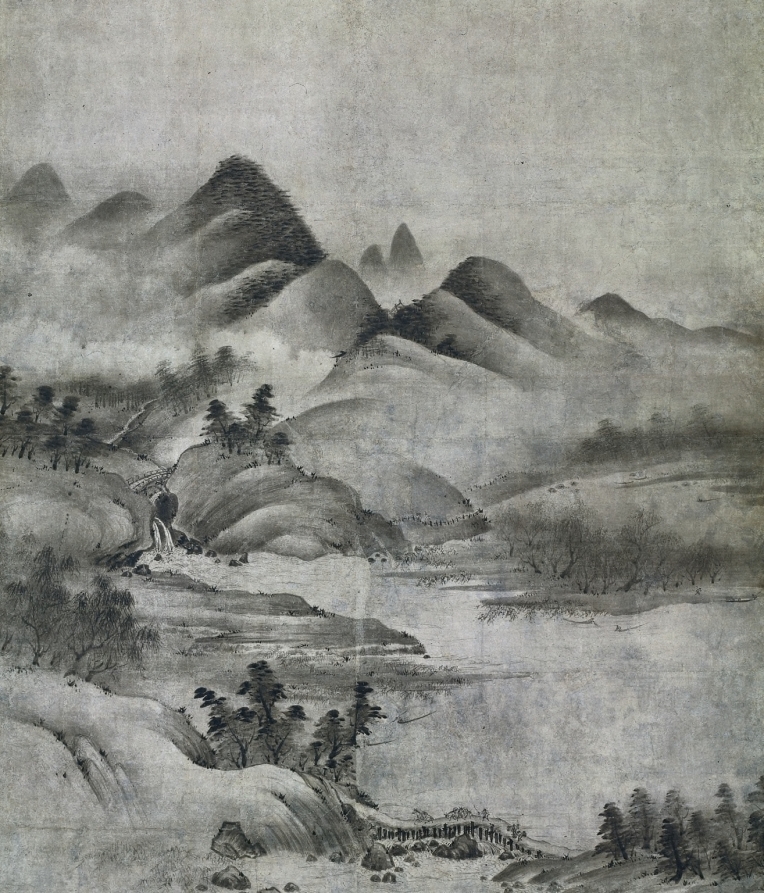 Sōami (Japanese, d. 1525) — Landscape
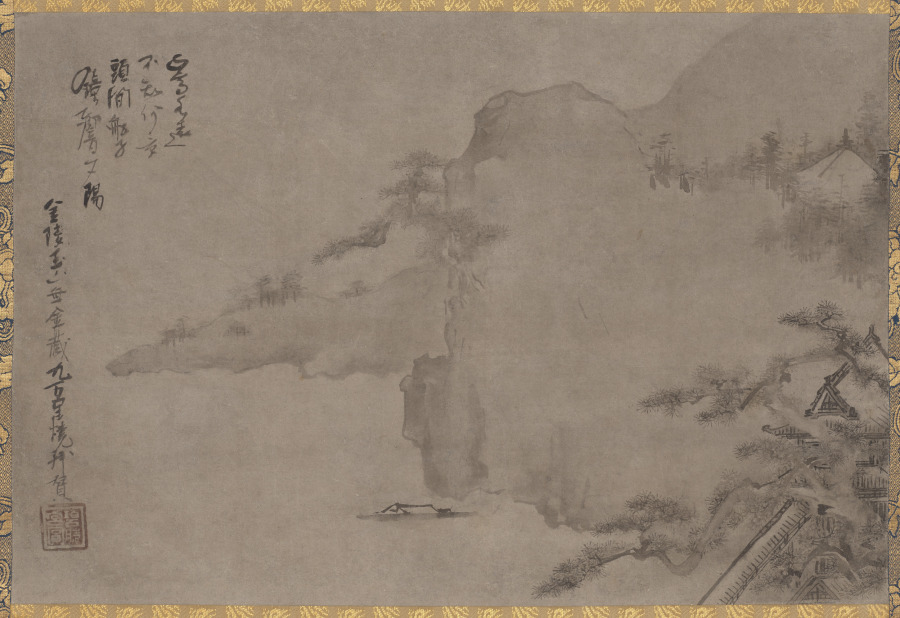 Iwasa Matabei (Japanese, 1578–1650) — Coastal Landscape
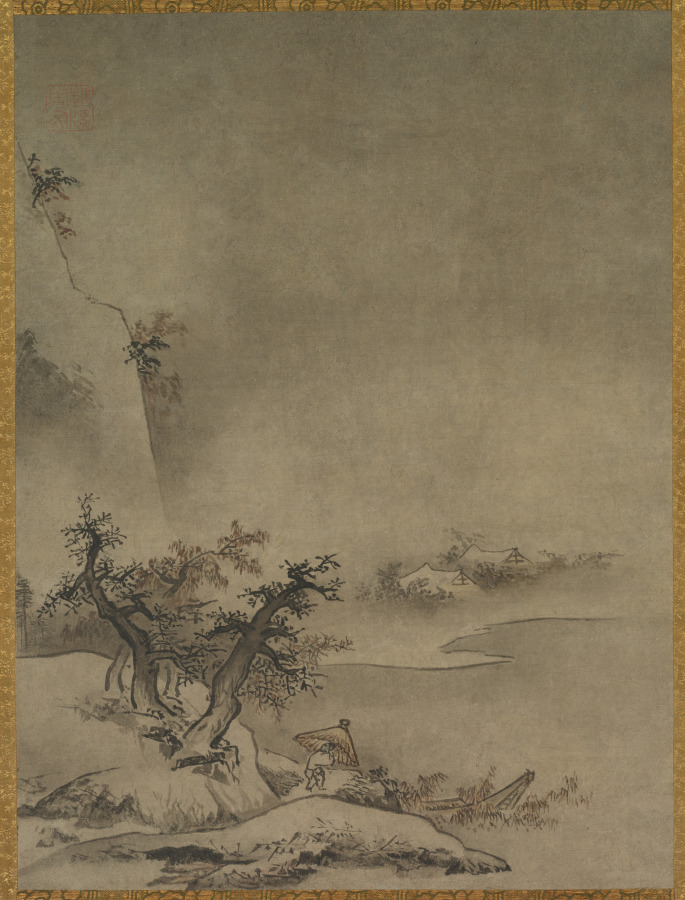 Gakuō Zōkyū (Japanese, active about 1482–1514) — Chinese Ser
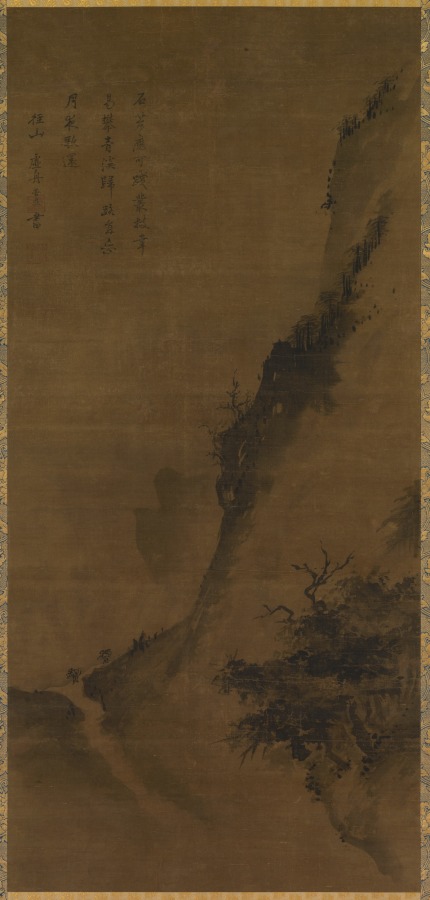 Landscape with Woodcutters Returning Home