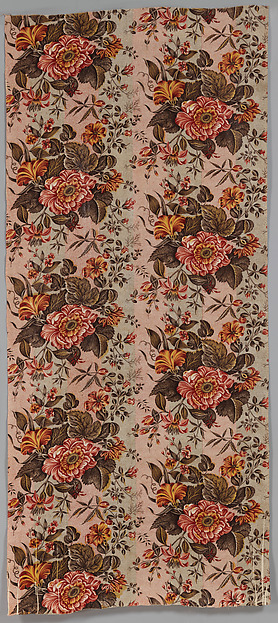
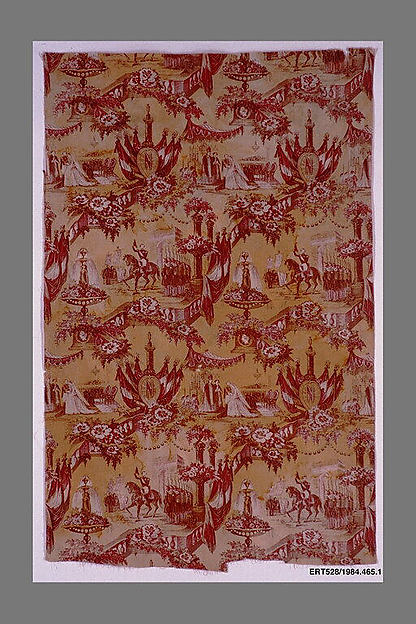
“Les Arts” Furnishing Fabric
SEE IT IN PERSON
Not currently on view
In the collection of Art Institute of Chicago, Chicago · as of July 2026
Discussion
FROM THE ART INSTITUTE OF CHICAGO’S CATALOG
The late 18th and early 19th centuries were an incredibly fertile period for innovation in the European textile industries, especially in the field of direct printing. Decades of experimentation led to the development of a variety of ways to apply color and pattern to cloth, which enabled artists and designers to invent new design vocabularies and quickly respond to cultural trends and ideas. One of the most enduring of these innovations was the ability to print on cloth with copperplates and then subsequently with engraved copper metal rollers. The quality of detail achieved through this method was unrivaled in terms of clarity, precision.
Be the first to share your thoughts.
Sign in to join the discussion.
More by Hippolyte Lebas


More like this
 Japan — Fragment
 France — Cape Provencale (Dress or Furnishing Fabric)
 Piece
Piece Anonymous — Sheet with an overall pattern of semicircles
 France, probably Jouy-en-Josas — Panel
 Anonymous|Remondini Family — Sheet with overall diamond patt
 Bernardin de Saint-Pierre — “Paul and Virginie” Furnishing F
 France — Eros (Furnishing Fabric)
 Remondini Family|Anonymous — Sheet with an overall floral an
 Marriage of Napoleon III
 France — Eros (Furnishing Fabric)
 Jean Baptiste Huet — Le Romain (The Roman) (Furnishing Fabri