FROM THE CLEVELAND MUSEUM OF ART’S CATALOG
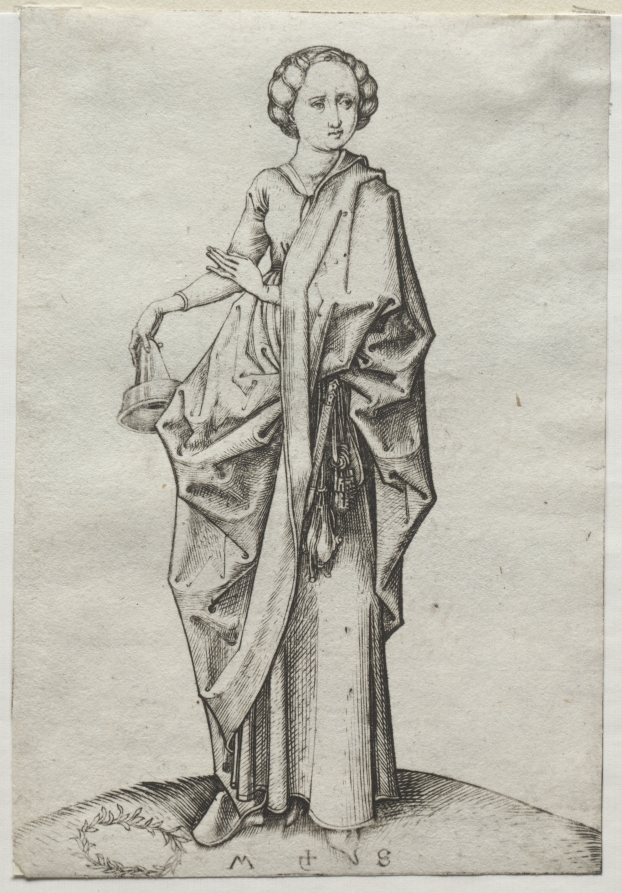
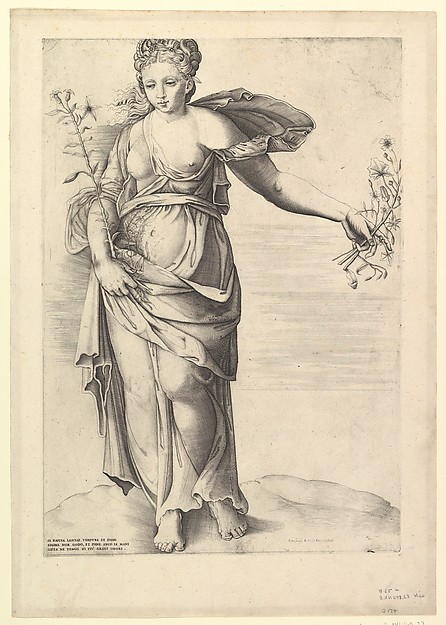
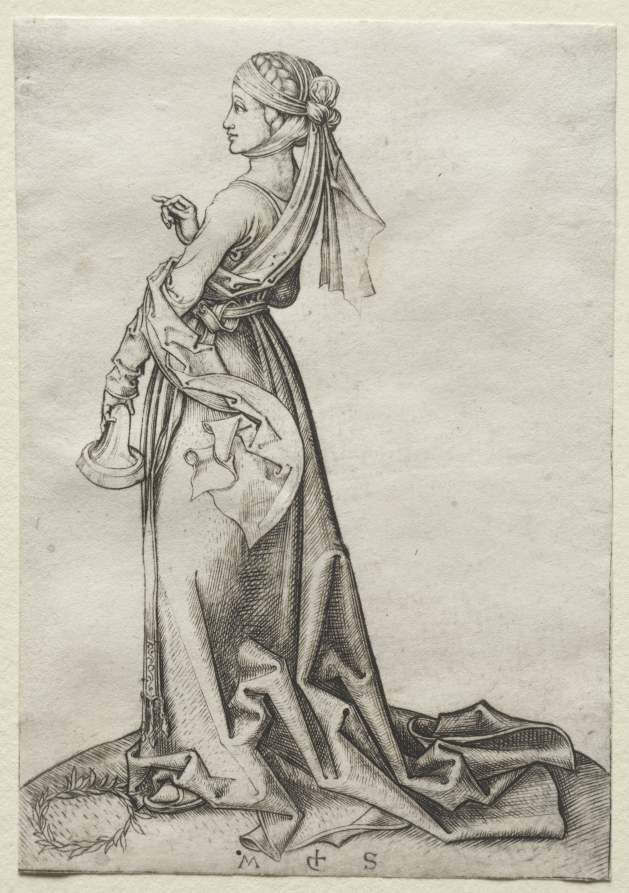
This engraving is part of the group “C” named Liberal Arts . Conceptually, the liberal arts descended from classical antiquity, and were divided into the Trivium (Grammar, Rhetoric, and Dialectic or Logic) and the Quadrivium (Music, Geometry, Arithmetic, and Astronomy). In the Tarocchi set the total number was risen to ten, with the addition of the three disciplines (Poetry, Philosophy, and Theology). The liberal arts denoted knowledge or skills considered necessary to participate in a free society. By the late Middle Ages, they began to be represented in the visual arts as womanlike allegories. Here, Loica (Logic) is personified as a full-length female figure turned to right. Her left hand carries a serpent, covered with a veil.
Source ↗︎
Be the first to share your thoughts.
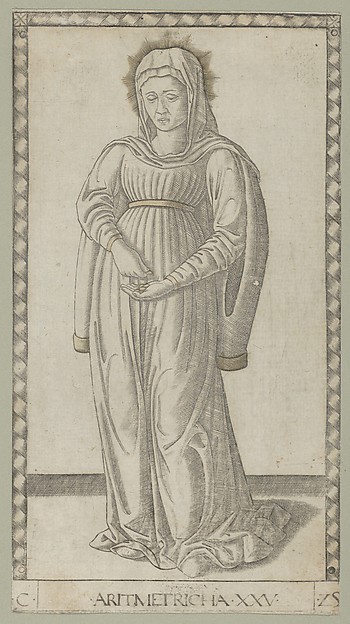 Arithmetic
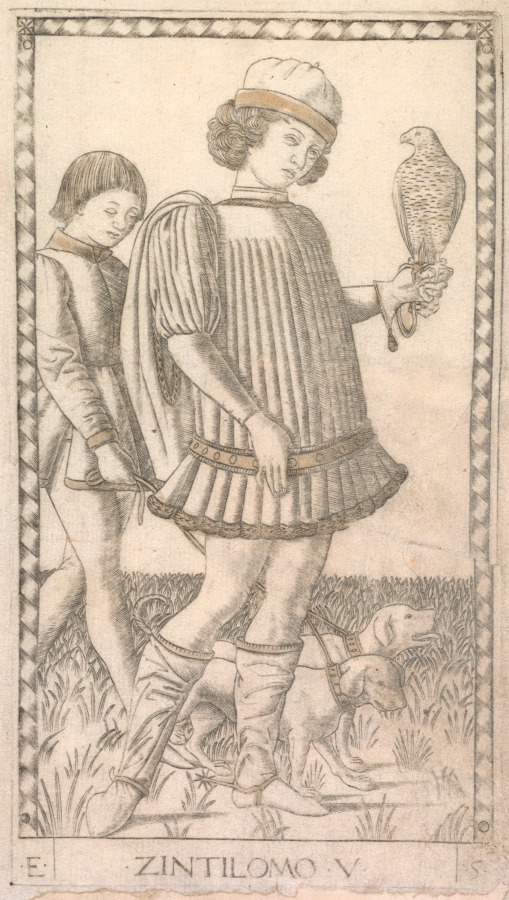 Gentleman (from the Tarocchi series E: Conditions of Man, #5
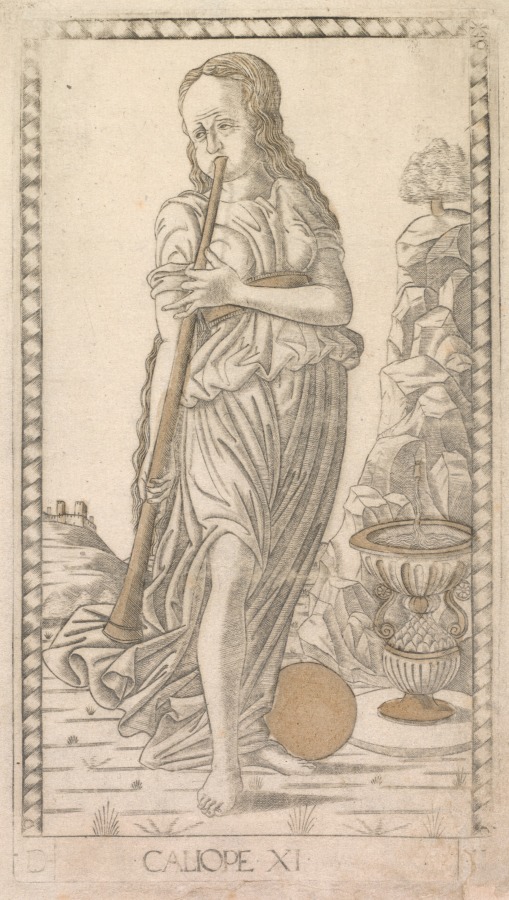 Calliope (from the Tarocchi series D: Apollo and the Muses,
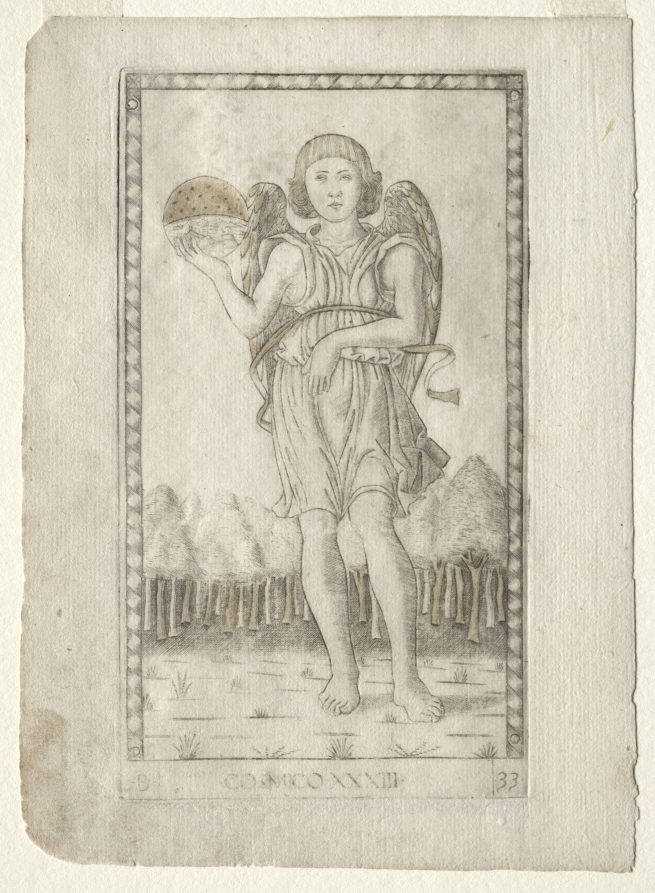 Genius of the World (from the Tarocchi, series B: Cosmic Pri
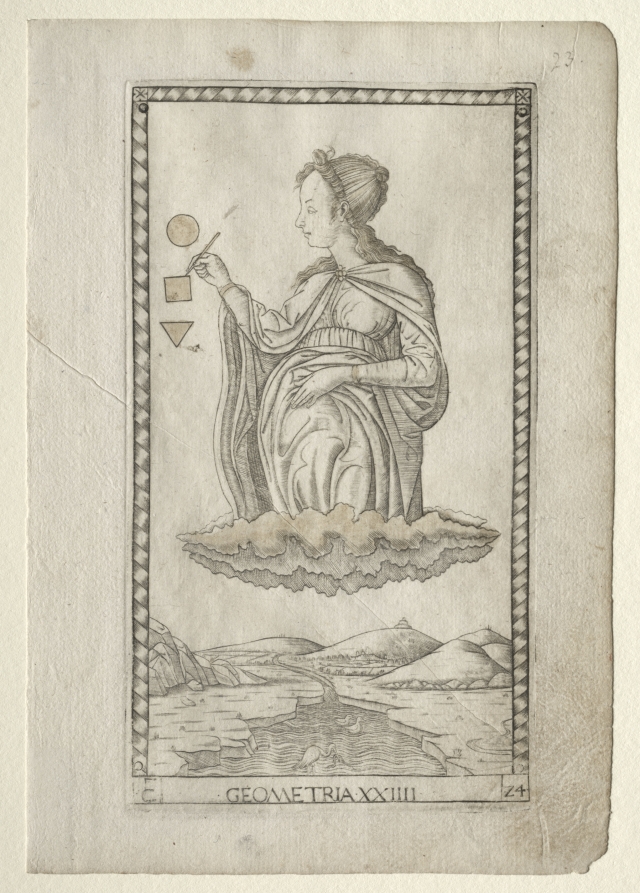 Geometry (from the Tarocchi, series C: Liberal Arts, #24)
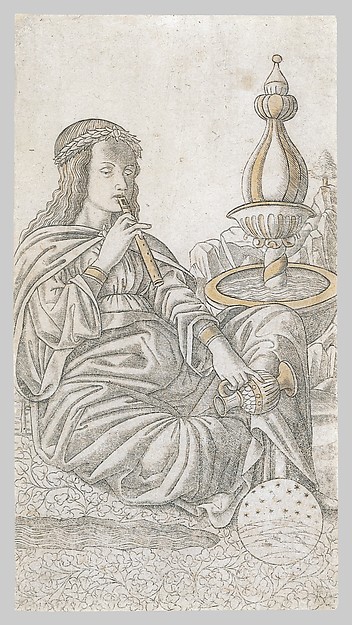 Poetry (Poesia XXVII)
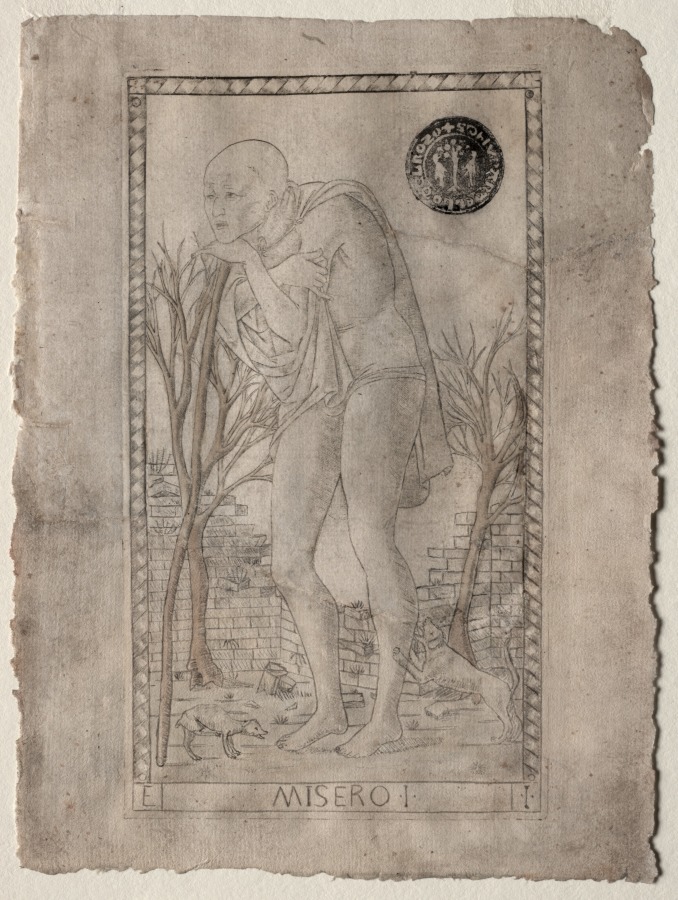 Tarocchi
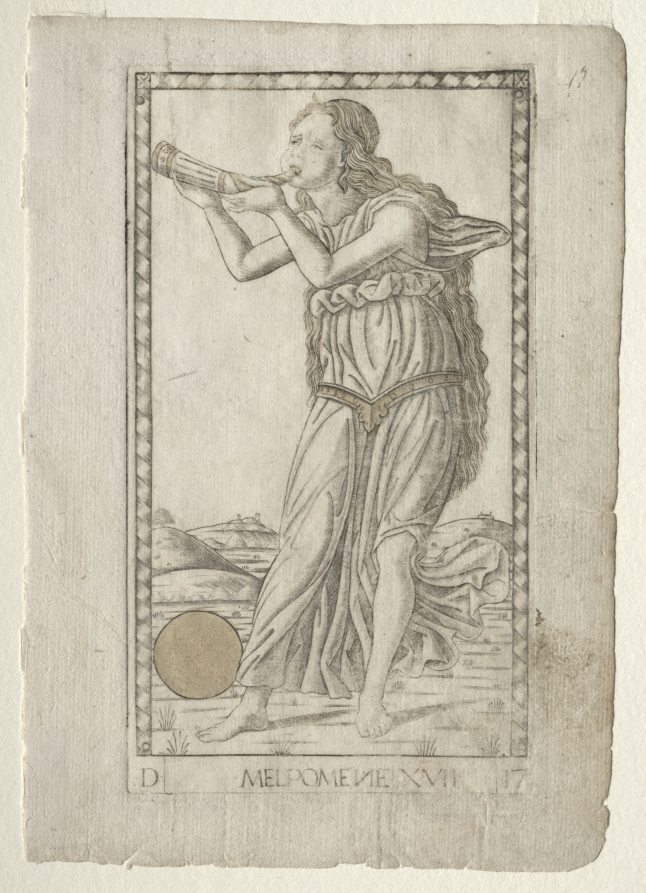 Melpomene (tragedy) (from the Tarocchi series D: Apollo and