FROM THE CLEVELAND MUSEUM OF ART’S CATALOG
Little is known about Boquet's life, and his artistic origins remain obscure. His style and technique suggest that he received formal training, but where and with whom is unclear. An inscription on a painting attributed to Boquet implies that he spent time in Rome, where he would have seen works by 17th-century French artists such as Claude Lorrain. This may explain the gentle, bucolic atmosphere and the warm, golden light in Pollard Willow , characteristics of which recall the paintings of Lorrain and his contemporaries. The severe pruning or pollarding of trees, especially willows, was a common practice before the Industrial Revolution (about 1750–1850). The procedure allowed the tree to produce large numbers of shoots, which were used in basketry, fence construction, and as fodder for farm animals.
Source ↗︎
Be the first to share your thoughts.
 Gerard Bilders — The Goatherdess
 George Andries Roth — Gezicht in het Bentheimse bos
 Adolf Karel Maximiliaan Engel — Landscape with Cattle
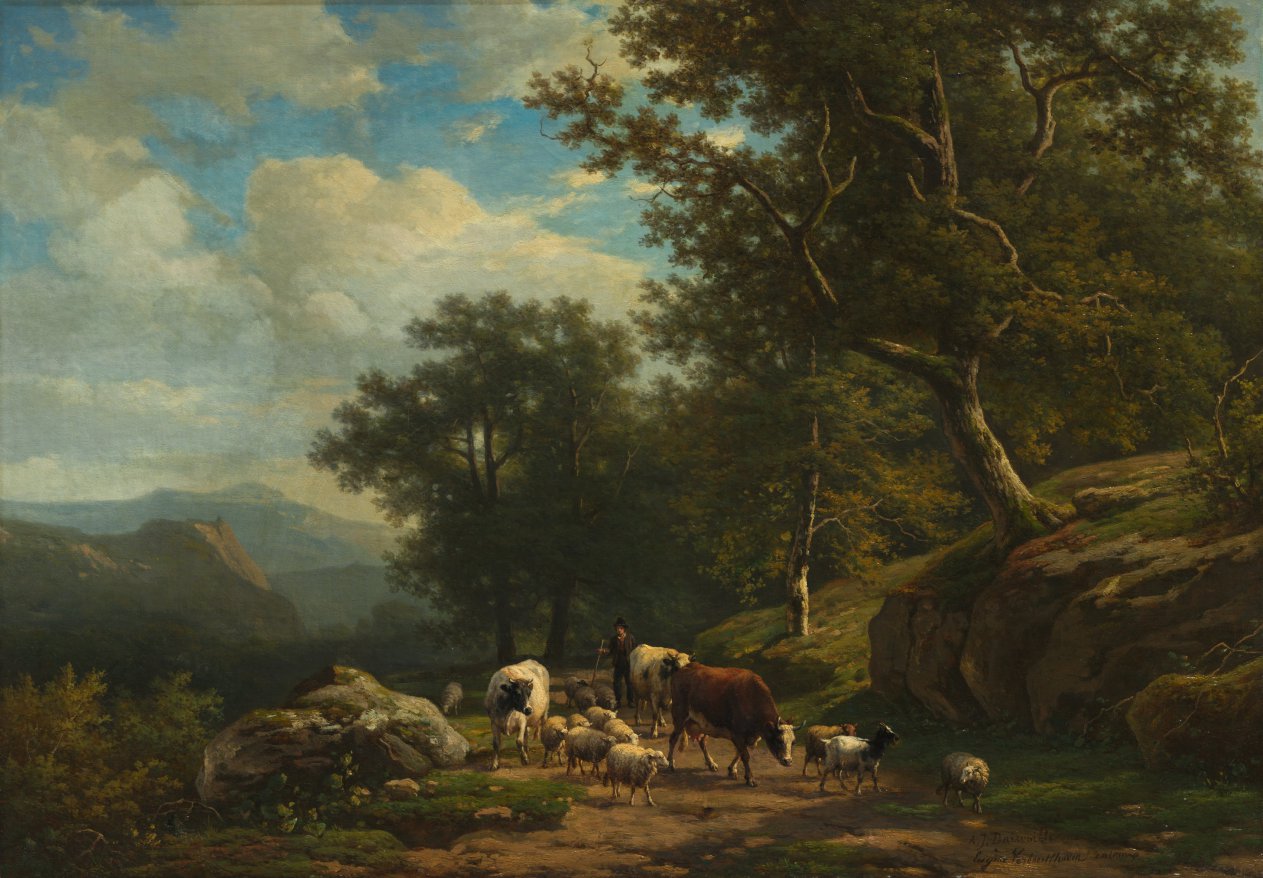 Alexander Joseph Daiwaille (Dutch, 1818–1888) — Landscape wi
 Jules Dupré — A Bright Day
 Jan Kobell (II) — Landscape with Cattle
 Pieter Gerardus van Os — Landscape with Herdsmen and Cattle
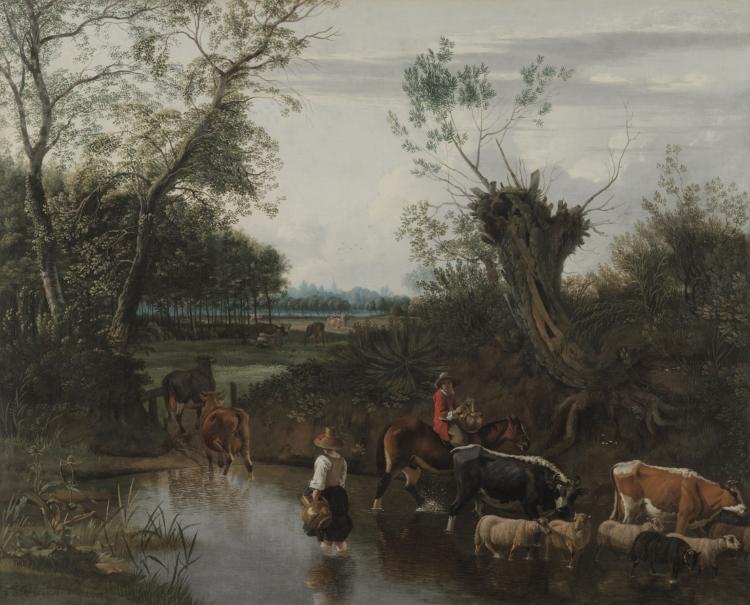 Jan Siberechts (Flemish, 1627-c. 1703) — Peasants Crossing a
 Johannes Warnardus Bilders — Landscape with Farmstead
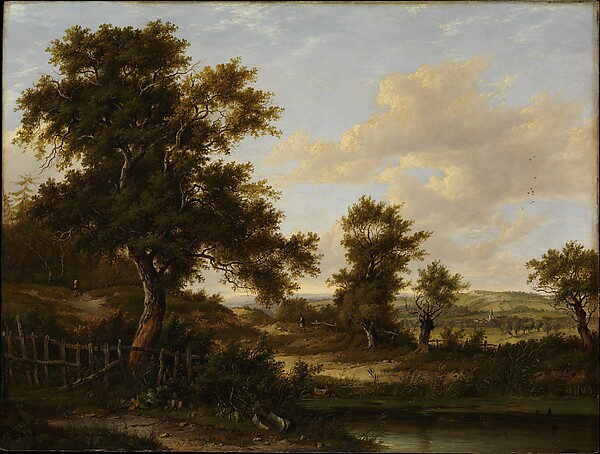 Patrick Nasmyth — Near Penshurst, Kent
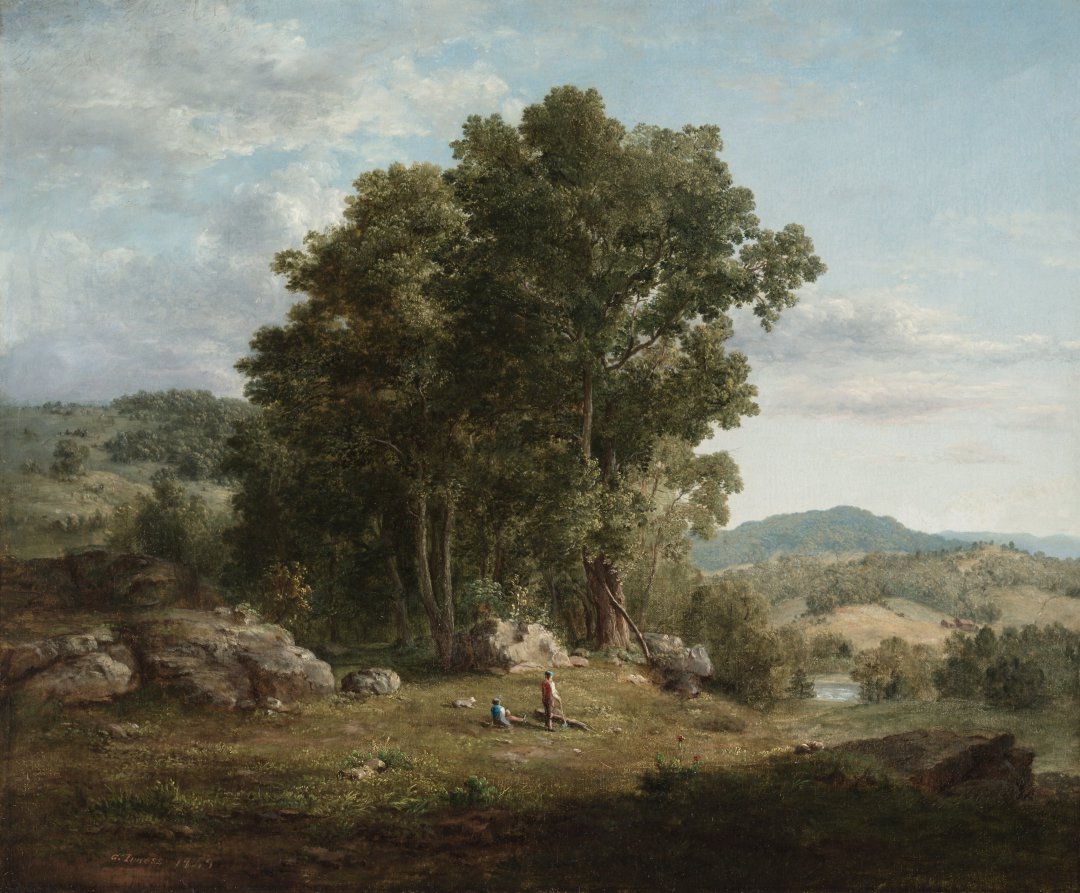 George Inness (American, 1825–1894) — The Wood Chopper
 Jacob van Strij — Meadow Landscape with Animals