Beach at Cabasson (Baigne-Cul)
SEE IT IN PERSON
Not currently on view
In the collection of Art Institute of Chicago, Chicago · as of July 2026
Discussion
FROM THE ART INSTITUTE OF CHICAGO’S CATALOG
In 1891, as a result of his rheumatoid arthritis, Henri Edmond Cross moved to Cabasson, a hamlet on the Côte d’Azur in southeastern France. The move deeply affected his art: after settling on the Mediterranean coast, he embraced the divided brushwork (small dashes and dots of color) and tonal gradations of “scientific Impressionism.” This methodical technique was a departure from the Impressionists’ more intuitive quick strokes of color to capture fleeting atmospheric conditions. In this beach scene, Cross used this more systematic paint application to convey the color and heat of his adopted region.
Be the first to share your thoughts.
Sign in to join the discussion.
More by Henri Edmond Cross


More like this
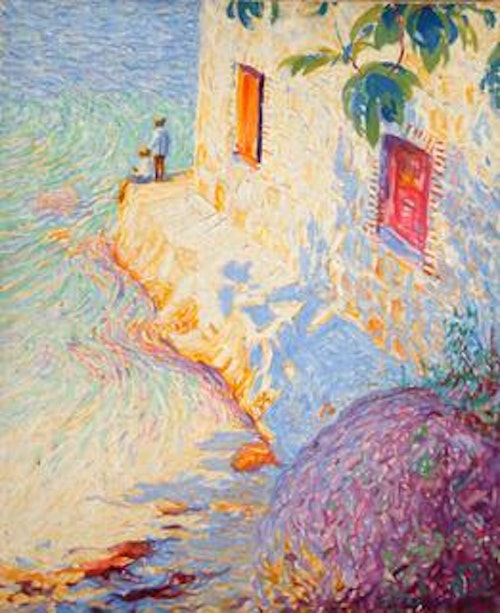 E. Webster — Sunlit Landscape
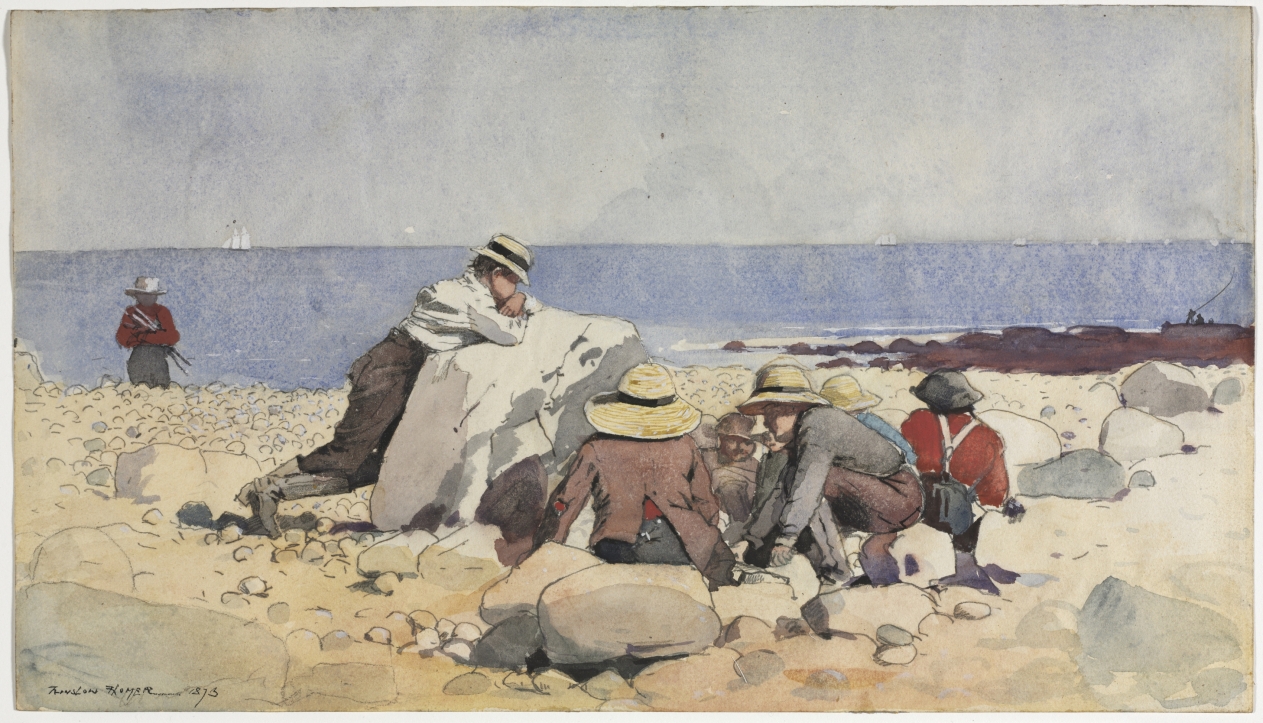 Winslow Homer (American, 1836–1910) — A Clam-Bake
 Charles Demuth — Two Women and Child on Beach
 Childe Hassam — Bailey's Beach, Newport, R.I.
 Claude Monet — The Mediterranean (Cap d'Antibes)
 Paul Huet — View at Étretat
 Joaquín Sorolla y Bastida — Rocks at the Lighthouse, Biarrit
 Claude Monet — Antibes
 Edward Henry Potthast — A Holiday
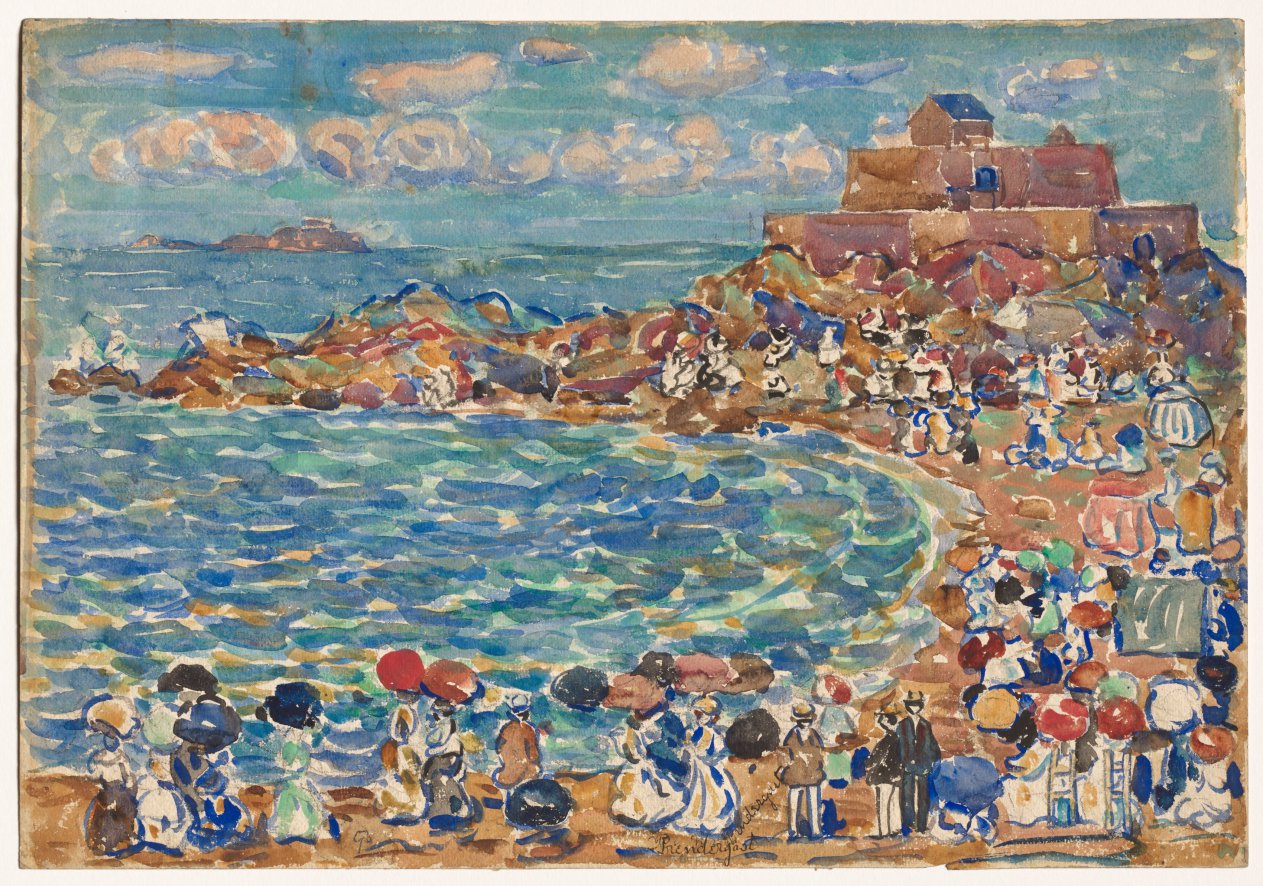 Maurice Prendergast (American, born Newfoundland [now Canada
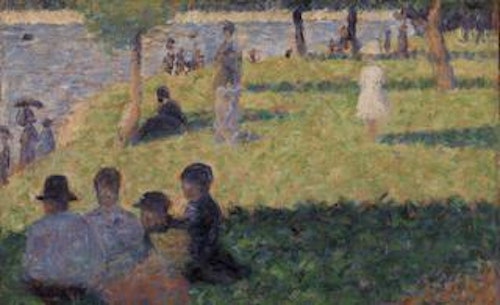 Georges Seurat — Group of Figures (Study for "Un dimanche à
  Paul Gauguin — Tahitian Landscape