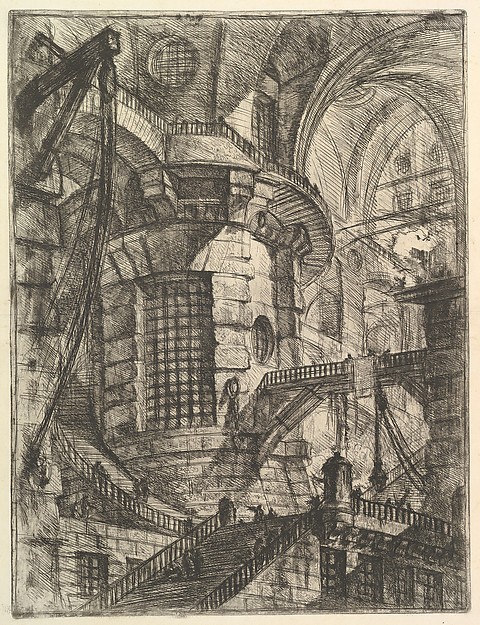
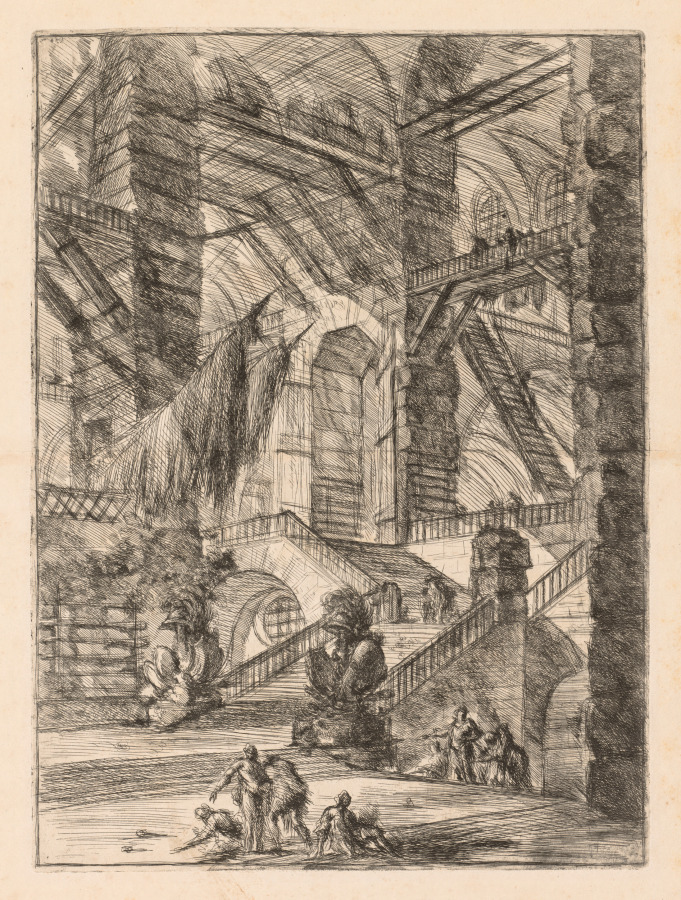
The Round Tower, plate 3 from the second edition of Carceri d'invenzione (Imaginary Prisons)
1750, reworked 1761
Etching, engraving, sulphur tint, and burnishing in black on ivory laid paper
54.2 × 41 cm (21.3 × 16.1 in)
SEE IT IN PERSON
Not currently on view
In the collection of Art Institute of Chicago, Chicago · as of July 2026
Discussion
FROM THE ART INSTITUTE OF CHICAGO’S CATALOG
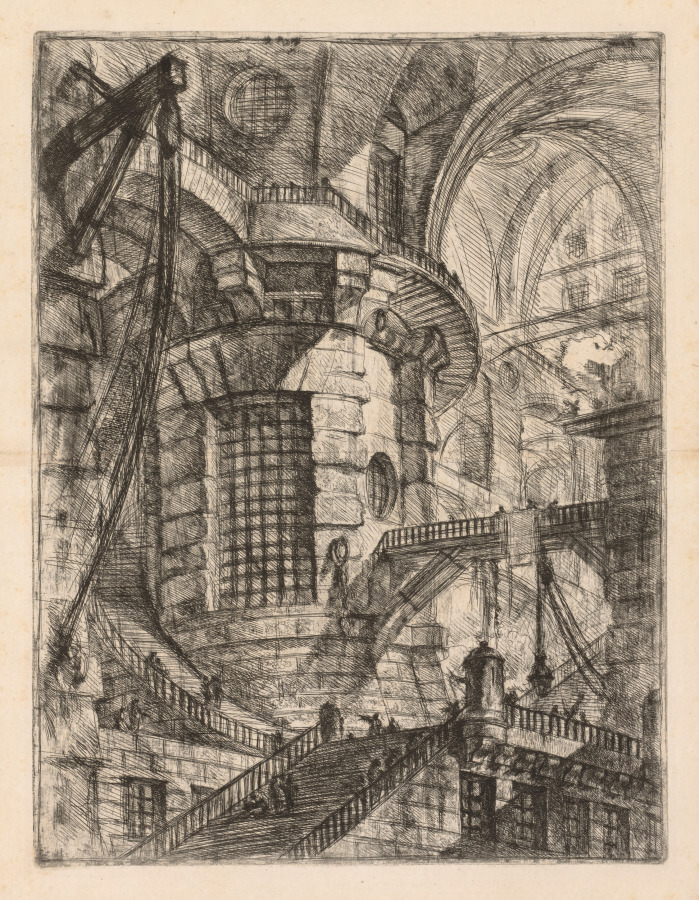
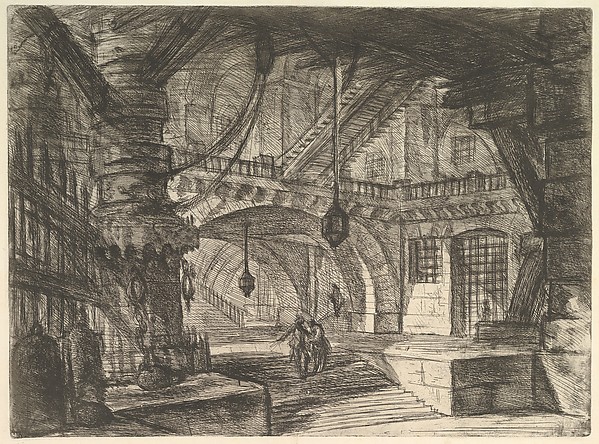
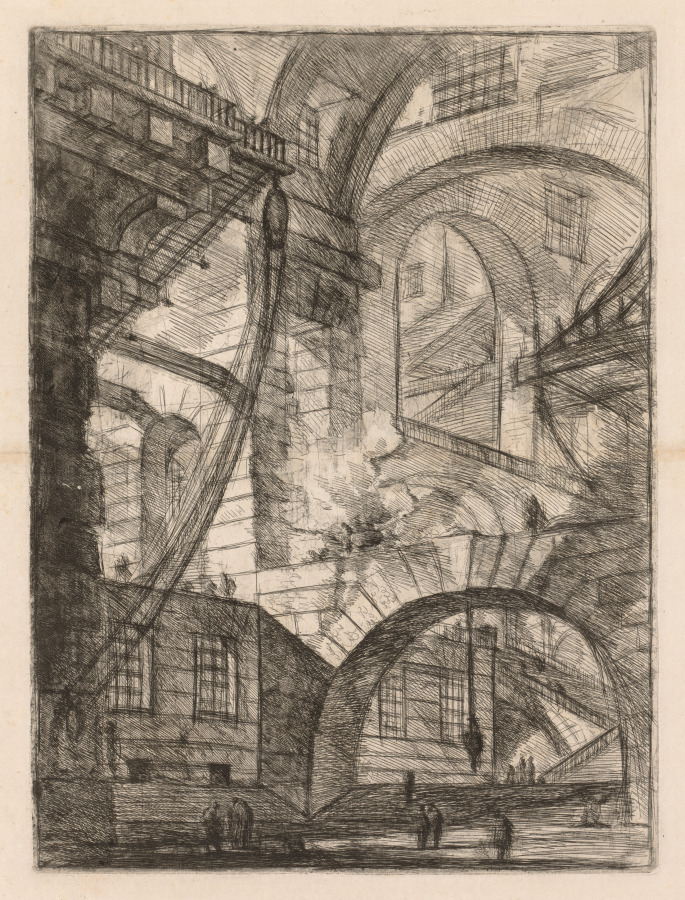
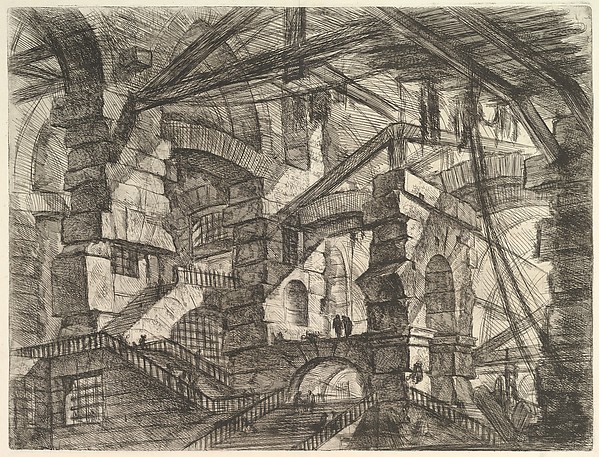
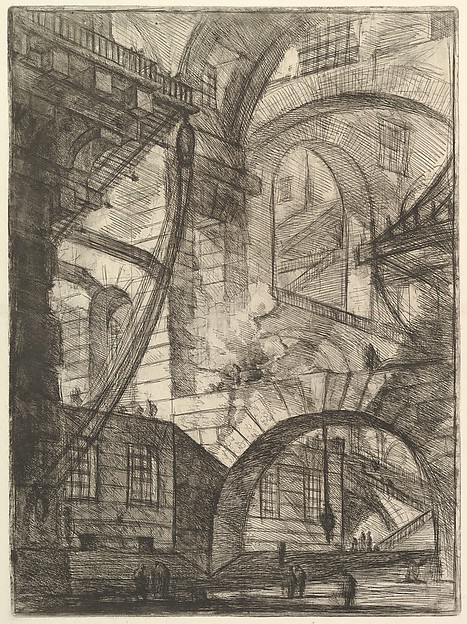
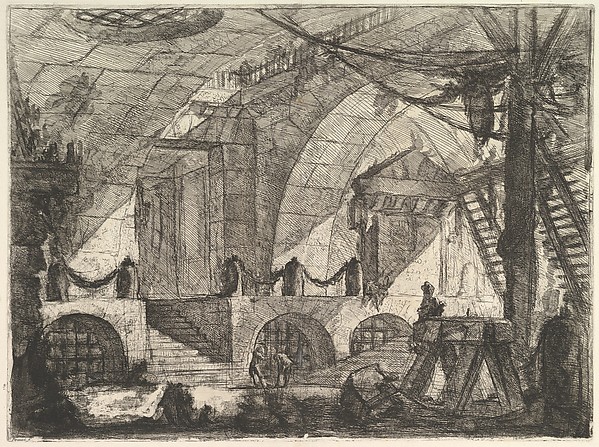
In addition to dramatic views of Roman architecture, Giovanni Battista Piranesi created a series of prison interiors that were entirely invented. These vast, entangled passageways and cavernous chambers were first printed around 1750. Ten years later, Piranesi reworked the plates, heightening their ominous state in an implied critique of social injustice.
Be the first to share your thoughts.
Sign in to join the discussion.
More by Giovanni Battista Piranesi
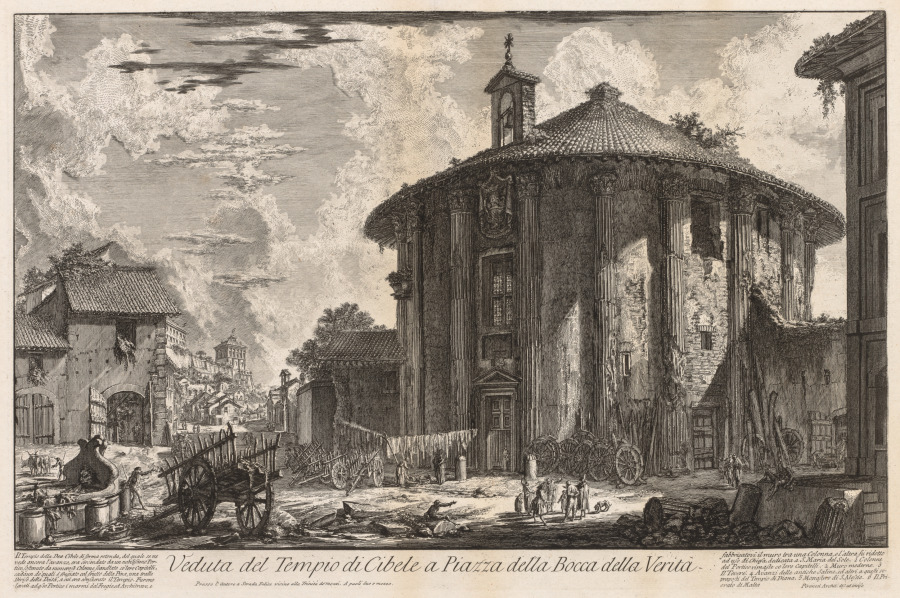 Views of Rome: Temple of Cybele
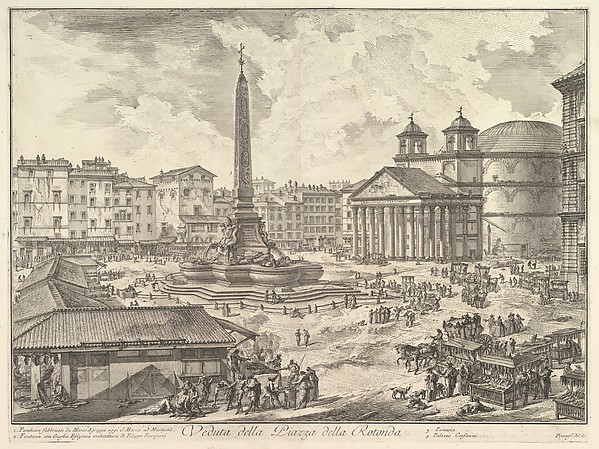 The Piazza della Rotonda, with the Pantheon and Obelisk (Ved
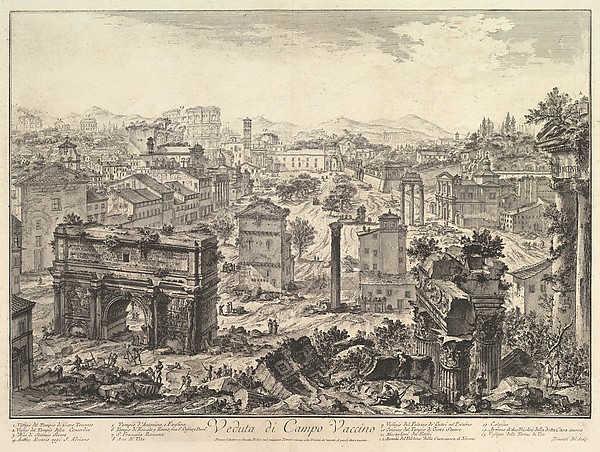 The Forum Romanum, or Campo Vaccino, from the Capitol, with
 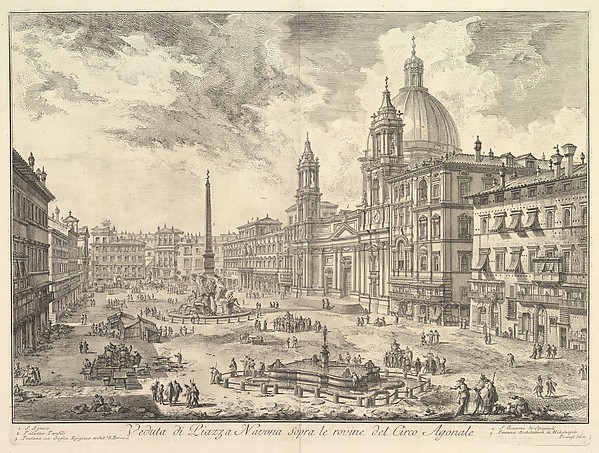 The Piazza Navona, Rome, above the ruins of the Circus of Do
 View of the Campo Vaccino (Roman Forum with the Temple of CaView of the Flavian Amphitheater, called the Colosseum, from
 The Forum Romanum, or Campo Vaccino, from the capitol, with
  View of the Temple of Cybele in the Piazza of the Bocca dell
More like this
 Giovanni Battista Piranesi|Giovanni Bouchard — The Round Tow
 Giovanni Battista Piranesi (Italian, 1720–1778) — The Prison
 Giovanni Battista Piranesi|Giovanni Bouchard — The Pier with
 Giovanni Battista Piranesi (Italian, 1720–1778) — The Prison
 Giovanni Battista Piranesi|Giovanni Bouchard — The Gothic Ar
 Giovanni Battista Piranesi|Giovanni Bouchard — The Smoking F
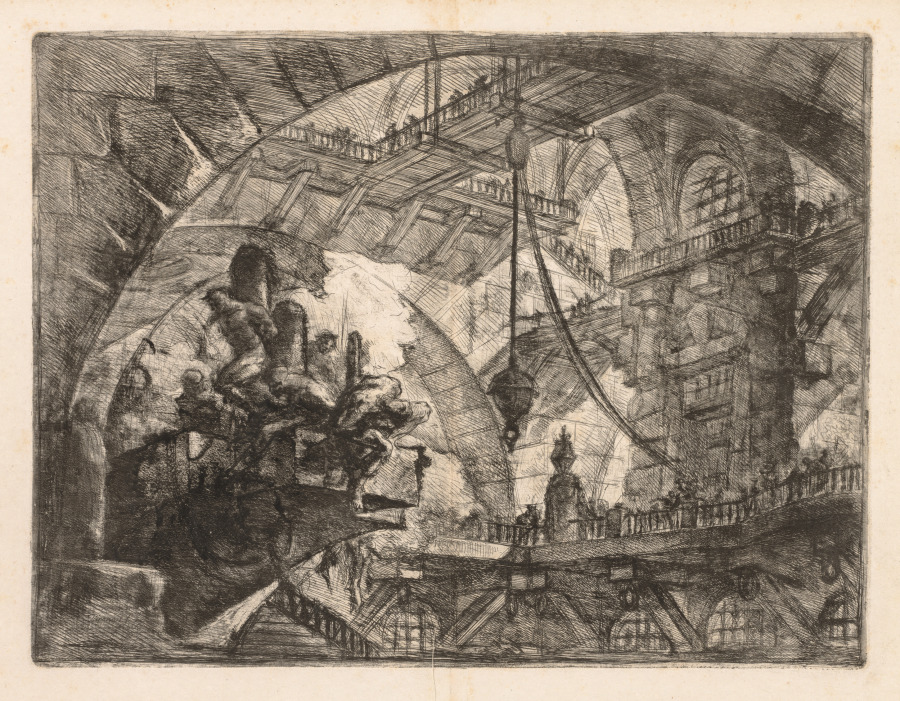 Giovanni Battista Piranesi (Italian, 1720–1778) — Prisoners
 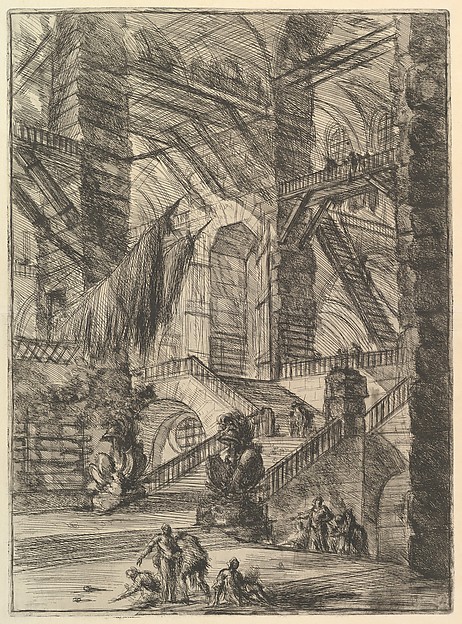 Giovanni Battista Piranesi|Giovanni Bouchard — The Staircase
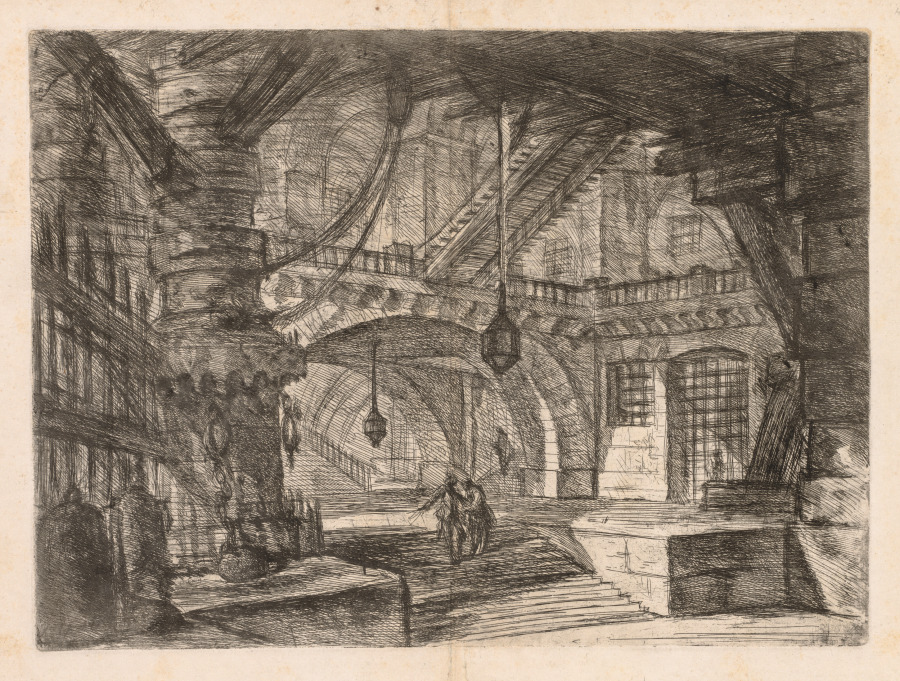 Giovanni Battista Piranesi (Italian, 1720–1778) — The Prison
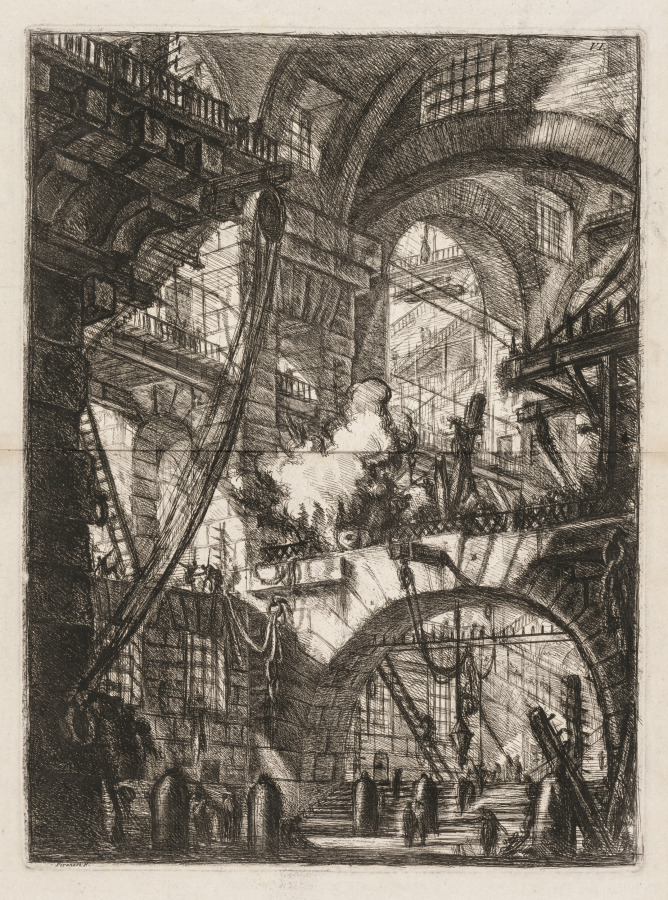 Giovanni Battista Piranesi (Italian, 1720–1778) — The Prison
 Giovanni Battista Piranesi|Giovanni Bouchard — The Sawhorse,
 Giovanni Battista Piranesi (Italian, 1720–1778) — The Prison