Samson Killing the Lion
SEE IT IN PERSON
Not currently on view
In the collection of Art Institute of Chicago, Chicago · as of July 2026
Discussion
FROM THE ART INSTITUTE OF CHICAGO’S CATALOG
The majority of Nicolaes de Bruyn’s work in the first decade of the 17th century consists of engravings after designs by Gillis van Coninxloo, a Netherlandish draftsman who was a generation older than De Bruyn. Highly influenced by his training in tapestry making, Coninxloo focused on the depiction of the heroic landscape, an interpretation of nature based on reality but with an emphasis on the ideal. De Bruyn followed the style of Coninxloo in his own designs, frequently including a small biblical subject within his landscapes. Here the immense and elaborate forest landscape overwhelms the tiny Samson and downplays the urgency of his fight with the lion.
Be the first to share your thoughts.
Sign in to join the discussion.
More by Nicolaes de Bruyn
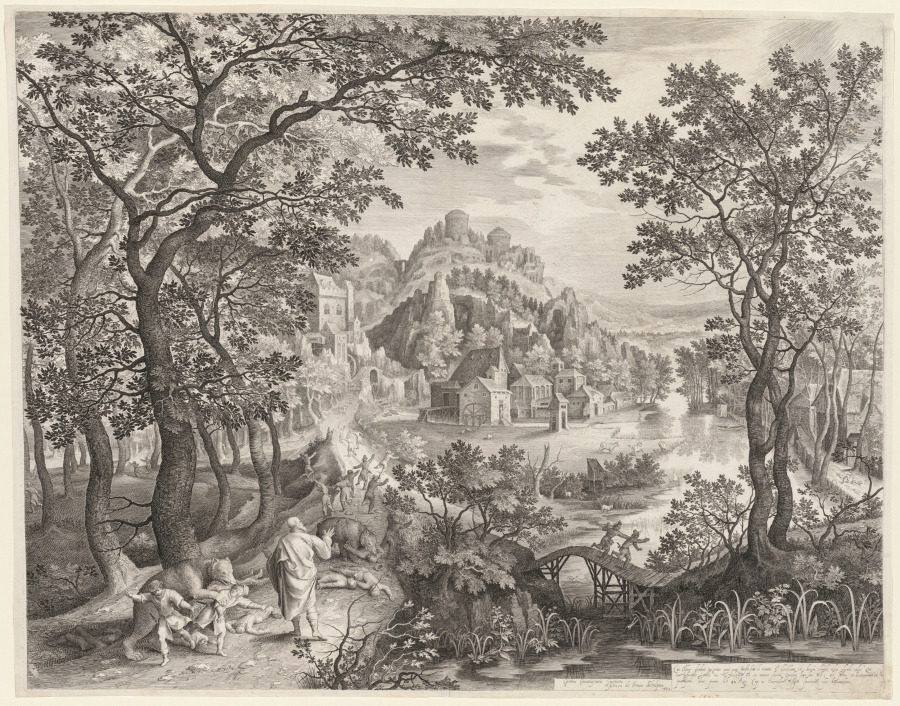 Elisha Cursing the Children of Bethel Who Are Being Devoured
 Abraham’s Sacrifice
 The Disciples on the Way to Emmaus
 Hosea and the Prostitute Gomer
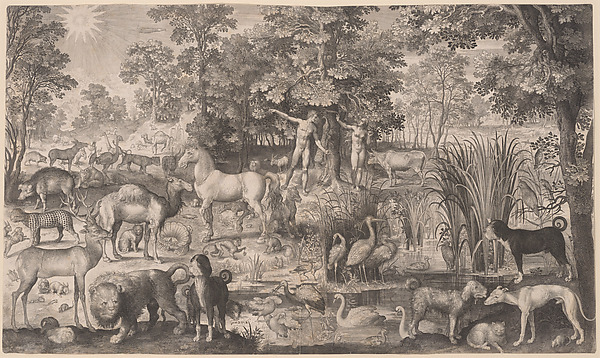 Adam and Eve in Paradise
 Fifth Day: The Creation of Birds and Fish, from The Creation
 Jeremiah Prophesying the Destruction of Jerusalem
 Third Day: The Creation of Land and Vegetation, from The Cre
More like this
 Giovanni Francesco Grimaldi — Three boys in a landscape with
 Hans Bol — Plate 17, from Landscapes with Scenes from the Ol
 Hans Bol — Plate 15, from Landscapes with Scenes from the Ol
 George Frederick Rosenberg — River Landscape with Figures
 Hans Bol — Plate 10, from Landscapes with Scenes from the Ol
 Hans Bol — Plate 11, from Landscapes with Scenes from the Ol
 Herman van Swanevelt (Dutch, c. 1600–1655) — The Flight into
 Adriaen Collaert — The Mocking Children Cursed by Elijah and
 Aegidius Sadeler, II — Scene One: Watermill on an Island in
  Hans Bol — Plate 23, from Landscapes with Scenes from the Ol
 Herman van Swanevelt (Dutch, c. 1600–1655) — The Large Tree
  Herman van Swanevelt (Dutch, c. 1600–1655) — The Little Ange