Distant View of Niagara Falls
SEE IT IN PERSON
● On view now — Gallery 161
Art Institute of Chicago, Chicago · verified July 2026
Discussion
FROM THE ART INSTITUTE OF CHICAGO’S CATALOG
Thomas Cole visited Niagara Falls in May 1829, composing this romanticized, autumnal scene the following year. Portraying the grandeur of the American landscape, the artist omitted the factories, scenic overlooks, and hotels that populated the area in the early 19th century. Cole expressed concern about the environmental impact of voracious industrialism, but at the same time his painting erased the human devastation wrought by colonialism and conquest in the region, which encompassed Attiwonderonk, Haudenosaunee, and Wenrohronon lands. The two Native American figures at center, combined with the falls, identify the setting as North America, but their diminished presence in scale and number reinforces the false idea of the “vanishing Indian” and is meant to signal impending transformation rather than acknowledge their stolen sovereignty.
Be the first to share your thoughts.
Sign in to join the discussion.
More by Thomas Cole

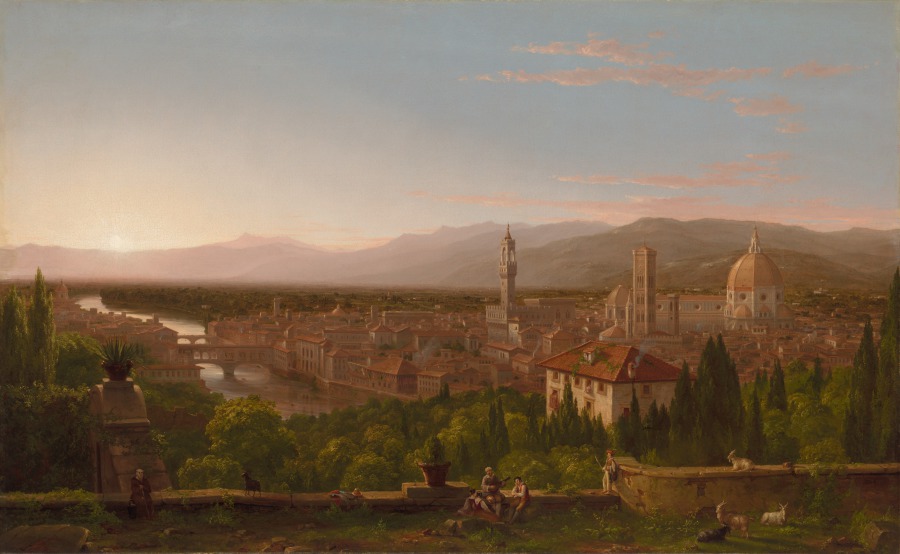

More like this
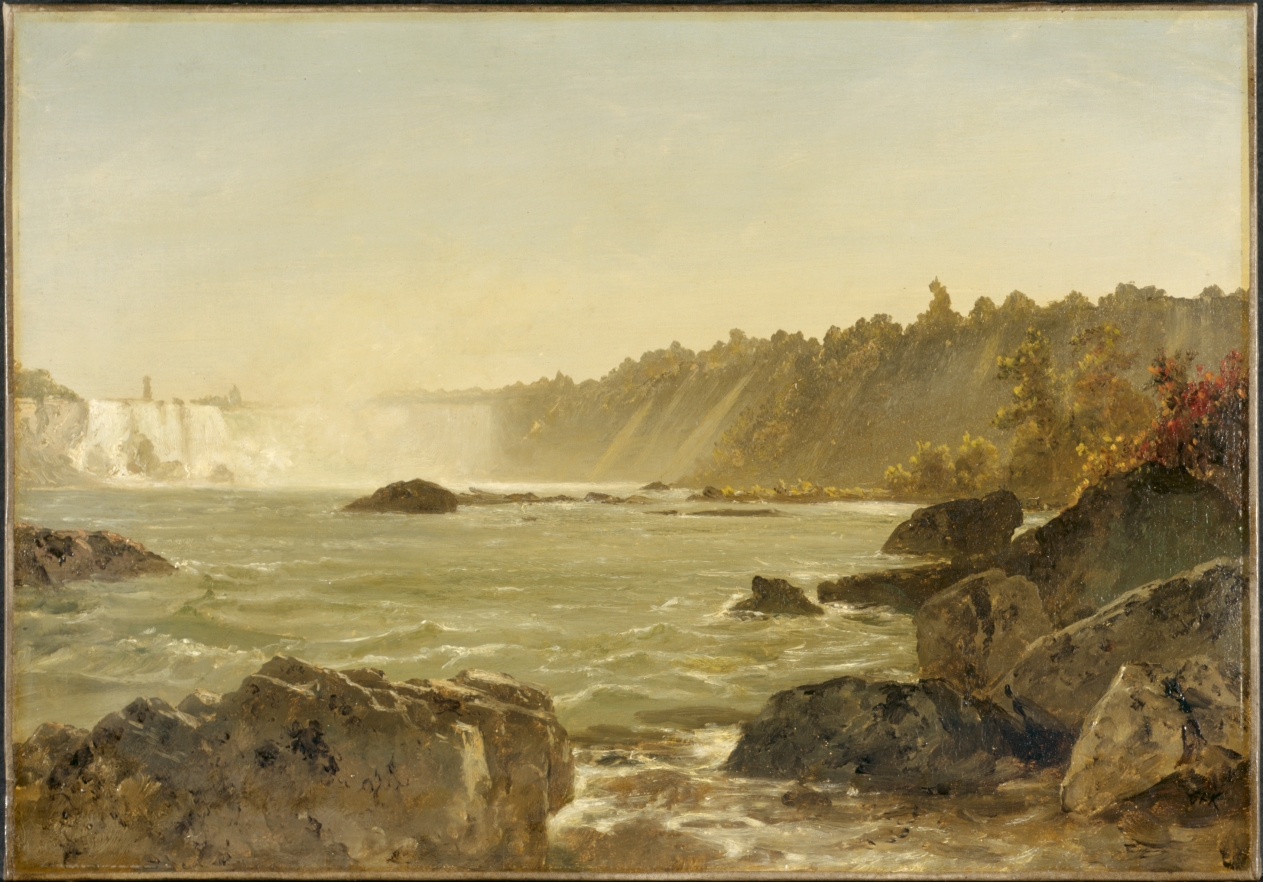 John Frederick Kensett (American, 1816–1872) — View of Niaga
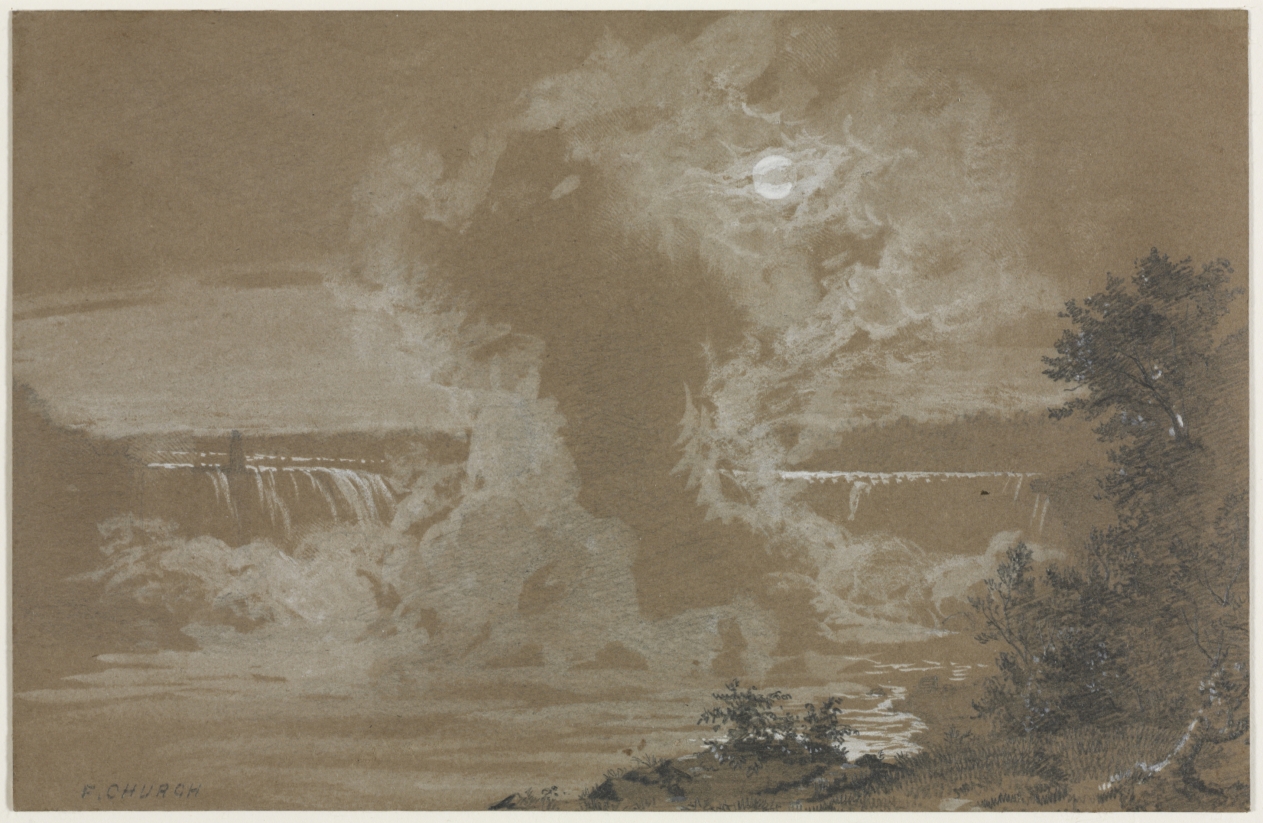 Frederic Edwin Church (American, 1826–1900) — Niagara Falls
 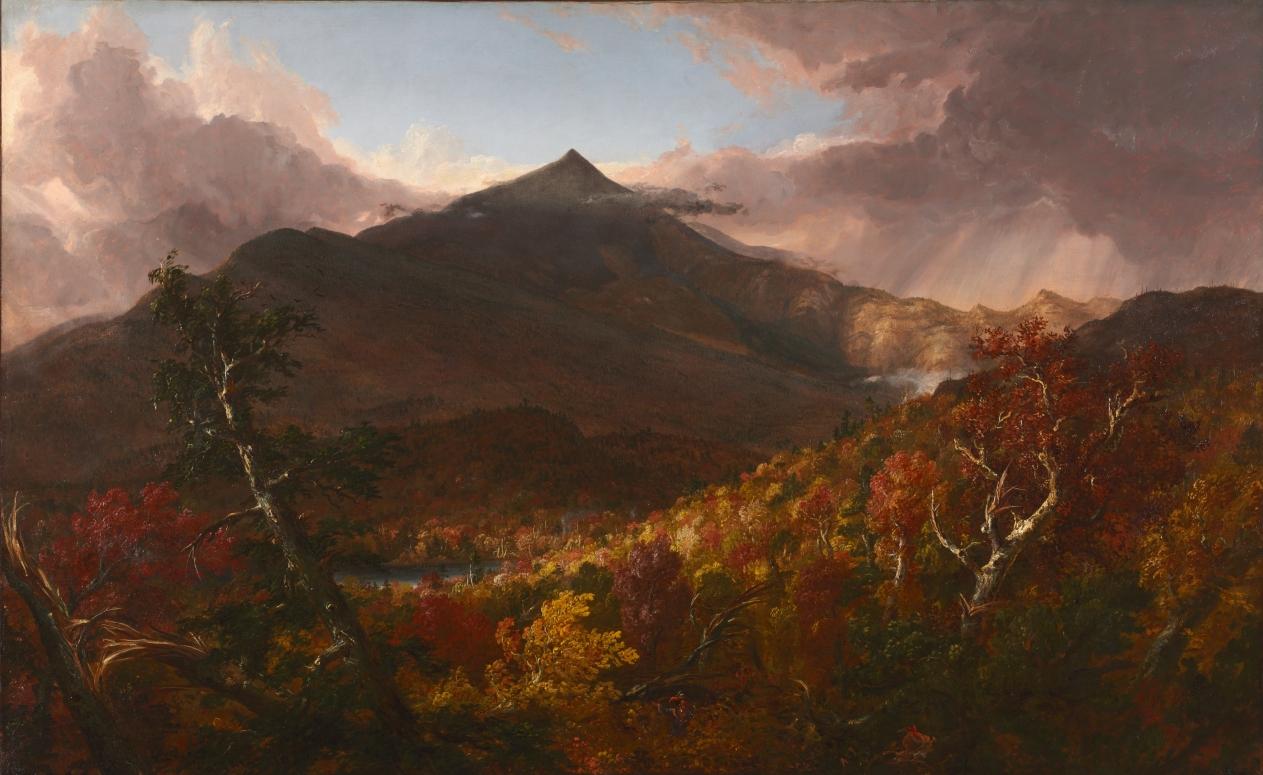 Thomas Cole (American, born England,1801–1848) — View of Sch
 Cornelis Apostool — The Anio Valley with the Waterfalls of T
 Frederic Edwin Church (American, 1826–1900) — Twilight in th
 Sanford Robinson Gifford — Mist Rising at Sunset in the Cats
 Worthington Whittredge (American, 1820–1910) — Landscape wit
 Thomas Doughty (American, 1793–1856) — View of a Lake
 William Morris Hunt (American, 1824–1879) — Niagara Falls
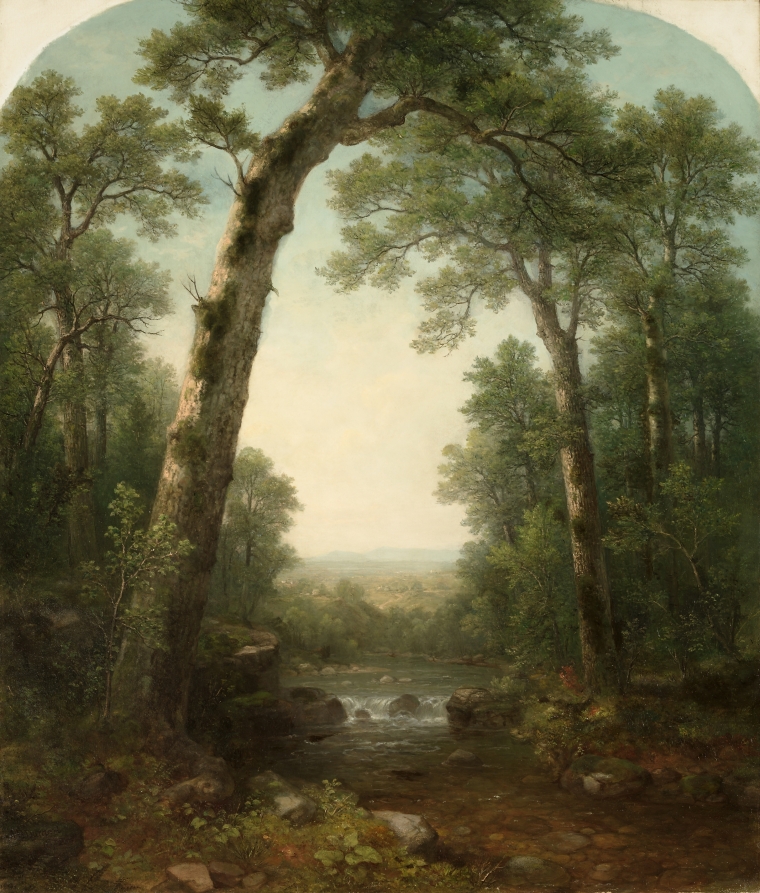 Asher B. Durand (American, 1796–1886) — Forest Stream with V
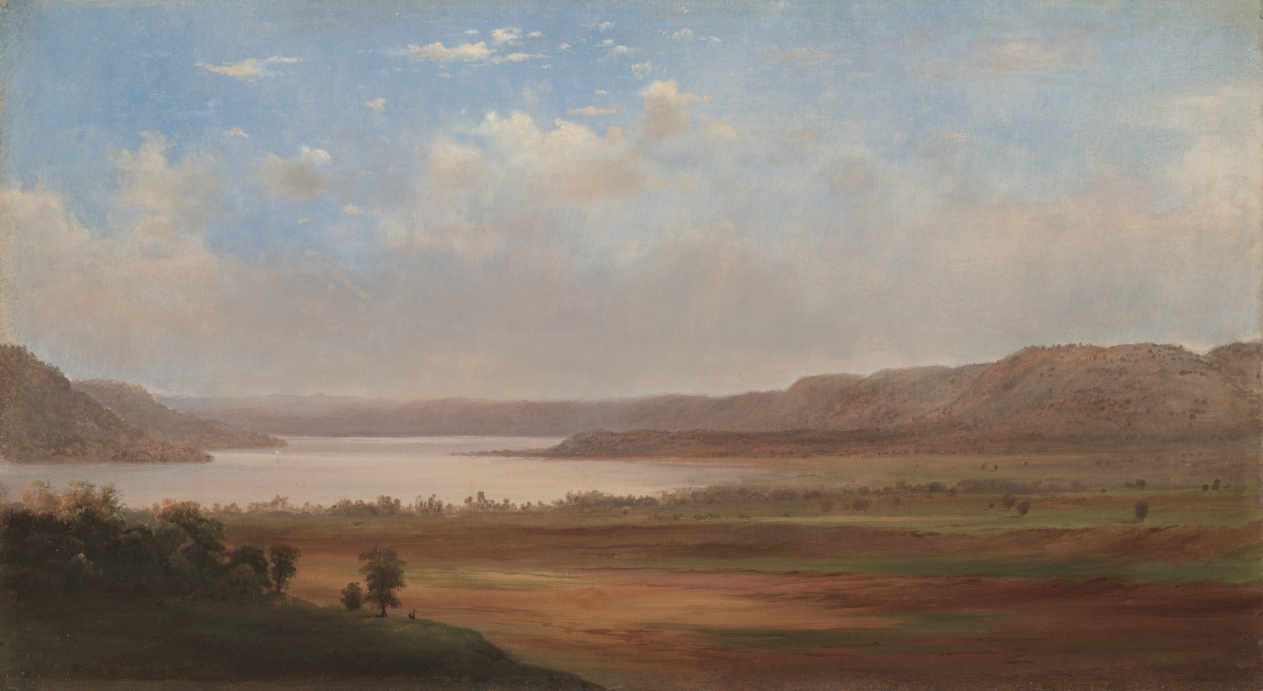 Robert S. Duncanson (American, 1821–1872) — View of Lake Pep
 Henri van Assche — River in the Ardennes at Sunset