Stefano della Bella|Pierre François Basan

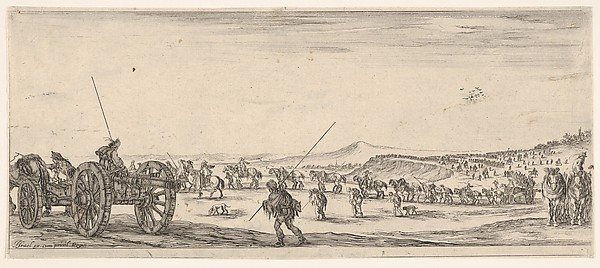
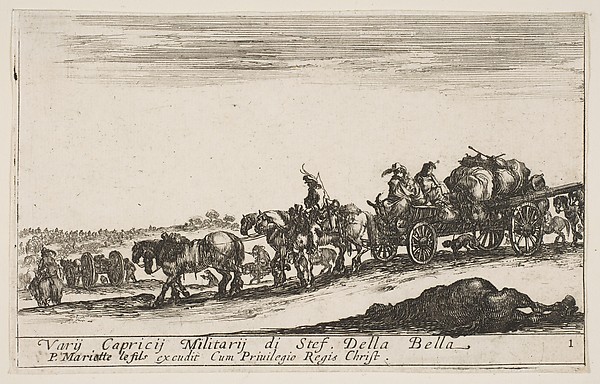
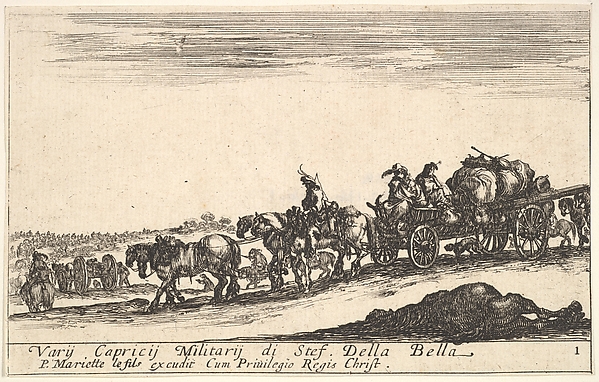
Plate 1: a horse drawn cart carrying people and goods, dead horse in the foreground, from "Various Military Caprices" (Varii capricci militari)

ca. 1641
Etching; third state of four
9 × 14.5 cm (3.5 × 5.7 in)

SEE IT IN PERSON

Not currently on view

In the collection of The Metropolitan Museum of Art, New York · as of July 2026

View at metmuseum.orgPlan a visit ↗

Discussion

Be the first to share your thoughts.

Sign in to join the discussion.

Community guidelines

More by Stefano della Bella|Pierre François Basan
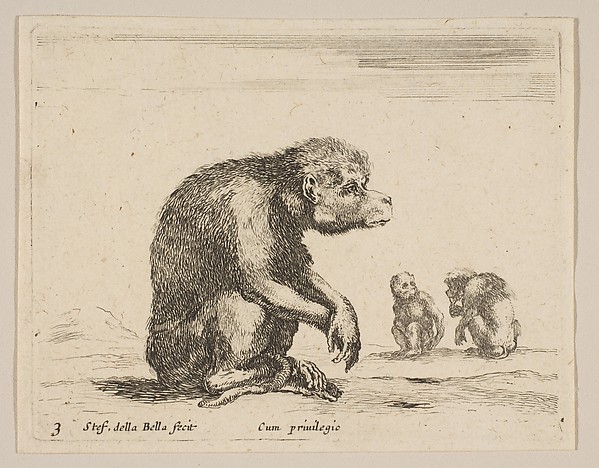
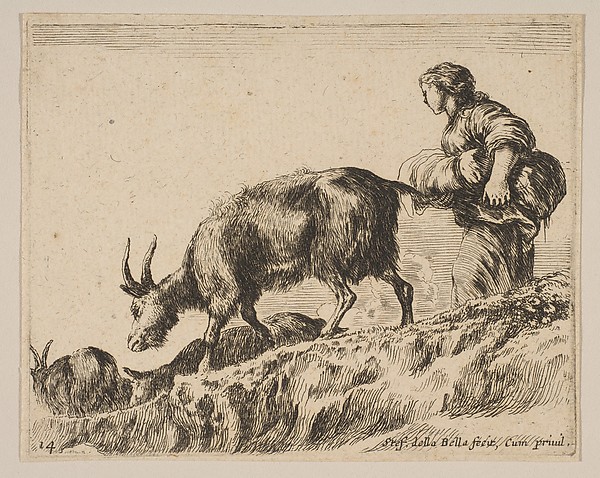
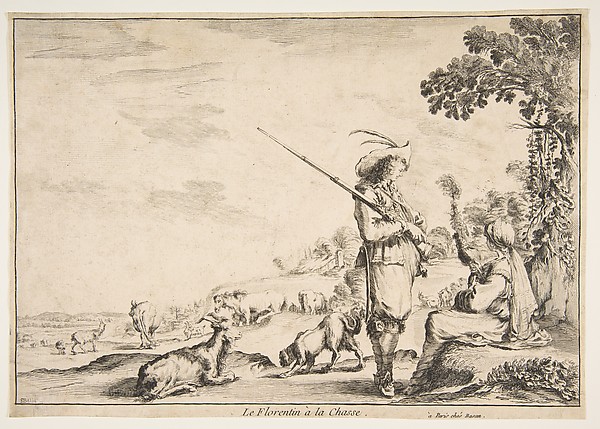
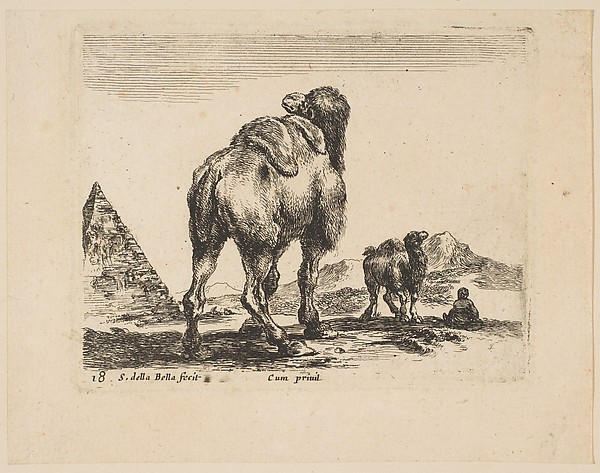
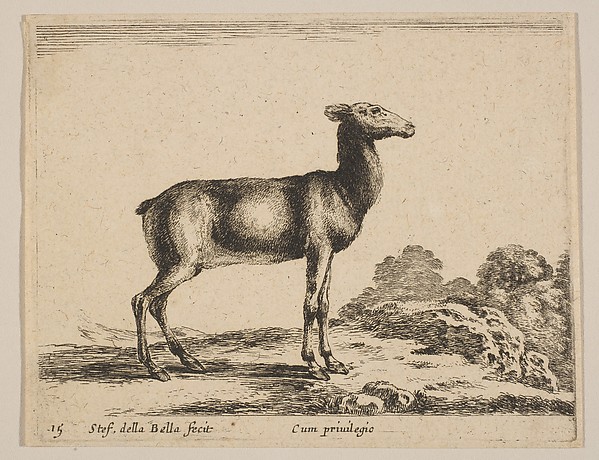
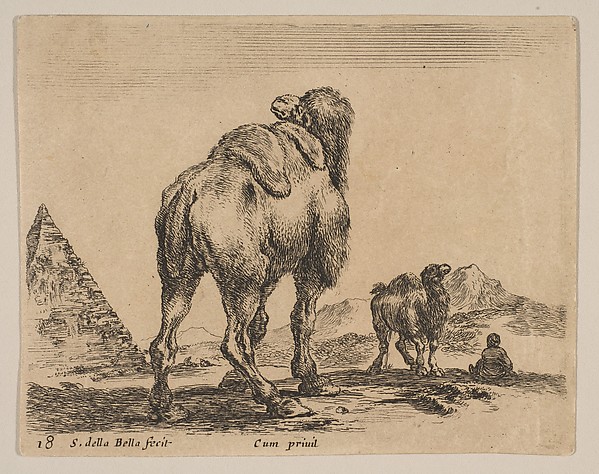
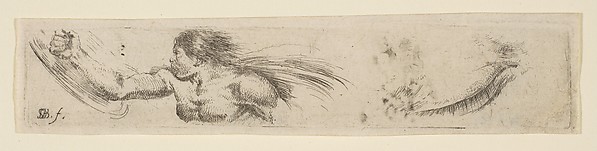
Plate 3: seated monkey, from "Various animals" (Diversi animali)Plate 3: seated monkey, from "Various animals" (Diversi animPlate 14: Shepherdess herding goats, from "Various animals" (Diversi animali)Plate 14: Shepherdess herding goats, from "Various animals" Le Florentin à la chasseLe Florentin à la chassePlate 5: Reclining Lion, from "Various animals" (Diversi animali)Plate 5: Reclining Lion, from "Various animals" (Diversi aniPlate 18: camel viewed from behind with pyramid at left, from 'Various animals' (Diversi animali)Plate 18: camel viewed from behind with pyramid at left, froPlate 15: Doe, from "Various animals" (Diversi animali)Plate 15: Doe, from "Various animals" (Diversi animali)Plate 18: Camel viewed from behind with pyramid at left, from "Various animals" (Diversi animali)Plate 18: Camel viewed from behind with pyramid at left, froTorso of a Man with a Shield and Eye Study, plate 19 from "Collection of various doodles and etching proofs" (Recueil de divers griffonnements et preuves d'eauforte)Torso of a Man with a Shield and Eye Study, plate 19 from "C
More like this

A horse drawn cart carrying people and goods, dead horse in the foreground, plate 1 from "Various Military Caprices" (Varii capricci militari)Stefano della Bella|Pierre Mariette le fils — A horse drawn Plate 1: A horse drawn cart carrying people and goods, dead horse in the foreground, from 'Various Military Caprices' (Varii capricci militari)Stefano della Bella|Pierre Mariette le fils — Plate 1: A horPlate 4: a procession of cannons and horses riding uphill towards the left, a dog at lower left, from Dessins de quelques conduites de troupesStefano della Bella — Plate 4: a procession of cannons and hPlate Four from Drawings of Several Movements by SoldiersStefano della Bella — Plate Four from Drawings of Several MoThe Bohemians Marching, from The BohemiansJacques Callot — The Bohemians Marching, from The BohemiansPlate 3: a procession of horse-drawn cannons, riding to the right, a horse-drawn cannon to the right seen from the back, from 'Troops, cannons, and attacks on towns' (Dessins de quelques conduites de troupes, canons, et ataques de villes)Stefano della Bella — Plate 3: a procession of horse-drawn cLes Bohémiens en Marche, pièce aussi appelée L'Avant-Garde (The Gypsies Travelling, piece also called The Advance Gard), from Le Bohémiens, série appelée aussi Les Égyptiens, La Marche des Bohémiens, La Vie Errante des Bohémiens, Les Marches Égyptiennes (The Gypsies, series also called The Egyptians, The Gypsy Troops, The Wandering Lives of Gypsies, The Egyptian Troops)Jacques Callot — Les Bohémiens en Marche, pièce aussi appeléAugust: Landscape with WagonsPieter Molyn (Dutch, 1595–1661) — August: Landscape with WagLandscape with Two Men on HorsebackPieter de Molijn — Landscape with Two Men on HorsebackTwo horsemen descending a mountain at left, another horseman to right in background, plate 10 from "Diversi capricci"Stefano della Bella|Nicolas Langlois — Two horsemen descendiLes Bohémiens en Marche, pièce aussi appelée L'Avant-Garde (The Gypsies Travelling, piece also called The Advance Gard), from "Le Bohémiens, série appelée aussi Les Égyptiens, La Marche des Bohémiens, La Vie Errante des Bohémiens, Les Marches Égyptiennes" (The Gypsies, series also called The Egyptians, The Gypsy Troops, The Wandering Lives of Gypsies, The Egyptian Troops)Jacques Callot — Les Bohémiens en Marche, pièce aussi appeléThankful for Having Survived, Francesco I d'Este Finds Refuge in the Shade of a Tree, as Anone is Overtaken with Heavy Musket Fire and the Example of His Own Survival, from L'Idea di un Principe ed Eroe Cristiano in Francesco I d'Este, di Modena e Reggio Duca VIII [...]Bartolomeo Fenice (Fénis)|Domenico Gamberti — Thankful for H