FROM THE CLEVELAND MUSEUM OF ART’S CATALOG
Crayon manner etching was invented in the 18th century to simulate the texture of chalk drawings, which were very popular at the time. A tool with toothed points of varying thicknesses set at irregular intervals and angles ( mattoir ) imitated the random character of grains of chalk on textured paper. Etudes de fleurs d’après nature demonstrates how prints propagated floral designs that could be used in the applied arts. Artisans designing textiles or decorating furniture, for instance, were inspired by the compositions found on prints.
Source ↗︎
Be the first to share your thoughts.
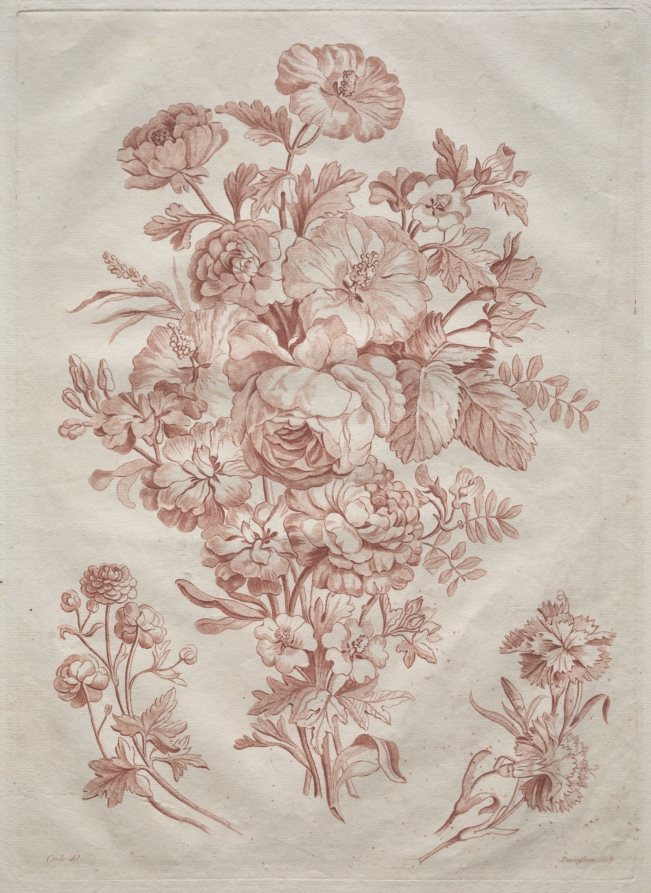 Roubillac (French, 1739-) — Spray of Flowers
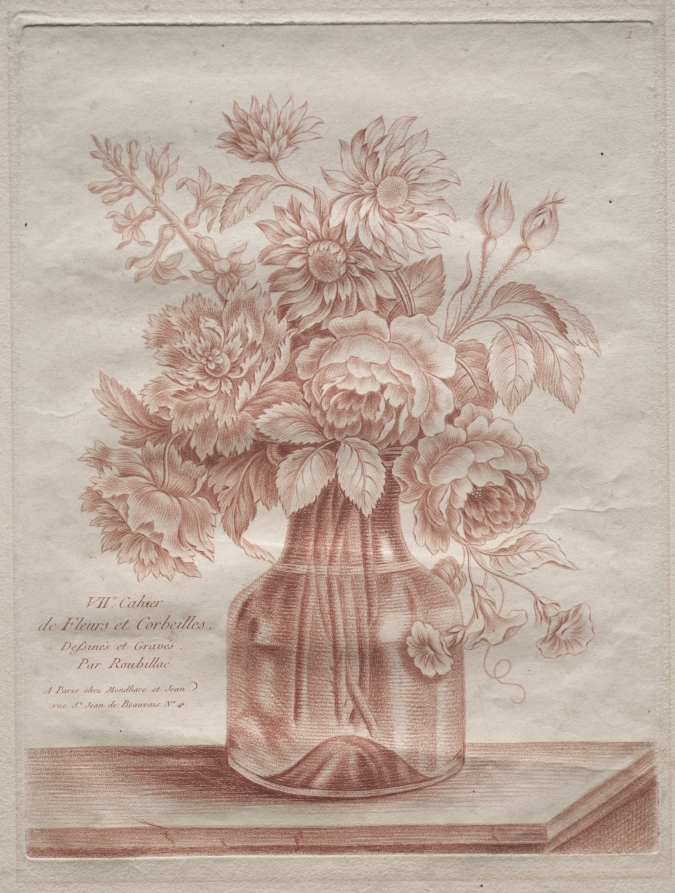 Roubillac (French, 1739-) — Bouquet in a Glass Bottle
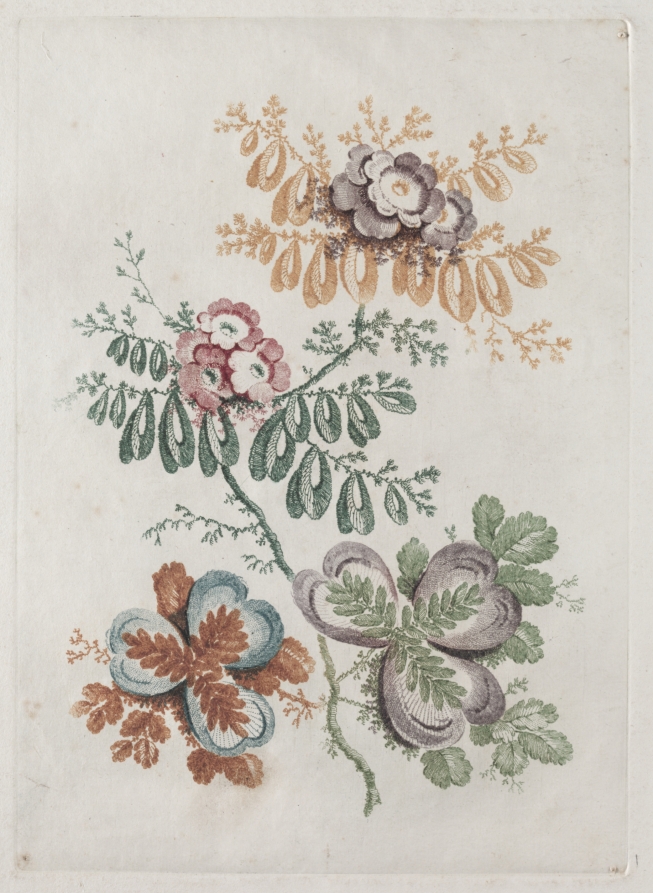 Anne Allen (British) — New Suite of Portfolios of Flowers Id
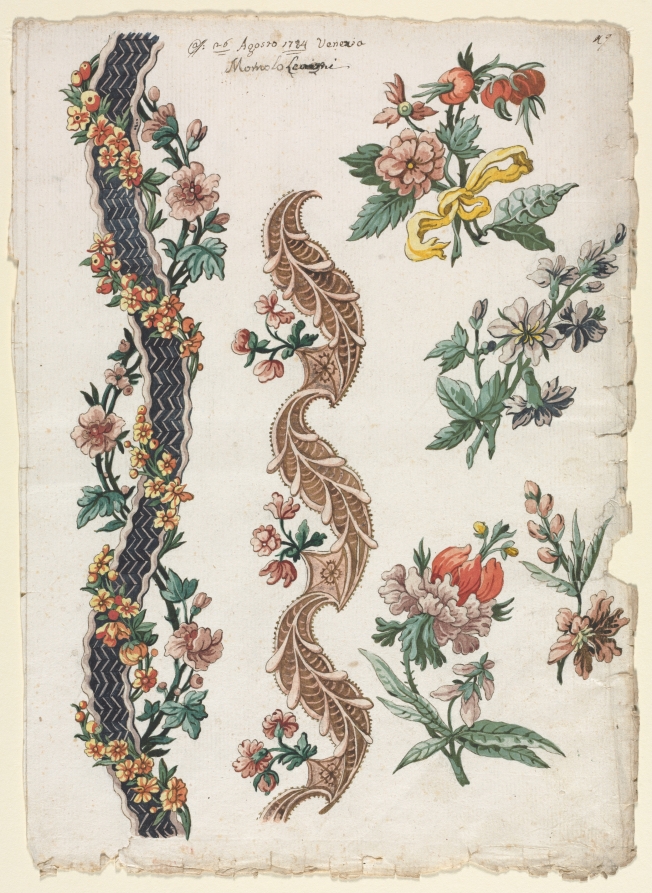 Giacomo Cavenezia (Italian) — Floral Designs and Floral Band
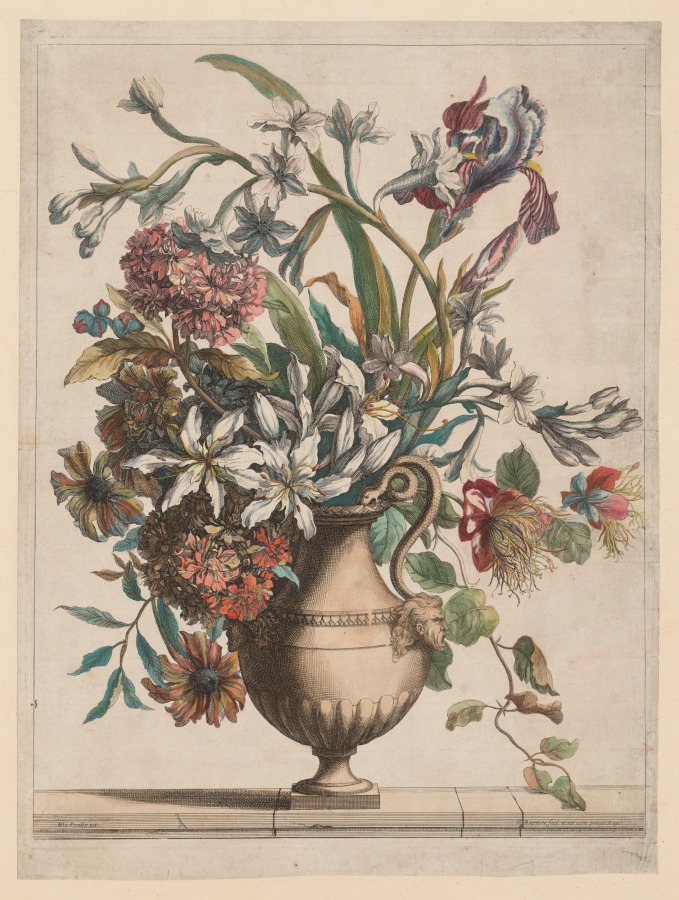 Jean-Baptiste I Monnoyer (French, c. 1636–1699) — Liure de T
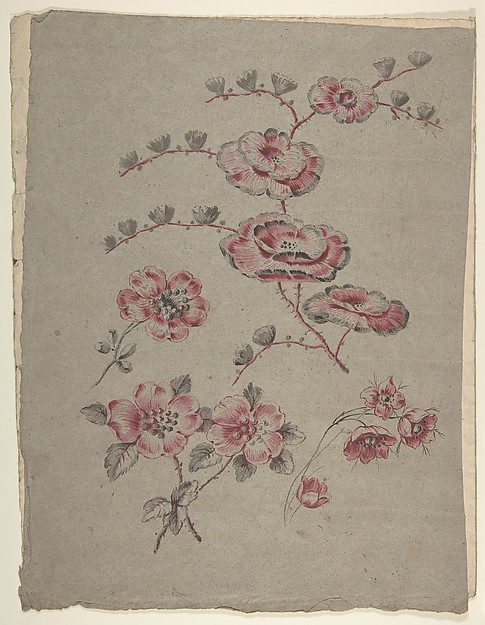 Anonymous, French, 19th century — Pink Flower Pattern
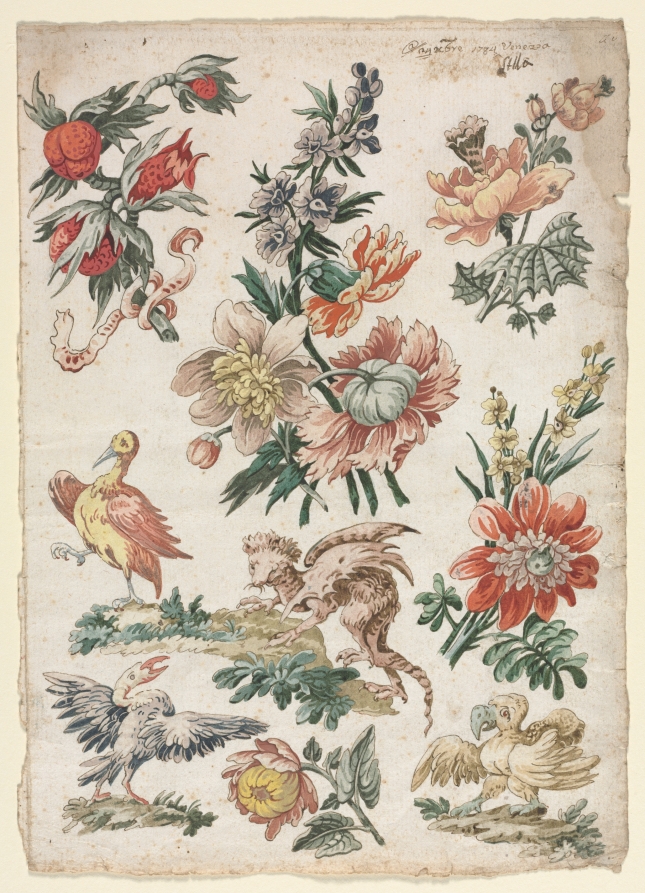 Giacomo Cavenezia (Italian) — Floral Designs with Birds and
 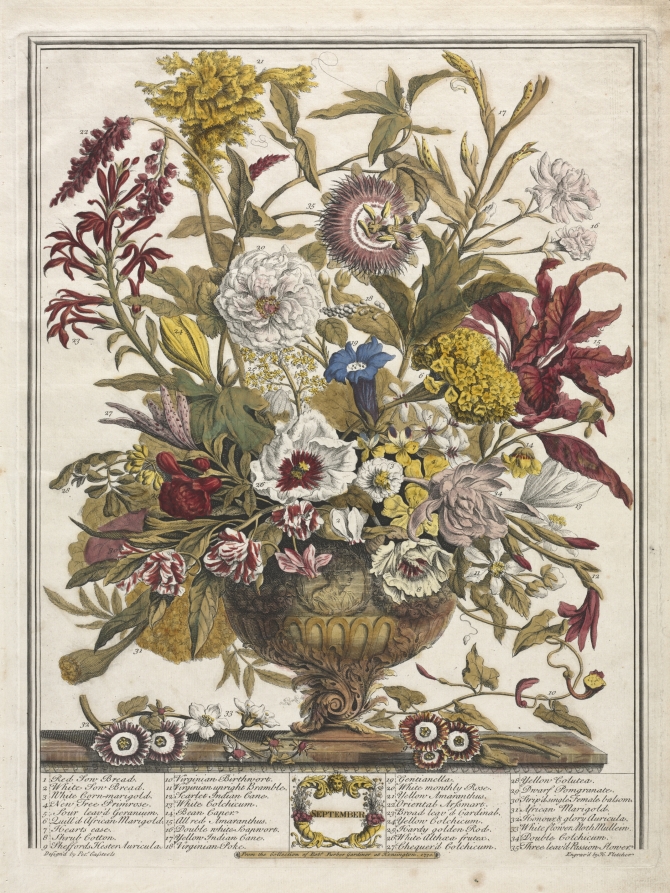 Henry Fletcher (British, active 1715–38) — Twelve Months of
 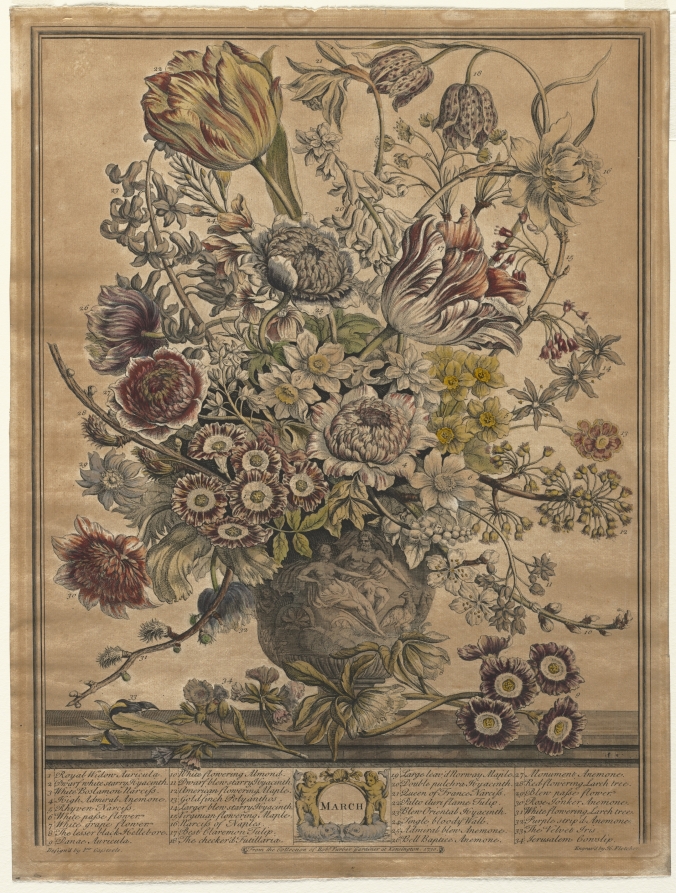 Henry Fletcher (British, active 1715–38) — Twelve Months of
 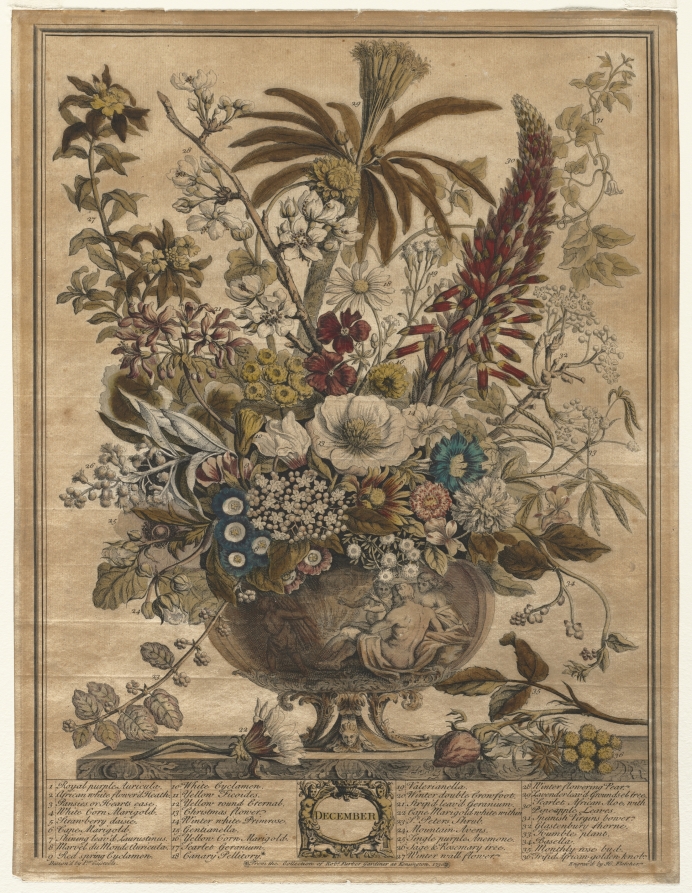 Henry Fletcher (British, active 1715–38) — Twelve Months of
 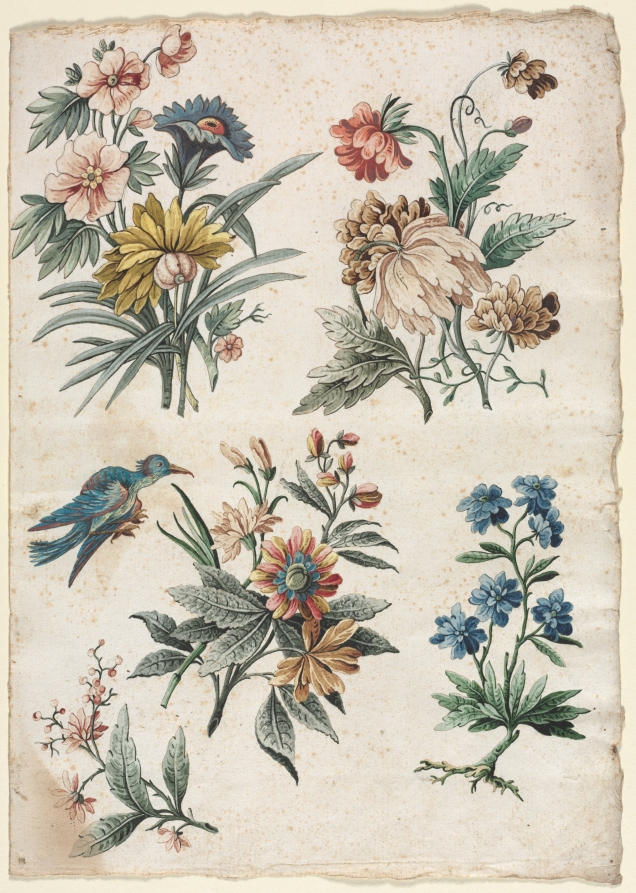 Giacomo Cavenezia (Italian) — Floral Designs with a Blue Bir
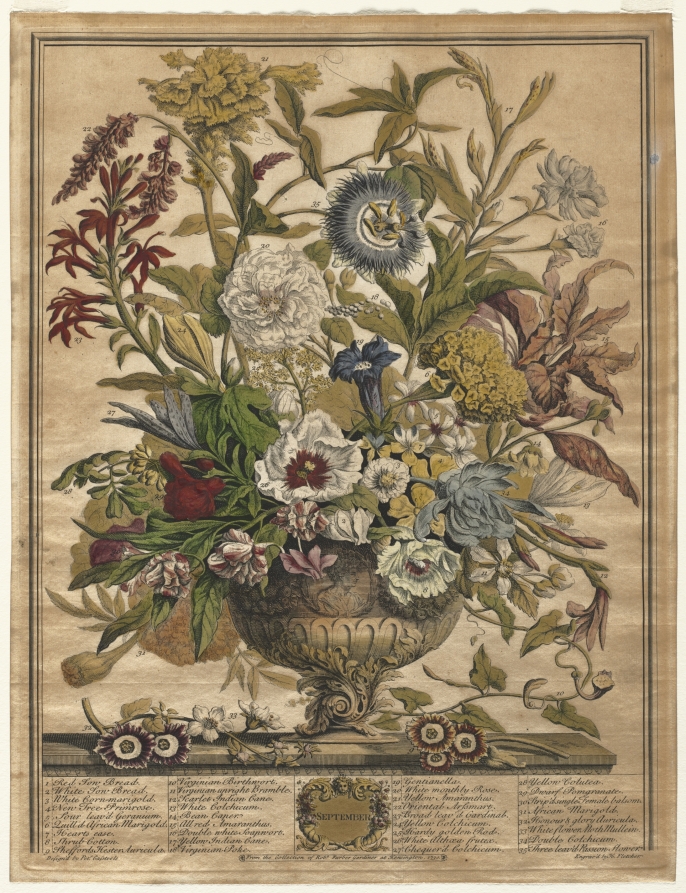 Henry Fletcher (British, active 1715–38) — Twelve Months of