Nocturne: Palaces
SEE IT IN PERSON
Not currently on view
In the collection of Art Institute of Chicago, Chicago · as of July 2026
Discussion
FROM THE ART INSTITUTE OF CHICAGO’S CATALOG
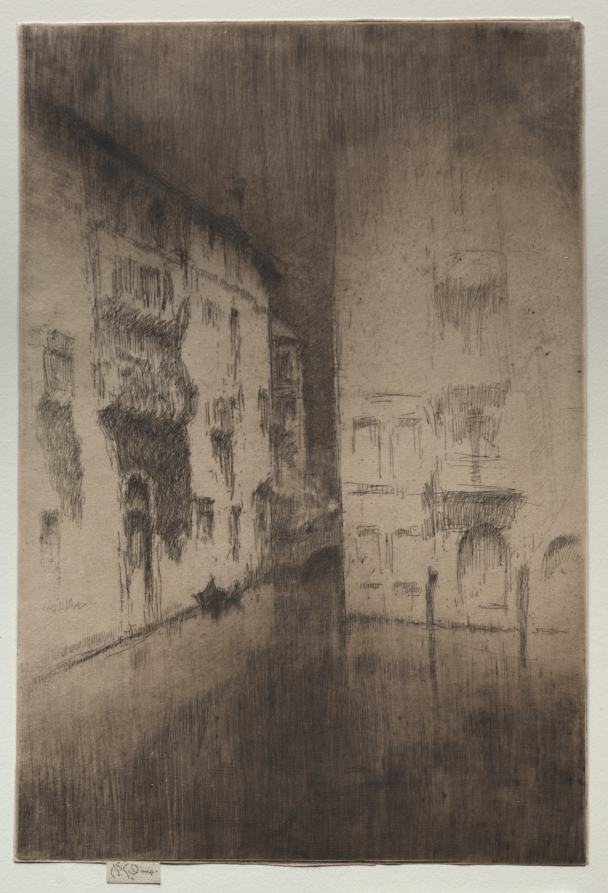
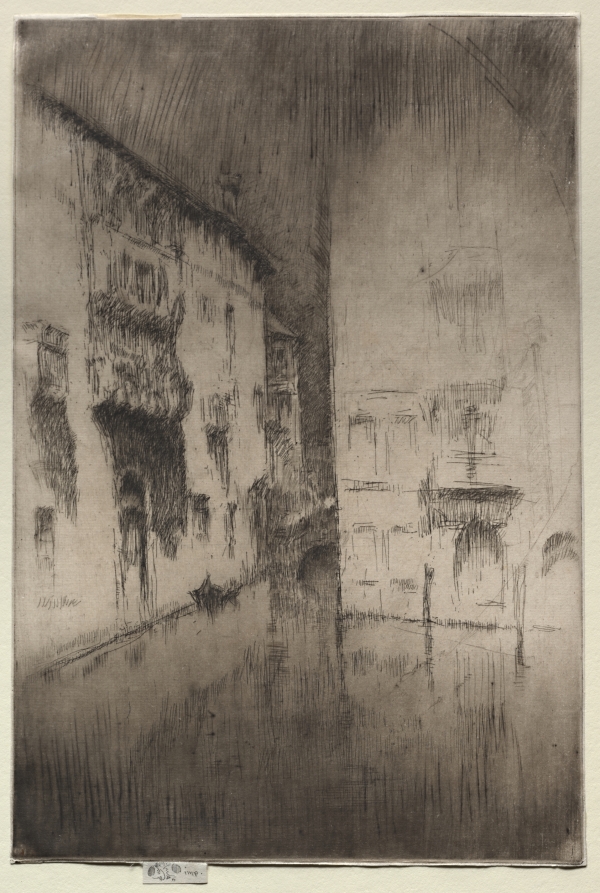
In developing this image, Whistler exploited plate tone (ink left on the unetched surface of the copper plate) to an extraordinary degree. Etched and incised drypoint lines were used as a framework for painterly inking and wiping of the plate, which allowed for endlessly varied impressions. In fact, each example of Nocturne: Palaces is different, conveying distinctive interpretations of light, darkness, and atmosphere. The impressions represent different states (second and eleventh); ink colors (black and brownish black); and wiping (inky at top and bottom and more nuanced overall plate tone). The earlier, more dramatic impression emphasizes architectural details and the velvety darkness of sky and water, while in the later example building facades are cloaked in mist and the dampness of a Venetian night is palpable.
Be the first to share your thoughts.
Sign in to join the discussion.
More by James McNeill Whistler




More like this
 James McNeill Whistler (American, 1834–1903) — Nocturne: Pa
 James McNeill Whistler (American, 1834–1903) — Nocturne: Pa
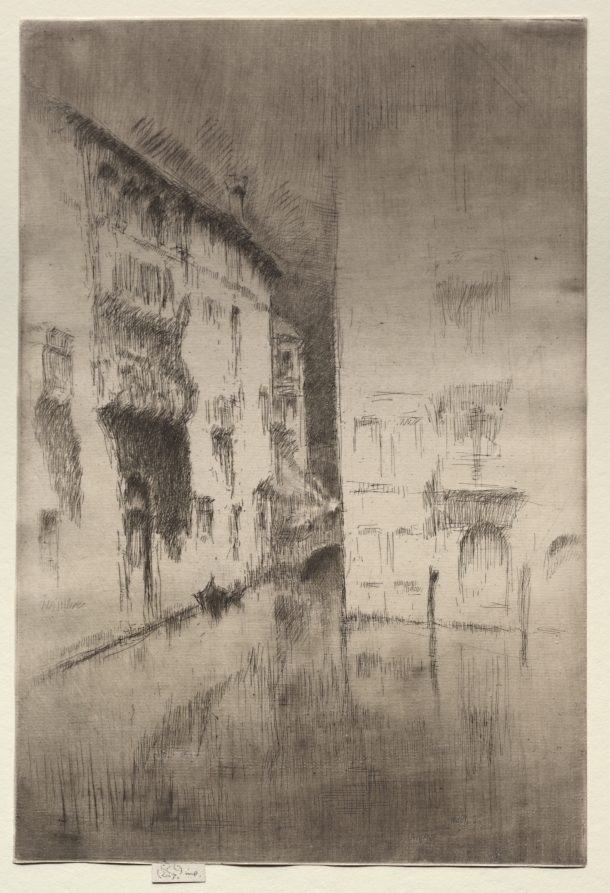 James McNeill Whistler (American, 1834–1903) — Nocturne: Pa
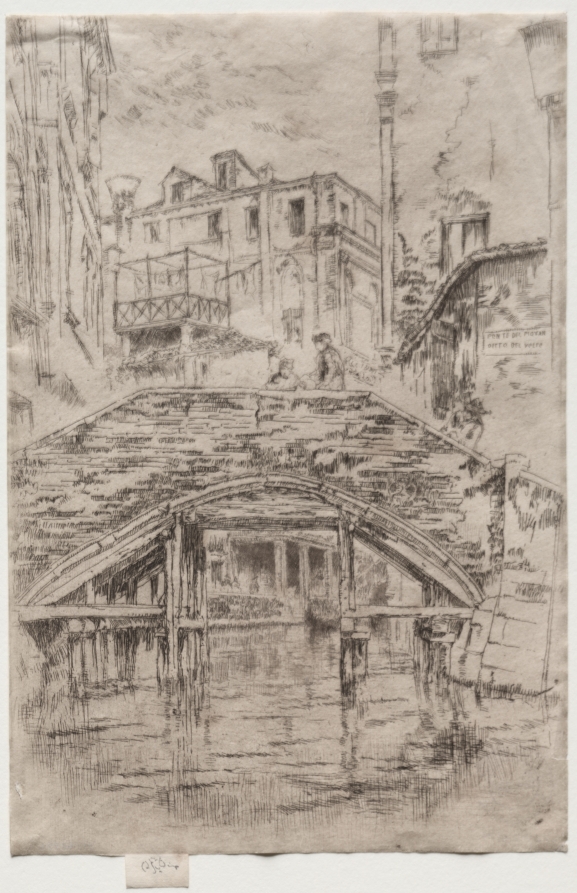 James McNeill Whistler (American, 1834–1903) — Ponte del Pio
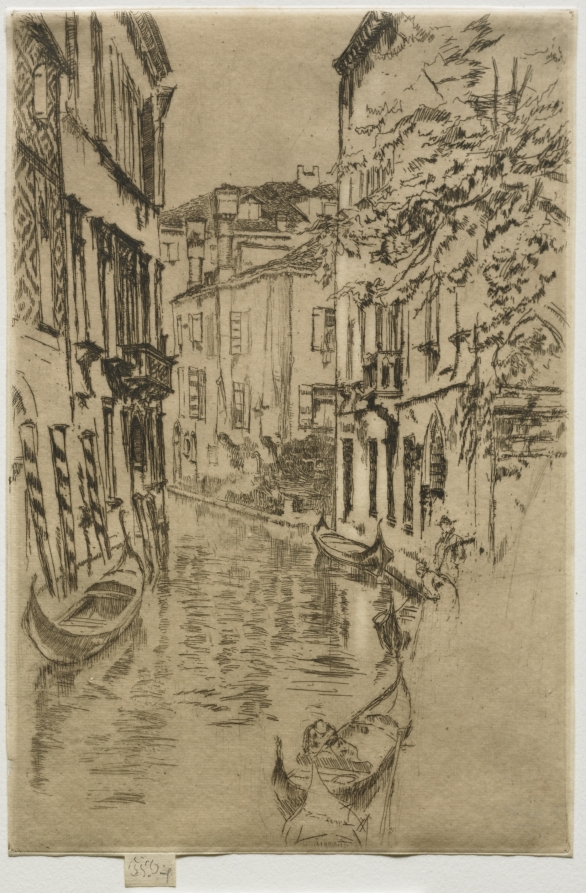 James McNeill Whistler (American, 1834–1903) — Quiet Canal
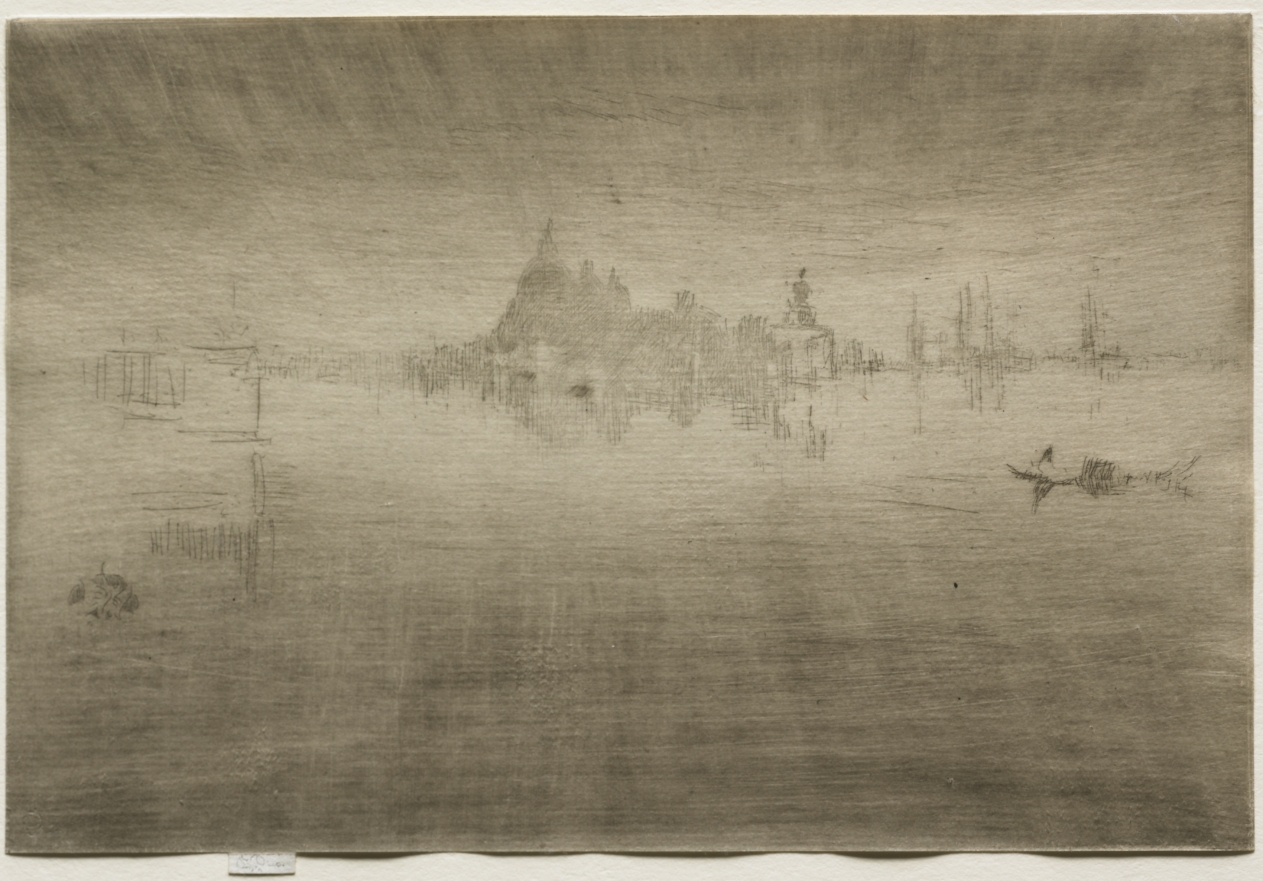 James McNeill Whistler (American, 1834–1903) — Nocturne: Sa
 Robert Frederick Blum (American, 1857–1903) — Venetian Canal
 James McNeill Whistler (American, 1834–1903) — The Bridge
 Frank Duveneck (American, 1848–1919) — San Trovasso Canal, V
 Otto Henry Bacher — Entrance to Canal Grande
 James McNeill Whistler (American, 1834–1903) — Nocturne, Sal
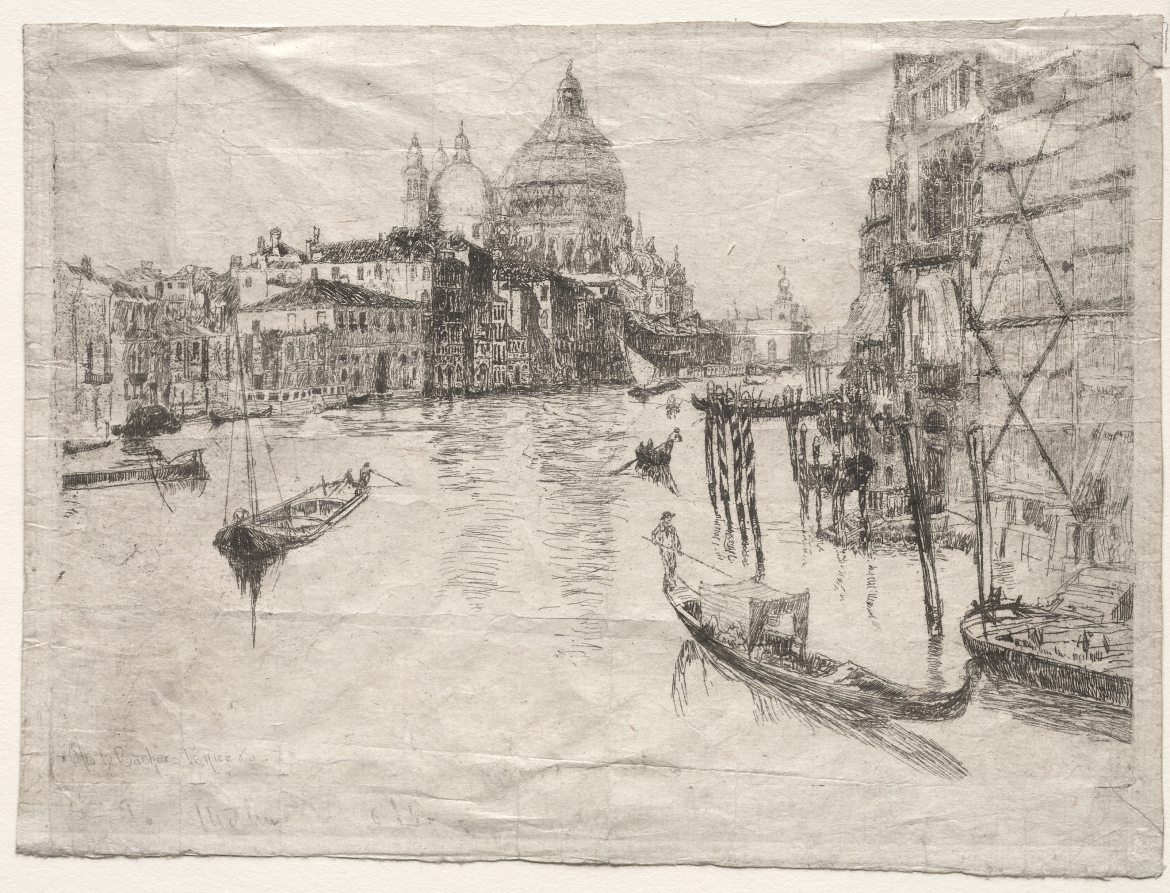 Otto H. Bacher (American, 1856–1909) — Entrance to the Grand