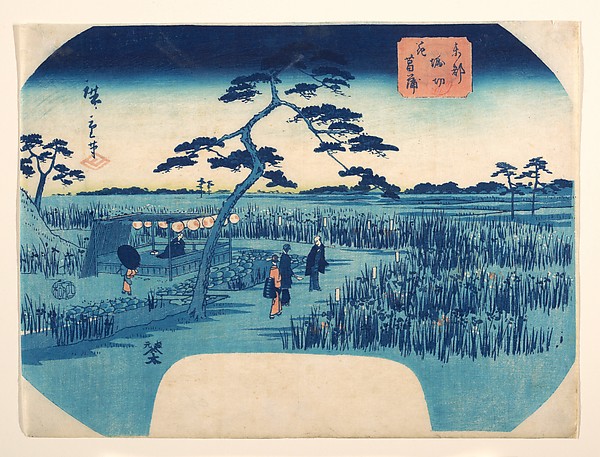
Irises at Horikiri (Horikiri no hanashobu), from the series "One Hundred Famous Views of Edo (Meisho Edo hyakkei)"
SEE IT IN PERSON
Not currently on view
In the collection of Art Institute of Chicago, Chicago · as of July 2026
Discussion
FROM THE ART INSTITUTE OF CHICAGO’S CATALOG
The suburb of Horikiri was famous for its marshy land and flower cultivation, and the hanashōbu iris seen here was its most well-known product. Hanashōbu irises were popular not only in Edo (now Tokyo) but also in the West: German botanist and physician Philipp von Siebold brought them to Europe in the 1850s. Popular images like this one made the flower a symbol of Japan. The printer used glorious purples and delicate gradation to depict the flowers in this print, considered an iconic representation of nature in Japanese art. This version is a well-preserved first edition of the design.
Be the first to share your thoughts.
Sign in to join the discussion.
More by Utagawa Hiroshige
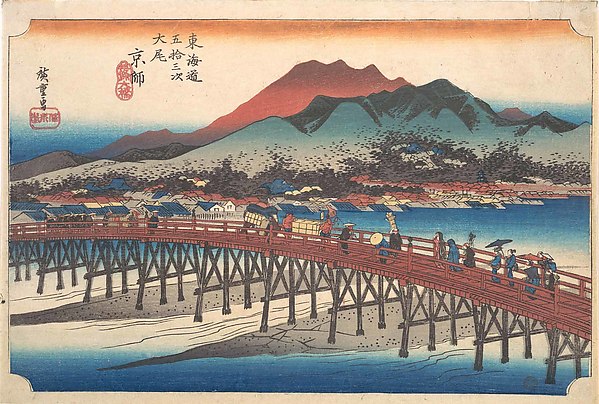 歌川広重画 「東海道五十三次 大尾 京師 三条大橋」|Kyoto: The Great Bridge at Sanjō
  Opening of the Garden at Fukagawa Hachiman Shrine (Fukagawa
 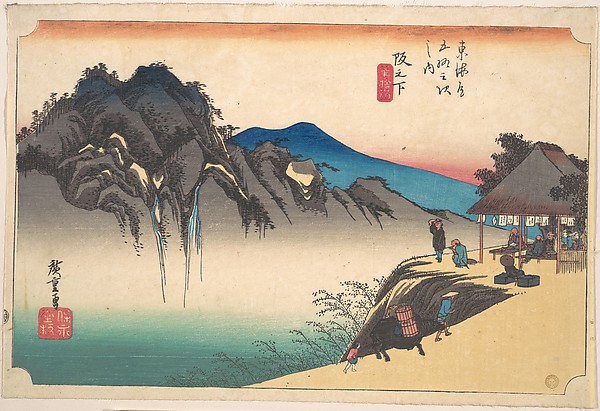 東海道五十三次之内 阪之下 筆捨嶺|Saka-no-shita, Fude-sute Mine
 Kumano Junisha Shrine in Tsunohazu, Popularly Known as Junis
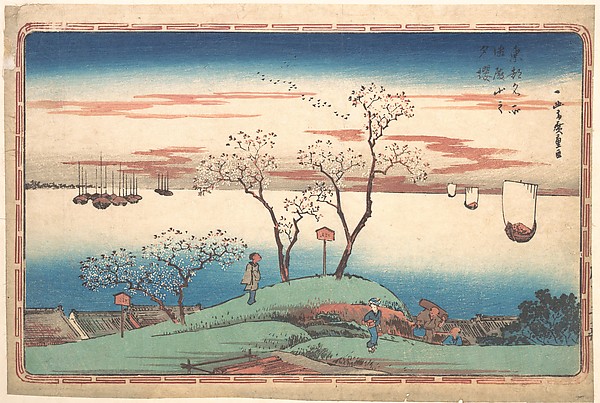 Gotenyama no yu-zakura|東都名所 御殿山之夕桜|Evening Cherry Blossoms a
 Sakanoshita: Peak of Fudesute Mountain (Sakanoshita, Fudesut
 Maisaka: View of Imagiri (Maisaka, Imagiri shinkei), from th
 Inume Pass in Kai Province (Kai Inume toge), from the series