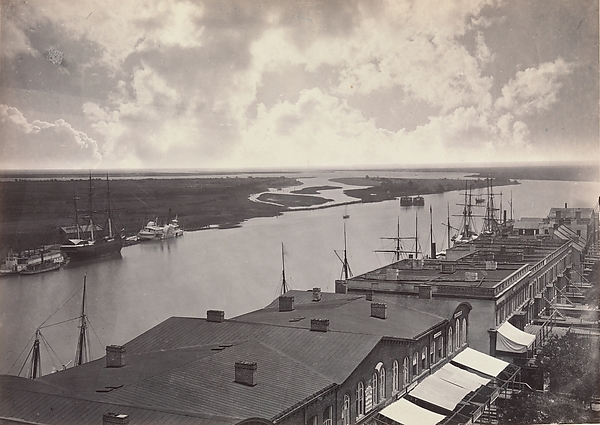
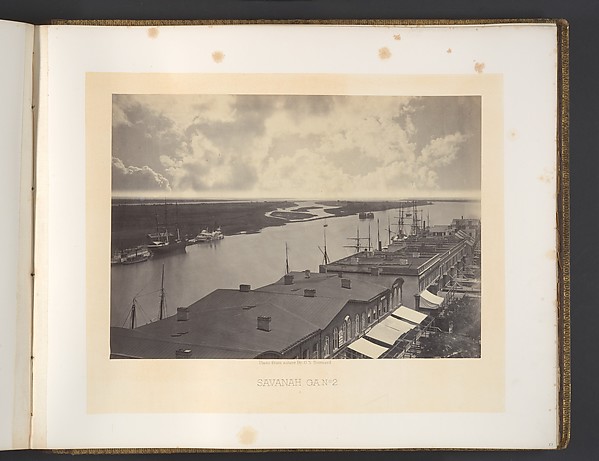
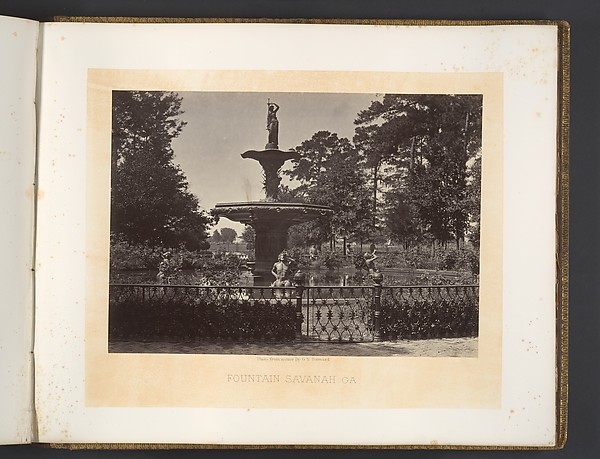
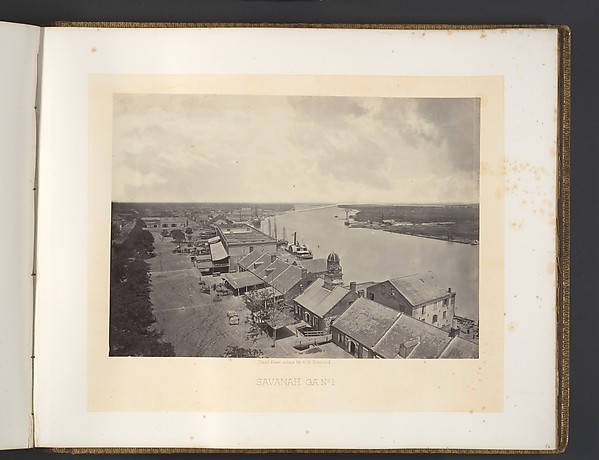
In the collection of Cleveland Museum of Art, Cleveland — check current display status with the museum.
FROM THE CLEVELAND MUSEUM OF ART’S CATALOG
From the medium’s beginnings in the 1830s through the 1880s, most photographs were intimately scaled objects meant for the hand, the album, and the home. As the medium began being used to document landscapes and monuments in the 1850s, larger scale processes arose such as the glass-plate negative. The mammoth print truly seemed gargantuan in the 1860s. For much of the 20th century, the 8-x-10-inch gelatin silver print was the norm for photojournalism; these prints were destined for reproduction in books and magazines around the same scale.
Be the first to share your thoughts.
Sign in to join the discussion.
![[Distant View of Fort Brady, Virginia]](https://images.metmuseum.org/CRDImages/ph/web-large/DP70564.jpg) William Frank Browne|Mathew B. Brady — [Distant View of Fort
William Frank Browne|Mathew B. Brady — [Distant View of Fort Timothy H. O'Sullivan|Mathew B. Brady — Front of Petersburg
 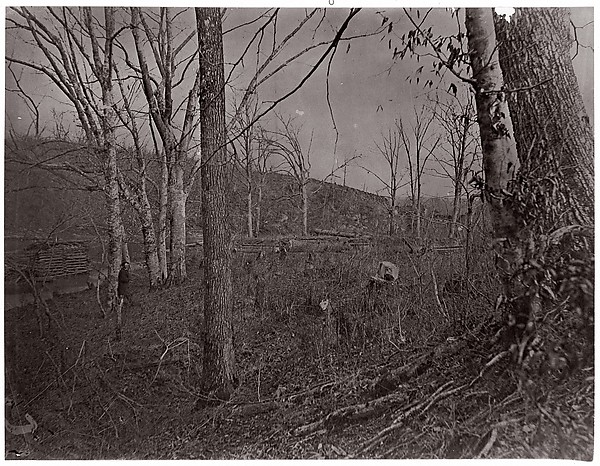 George N. Barnard|Timothy H. O'Sullivan|Mathew B. Brady — Bu
![[Camp of Confederate Prisoners at Belle Plain Landing, Virginia, Captured with Johnson's Division]](https://images.metmuseum.org/CRDImages/ph/web-large/DP70634.jpg) Timothy H. O'Sullivan|Mathew B. Brady — [Camp of Confederate
Timothy H. O'Sullivan|Mathew B. Brady — [Camp of Confederate![[Dead Confederate Soldier in the Trenches of Fort Mahone, Petersburg, Virginia]](https://images.metmuseum.org/CRDImages/ph/web-large/DP70481.jpg) Thomas C. Roche|Mathew B. Brady — [Dead Confederate Soldier
Thomas C. Roche|Mathew B. Brady — [Dead Confederate Soldier ![[Landscape with Distant View of Earthwork Fortifications]](https://images.metmuseum.org/CRDImages/ph/web-large/DP70778.jpg) Mathew B. Brady|Unknown — [Landscape with Distant View of Ea
Mathew B. Brady|Unknown — [Landscape with Distant View of Ea![[Entrenchments on Left of Bermuda Hundred Lines, Near Richmond, Virginia]](https://images.metmuseum.org/CRDImages/ph/web-large/DP70543.jpg) Andrew Joseph Russell|Mathew B. Brady — [Entrenchments on Le
Andrew Joseph Russell|Mathew B. Brady — [Entrenchments on Le![[Entrenchments on Left of Bermuda Hundred Lines, Near Richmond, Virginia]](https://images.metmuseum.org/CRDImages/ph/web-large/DP70542.jpg) Andrew Joseph Russell|Mathew B. Brady — [Entrenchments on Le
Andrew Joseph Russell|Mathew B. Brady — [Entrenchments on Le![[The Wilderness Battlefield]](https://images.metmuseum.org/CRDImages/ph/web-large/DP254970.jpg) Unknown — [The Wilderness Battlefield]
Unknown — [The Wilderness Battlefield]![[Tented Camp of 30th Pennsylvania Infantry]](https://images.metmuseum.org/CRDImages/ph/web-large/DP70788.jpg) Mathew B. Brady|Unknown — [Tented Camp of 30th Pennsylvania
Mathew B. Brady|Unknown — [Tented Camp of 30th Pennsylvania 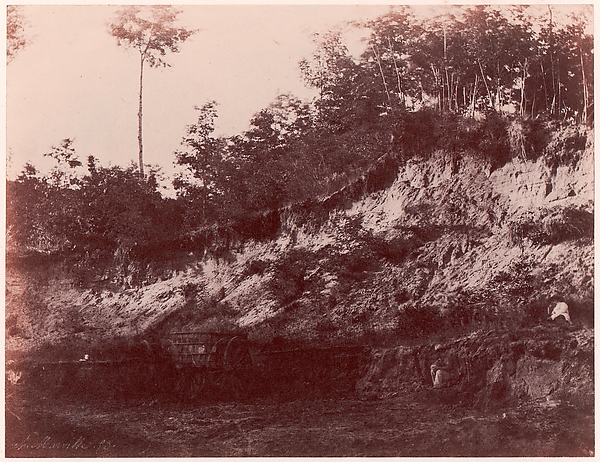 Charles Marville|Imprimerie photographique de Blanquart-Évra
![[Dutch Gap Canal, James River, Virginia]](https://images.metmuseum.org/CRDImages/ph/web-large/DP70538.jpg) Egbert Guy Fowx|Andrew Joseph Russell|Mathew B. Brady — [Dut
Egbert Guy Fowx|Andrew Joseph Russell|Mathew B. Brady — [Dut