In the collection of Cleveland Museum of Art, Cleveland — check current display status with the museum.
FROM THE CLEVELAND MUSEUM OF ART’S CATALOG
In this dramatic night scene, Kuniyoshi emphasized the moon and its huge glowing halo. He employed Western-style shadows beneath the figures and the palanquin. The man at the center is singing with his mouth wide open. Perhaps he is headed home after drinking in New Yoshiwara, the pleasure quarter, visible only as a series of low rooflines in the background beyond the rice paddies. The chatting pair and wealthy passenger inside the palanquin may be on their way to the pleasure quarter.
Be the first to share your thoughts.
Sign in to join the discussion.
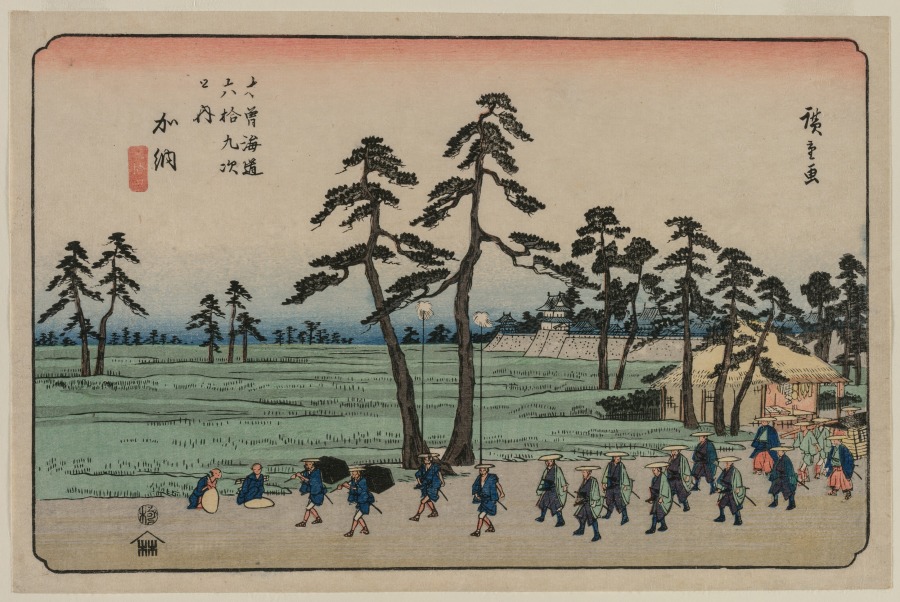 Utagawa Hiroshige (Japanese, 1797–1858) — Kanō, from the ser
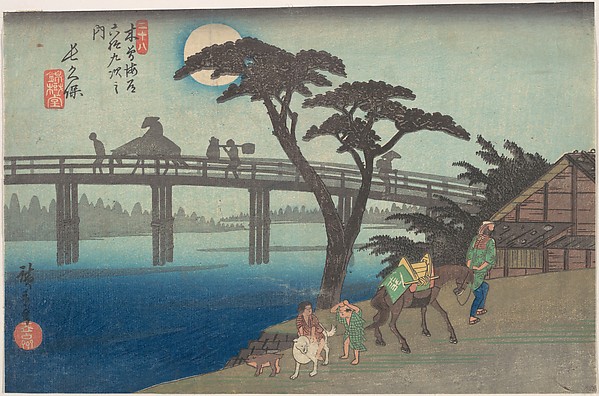 Utagawa Hiroshige — 木曽海道六拾九次之内 長久保|Nagakubo, Station No. 28
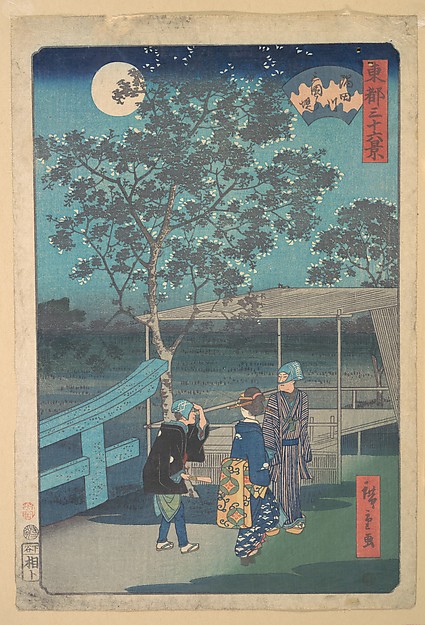 Utagawa Hiroshige — 東都三十六景 隅田川三囲り堤|Sumidagawa, Mimeguri
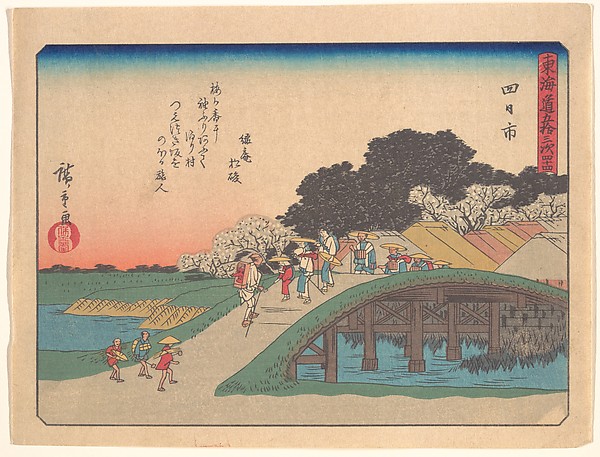 Utagawa Hiroshige — 東海道五十三次 四日市|Yokkaichi, from the series T
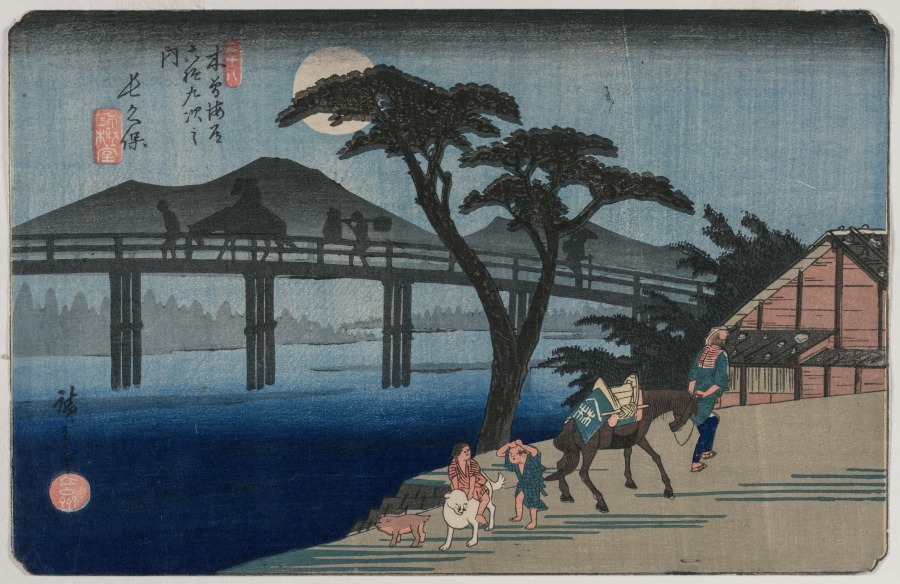 Utagawa Hiroshige (Japanese, 1797–1858) — Nagakubo (Station
 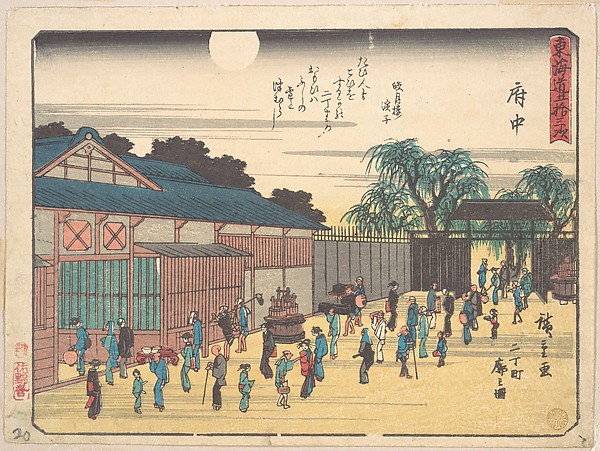 Utagawa Hiroshige — 東海道五十三次 府中|Fuchu
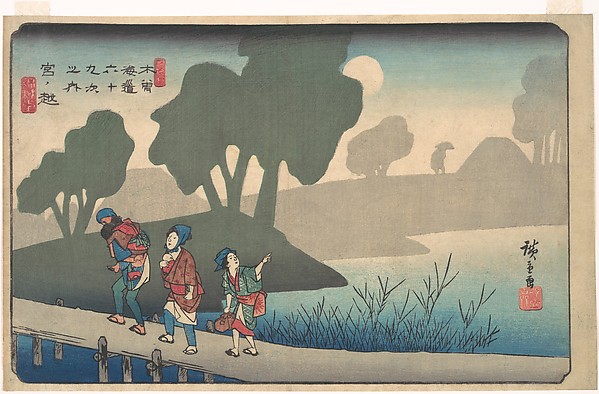 Utagawa Hiroshige — 木曽海道六拾九次之内 宮ノ越|Miyanokoshi Station
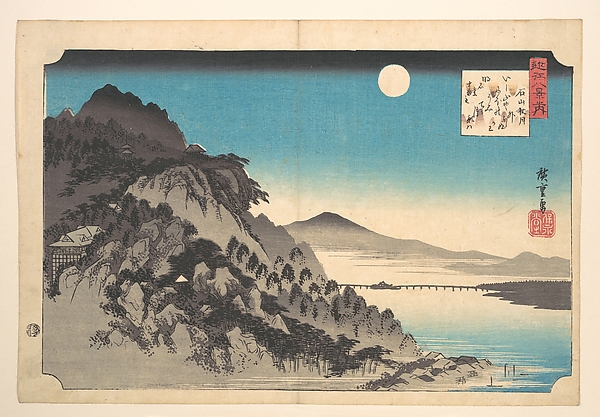 Utagawa Hiroshige — 近江八景之内 石山秋月|The Autumn Full Moon at Ishi
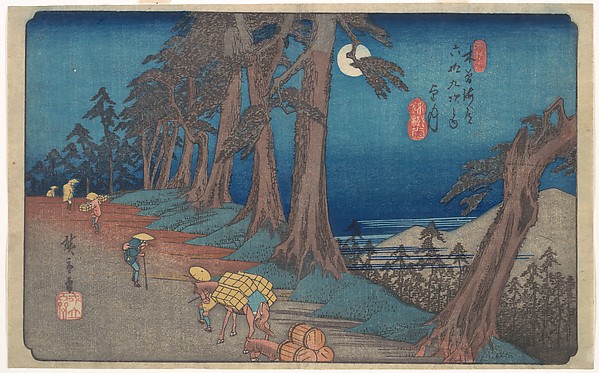 Utagawa Hiroshige — 木曽海道六拾九次之内 望月|Mochizuki
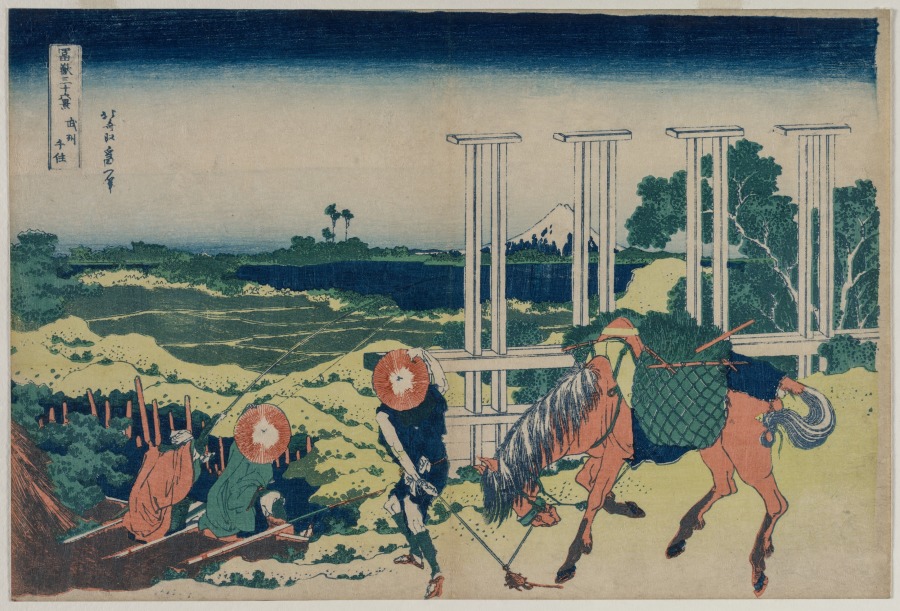 Katsushika Hokusai (Japanese, 1760–1849) — The Weir at Senju
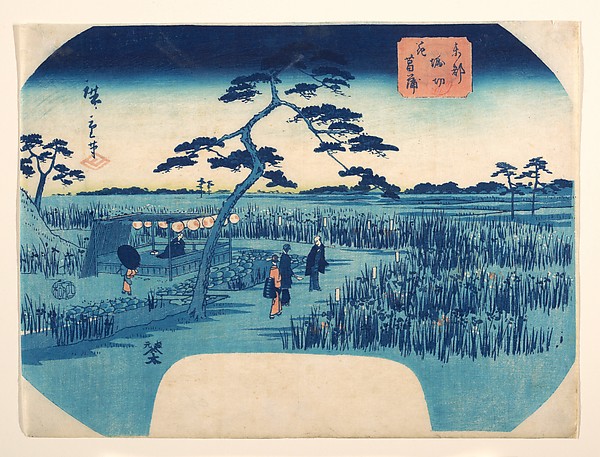 Utagawa Hiroshige II
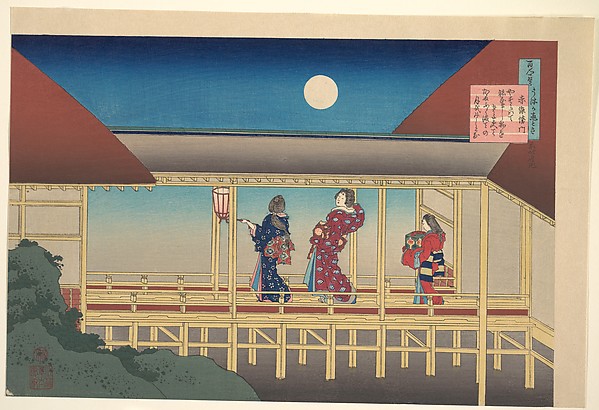 Katsushika Hokusai — 百人一首 うはかゑとき 赤染衛門|Poem by Akazome Emon,