In the collection of Cleveland Museum of Art, Cleveland — check current display status with the museum.
FROM THE CLEVELAND MUSEUM OF ART’S CATALOG
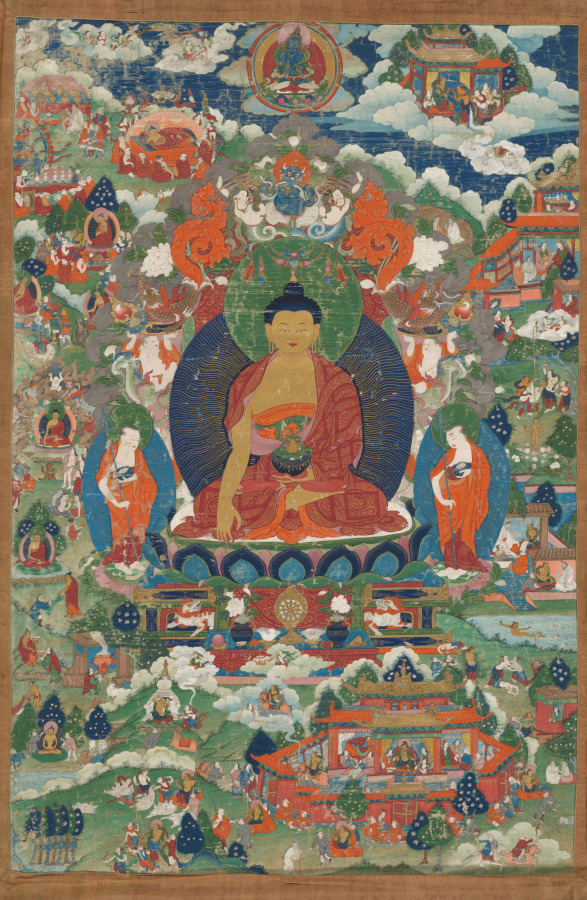
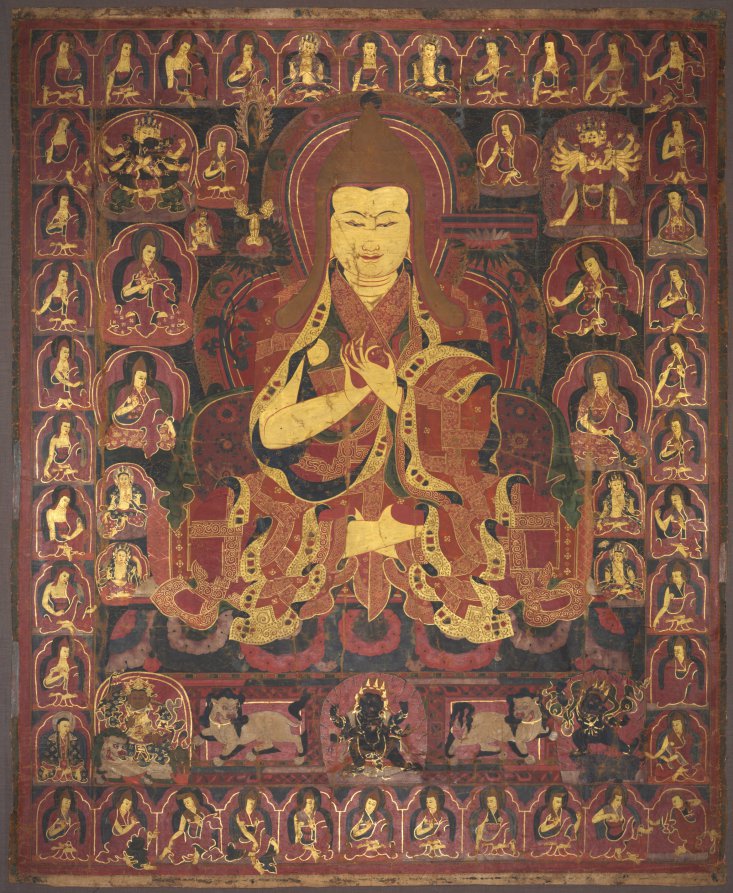
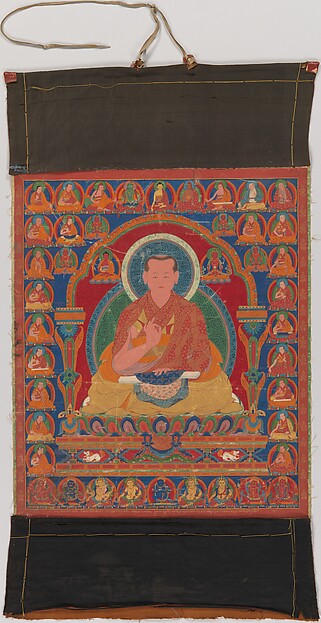
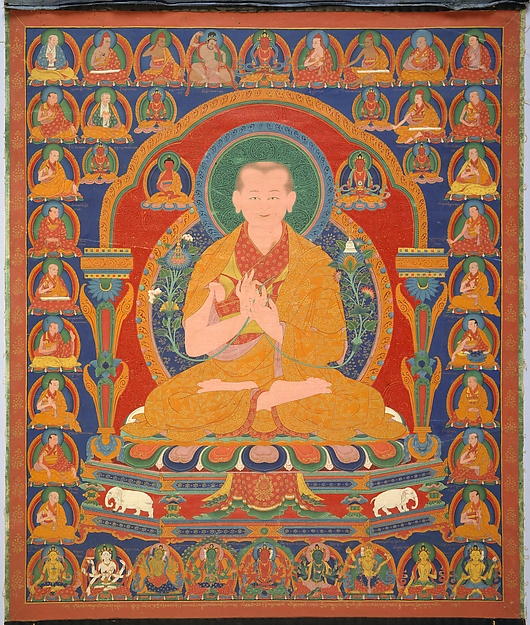
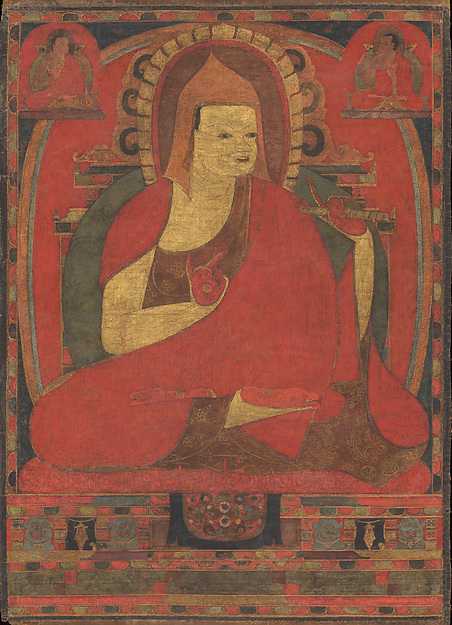
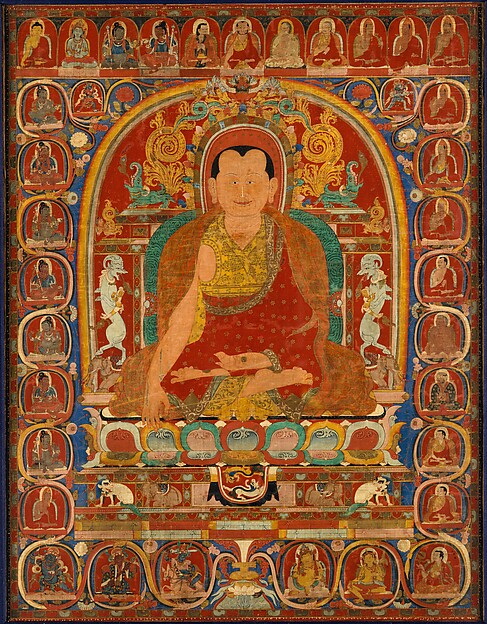
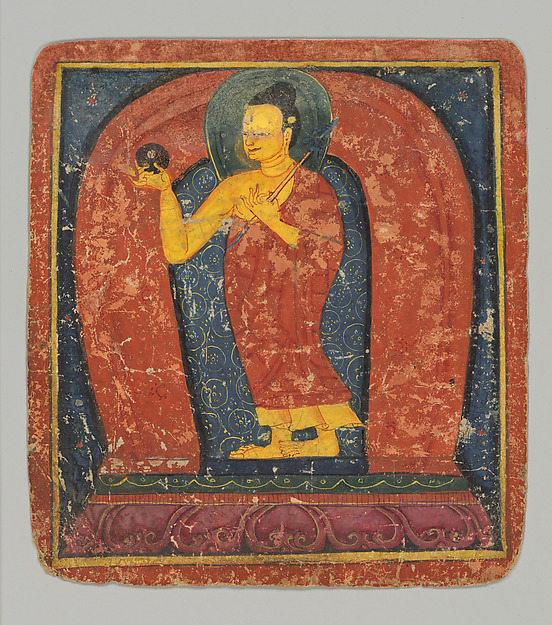
Buddhism was introduced to Tibet in the 7th century, but the persecution that followed in the 9th and 10th centuries destroyed all artifacts of the period. Consequently the earliest existing Buddhist art from Tibet dates to the 11th and 12th centuries, the so-called period of the Second Diffusion of Buddhism, yet few 11th- or 12th-century paintings survive. This miniature painting is one of these rare paintings. Not a manuscript illustration, it was conceived as a separate votive painting, a so-called tsa-kal i. It was recovered from the Tholing Monastery, which was founded by Rinchensangpo (958-1055), the famous translator of Buddhist scriptures, who acted on the order of Yesheö, the king of Guge. Yesheö was also the father of "Lhatsun Nagaraja" (active 998-1026) whose name is inscribed on the museum's early Himalayan bronze statue of a Standing Buddha (1966.30)—one of the most important and beautiful Himalayan bronzes to survive. The museum's collection includes another important sculpture from the western Himalayas: the colorful wooden sculpture of a Seated Buddha (1986.6). The two sculptures date from the 11th century and provide a meaningful comparison with this painting, whic
Be the first to share your thoughts.
Sign in to join the discussion.