In the collection of Cleveland Museum of Art, Cleveland — check current display status with the museum.
FROM THE CLEVELAND MUSEUM OF ART’S CATALOG
Paul Klee made this drawing during World War I. It shows a hovering figure, who could be saintly or demonic, overlooking a scene that includes a zeppelin, a decapitated child, a fallen soldier, and a recoiling (or attacking) figure. The soldier’s helmet displays a handle, implying the mechanized or dehumanized war machine. Klee’s title for the drawing includes the depiction of a point (•), which refers to the circular zeppelin or circle that frequently appeared in his drawings as a menacing omen. In 1915 Klee wrote: “The more horrifying this world becomes the more art becomes abstract; while a world at peace produces realistic art.”
Be the first to share your thoughts.
Sign in to join the discussion.
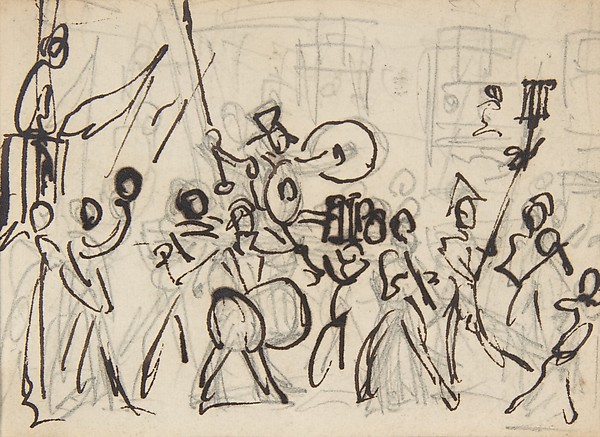 George Cruikshank — A Parade
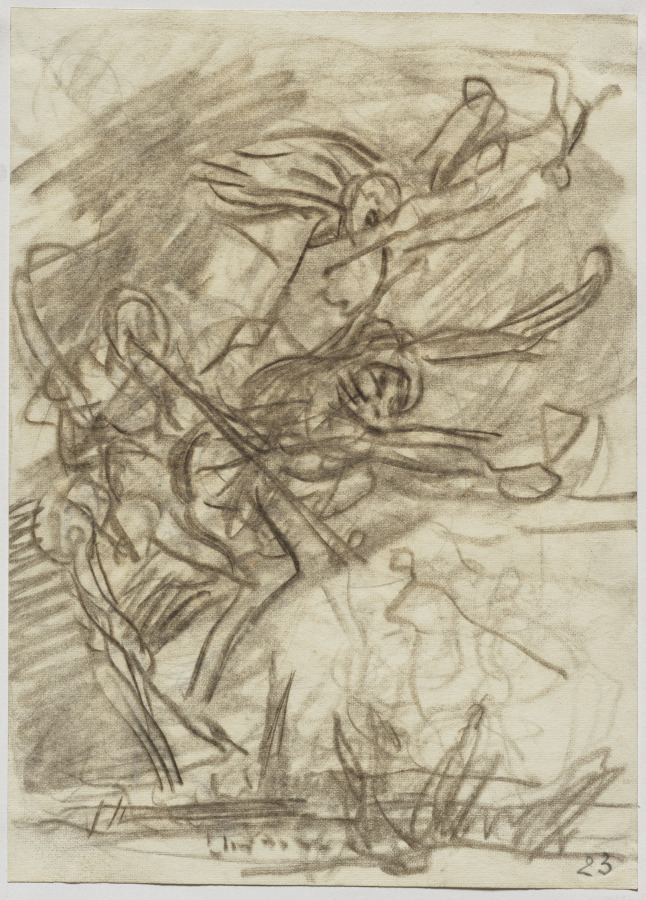 Auguste Louis Lepère (French, 1849–1918) — La Mort et les Pa
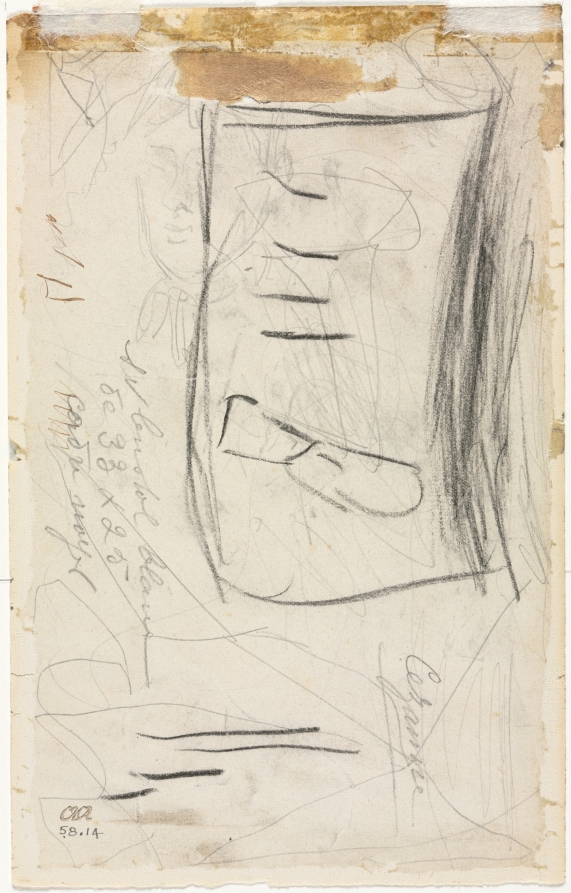 Paul Cezanne (French, 1839–1906) — Sketch of Madame Cézanne
 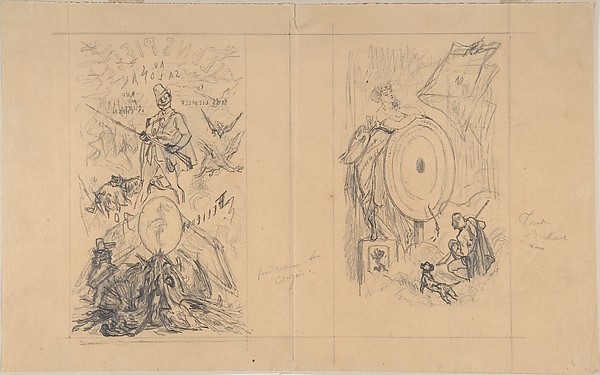 Félicien Rops — Cover designs for "Ulenspiegel au Salon"
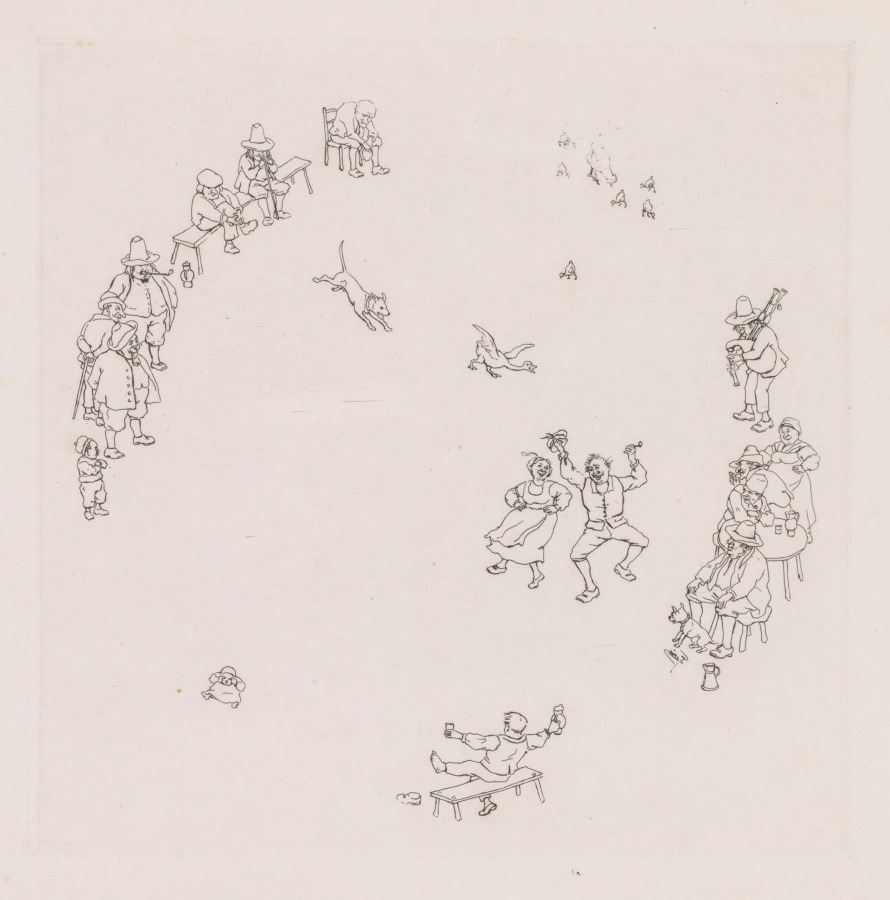 Léonce Justin Alexandre Petit (French, 1839–1894) — Revelers
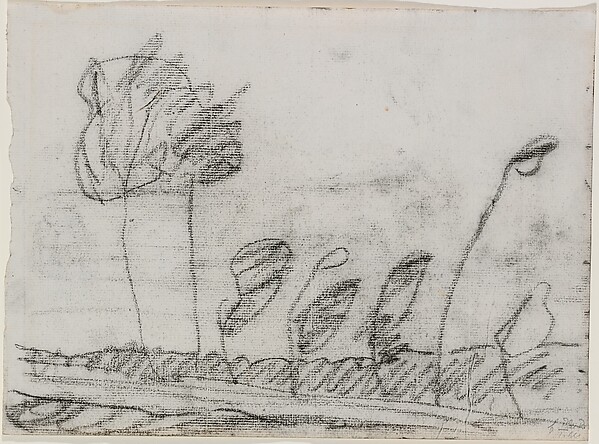 Paula Modersohn-Becker — Seven Trees
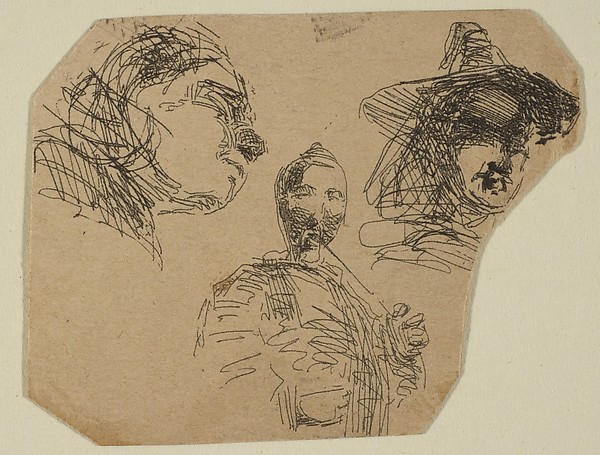 James McNeill Whistler — Two Female Heads and Standing Figur
 Edvard Munch — Workers in Snow: Fragment
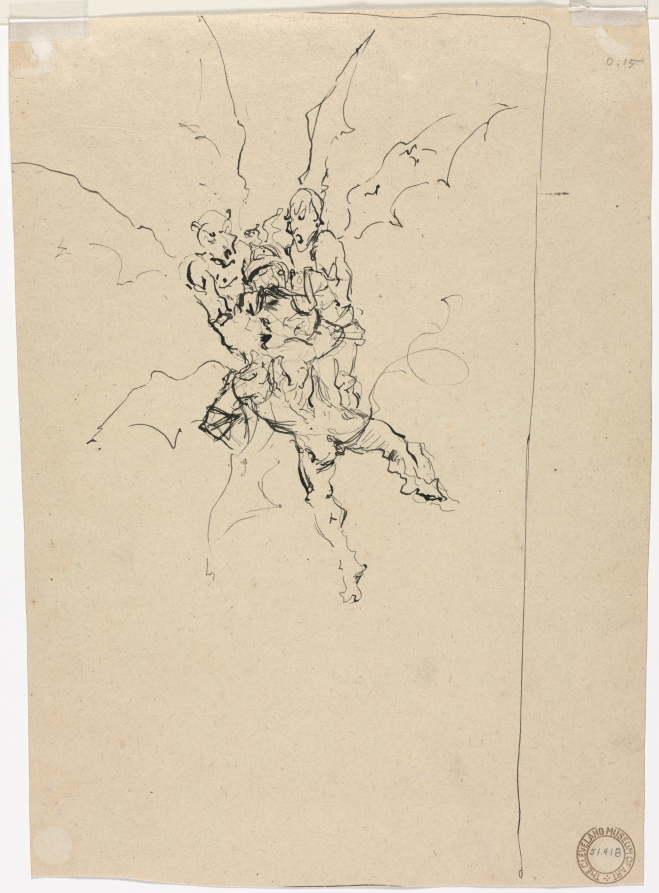 Three Demons Holding a Knight (verso)
 Émile Bernard — Two Breton Women Facing Each Other
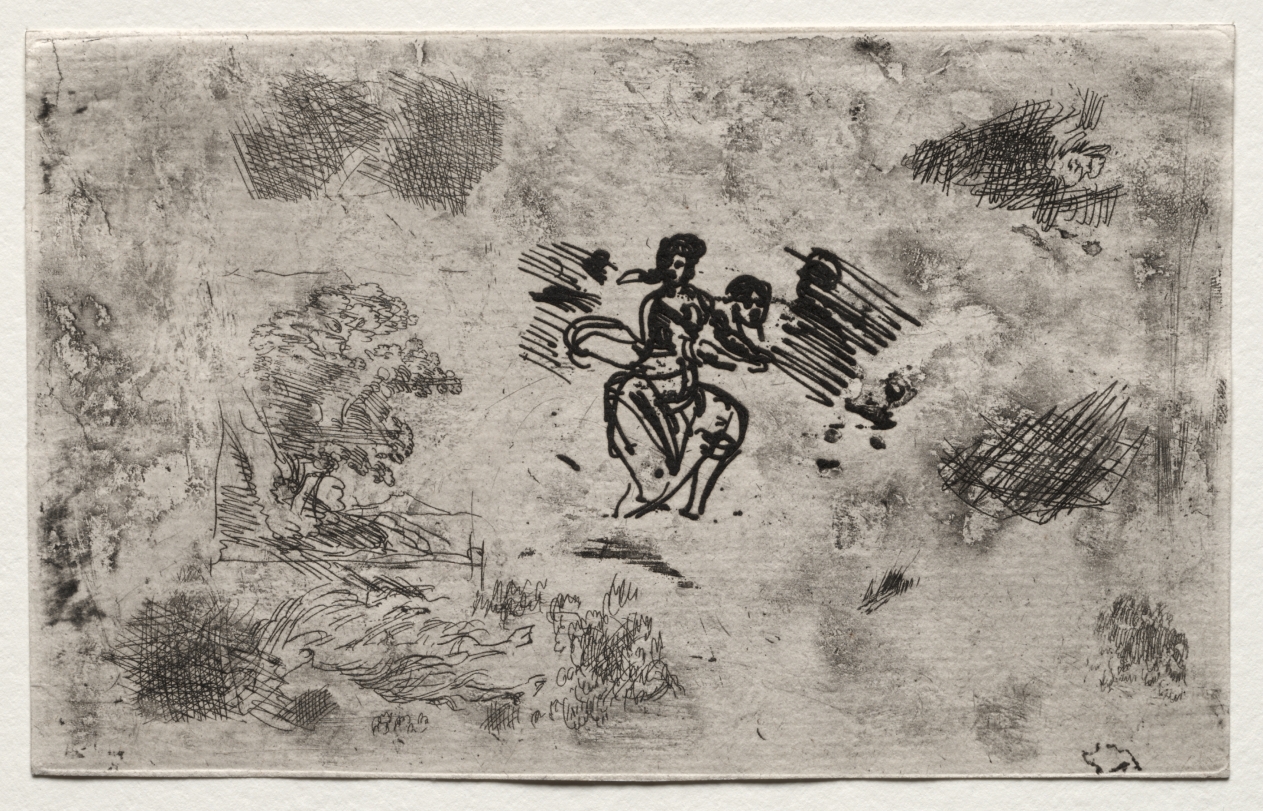 Claude Lorrain (French, 1604–1682) — Study of a Seated Woman
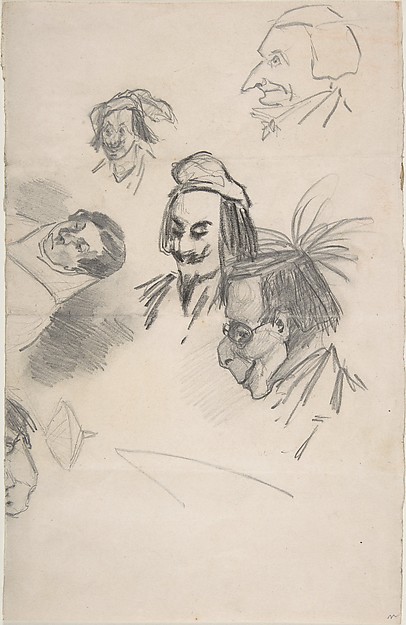 Félicien Rops — Sketches of Six Heads in Profile (caricature