S. L. Holman American, 19th century
Untitled (George Coit)
SEE IT IN PERSON
Not currently on view
In the collection of Art Institute of Chicago, Chicago · as of July 2026
Discussion
FROM THE ART INSTITUTE OF CHICAGO’S CATALOG
Daguerreotypes—brilliant photographs on metal plates—memorialized families with the first widely affordable images. The technology was especially popular in the 1840s and 1850s, an era of higher mortality rates. Daguerreotypists employed the slogan “Secure the shadow, ere the substance fade” to encourage sitters to visit the photographer’s studio before it was too late. This is one of a rare group of five images that tracks a single family over several years, including a period of mourning. Most of the images focus on the family’s patriarch, Charles Coit, including a photographic portrait, a painted portrait based on that photograph, a daguerreotype copy of that painting, and finally, a daguerreotype of the entire family posing with the painting—as a substitute for the father in a group portrait—made after his untimely death. These family photographs thus invite meditation on mortality and the function of representation. Can a painting stand in for a person? Can a photograph? Here, we see a portrait of the youngest son, George Coit; judging from his clothing, this was probably made during the same session as the group portrait (2019.454) after his father's death.
Be the first to share your thoughts.
Sign in to join the discussion.
More by S. L. Holman American, 19th century


More like this
 Unknown Maker — Untitled (Portrait of a Boy)
![[Boy in Wide Lapelled Coat, Seated in Chair]](https://images.metmuseum.org/CRDImages/ph/web-large/DP700197.jpg) Unknown — [Boy in Wide Lapelled Coat, Seated in Chair]
Unknown — [Boy in Wide Lapelled Coat, Seated in Chair] Unknown maker
American, 19th century — Untitled (Portrait of
Unknown maker
American, 19th century — Untitled (Portrait of![[Unidentified Boy in Dark Suit]](https://images.metmuseum.org/CRDImages/ph/web-large/37.14.12.jpg) Albert Sands Southworth|Josiah Johnson Hawes|Southworth and
Albert Sands Southworth|Josiah Johnson Hawes|Southworth and  Jeremiah Gurney
American, 1812-1895 — Untitled (Portrait of
Jeremiah Gurney
American, 1812-1895 — Untitled (Portrait of  Unknown Maker — Untitled (Portrait of a Boy Holding a Sword)
 B & G Moses — Untitled
 L. H. Hale — Untitled (Portrait of a Boy)
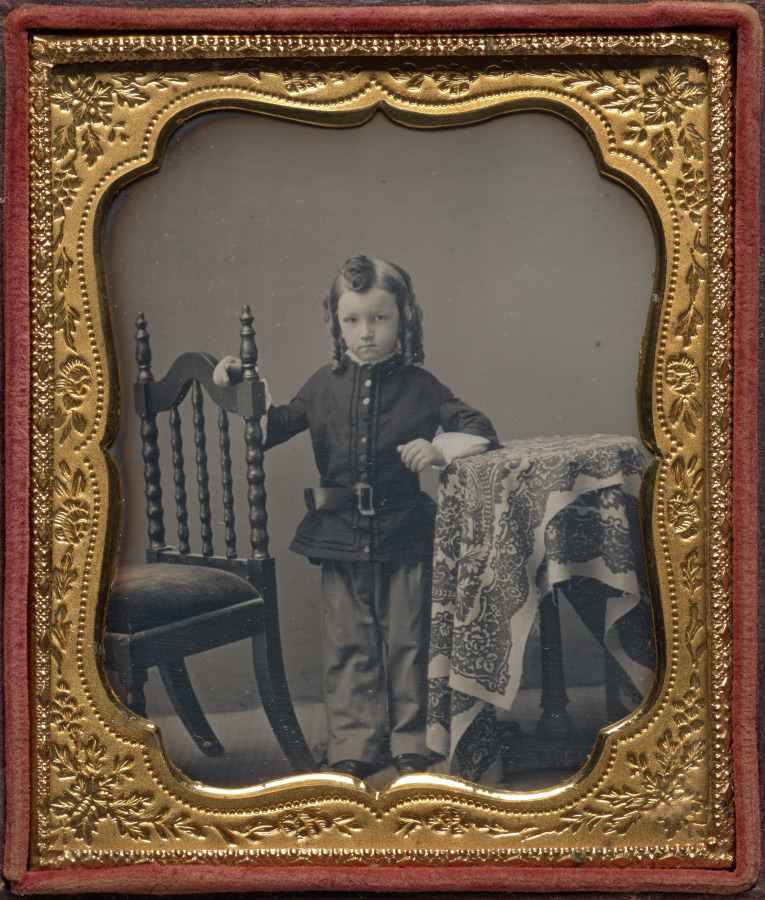 Standing boy with bottle curls
 Unknown Maker — Untitled (Portrait of a Standing Boy)
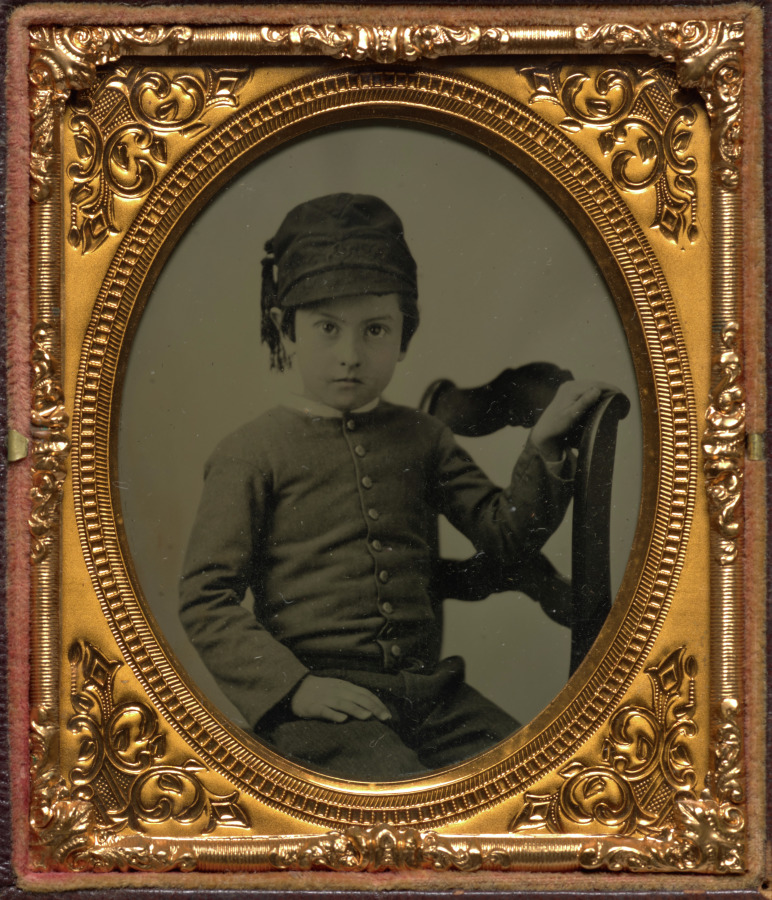 Seated boy in tasseled cap
 Unknown Maker — Untitled (Portrait of a Standing Child)