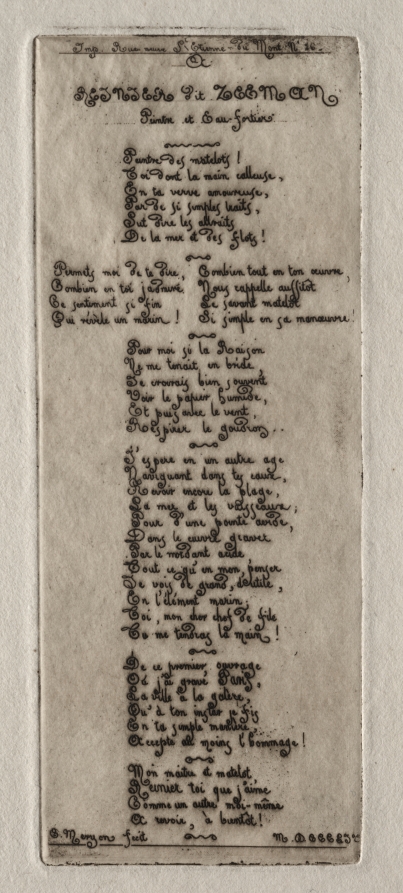
Dedicatory Verses by Meryon to Reinier Nooms, Called Zeeman
1854
Etching in black and red on ivory wove paper
17.4 × 6.9 cm (6.9 × 2.7 in)
SEE IT IN PERSON
Not currently on view
In the collection of Art Institute of Chicago, Chicago · as of July 2026
Discussion
Be the first to share your thoughts.
Sign in to join the discussion.
More by Charles Meryon



More like this
 Charles Meryon (French, 1821–1868) — Etchings of Paris: Ded
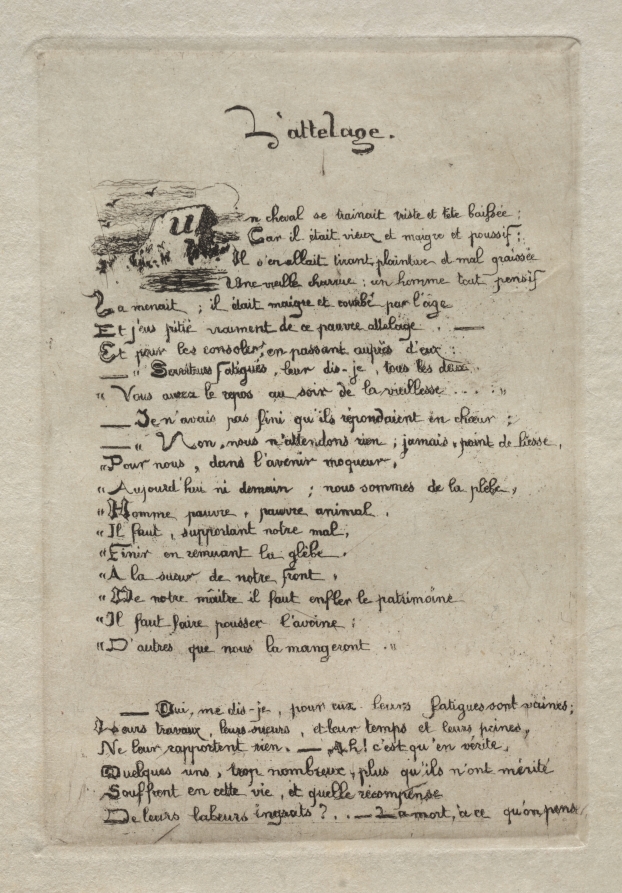 Charles Meryon (French, 1821–1868) — The Ploughman and his H
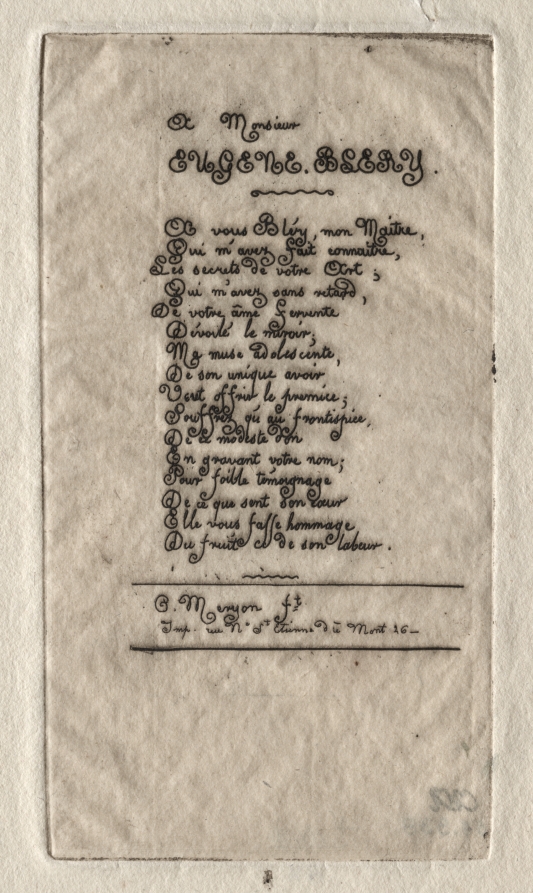 Charles Meryon (French, 1821–1868) — Verses to Eugène Bléry
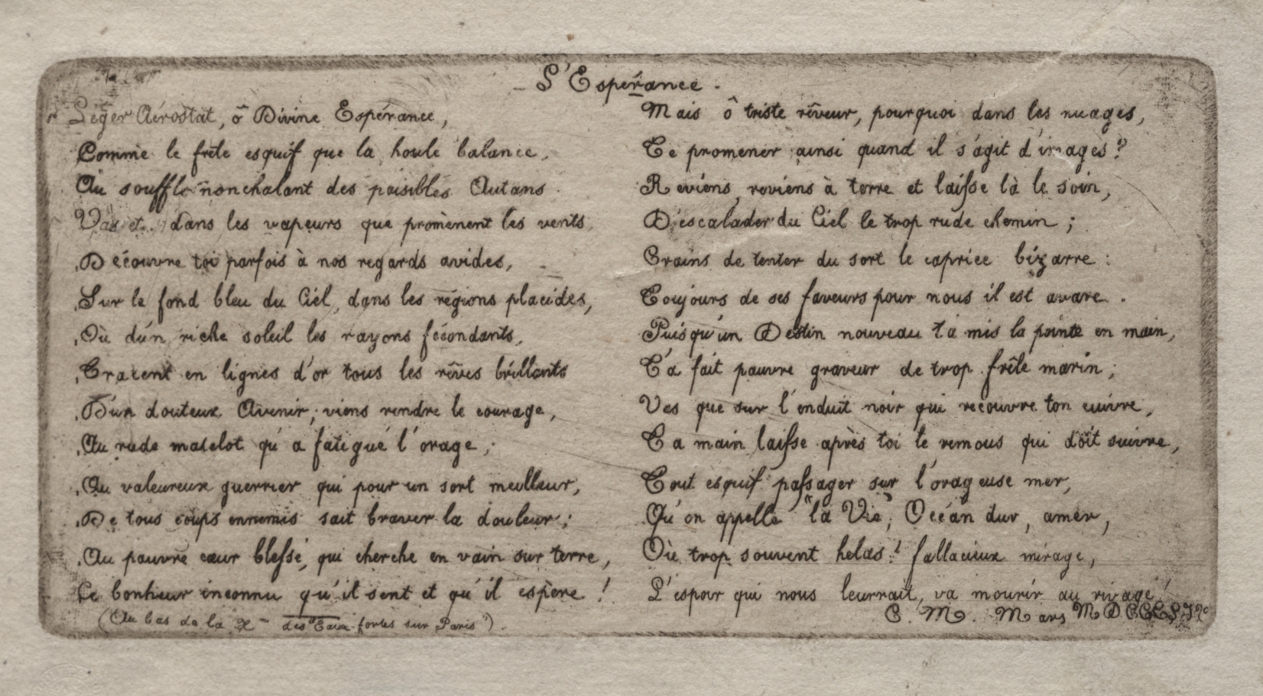 Charles Meryon (French, 1821–1868) — Etchings of Paris: Hop
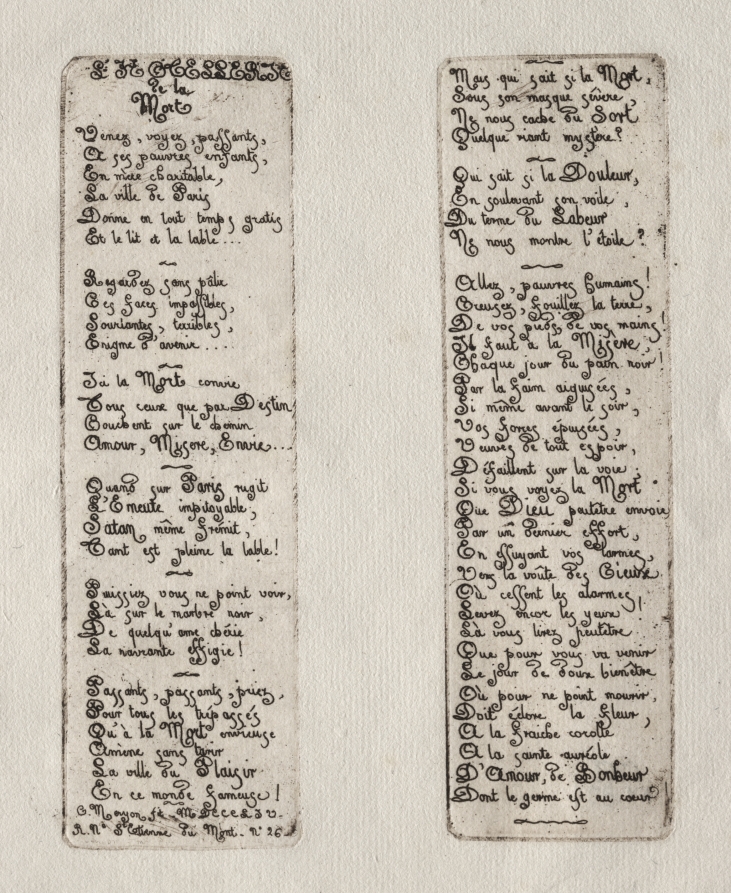 Charles Meryon (French, 1821–1868) — Etchings of Paris: Dea
 Charles Meryon|Reinier Nooms, called Zeeman — Dedicatory ver
 Aubin — Various Slanted Calligraphy, from Encyclopédie
 Aubin — Basic Shapes, from Encyclopédie
 Aubin — Various Rounded-Style Calligraphy, from Encyclopédie
 José Guadalupe Posada — Corrido of the Lottery
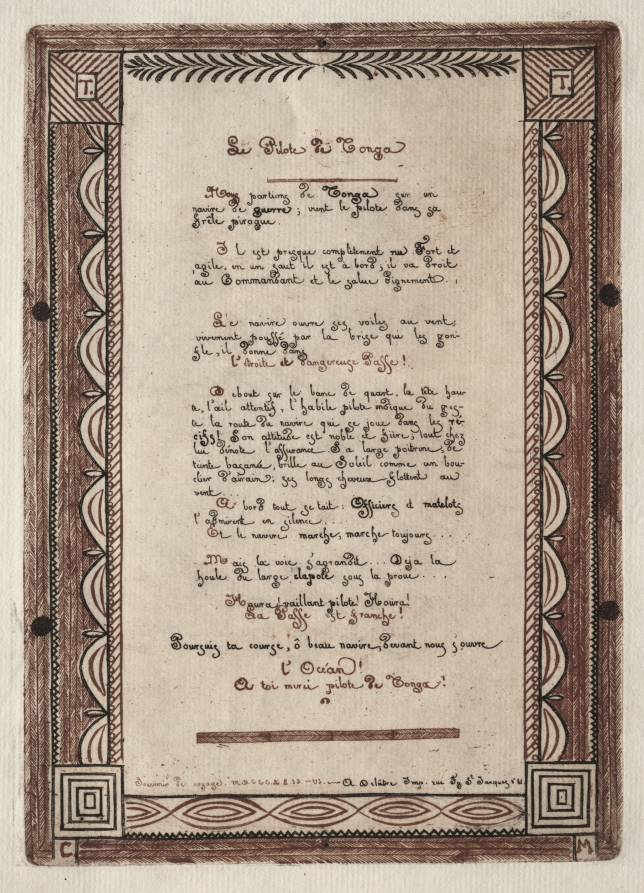 Charles Meryon (French, 1821–1868) — Verses to the Pilot of
  Paul Gauguin — Le sourire: Journal méchant, Feb. 1900