Pietro Santi Bartoli|Giovanni Giacomo De Rossi|Raphael

Plate 4: The Sacrifice of Abraham, from Genesis Chapter 22, after a lost fresco in the basamento of Bay 4 of the Vatican Loggia

1650–77
Etching
9.4 × 23.5 cm (3.7 × 9.3 in)

SEE IT IN PERSON

Not currently on view

In the collection of The Metropolitan Museum of Art, New York · as of July 2026

View at metmuseum.orgPlan a visit ↗

Discussion

Be the first to share your thoughts.

Sign in to join the discussion.

Community guidelines

More by Pietro Santi Bartoli|Giovanni Giacomo De Rossi|Raphael
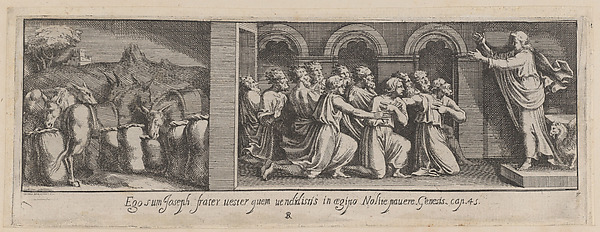
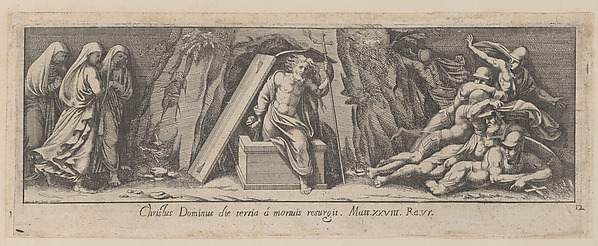
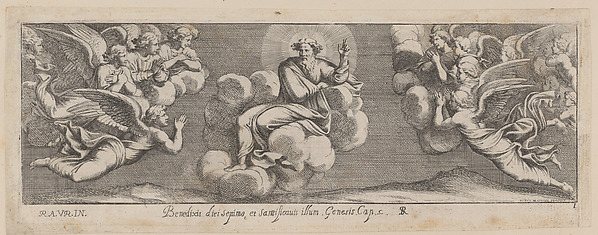
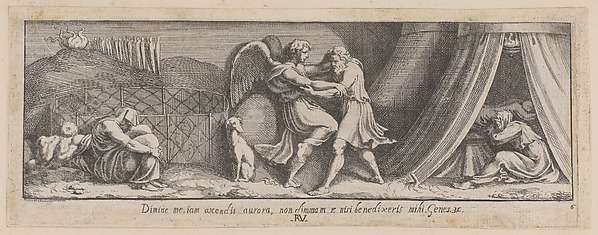
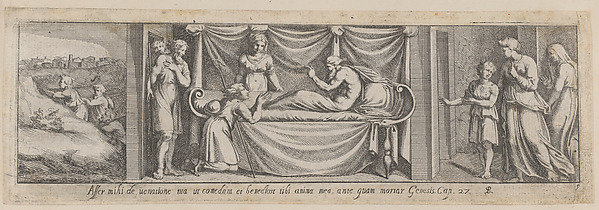
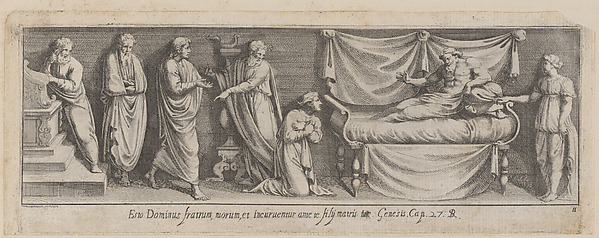
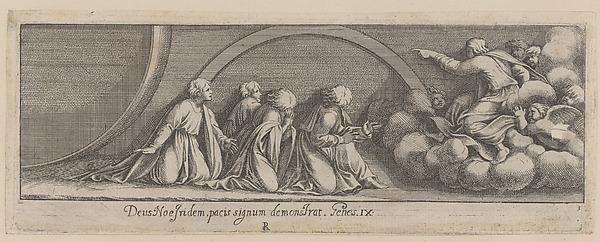
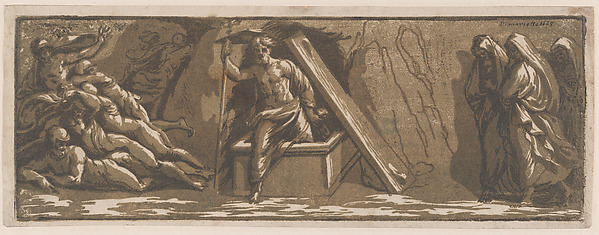
Plate 7: Joseph Making Himself Known to his Brothers, from Genesis 45, after a lost fresco in the basamento of Bay 7 of the Vatican LoggiaPlate 7: Joseph Making Himself Known to his Brothers, from GPlate 2: Cain and Abel from Genesis Chapter 4, after a lost fresco in the basamento of Bay 2 of the Vatican LoggiaPlate 2: Cain and Abel from Genesis Chapter 4, after a lost Plate 12: The Resurrection, after a lost fresco in the basamento of Bay 13 of the Vatican LoggiaPlate 12: The Resurrection, after a lost fresco in the basamPlate 1: God Blessing on the Seventh Day, from Genesis Chapter 2, after a lost fresco in the basamento of Bay 1 of the Vatican LoggiaPlate 1: God Blessing on the Seventh Day, from Genesis ChaptPlate 6: Jacob Wrestling with the Angel, from Genesis 32, after a lost fresco in the basamento of Bay 6 of the Vatican LoggiaPlate 6: Jacob Wrestling with the Angel, from Genesis 32, afPlate 5: Isaac telling Esau to hunt for meat at left and Jacob and Rebekah at right, from Genesis 27, after a lost fresco in the basamento of Bay 5 of the Vatican LoggiaPlate 5: Isaac telling Esau to hunt for meat at left and JacPlate 11: Bathsheba interceding with David for Solomon, from Genesis 27, after a lost fresco in the basamento of Bay 11 of the Vatican LoggiaPlate 11: Bathsheba interceding with David for Solomon, fromPlate 3: God Addressing Noah and his Sons, from Genesis Chapter 3, after a lost fresco in the basamento of Bay 13 of the Vatican LoggiaPlate 3: God Addressing Noah and his Sons, from Genesis Chap
More like this

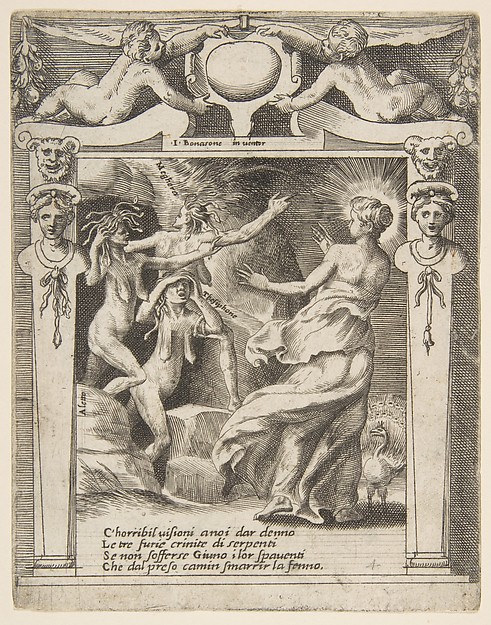
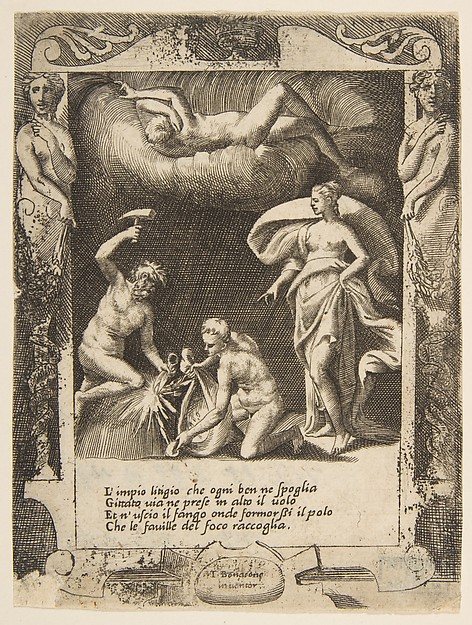
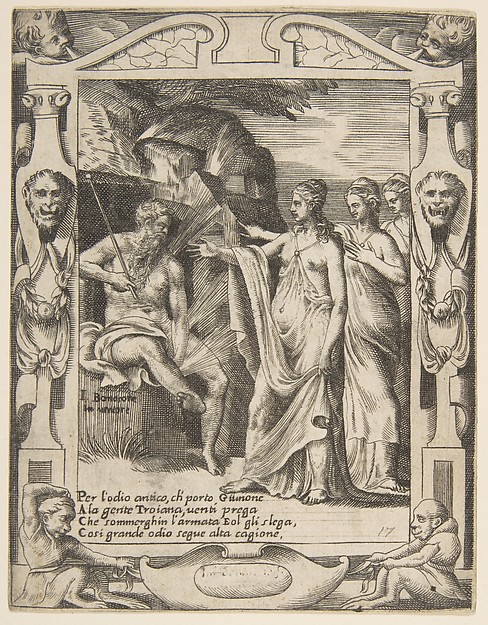
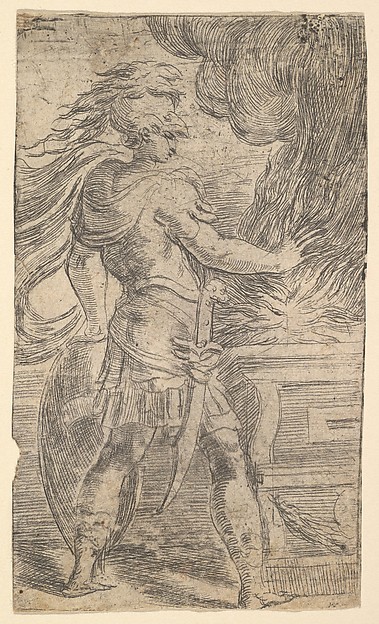
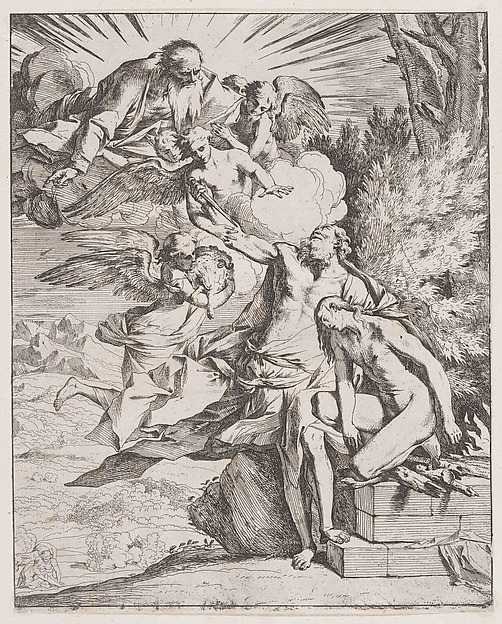
The sacrifice of Isaac by his father AbrahamPietro Testa — The sacrifice of Isaac by his father AbrahamResurrection of ChristUgo da Carpi|Raphael (Raffaello Sanzio or Santi) — ResurrectJuno frightened by the Furies, set within a decorative frame, from "Loves, Rages and Jealousies of Juno"Giulio Bonasone — Juno frightened by the Furies, set within Litigium removed from the body of Chaos while his mother is thrown into the air, set within a frame, from "Loves, Rages and Jealousies of Juno"Giulio Bonasone — Litigium removed from the body of Chaos whJuno asks Aeolus to raise a storm against the Trojan fleet, set within an elaborate frame, from "Loves, Rages and Jealousies of Juno"Giulio Bonasone — Juno asks Aeolus to raise a storm against Mutius Scaevola placing his hand in the flames (left half of a composition, the right half of which shows a woman extending her right arm towards an altar)Parmigianino (Girolamo Francesco Maria Mazzola)|Andrea SchiaFrieze with putti, some riding a chariot pulled by animals, others riding animals and holding garlandsLucas Vorsterman II|Frans van den Wyngaerde|Peter Paul RubenA giant heaving a boulder at center, other giants to left and right struggling and recoiling against impending boulders, nude figures climbing rocks and struggling in the background, from 'Giove che fulmina li giganti', after the frescoes on the ceiling of the Sala dei Giganti designed by Giulio Romano for the Palazzo del Te, MantuaPietro Santi Bartoli|Giulio Romano — A giant heaving a bouldOrpheus and EurydiceAgostino Carracci — Orpheus and EurydiceFire, represented by Venus seated before Vulcan's forge, with armor, a cannon, and cannon balls surrounding her, she turns her head toward Cupid, who stretches his body away from her, from "The Elements"Giulio Carpioni — Fire, represented by Venus seated before VJudithAnonymous, Italian, 16th century|Parmigianino (Girolamo FranOrpheus and Eurydice, from 'Game of Mythology' (Jeu de la Mythologie)Stefano della Bella — Orpheus and Eurydice, from 'Game of My