Philips Galle|Adriaen Collaert|Jan van der Straet, called Stradanus

Plate 11: equestrian statue of Titus, seen three-quarters to the right, Mount Vesuvius erupting at left in the background, from 'Roman Emperors on Horseback'

ca. 1587–89
Engraving
32.4 × 21.7 cm (12.8 × 8.5 in)

SEE IT IN PERSON

Not currently on view

In the collection of The Metropolitan Museum of Art, New York · as of July 2026

View at metmuseum.orgPlan a visit ↗

Discussion

Be the first to share your thoughts.

Sign in to join the discussion.
Community guidelines

More by Philips Galle|Adriaen Collaert|Jan van der Straet, called Stradanus

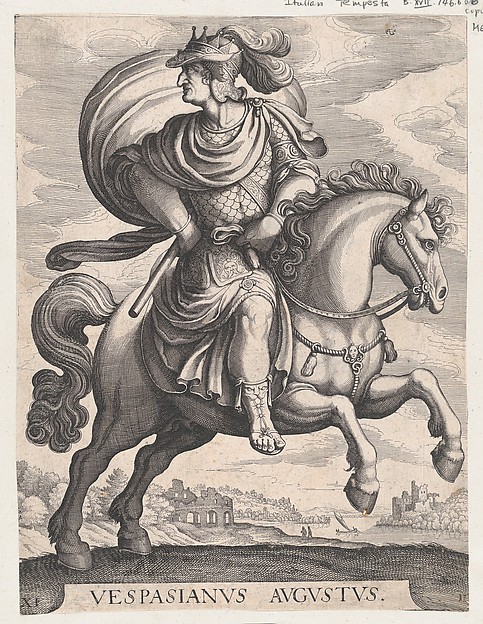
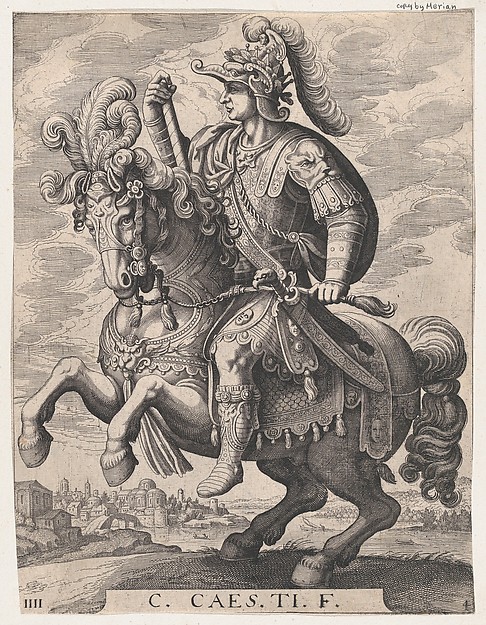
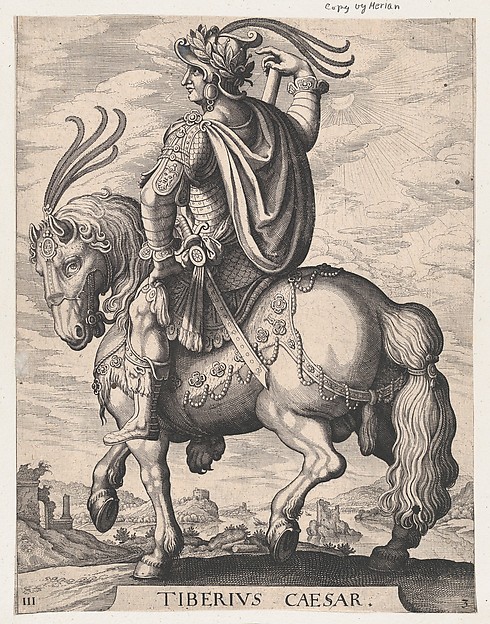
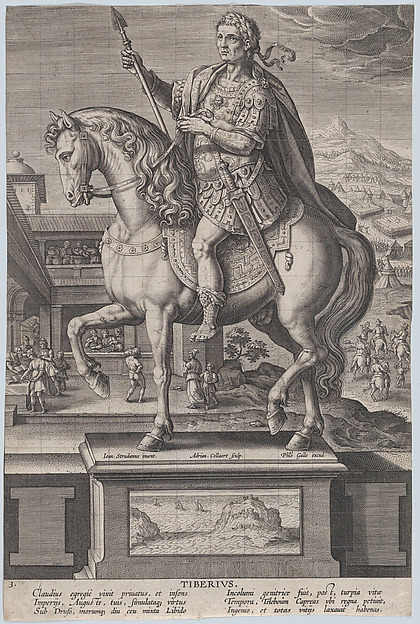
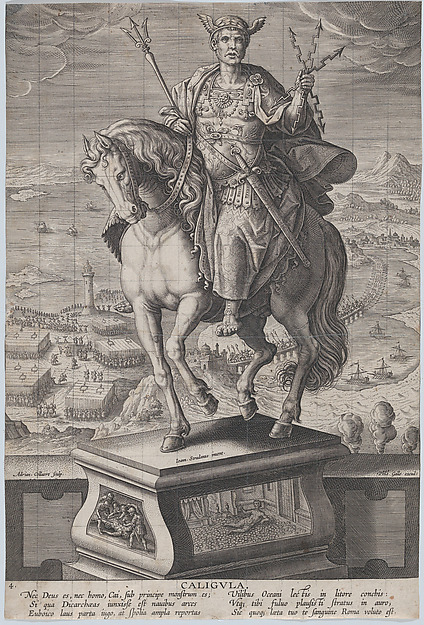
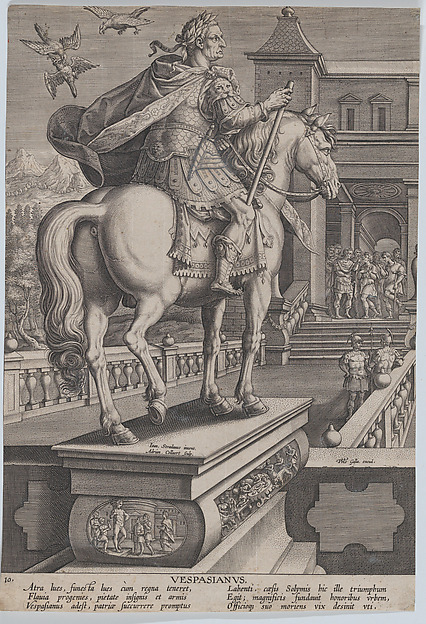
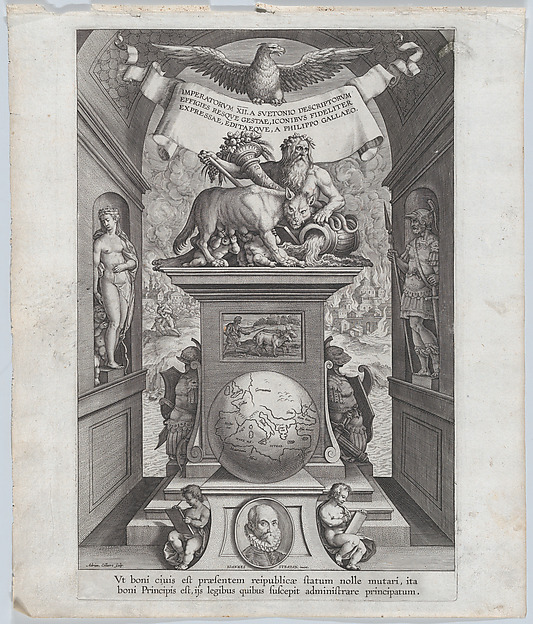
Plate 3: equestrian statue of Tiberius, in profile to the left, with a naval landscape on pedestal below, from 'Roman Emperors on Horseback'Plate 3: equestrian statue of Tiberius, in profile to the lePlate 4: equestrian statue of Caligula, seen three-quarters to the left, wearing a winged helmet and holding double-headed arrows, a military scene in the background, from 'Roman Emperors on Horseback'Plate 4: equestrian statue of Caligula, seen three-quarters Plate 10: equestrian statue of Vespasian, seen from behind, three birds at upper right with one attacking another, from 'Roman Emperors on Horseback'Plate 10: equestrian statue of Vespasian, seen from behind, Title page for "Roman Emperors on Horseback"Title page for "Roman Emperors on Horseback"

More like this

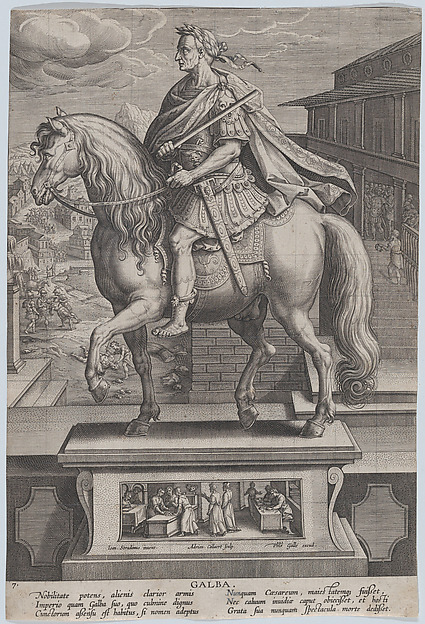
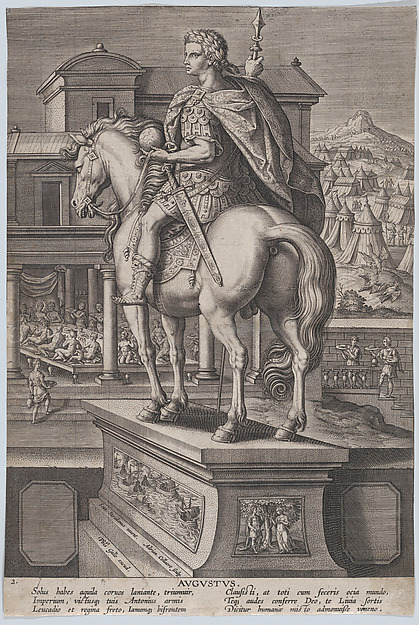
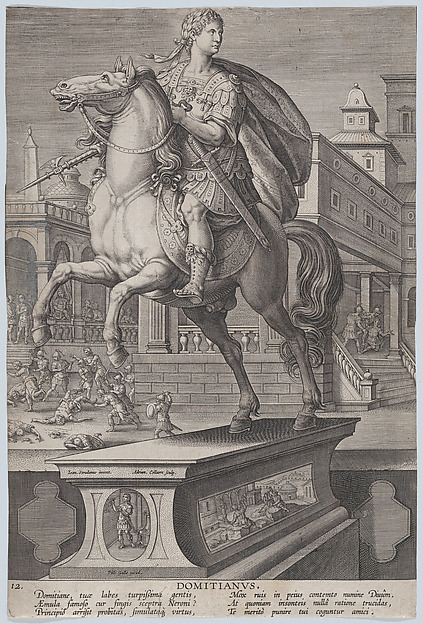
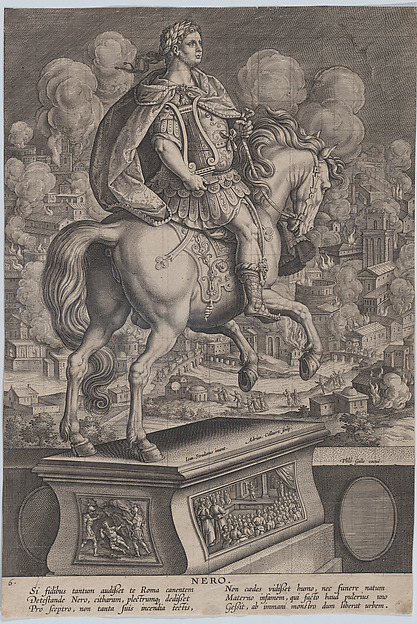
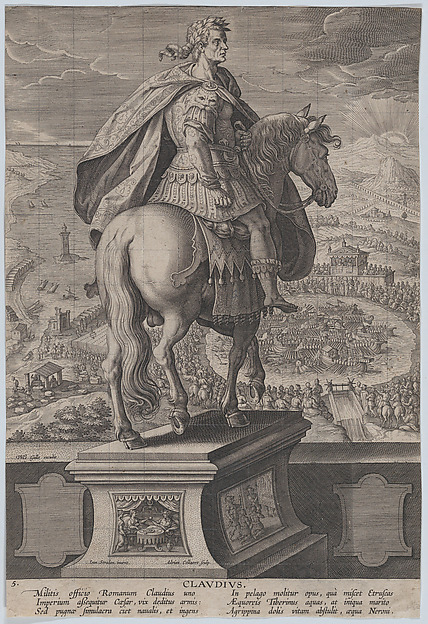
Plate 5: equestrian statue of Claudius, seen from behind, a naval competition at right in the background, from 'Roman Emperors on Horseback'Adriaen Collaert|Jan van der Straet, called Stradanus|PhilipPlate 7: equestrian statue of Galba, in profile to the left, with a beheading scene in the background, from 'Roman Emperors on Horseback'Jan van der Straet, called Stradanus|Adriaen Collaert|PhilipPlate 2: equestrian statue of Augustus, holding a globe and seen from behind, with a feast occurring at left in the background, from 'Roman Emperors on Horseback'Adriaen Collaert|Philips Galle|Jan van der Straet, called StPlate 12: equestrian statue of Domitian, seen three-quarters to the left, with his stabbing death at right in the background, from 'Roman Emperors on Horseback'Jan van der Straet, called Stradanus|Philips Galle|Adriaen CPlate 6: equestrian statue of Nero, seen from behind, the Great Fire of Rome in the background, from 'Roman Emperors on Horseback'Jan van der Straet, called Stradanus|Philips Galle|Adriaen CPlate 1: equestrian statue of Julius Caesar, seen from the front, with a scene of a naval battle on pedestal below, from 'Roman Emperors on Horseback'Adriaen Collaert|Jan van der Straet, called Stradanus|PhilipPlate 8: equestrian statue of Otho, seen from behind, his death scene in the background with him stabbing himself at right and the burning of his body at left, from 'Roman Emperors on Horseback'Adriaen Collaert|Philips Galle|Jan van der Straet, called StPortrait of Emperor Rudolph II on HorsebackAdriaen de Vries|Marcus Sadeler|Aegidius Sadeler II — PortraPlate 12: Emperor Domitian on horseback, from 'The First Twelve Roman Caesars' after TempestaAntonio Tempesta|Matthäus Merian the Elder — Plate 12: EmperEmperor Vespasian on Horseback, from the series The First Twelve Roman Caesars, plate 11Antonio Tempesta|Matthäus Merian the Elder — Emperor VespasiPlate 4: Emperor Gaius on Horseback, from 'The First Twelve Roman Caesars', after TempestaAntonio Tempesta|Matthäus Merian the Elder — Plate 4: EmperoPlate 3: Emperor Tiberius on Horseback, from 'The First Twelve Roman Caesars', after TempestaAntonio Tempesta|Matthäus Merian the Elder — Plate 3: Empero