Courtesan Walking
SEE IT IN PERSON
● On view now — Gallery 107
Art Institute of Chicago, Chicago · verified July 2026
Discussion
FROM THE ART INSTITUTE OF CHICAGO’S CATALOG
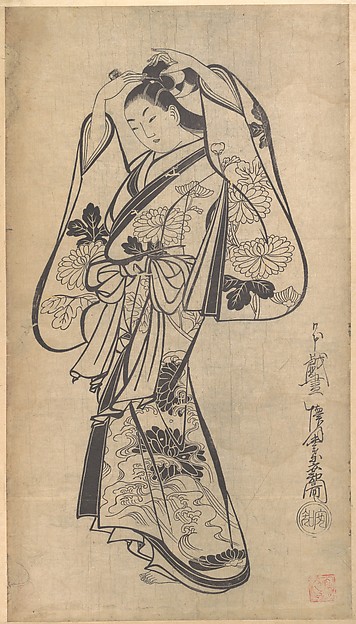
Woodblock prints are regarded as the most characteristic expression of the Japanese artistic genius. Great quantities of this popular art form, called ukiyo-e ("pictures of the floating world"), were made during the Edo period (1603-1868) and sold inexpensively to a pleasure-seeking public captivated by Kabuki theater, sumo wrestling, and the brothel districts. Prints such as Kaigetsudo's hand-painted Courtesan display a freedom and originality that were not possible in the rendering of tradition-bound religious images. The beautiful woman clutches her billowing kimono, which has been decorated with the words of a poem whose author is depicted in the lining.
Be the first to share your thoughts.
Sign in to join the discussion.
More by Kaigetsudo Anchi

More like this
 Torii Kiyomasu I — The Actor Uemura Kaemon (?)
 Okumura Masanobu — An Elegant Lady
 Torii Kiyomasu I — The Actor Fujimura Handayu II as Oiso no
  Torii Kiyomasu II — The Actor Nakamura Takesaburo I in a fem
 Kaigetsudo Dohan — Courtesan Playing with a Cat
 Nishimura Shigenaga — In the Style of a Page (Kosho fu), Cen
 Torii Kiyomasu I — The Actor Tsutsui Kichijuro
 Katsukawa Shunsho — The Actor Nakamura Nakazo I as Chinzei H
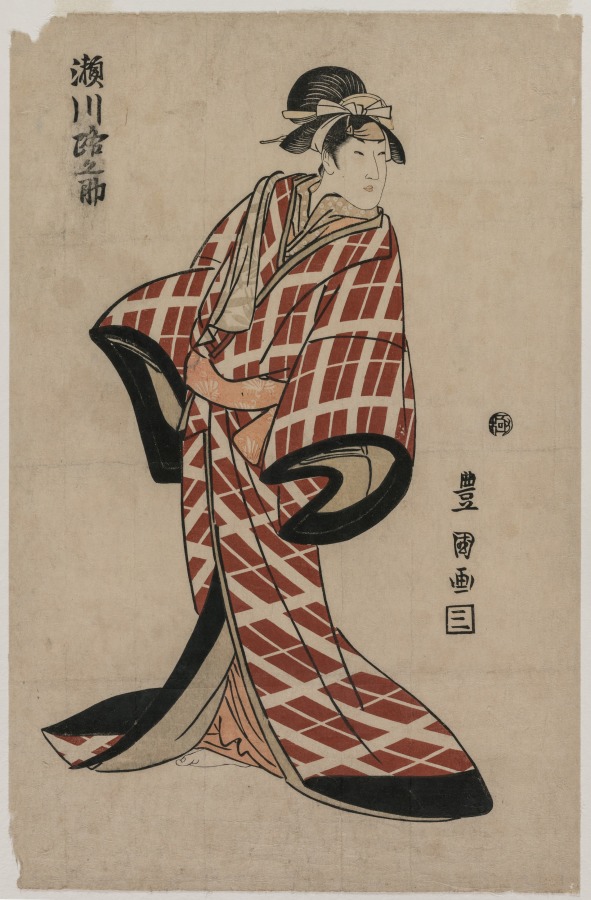 Utagawa Toyokuni (Japanese, 1769–1825) — Segawa Michinosuke
  Okumura Toshinobu — The Actor Ichikawa Monnosuke I
 Torii Kiyonobu I — The Actor Nakamura Denkuro I
 Okumura Toshinobu — Puppeteer