Stefano della Bella|Nicolas Langlois

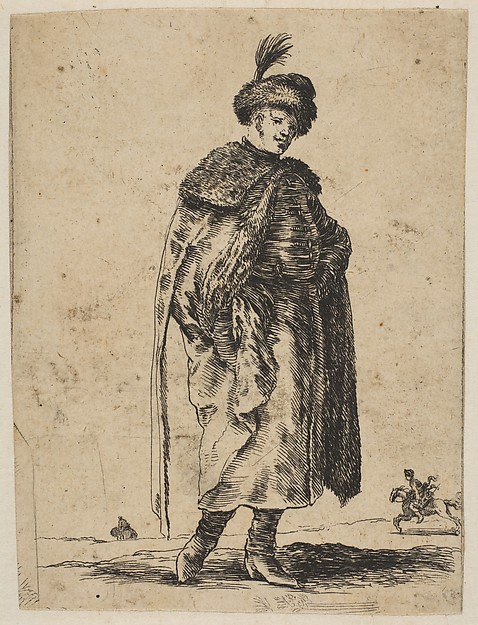
A man wearing a plumed hat in center facing right, a woman walking towards the left in the background, plate 17 from "Diversi capricci"

ca. 1644–47
Etching; third state of four (De Vesme)
8.2 × 9.9 cm (3.2 × 3.9 in)

SEE IT IN PERSON

Not currently on view

In the collection of The Metropolitan Museum of Art, New York · as of July 2026

View at metmuseum.orgPlan a visit ↗

Discussion

Be the first to share your thoughts.

Sign in to join the discussion.

Community guidelines

More by Stefano della Bella|Nicolas Langlois
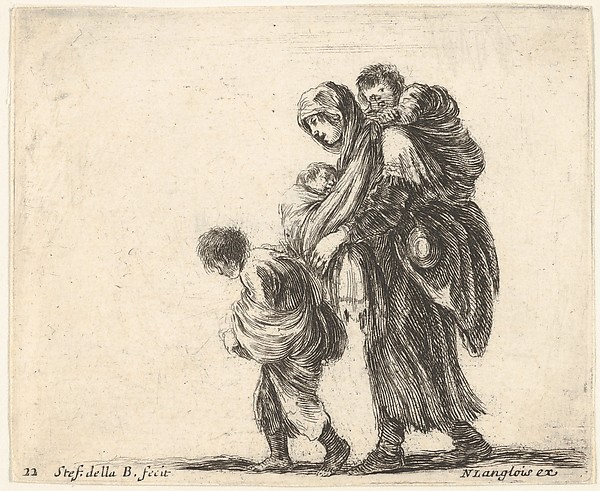
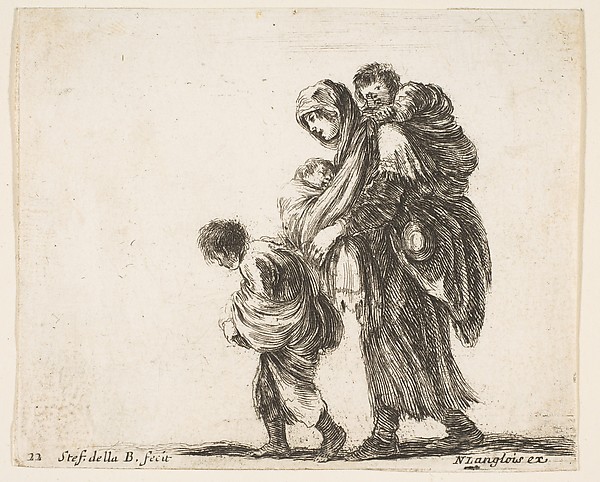
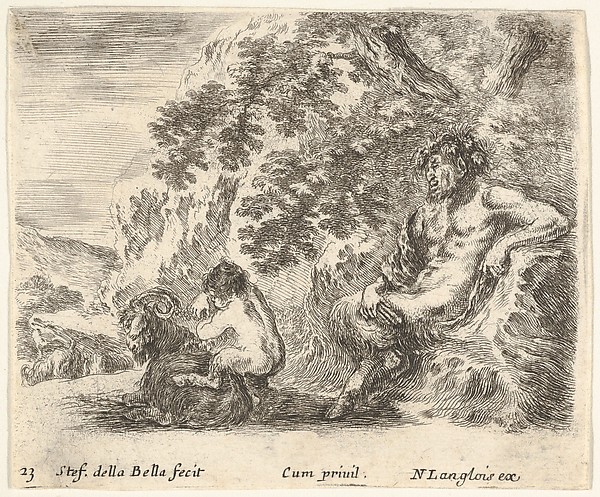
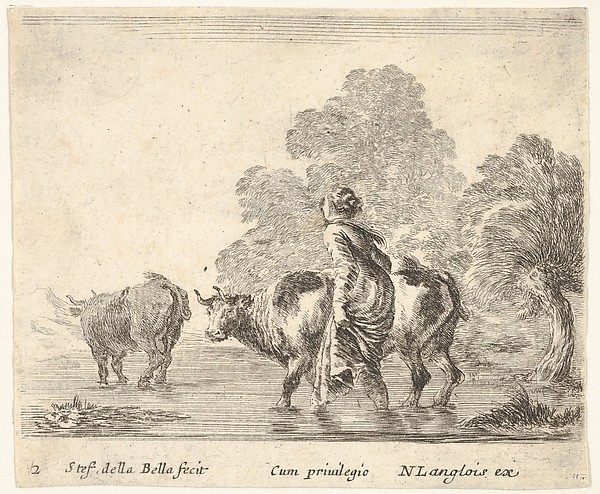
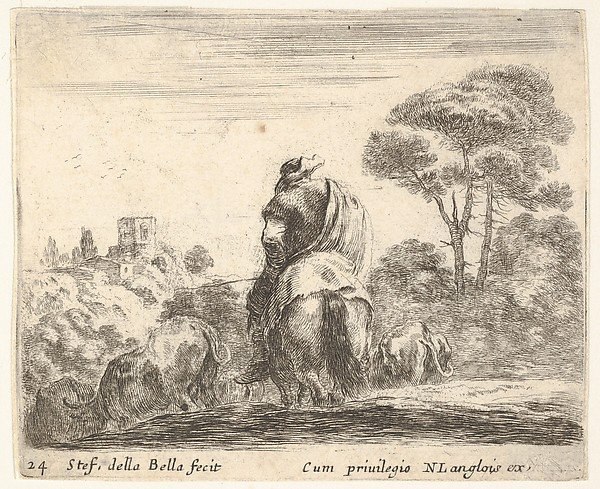
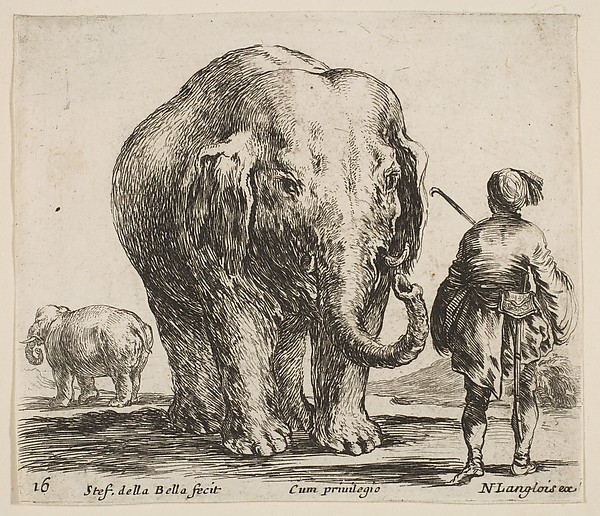
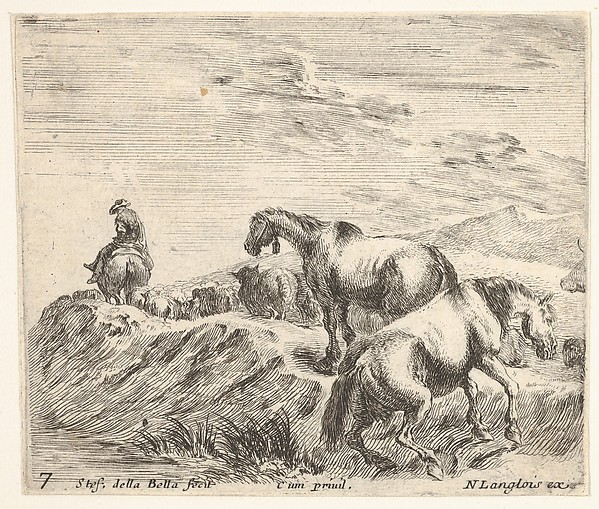
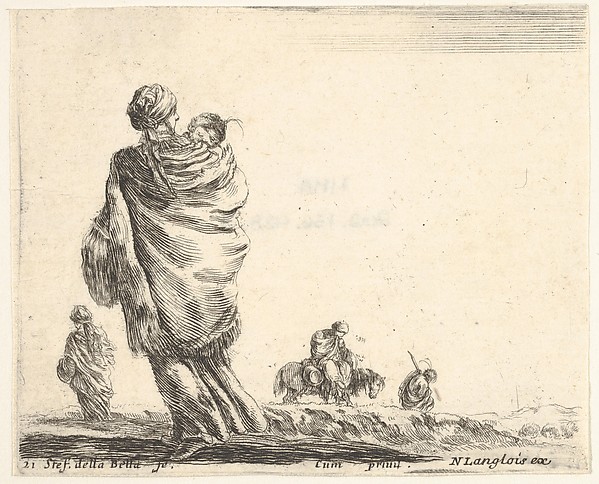
Plate 22: a beggar woman with three children, one child on her shoulders, one child in her arms, and one child who walks in front of her to left, from 'Diversi capricci'Plate 22: a beggar woman with three children, one child on hA beggar woman with three children, one child on her shoulders, one child in her arms, and one child who walks in front of her to left, plate 22 from "Diversi capricci"A beggar woman with three children, one child on her shouldePlate 23: a satyr sitting against a tree to right and holding a flute in his right hand, a child playing with a goat to left, from 'Diversi capricci'Plate 23: a satyr sitting against a tree to right and holdinPlate 2: a peasant woman herds two cows across a stream, walking towards the left, from 'Diversi capricci'Plate 2: a peasant woman herds two cows across a stream, walPlate 24: herdsman atop a horse, seen from behind, leads his cattle down a hill, a tower on a hill to left in the background, from 'Diversi capricci'Plate 24: herdsman atop a horse, seen from behind, leads hisAn elephant in center, his mahout standing to the right wearing an Oriental costume, another elephant to left in background, plate 16 from "Diversi capricci"An elephant in center, his mahout standing to the right wearPlate 7: two horses ascending the bank of a river at right, following a procession of horses and one horseman to the left, from 'Diversi capricci'Plate 7: two horses ascending the bank of a river at right, Plate 21: a poor woman to left, seen from behind, enveloping her child in a shawl, another woman seen from behind to left in background, a woman atop a horse and a man to right in background, from 'Diversi capricci'Plate 21: a poor woman to left, seen from behind, enveloping
More like this

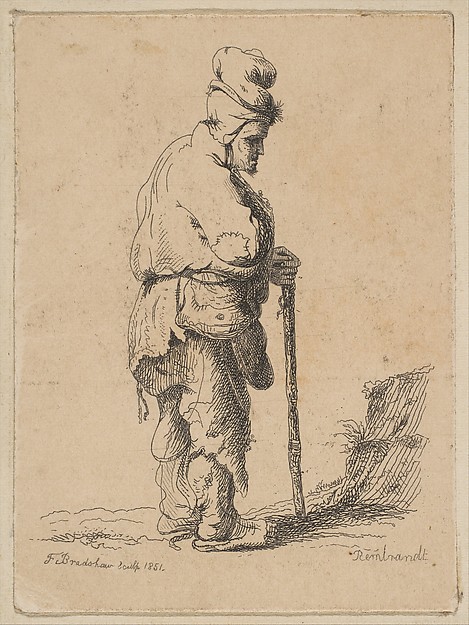
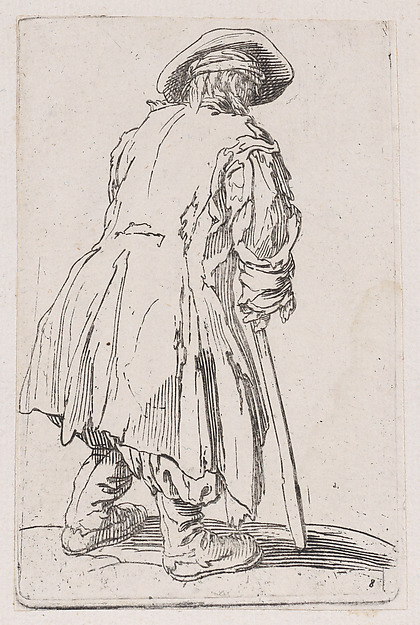
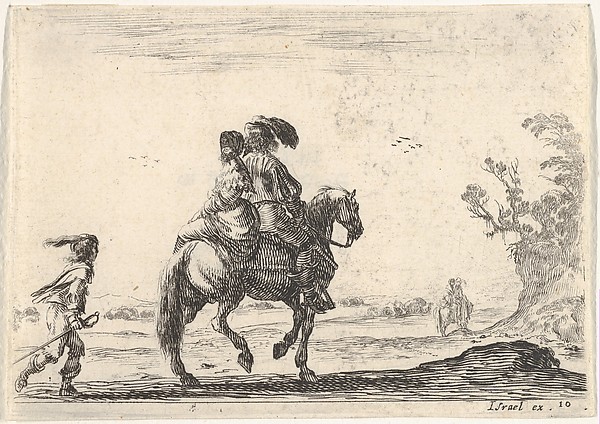
Two Seated Men, from The CapricesJacques Callot — Two Seated Men, from The CapricesThe Promenade, from The CapricesJacques Callot — The Promenade, from The CapricesBeggar with a Wooden LegRembrandt van Rijn — Beggar with a Wooden LegBeggar Leaning on a Stick (reverse copy)F. Bradshaw|Rembrandt (Rembrandt van Rijn) — Beggar Leaning Reverse Copy of Le Vieux Mendiat a une Seule Béquille (The Old Beggar with One Crutch), from Les Gueux suite appelée aussi Les Mendiants, Les Baroni, ou Les Barons (The Beggars, also called the Barons)Jacques Callot|Anonymous — Reverse Copy of Le Vieux Mendiat Plate 10: a horseman and a woman, seen from behind, riding towards the right with a young man following them to left, another horseman and woman to right in the background, from 'Various Figures' (Agréable diversité de figures)Stefano della Bella|Israël Henriet — Plate 10: a horseman anPolish man with a mustache wearing a fur coat and a hat with a featherStefano della Bella — Polish man with a mustache wearing a fPlate 11: a peasant wearing a hat at center, walking towards the right, a horse descending a mountain to right in the background, trees to left in the background, from 'Twelve Landscapes' (Suite de douze paysages)Stefano della Bella — Plate 11: a peasant wearing a hat at cThe Blind Man and his Companion, plate nine from The BeggarsJacques Callot — The Blind Man and his Companion, plate nineTwo Tramps, a Man and a WomanRembrandt van Rijn — Two Tramps, a Man and a WomanThe Shepherdess KnittingJean François Millet — The Shepherdess KnittingReverse Copy of Le Vieux Mendiat a une Seule Béquille (The Old Beggar with One Crutch), from Les Gueux suite appelée aussi Les Mendiants, Les Baroni, ou Les Barons (The Beggars, also called the Barons)Jacques Callot|Anonymous — Reverse Copy of Le Vieux Mendiat