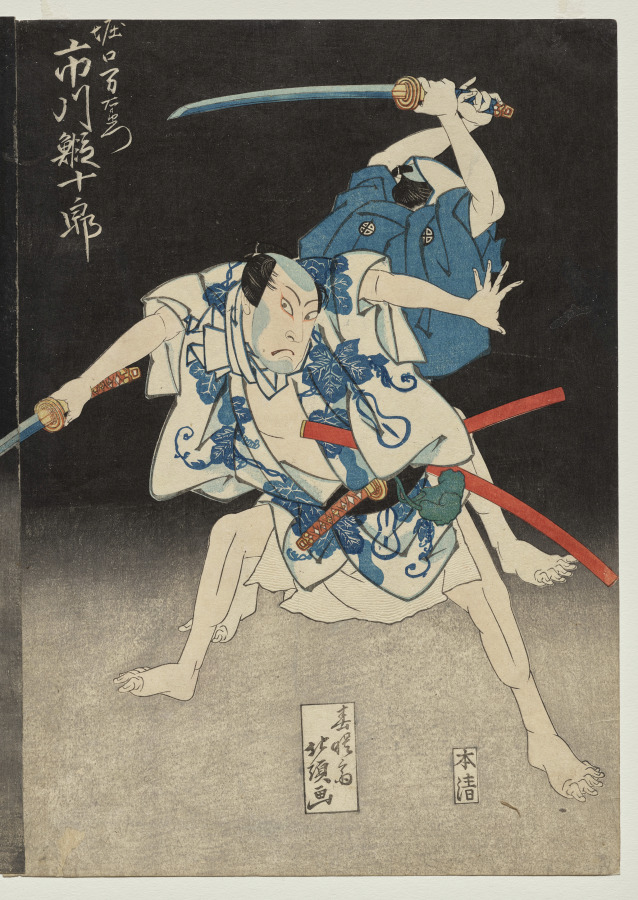
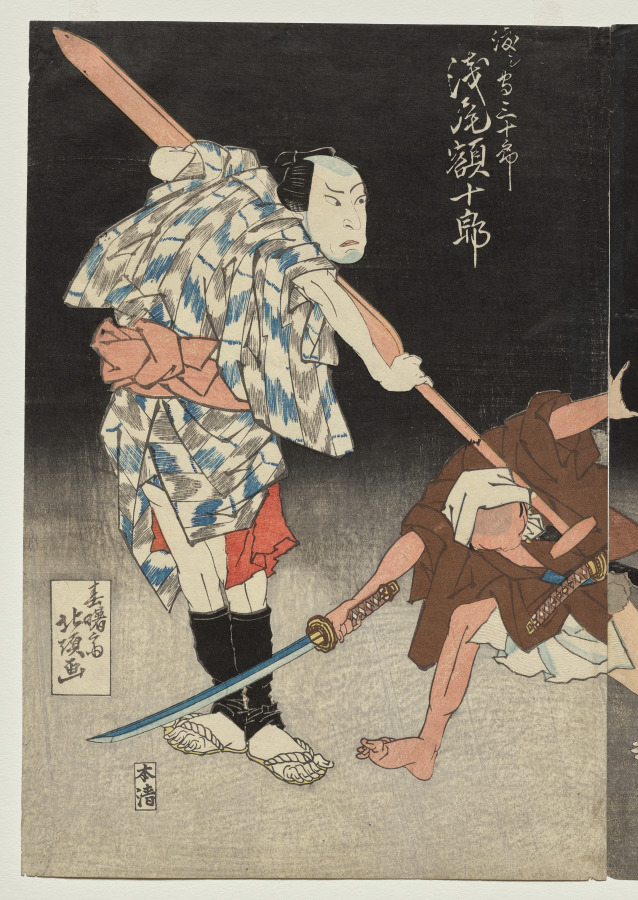
In the collection of Cleveland Museum of Art, Cleveland — check current display status with the museum.
FROM THE CLEVELAND MUSEUM OF ART’S CATALOG
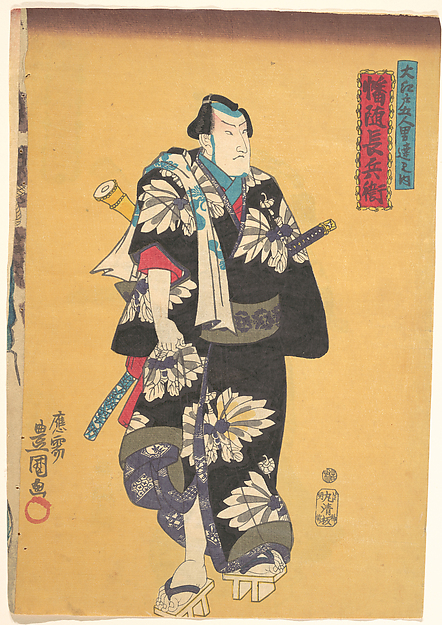
Three prints form a continuous scene from a Kabuki play written in 1778 by Namiki Gohei I (1747–1808) and produced at the Kado Theater in Osaka in the summer of 1829. It was the final performance for actor Ichikawa Ebijūrō II (1806–1829; right)—highly regarded for portraying villains—because he got sick and died several months later. This design belongs to a category of Japanese prints called “actor images” ( yakusha - e or 役者絵). They were collected by fans of popular Kabuki actors. Kabuki is a kind of entertainment that got its start in the early Edo period, evolving from dance performances with simple storylines to long plays with complex plots, elaborate sets, and full musical accompaniments. Performers wear showy costumes and heavy makeup and strike poses called mie at critical moments in the narrative. Dialogue is spoken in a stylized way that resembles singing.
Be the first to share your thoughts.
Sign in to join the discussion.
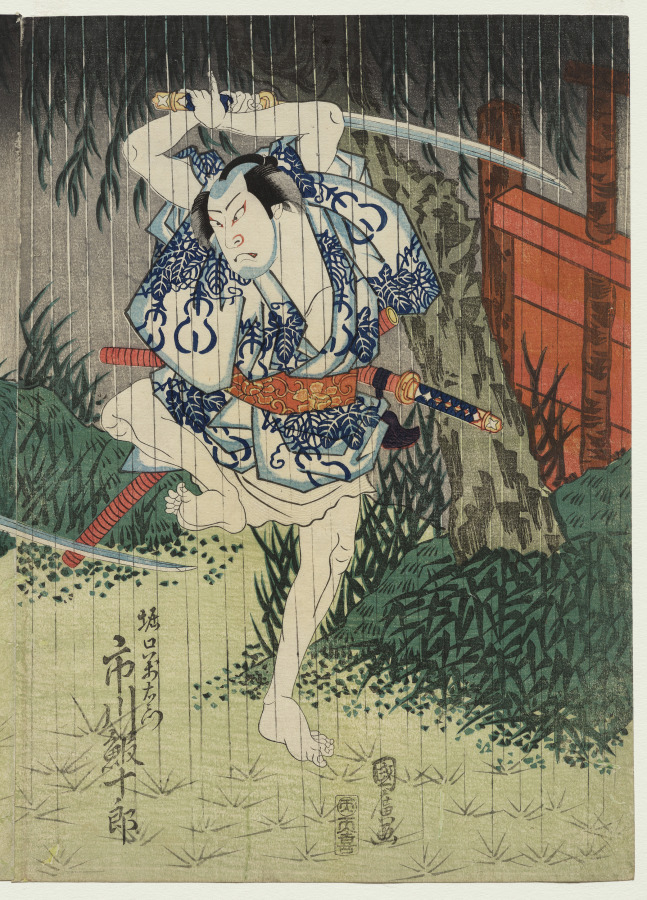 Utagawa Kunihiro (Japanese) — Ichikawa Ebijuro II as Horiguc
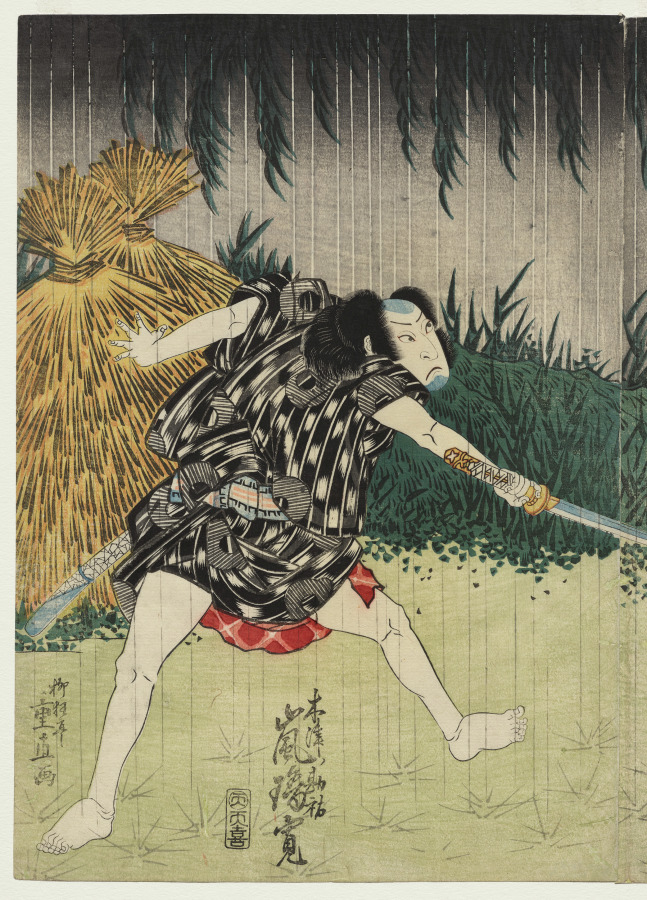 Shigenao (Japanese) — Arashi Rikan II as Kizu Kansuke
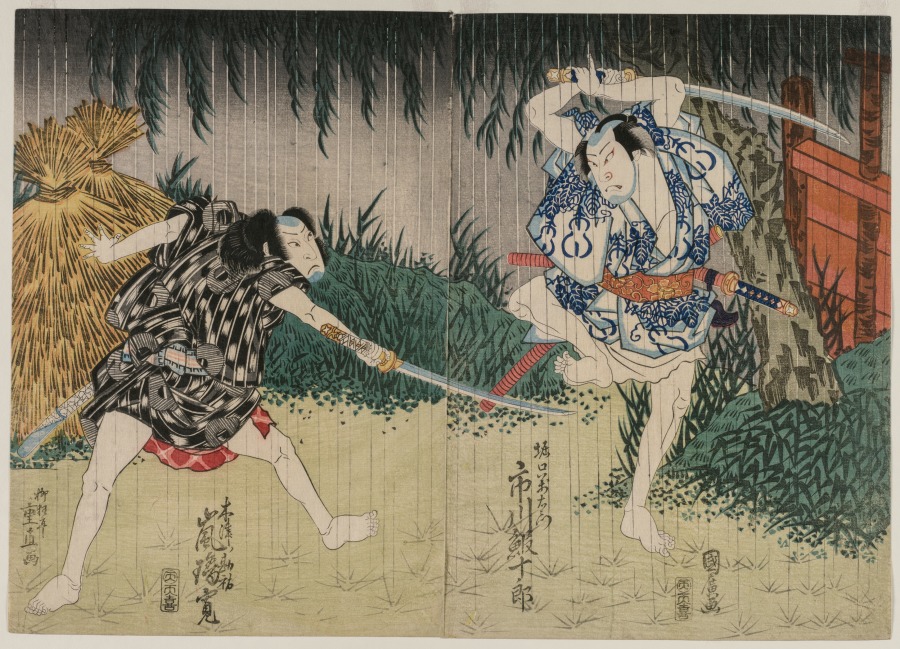 Shigenao (Japanese) — Arashi Rikan II as Kizu Kansuke; Ichik
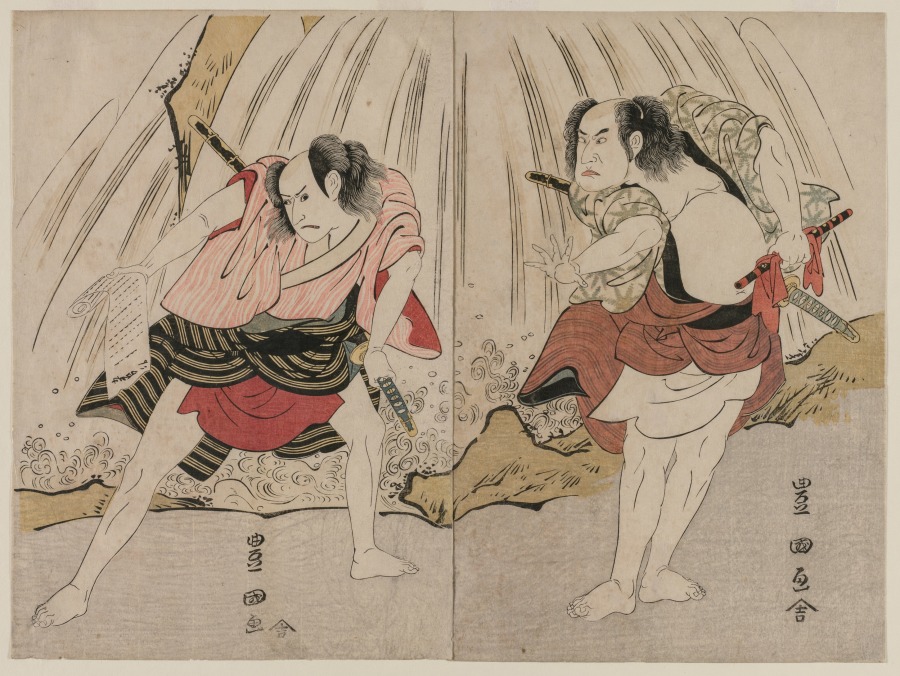 Utagawa Toyokuni (Japanese, 1769–1825) — Kataoka Nizaemon VI
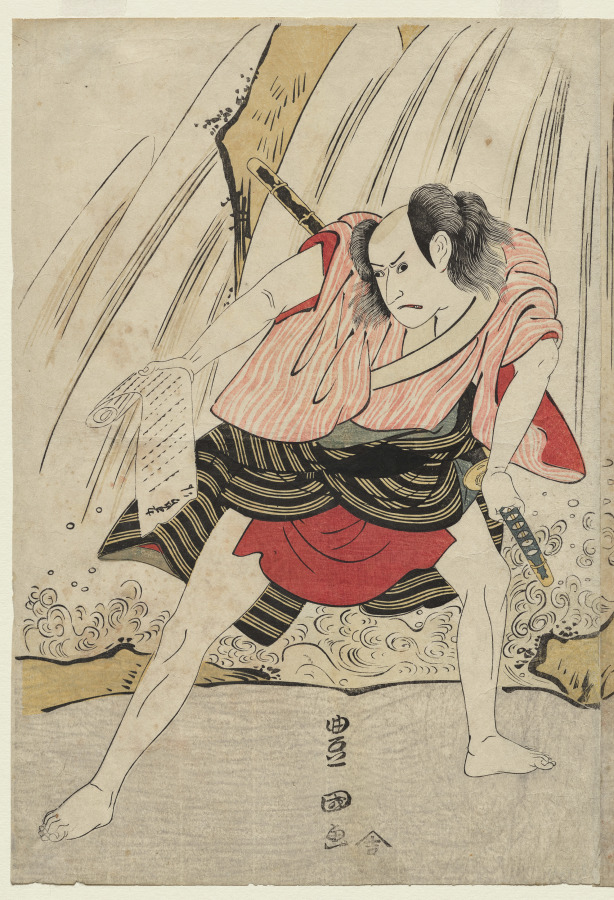 Utagawa Toyokuni (Japanese, 1769–1825) — Kataoka Nizaemon VI
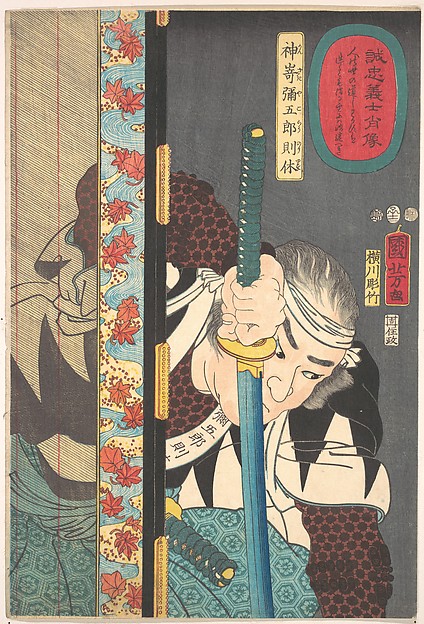 Yokogawa Horitake|Utagawa Kuniyoshi
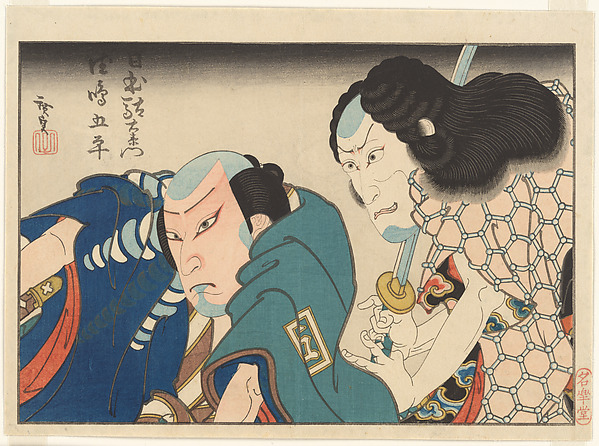 Gosōtei Hirosada 五粽亭広貞 — 「日本駄右衛門」 五代目市川海老蔵 ・「徳嶋五平」 二代目片岡我童|T
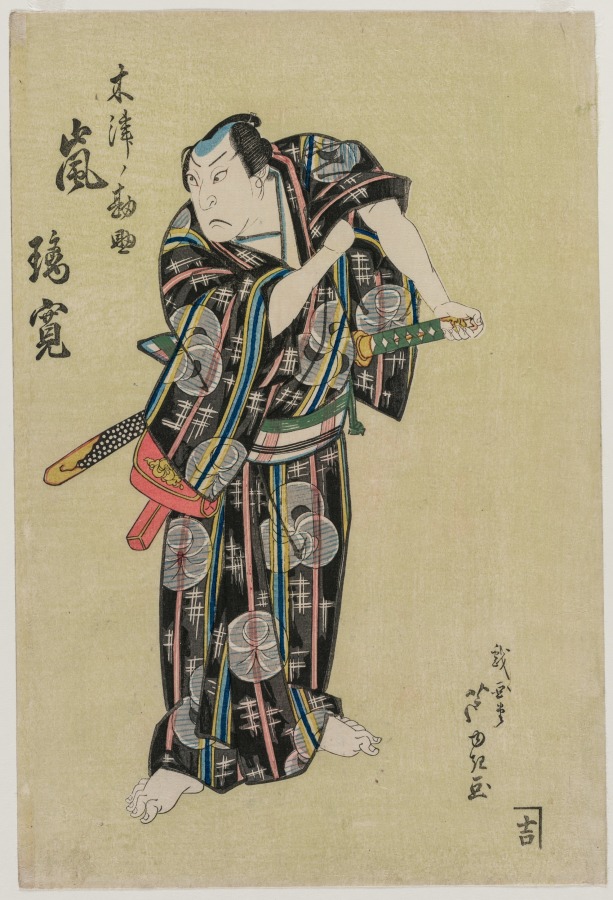 Gigadō Ashiyuki (Japanese, active 1813–34) — Arashi Rikan II
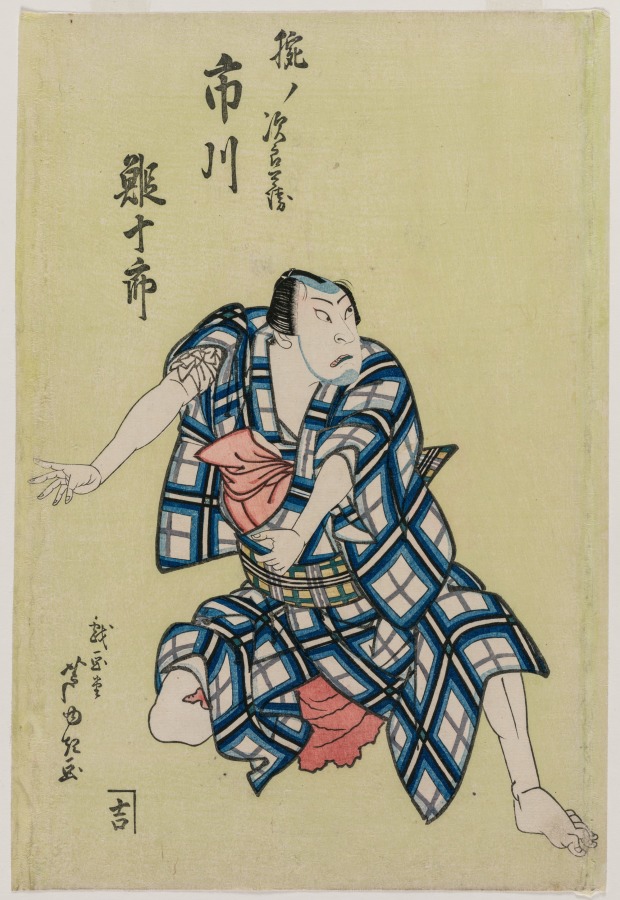 Gigadō Ashiyuki (Japanese, active 1813–34) — Ichikawa Ebijur
 Shunbaisai Hokuei (Japanese, d. 1837) — Arashi Rikan II as D
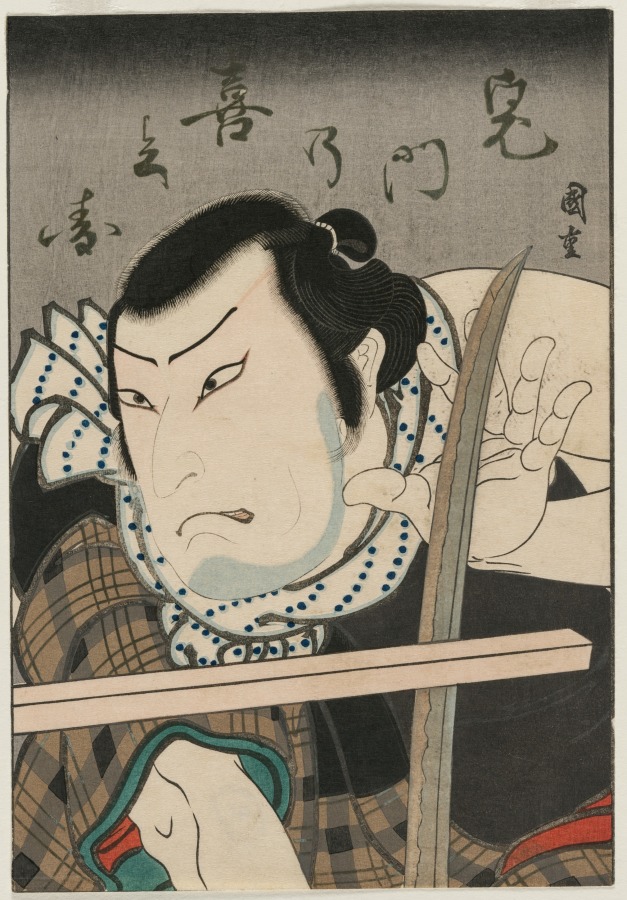 Ryūsai Shigeharu (Japanese) — Actor as Kimon no Kihei
 Utagawa Kunisada