Interior. The Music Room, Strandgade 30
SEE IT IN PERSON
● On view now — Gallery 246
Art Institute of Chicago, Chicago · verified July 2026
Discussion
FROM THE ART INSTITUTE OF CHICAGO’S CATALOG
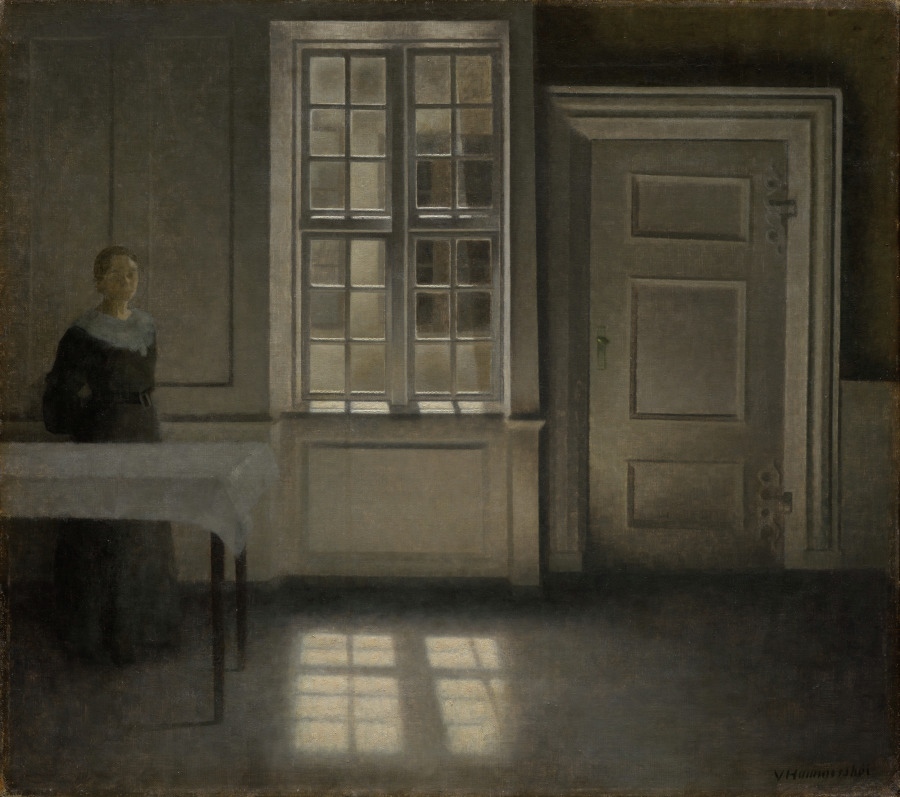
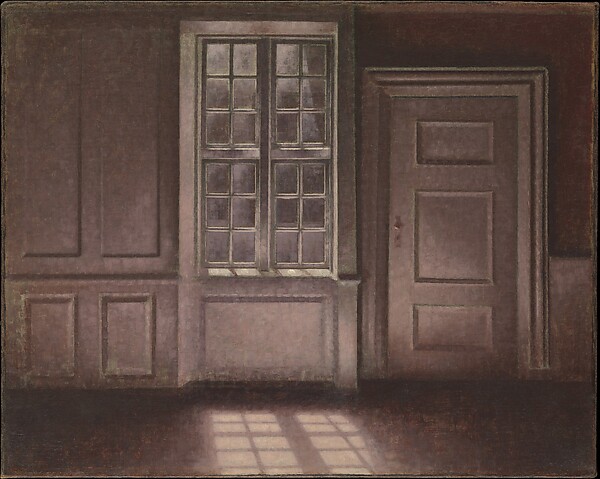
On September 15, 1898, Vilhelm Hammershøi and his wife Ida moved to an apartment on the upper floor of Strandgade 30 in Copenhagen, where they remained until 1909. This stay coincided with the most productive period of the artist’s career, during which he painted his best-known series of works: ever-evolving variations on the interior of his apartment. Hammershøi regularly depicted this corner of his drawing room, both with and without the figure of Ida. For the artist, the apartment was akin to a stage set, and he used furniture and household objects like props, endlessly positioning and repositioning them not according to their domestic function but rather to their aesthetic effect. In Interior. The Music Room, Strandgade 30 , a minimal arrangement featuring musical instruments is illuminated by soft light filtering through a window just outside the frame. But without a human presence to animate the instruments, the scene evokes only silence. Carefully painted with small, flickering brushstrokes, the picture embodies the poet Rainer Maria Rilke’s observation that “Hammershøi is not one of those about whom one must speak quickly. His work is long and slow, and at whichever moment
Be the first to share your thoughts.
Sign in to join the discussion.
More by Vilhelm Hammershøi
More like this
 William Michael Harnett — The Old Violin
 Johannes Vermeer — A Young Woman seated at a Virginal
 François Bonvin — Vrouw aan de piano, op de rug gezien
 Anthonius Leemans — Still Life with a Copy of De Waere Mercu
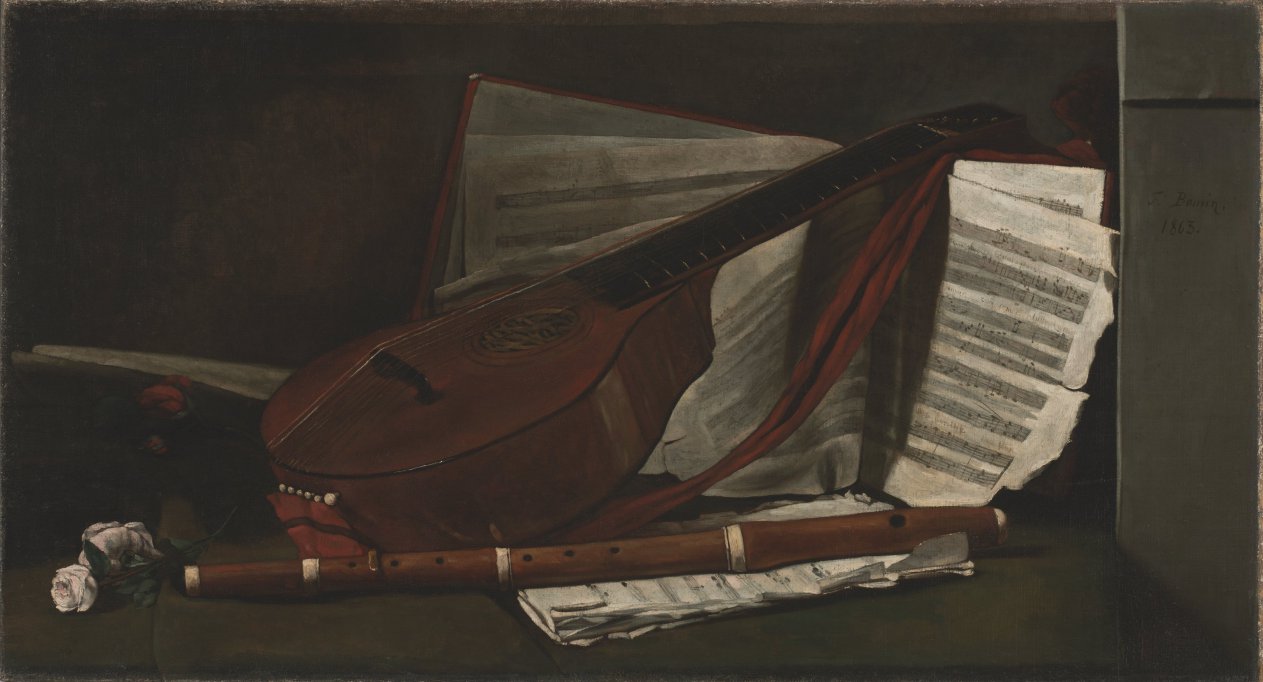 François Bonvin (French, 1817–1887) — Attributes of Music
 Johannes Vermeer — The Concert
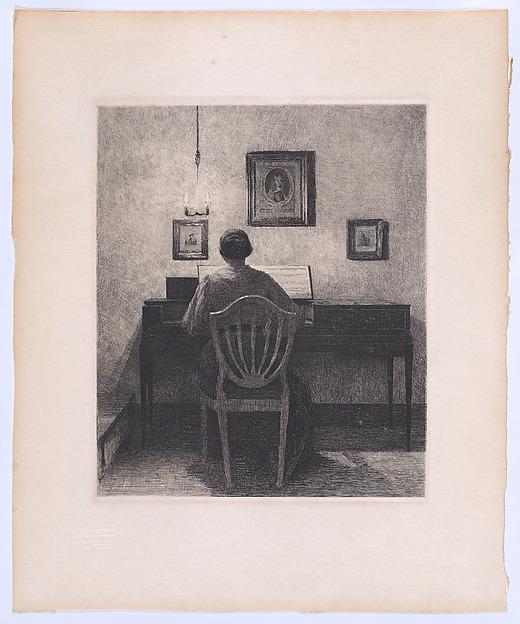 Peter Ilsted — Lady Playing the Piano
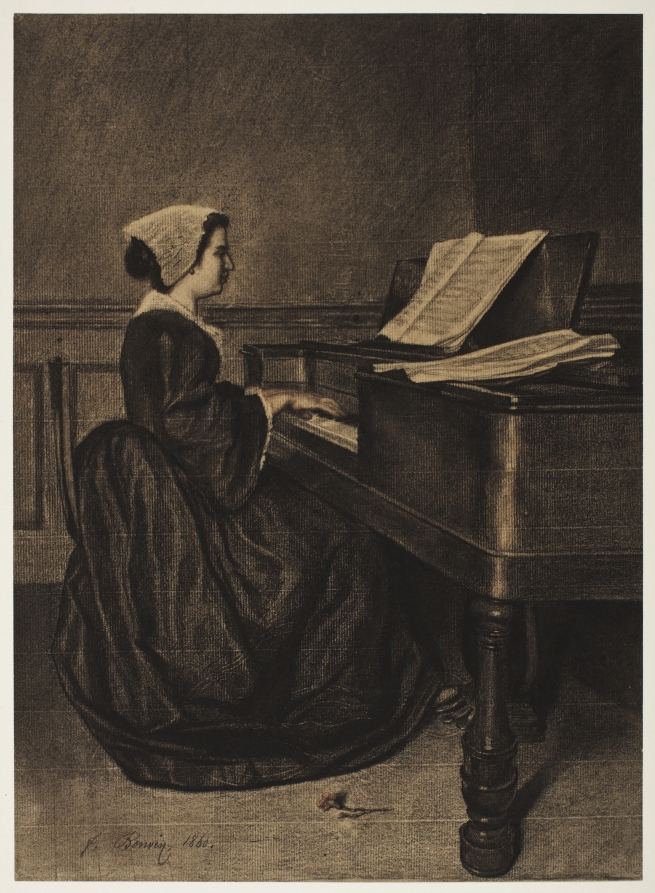 François Bonvin (French, 1817–1887) — Woman at the Spinet
 Jacob Maris — Girl at the Piano
 Jan Ekels (II) — A Writer Trimming his Pen
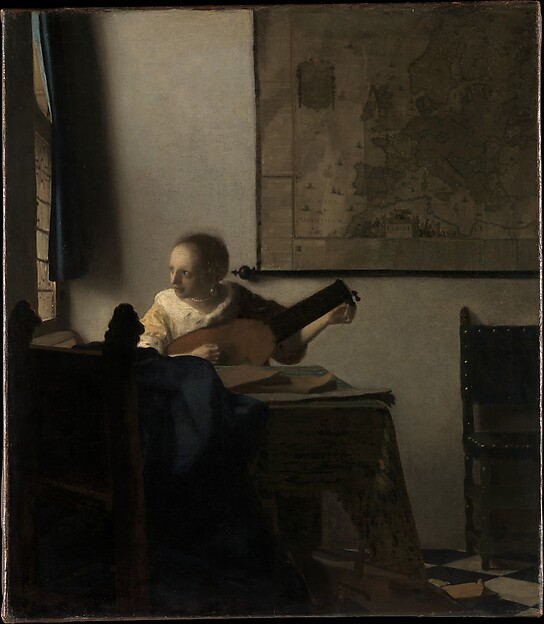 Johannes Vermeer — Young Woman with a Lute
 Jacques de Claeuw — Vanitas Still Life