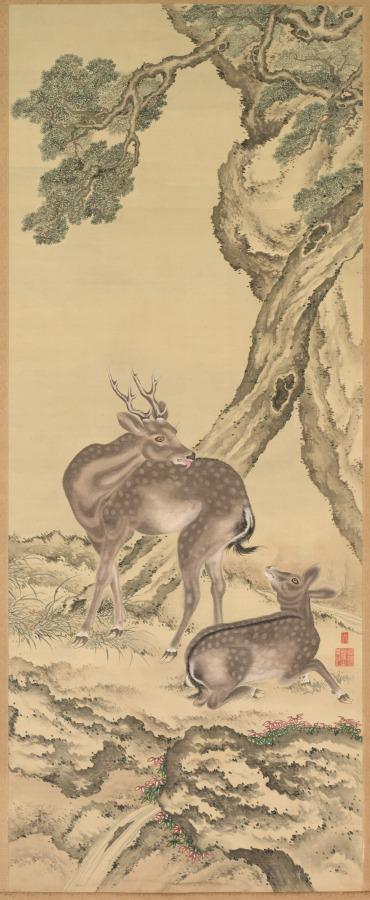
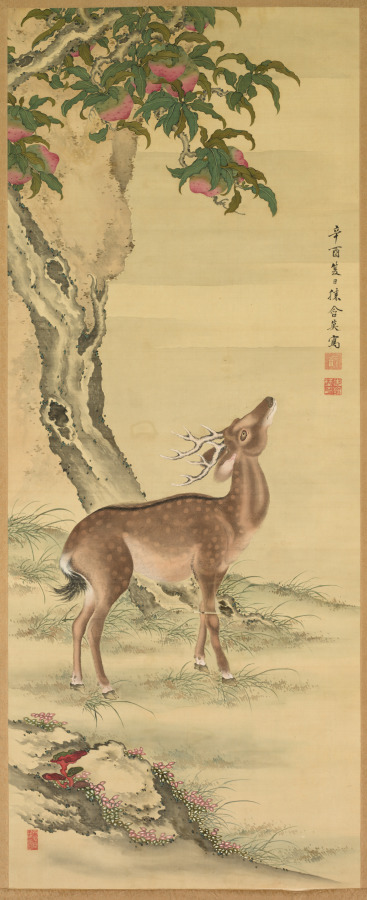
In the collection of Cleveland Museum of Art, Cleveland — check current display status with the museum.
FROM THE CLEVELAND MUSEUM OF ART’S CATALOG
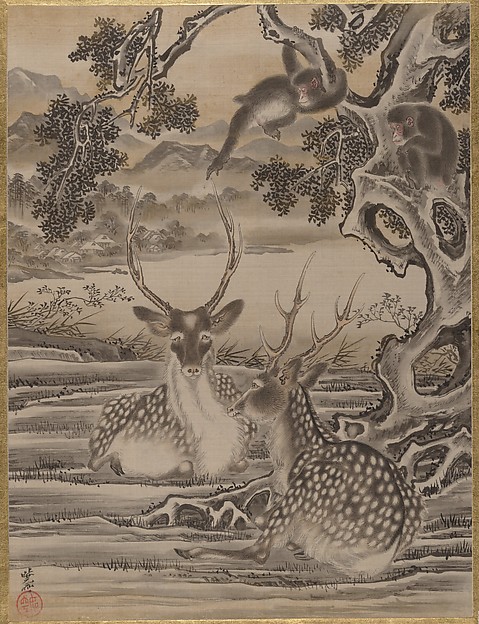
This pair of hanging scrolls is replete with images symbolizing longevity. Peaches, associated with immortality, hang in abundance from a tree in the left scroll, while pines, known for being eternally green, twist together in the right scroll. Beneath the trees stand two bucks, one of whom gazes at a doe seated on the ground as he licks his coat. Medicine made from deer antlers is said to promote health. Mushrooms, in bright red and green, seen in the left scroll, are said to confer immortality upon those who eat them, and the small waterfall in the right scroll speaks to the infinite flexibility and abundance flowing through life. Toda Tadanaka, the son of the ruler of Noto province and a military leader himself, trained with trained with Mori Ransai (1740-1801), a painter known for colorful bird-and-flower compositions in the style of Shen Nanping. The style is more generally referred to as the Nagasaki style, indicating the port city in which a number of Chinese painters were active in the Edo period (1615-1868).
Be the first to share your thoughts.
Sign in to join the discussion.
 Suzuki Kiitsu|Ogata Kōrin
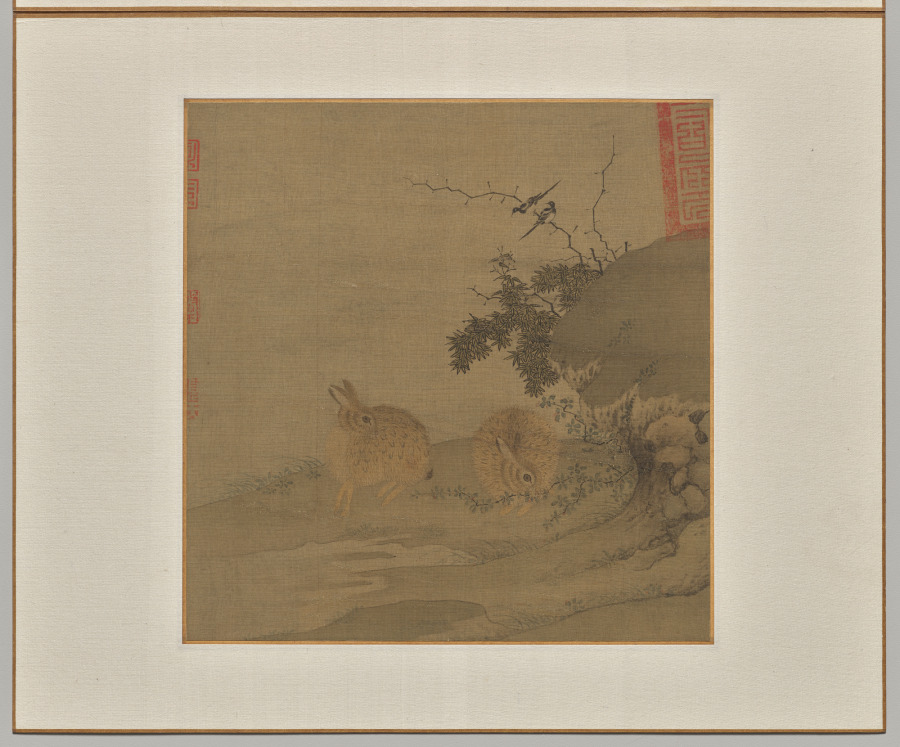 Li Yong (Chinese, active 1200s) — Magpies and Wild Rabbits
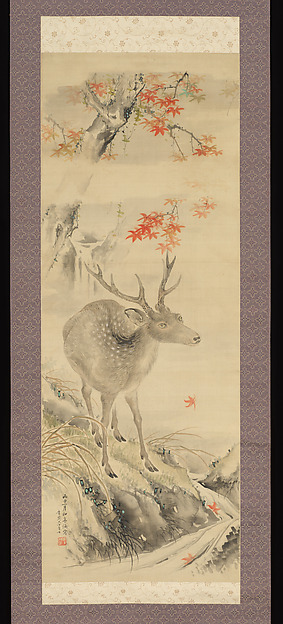 Taki Katei
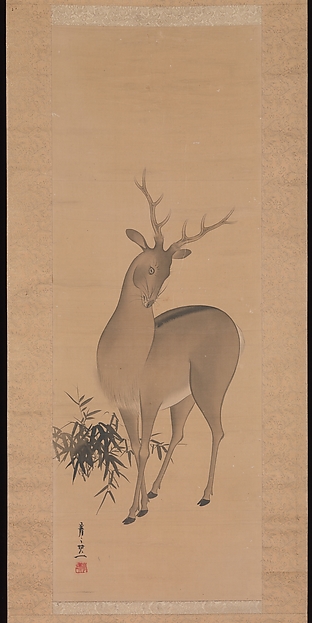 Suzuki Kiitsu
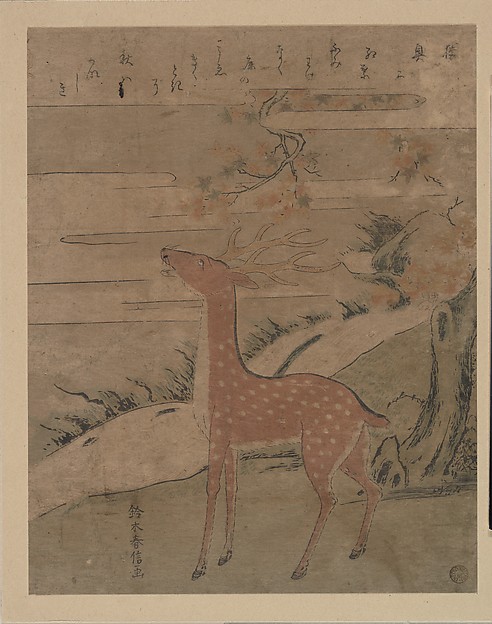 Suzuki Harunobu
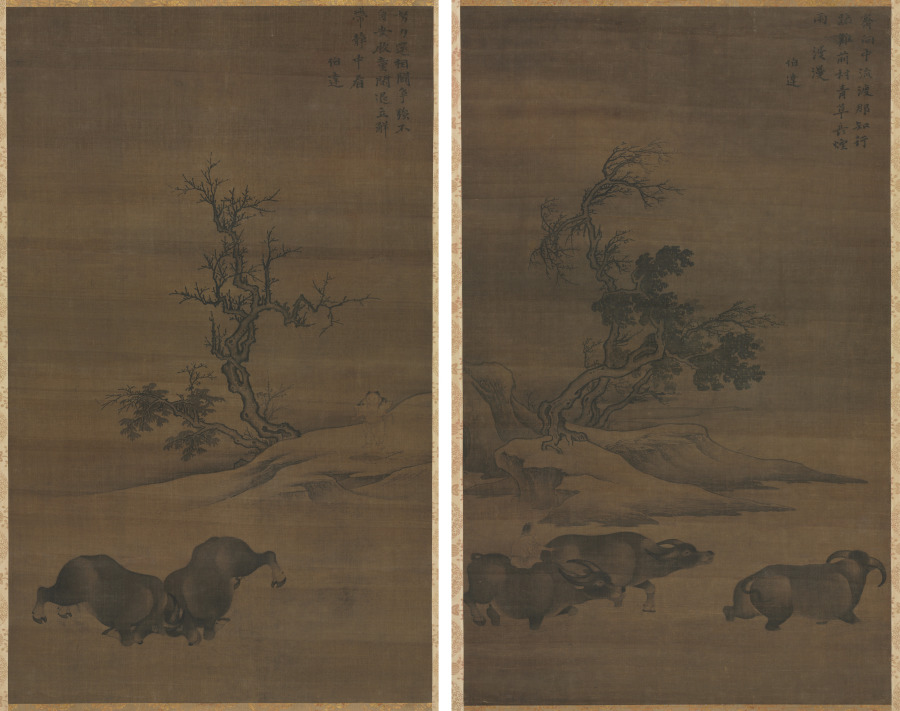 Guo Min (Chinese, mid-late 1200s) — Herdboys and Buffalo in
  Kano Sanraku (Japanese, 1559–1635) — Wild Geese
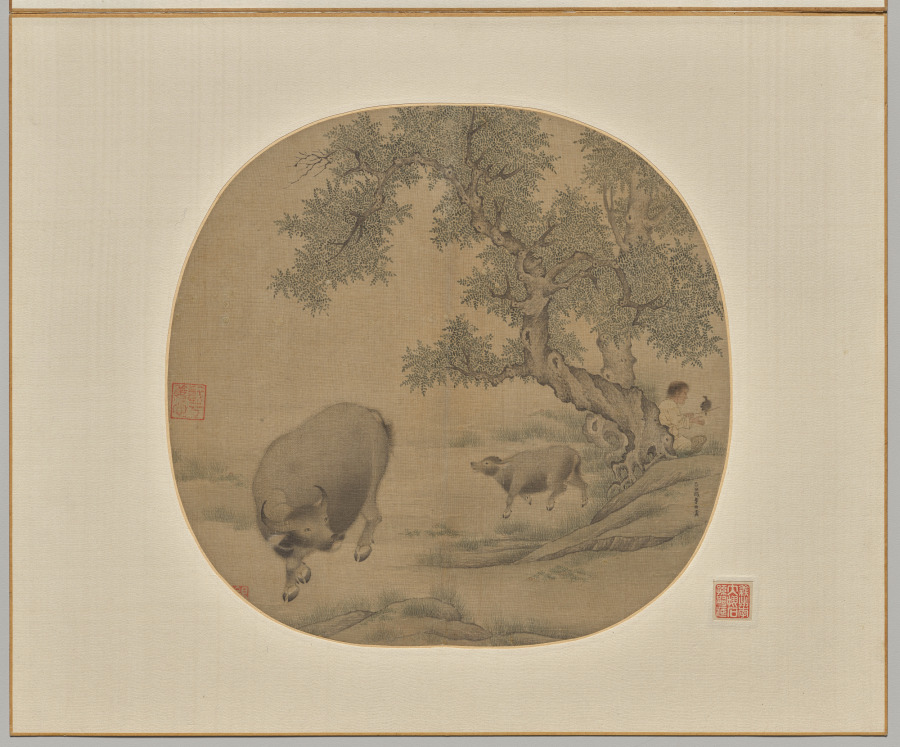 Li You (Chinese, active c. 1145) — Man, Buffalo, and Calf
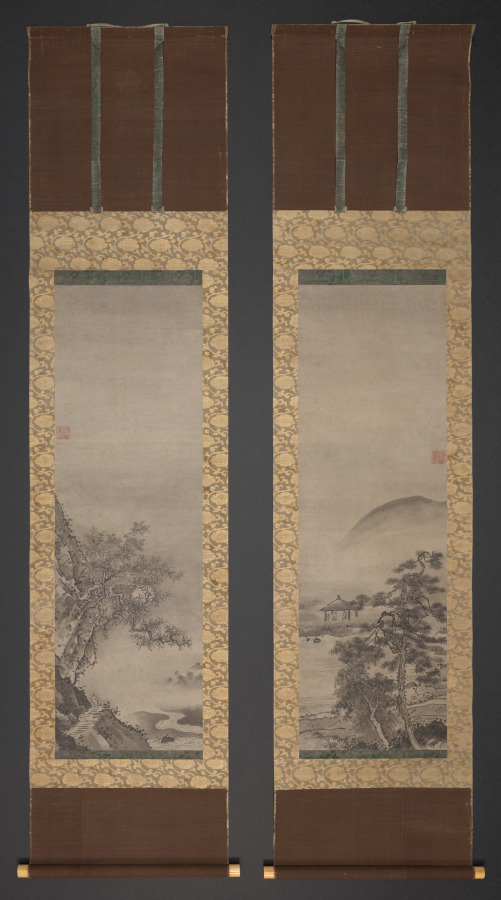 Shūgetsu Tōkan (Japanese, 1440?–1529) — Landscapes with Figu
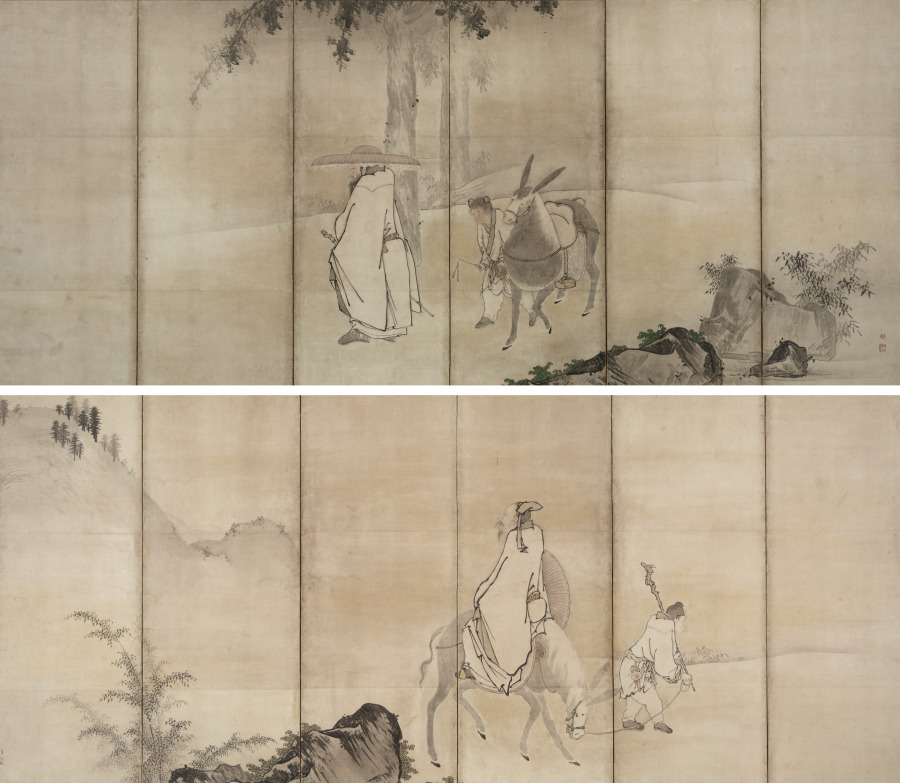 Unkoku Tōgan (Japanese, 1547–1618) — Su Shi (So Shoku) and P
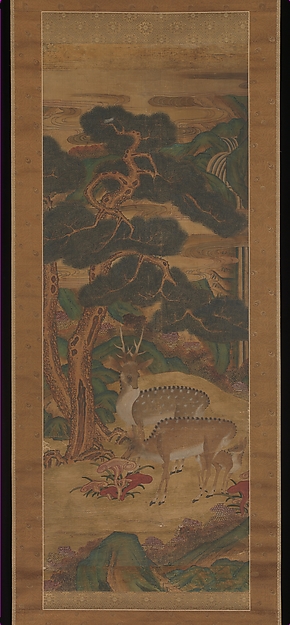 Unidentified artist — 작자미상 소나무 아래 사슴 조선|作者未詳 松下雙鹿圖 朝鮮|De
 Kawanabe Kyōsai 河鍋暁斎