In the collection of Cleveland Museum of Art, Cleveland — check current display status with the museum.
FROM THE CLEVELAND MUSEUM OF ART’S CATALOG
Licentious witches occupied a precarious place during the 16th and 17th centuries, due to their perceived seductive powers that threatened to overturn the patriarchal order of society. The four fleshy women of Albrecht Dürer's beguiling Four Witches exchange vague and shifting glances that suggest sinister intentions. The threatening atmosphere is emphasized by a devil lurking behind an open doorway at the left, and a globe hanging from the ceiling inscribed O.G.H. ( O Gott hüte ), a proverb that means "Oh God, save us"—in this instance, from these sensual witches.
Be the first to share your thoughts.
Sign in to join the discussion.
 Albrecht Dürer — Four Naked Women
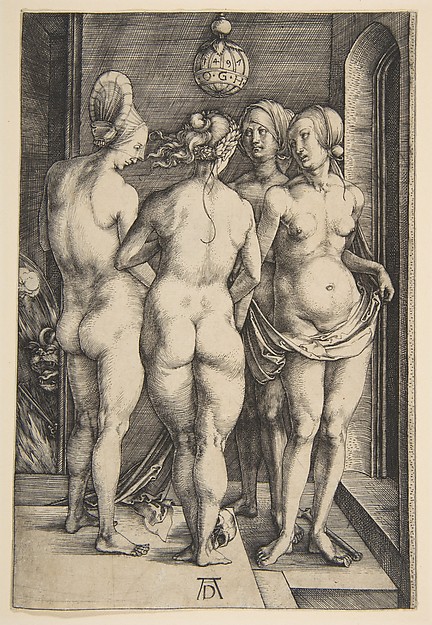 Albrecht Dürer — Four Naked Women
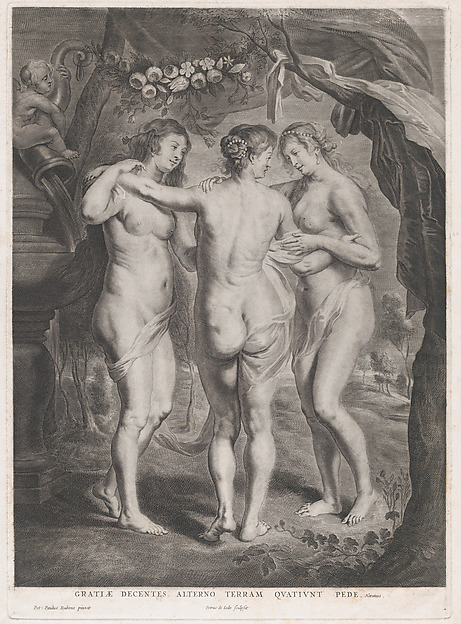 Pieter de Jode II|Peter Paul Rubens — The Three Graces
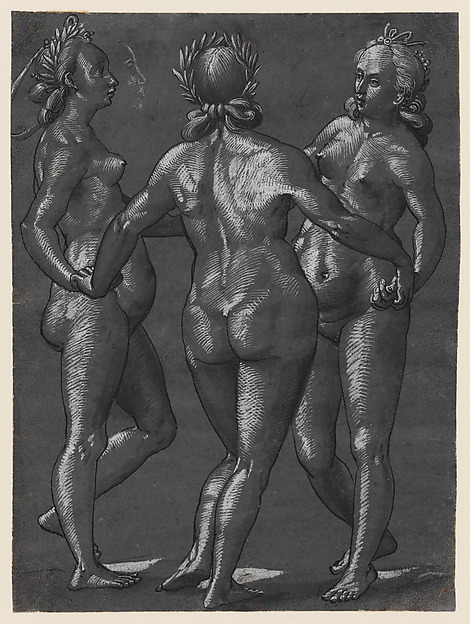 Christoph Murer — The Three Graces (recto); Four putti engag
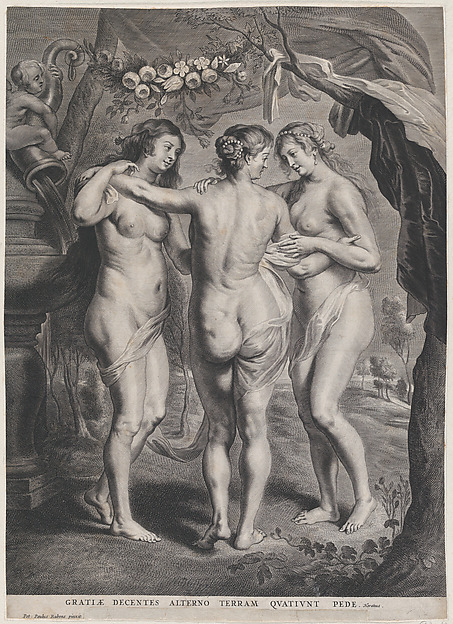 Pieter de Jode II|Peter Paul Rubens — The Three Graces
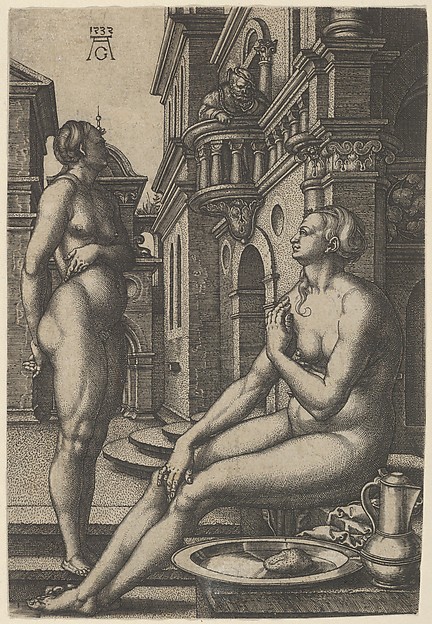 Heinrich Aldegrever — Bathsheba at the Bath
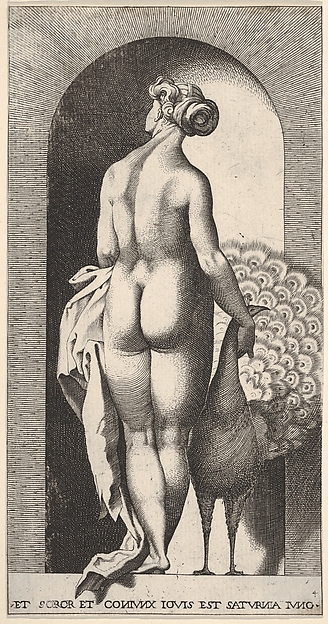 Giovanni Jacopo Caraglio|Rosso Fiorentino — Plate 4: Juno st
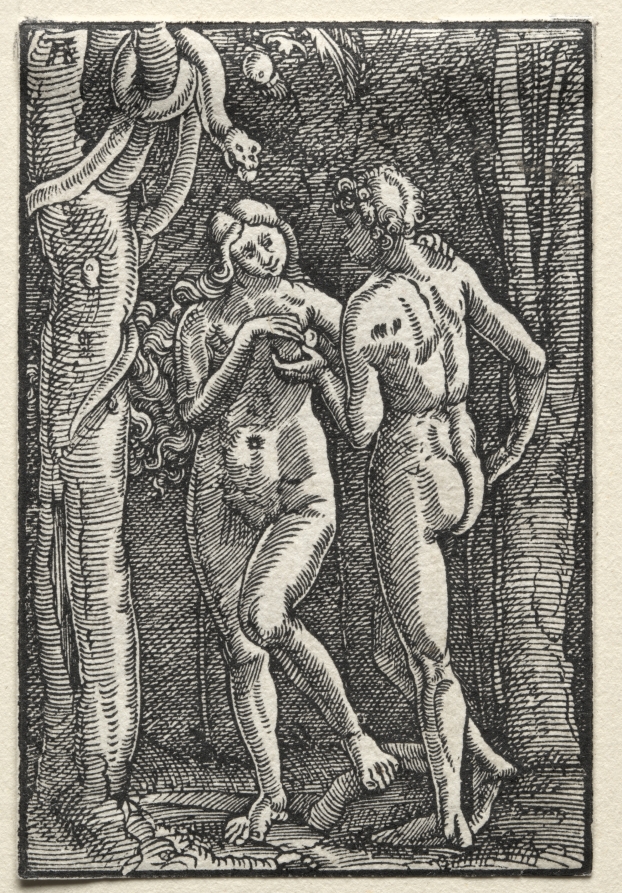 Albrecht Altdorfer (German, c. 1480–1538) — The Fall and Red
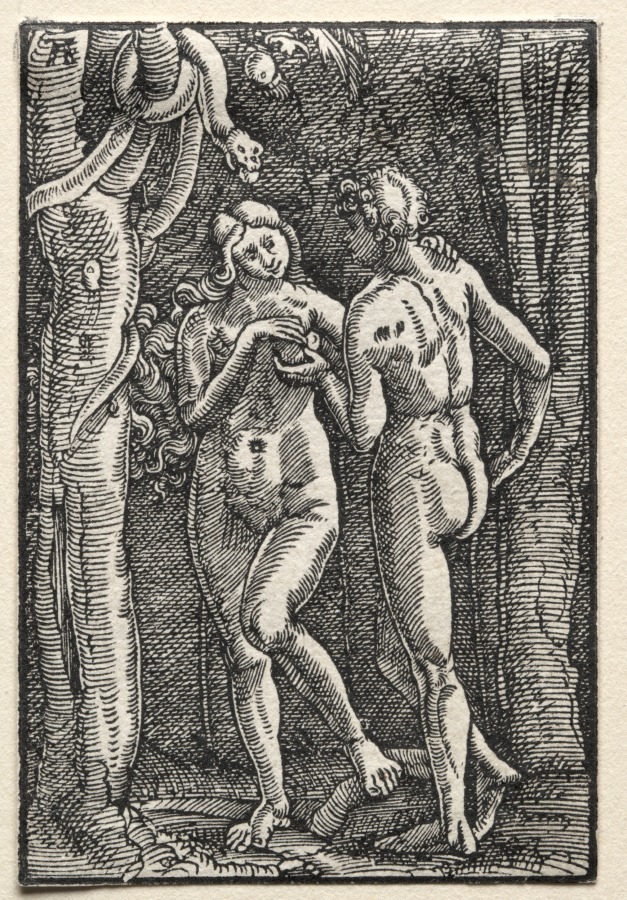 Albrecht Altdorfer (German, c. 1480–1538) — The Fall and Red
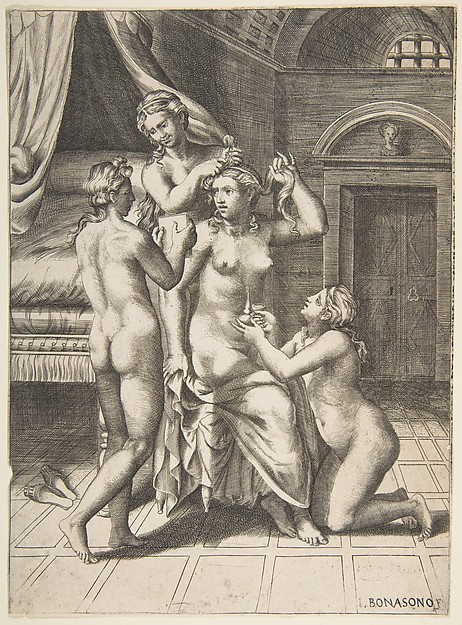 Giulio Bonasone — The toilet of Psyche who is seated in the
 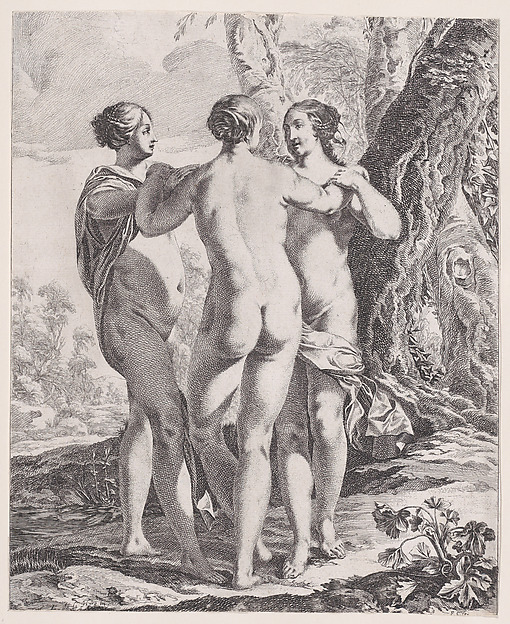 Laurent de La Hyre|François Chauveau — The Three Graces
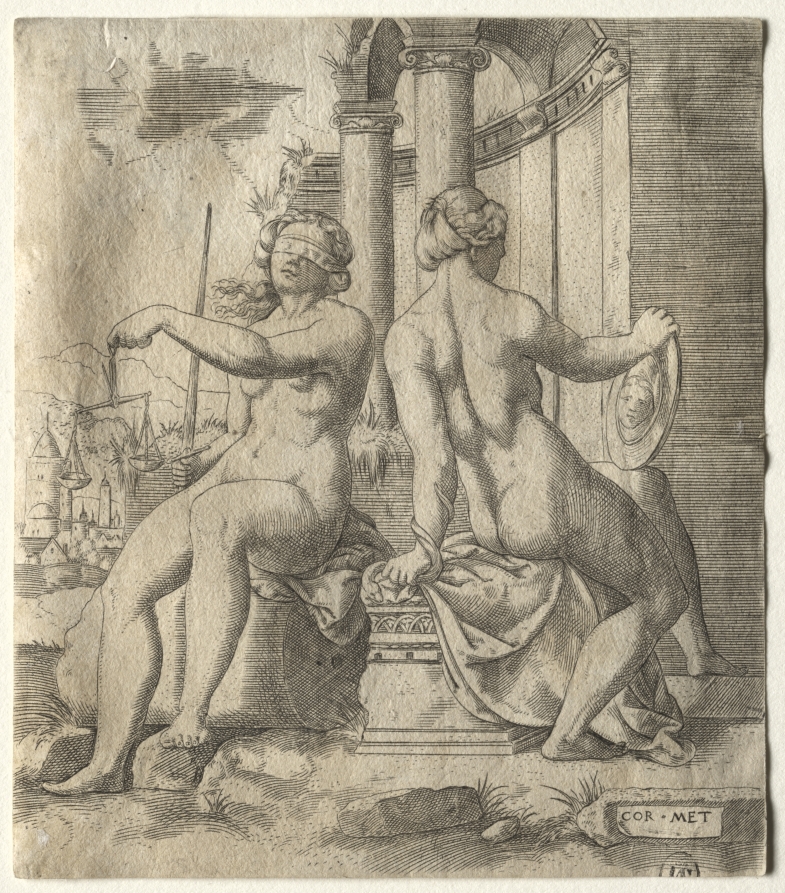 Cornelis Massys (Flemish, 1510/11–1556/57) — Justice and Pru
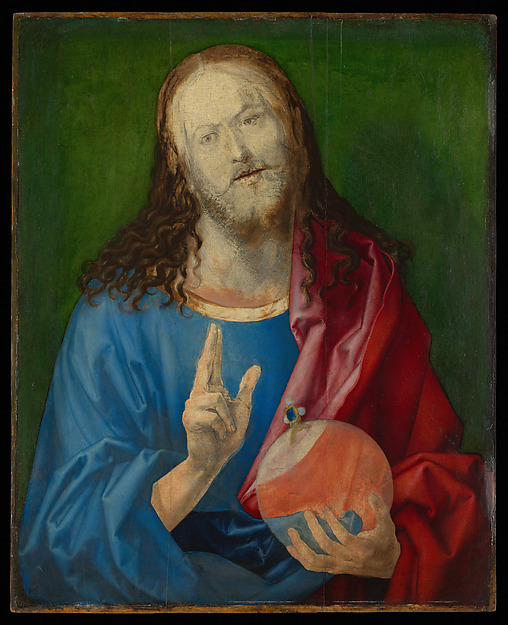
![Madonna and Child [obverse]](https://api.nga.gov/iiif/878db7e6-10ae-4cae-ba5d-6d6f5c413ae8/full/!500,500/0/default.jpg)
![Lot and His Daughters [reverse]](https://api.nga.gov/iiif/7565a449-f82a-414b-9bda-c93f55a51b4d/full/!500,500/0/default.jpg)