FROM THE CLEVELAND MUSEUM OF ART’S CATALOG
Four fish of various sizes are swimming among aquatic plants. Like in other paintings, the existence of water is suggested in the harmonious movement of the fish and plants. In Chinese, the word for fish ( yu ) is a homophone for “abundance” and thus the motif has an auspicious connotation. The painter uses the so-called boneless technique without outlines to shade and texture the bodies of the fish. The smooth transition from dark shades on their backs to their white bellies and the thin transparent fins and tails in light washes accentuated by gills and scales are all executed without contour lines.
Source ↗︎
Be the first to share your thoughts.
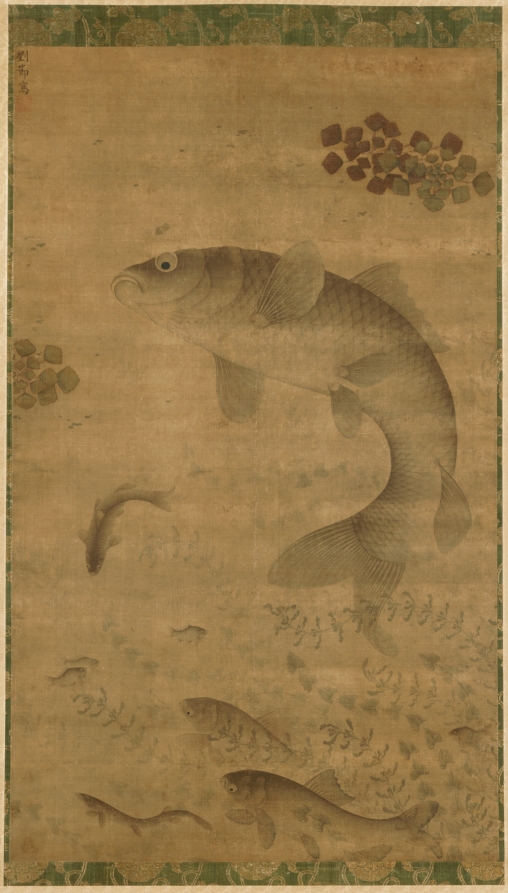 Liu Jie (Chinese, c. 1447–1520s) — Leaping Carp
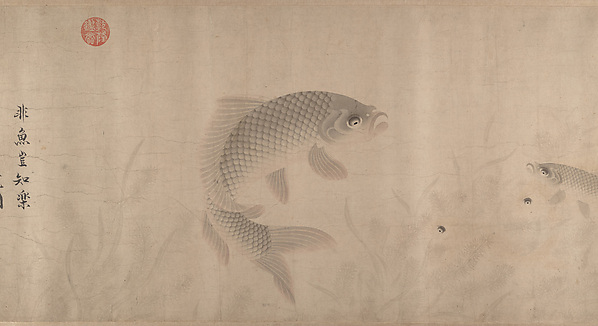 Zhou Dongqing — 元 周東卿 魚樂圖 卷|The Pleasures of Fishes
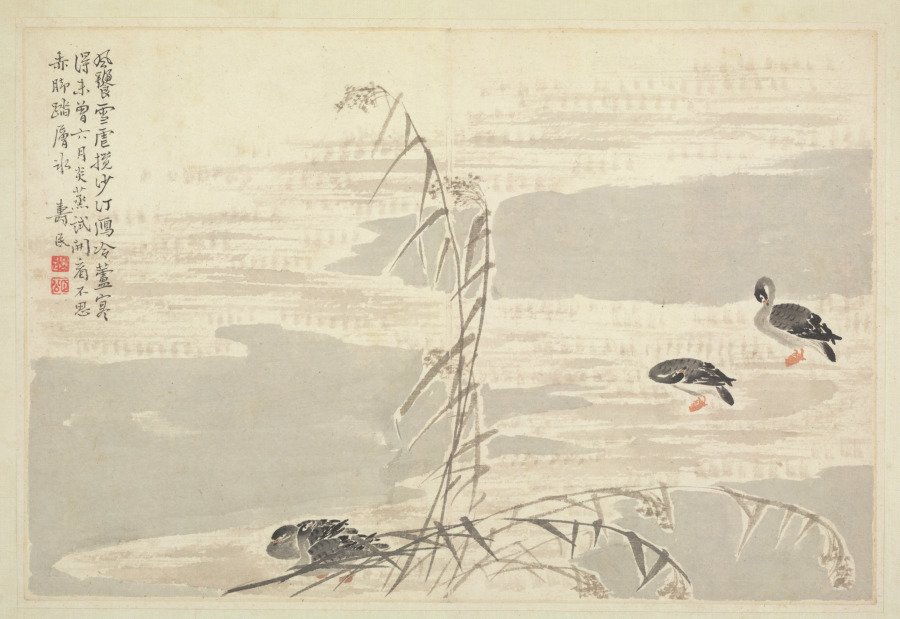 Bian Shoumin (Chinese, 1684–1752) — Album of Calligraphy and
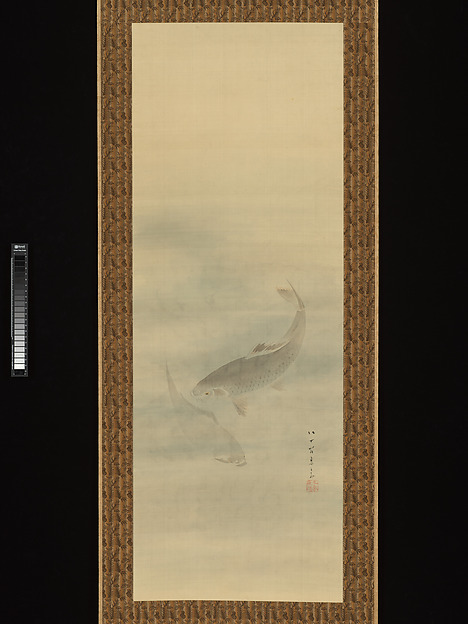 Kikuchi Yōsai
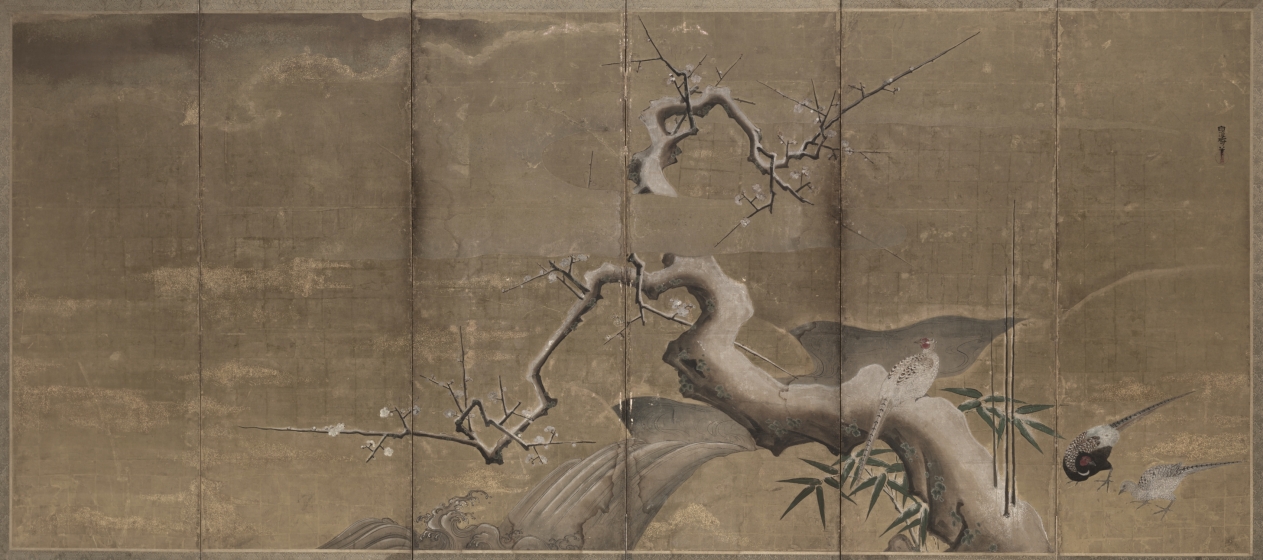 Kano Naonobu (Japanese, 1607–1650) — Winter Scene with Plum
 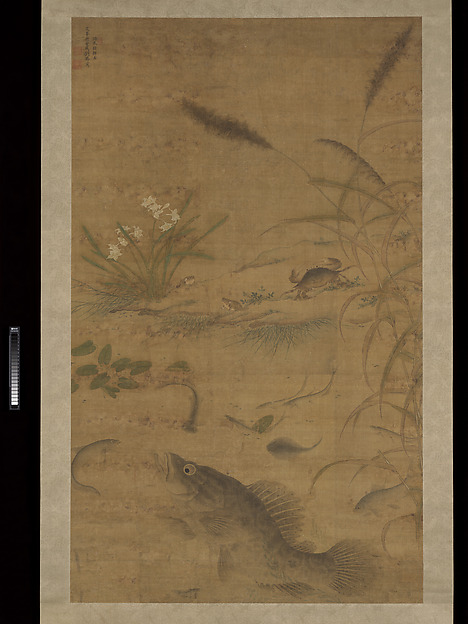 Liu Jie — 一鱖禾蟹圖|Flowers, fish, and crabs
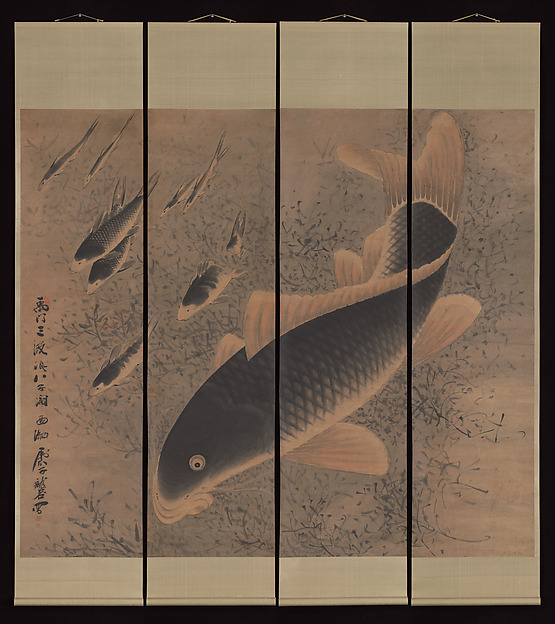 Gong Gu — 清 龔谷 躍鯉圖 四條屏|Nine carp
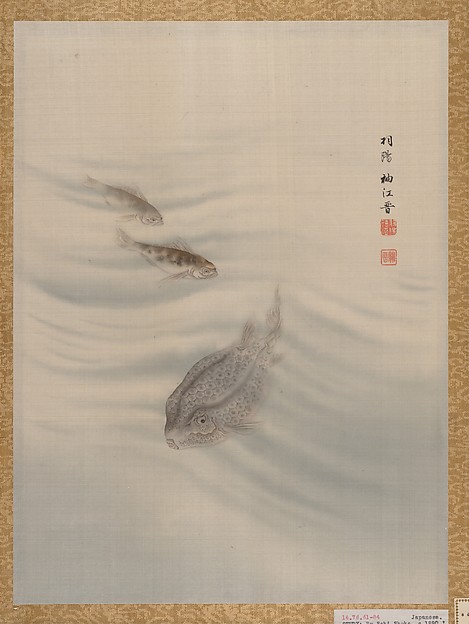 Seki Shūkō
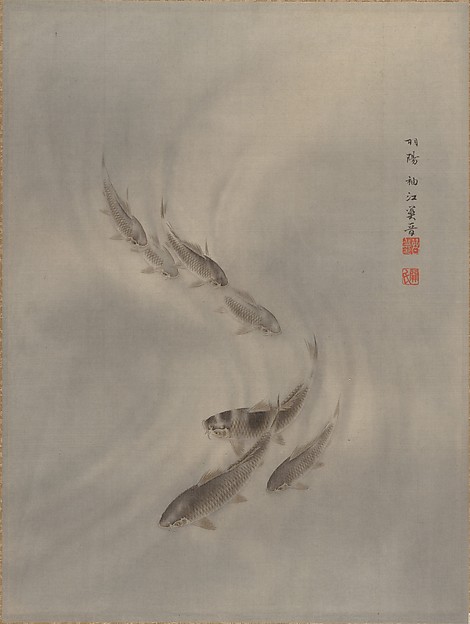 Seki Shūkō
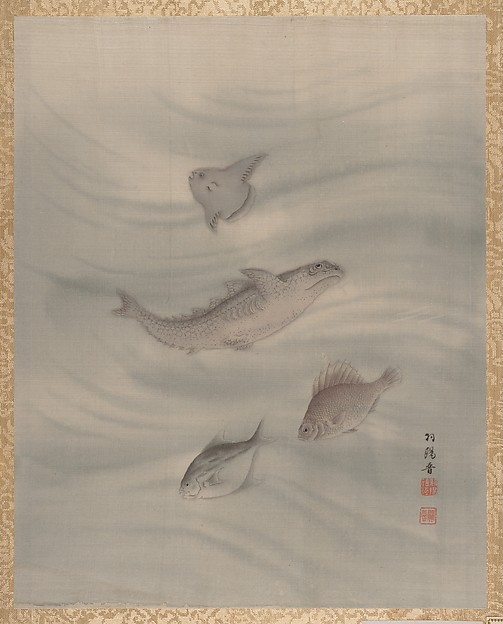 Seki Shūkō
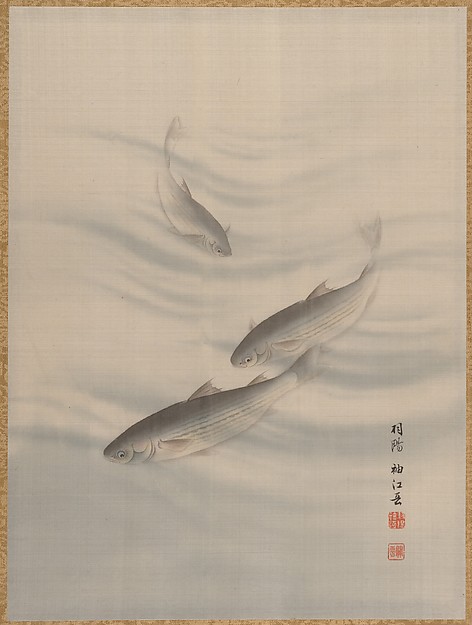 Seki Shūkō
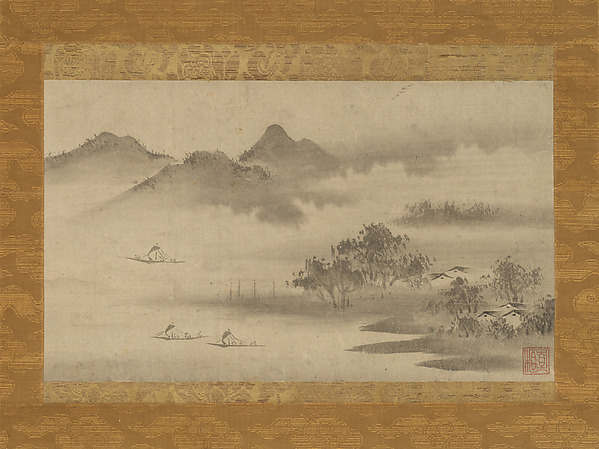 Sōami
Sōami