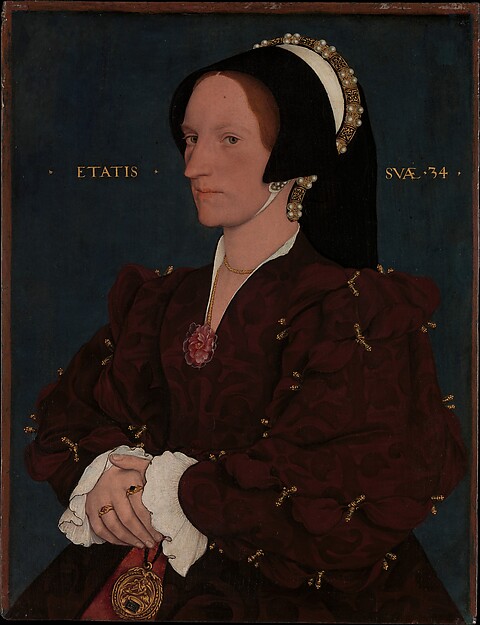
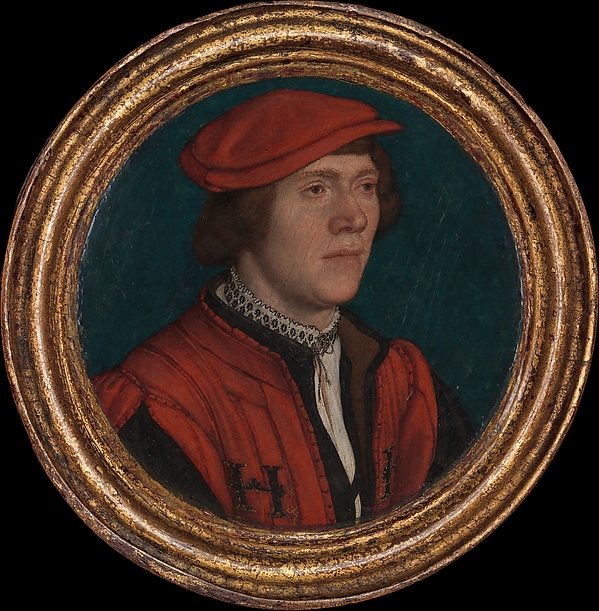
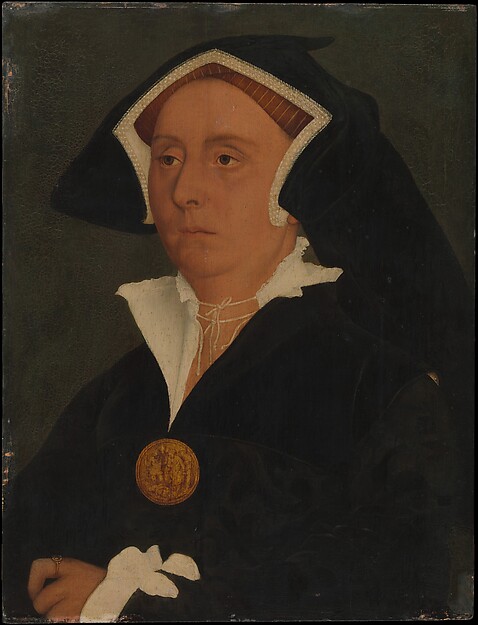
In the collection of Cleveland Museum of Art, Cleveland — check current display status with the museum.
FROM THE CLEVELAND MUSEUM OF ART’S CATALOG
Dance of Death is the most celebrated series of woodcuts designed by Holbein. The forty-one blocks were cut by Hans Lützelburger in the years immediately before his death in 1526, though the set was not published until 1538. Dance of Death originated as a drama in the middle of the 14th century. Following widespread epidemics such as the black plague, these plays took place in a cemetery or churchyard. Actors, dressed in pale costumes painted to resemble skeletons, personified Death and summoned a group of people from all social classes in a dancelike procession. In a period when the life span was short, the purpose of the Dance of Death was to remind the populace to prepare for the Last Judgement.
Be the first to share your thoughts.
Sign in to join the discussion.
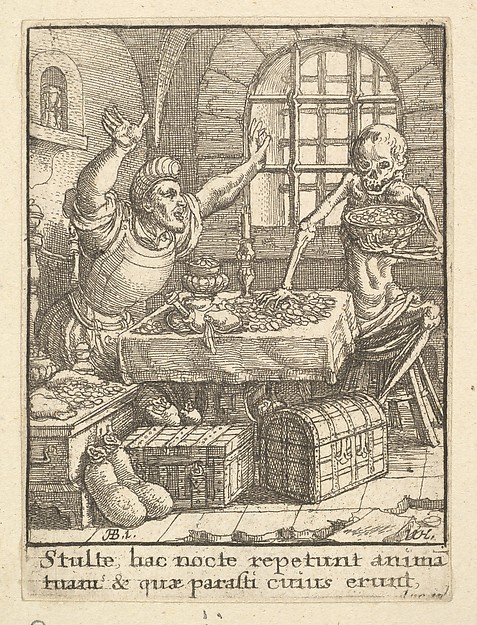 Hans Holbein the Younger|Wenceslaus Hollar — The Miser, from
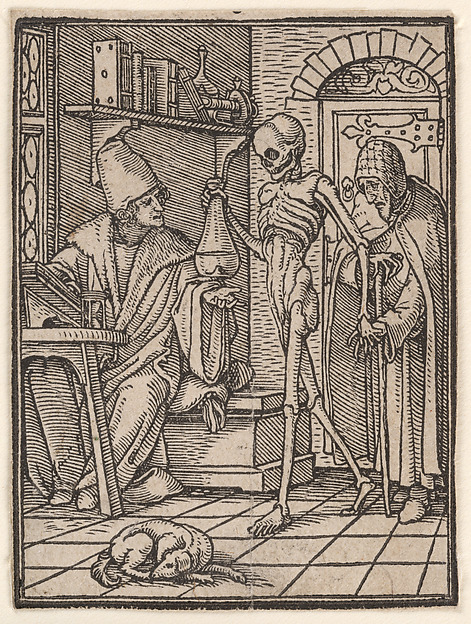 Hans Holbein the Younger|Hans Lützelburger — The Doctor (or
 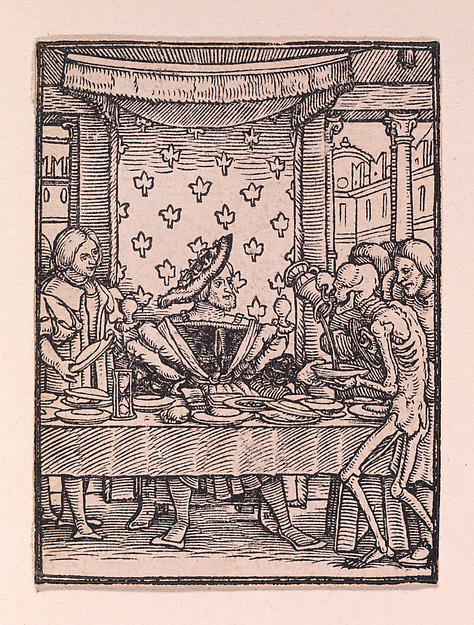 Hans Holbein the Younger|Hans Lützelburger — The Rich Man, f
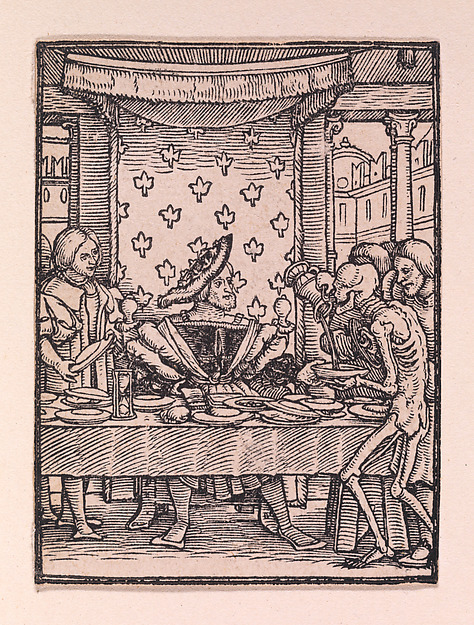 Hans Holbein the Younger|Hans Lützelburger — The King, from
 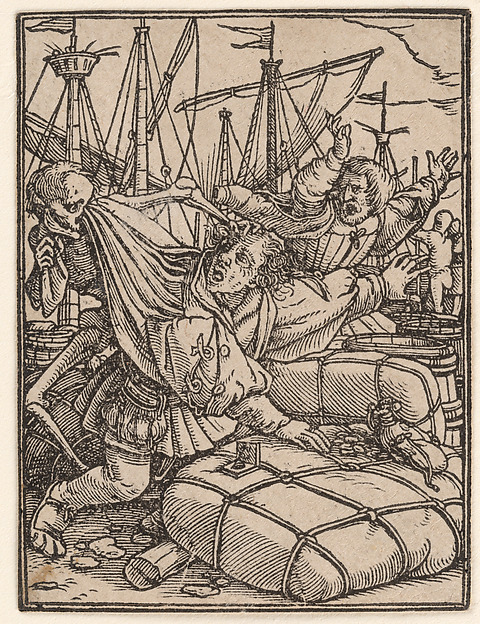 Hans Holbein the Younger|Hans Lützelburger — The Merchant, f
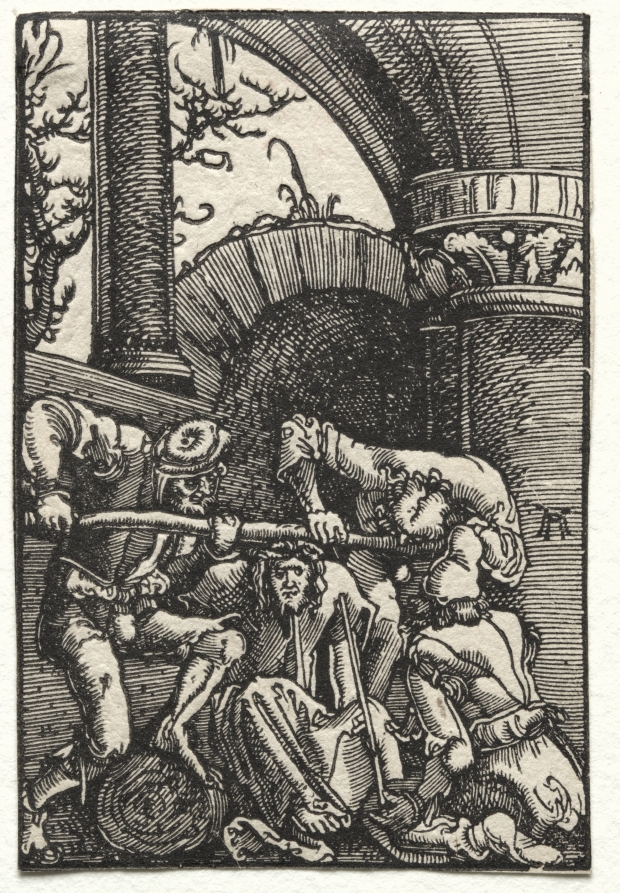 Albrecht Altdorfer (German, c. 1480–1538) — The Fall and Red
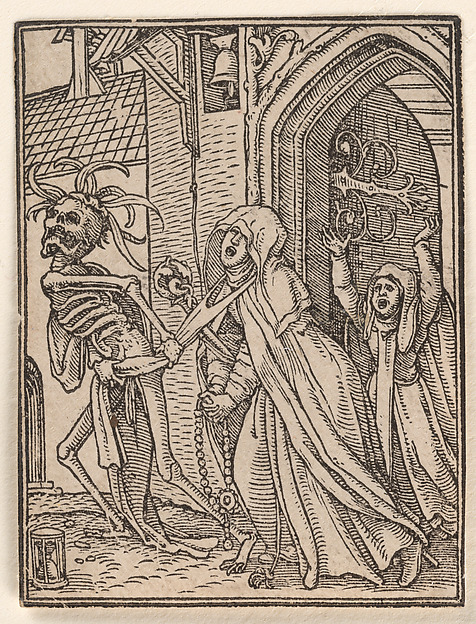 Hans Holbein the Younger|Hans Lützelburger — The Abbess, fro
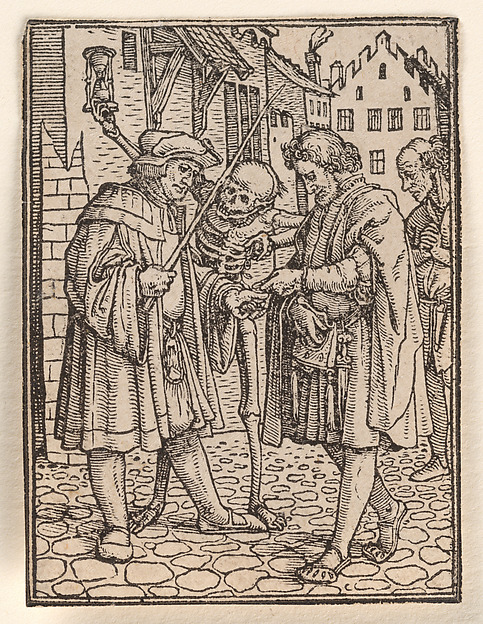 Hans Holbein the Younger|Hans Lützelburger — The Lawyer (or
 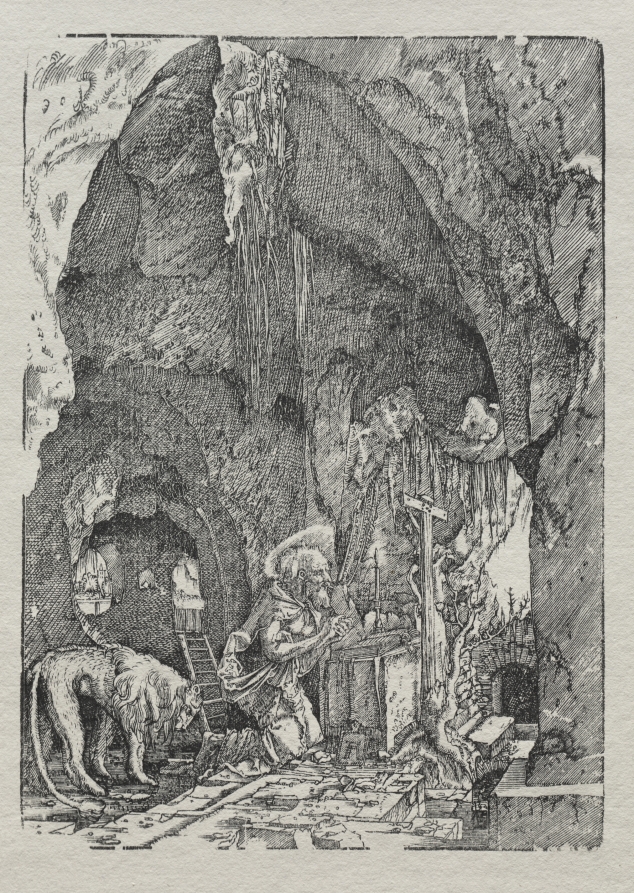 Albrecht Altdorfer (German, c. 1480–1538) — St. Jerome in th
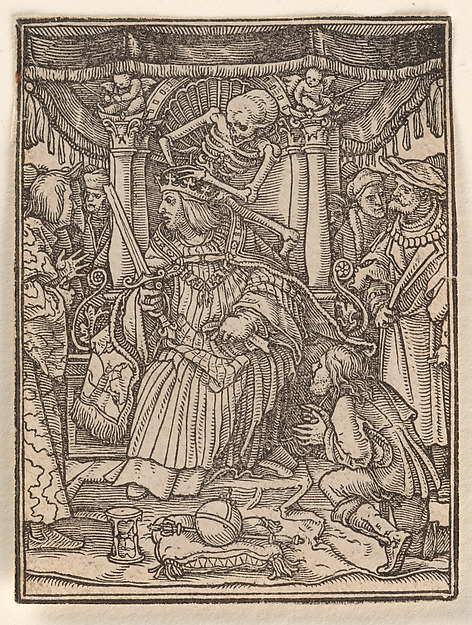 Hans Holbein the Younger|Hans Lützelburger — The Emperor, fr
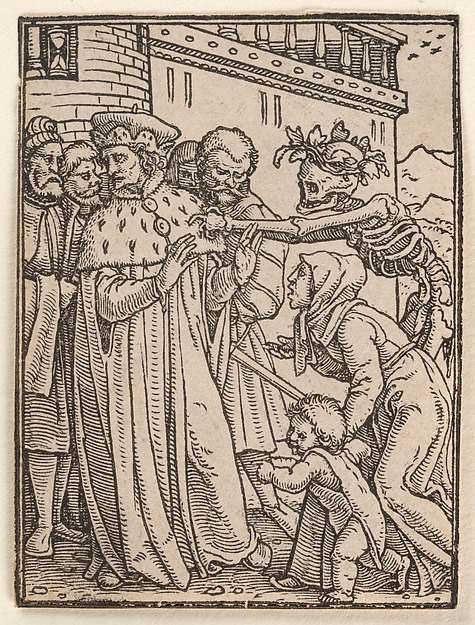 Hans Holbein the Younger|Hans Lützelburger — The Duke, from
 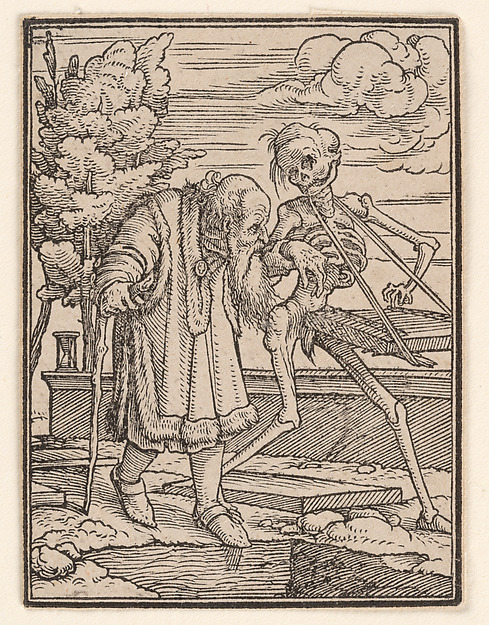 Hans Holbein the Younger|Hans Lützelburger — The Old Man, fr