In the collection of Cleveland Museum of Art, Cleveland — check current display status with the museum.
FROM THE CLEVELAND MUSEUM OF ART’S CATALOG
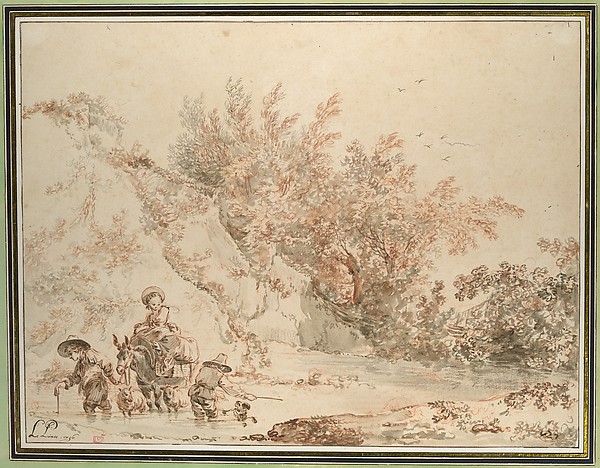
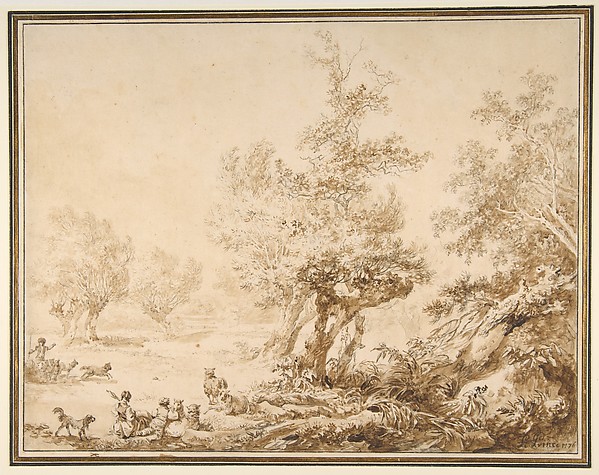
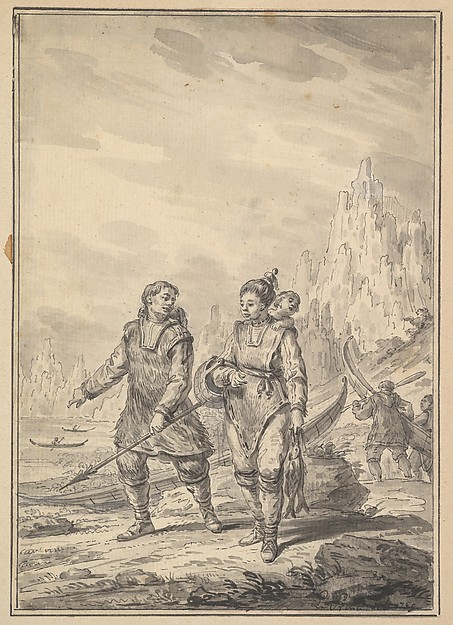
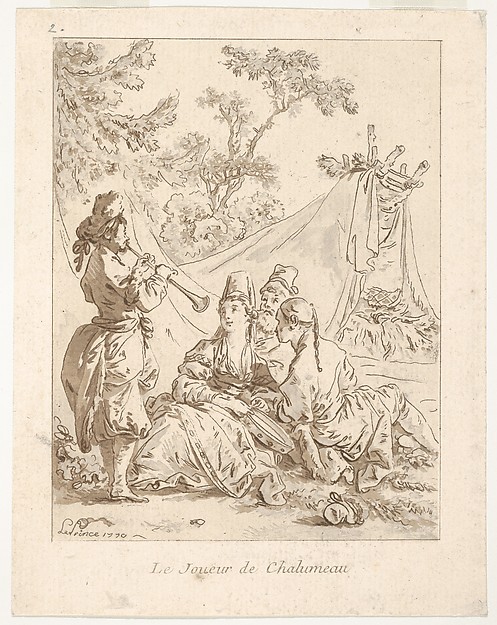
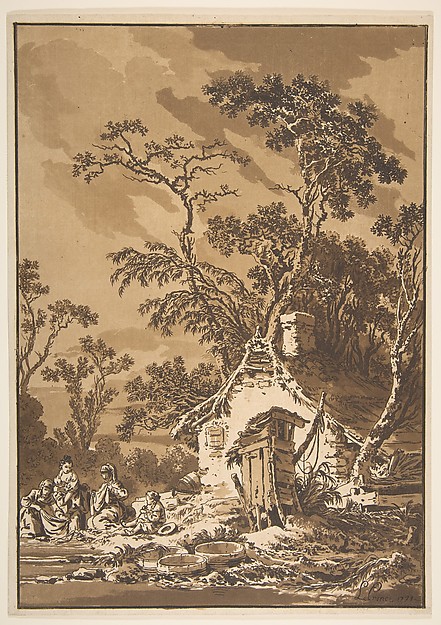
French art during the 1700s often reflects an interest in the exotic, especially in imagery of lands then perceived as far away and unusual-such as Turkey and China, places with religions and cultural practices different from those of Western Europe. Le Prince developed his own type of exotic imagery based on the peoples and customs of Russia. But unlike most artists, who fabricated fantastic visions of such places, he based his work on his own observations made in Russia between 1758 and 1763. After returning to Paris, Le Prince continued to rely on his Russian experiences for artistic subject matter. This drawing shows a rustic structure built as an outdoor pleasure garden and drinking establishment. Le Prince, who was an innovative printmaker, developed the medium known as aquatint, which allowed artists to translate the broad tonal washes of ink drawing into a type of etching. Le Prince translated this drawing into an aquatint. For more about this technique, see the exhibition about French printmaking on view nearby in galleries 109 and 110.
Be the first to share your thoughts.
Sign in to join the discussion.
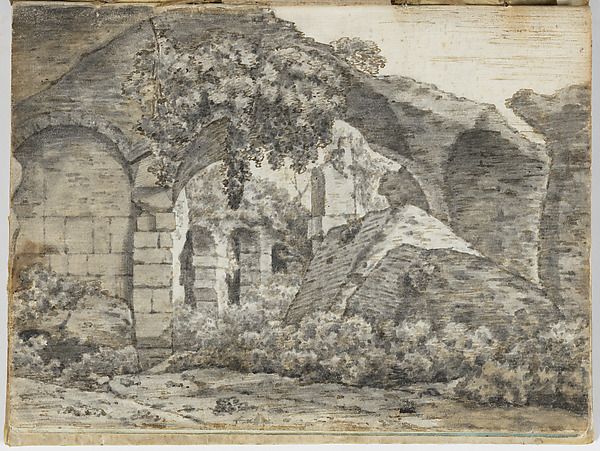 Joseph Wright (Wright of Derby) — Roman Ruins (recto); Three
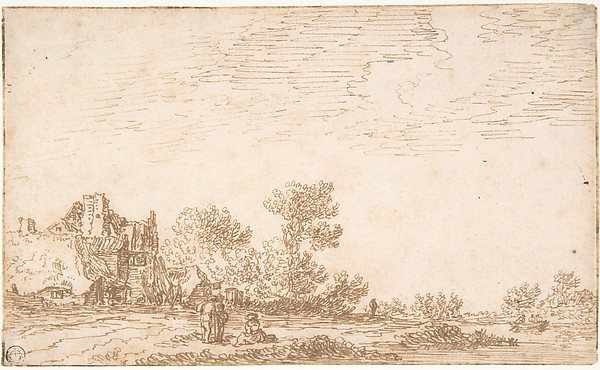 Jan van Goyen — Landscape with River and Three Figures
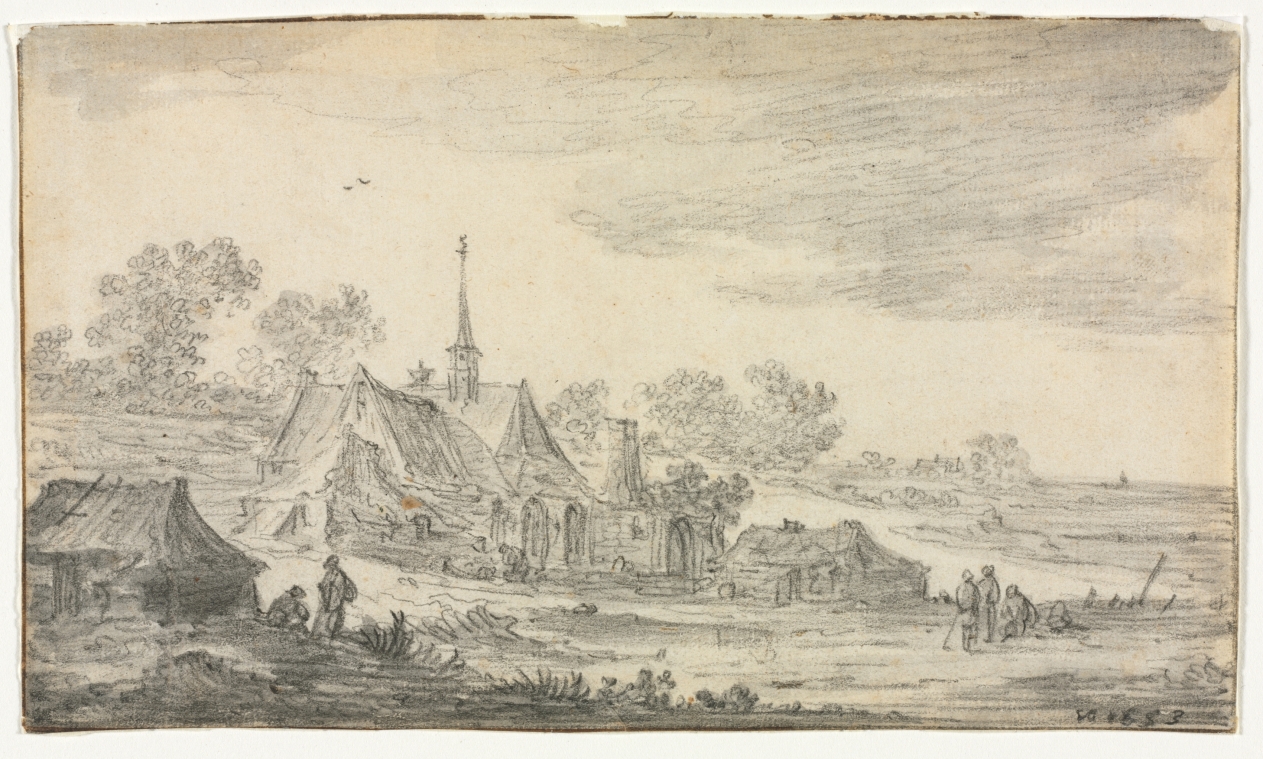 Jan van Goyen (Dutch, 1596–1656) — Group of Buildings on a S
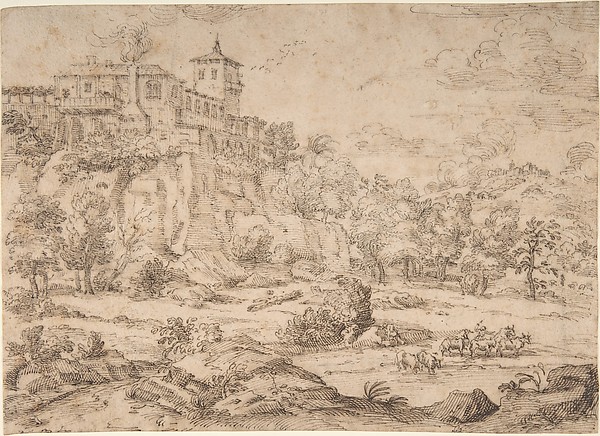 Guillerot — Landscape with Hilltop Villa
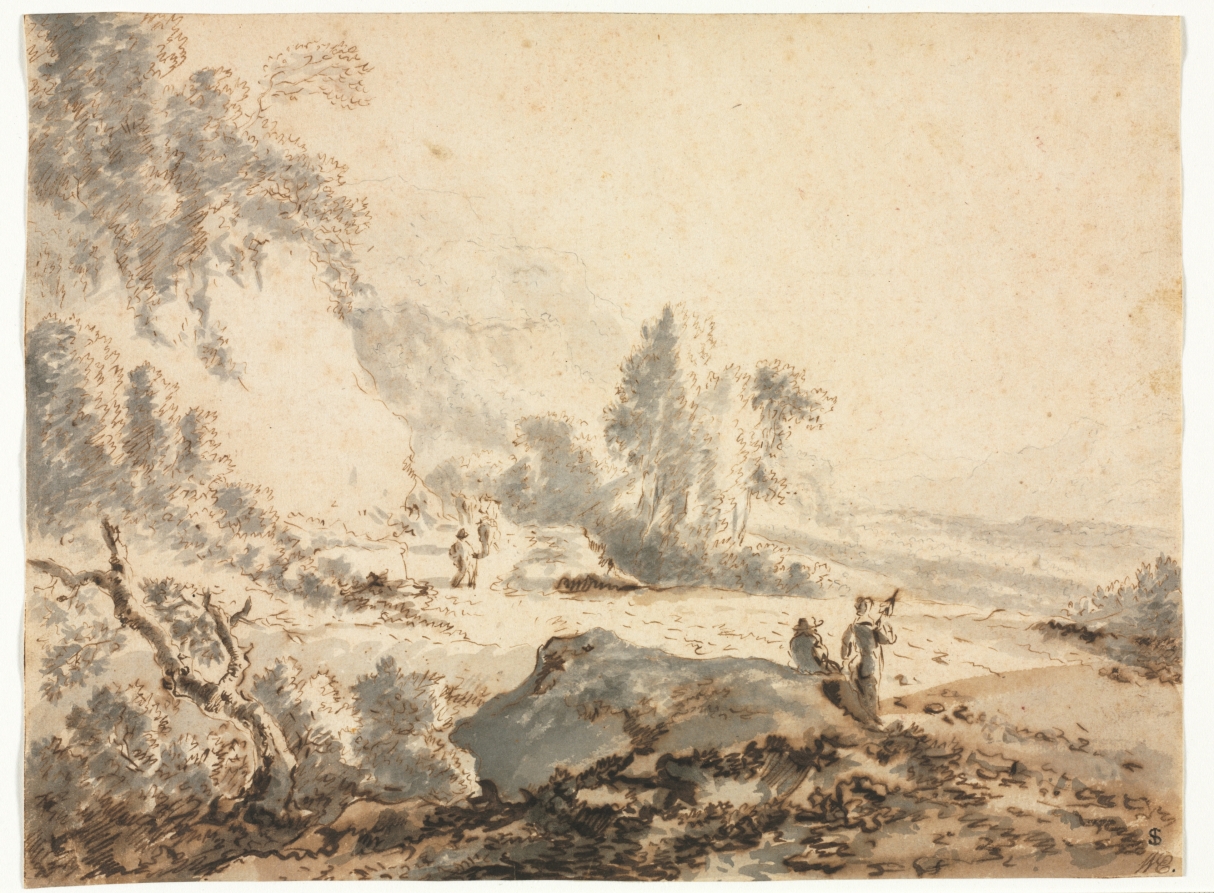 Anonymous — Landscape
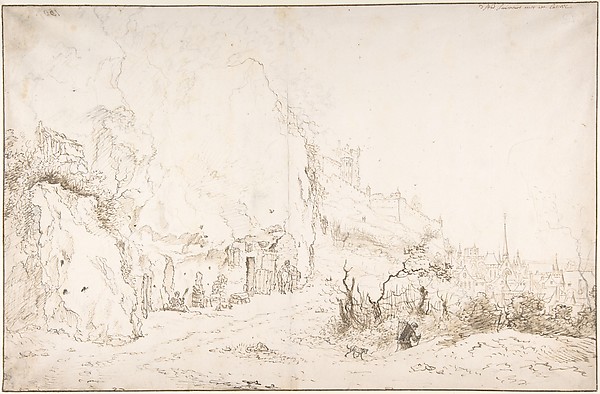 Willem Schellinks — View of Saumur
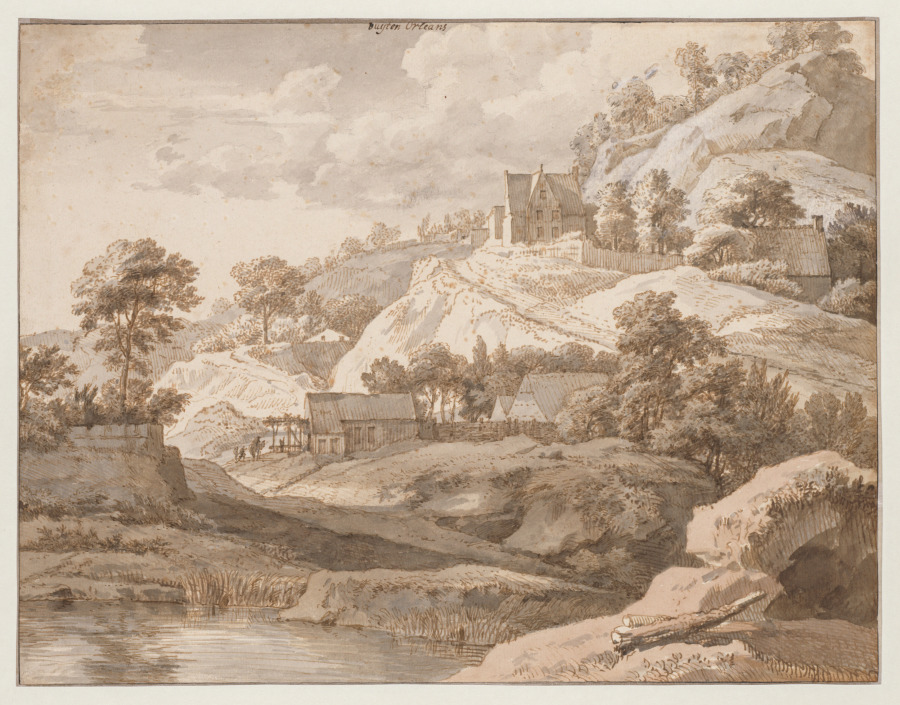 Isaac de Moucheron (Dutch, 1667–1744) — View near Orleans
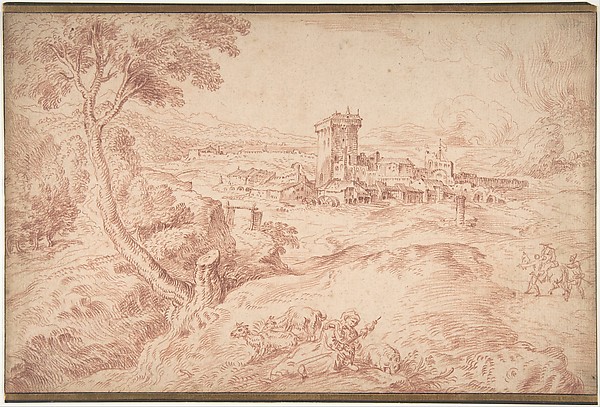 Antoine Watteau|Domenico Campagnola — Landscape with an Old
 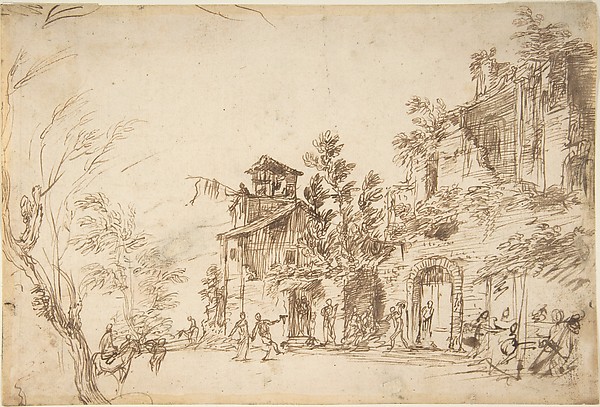 Anonymous, Italian, Venetian, 18th century — Landscape with
 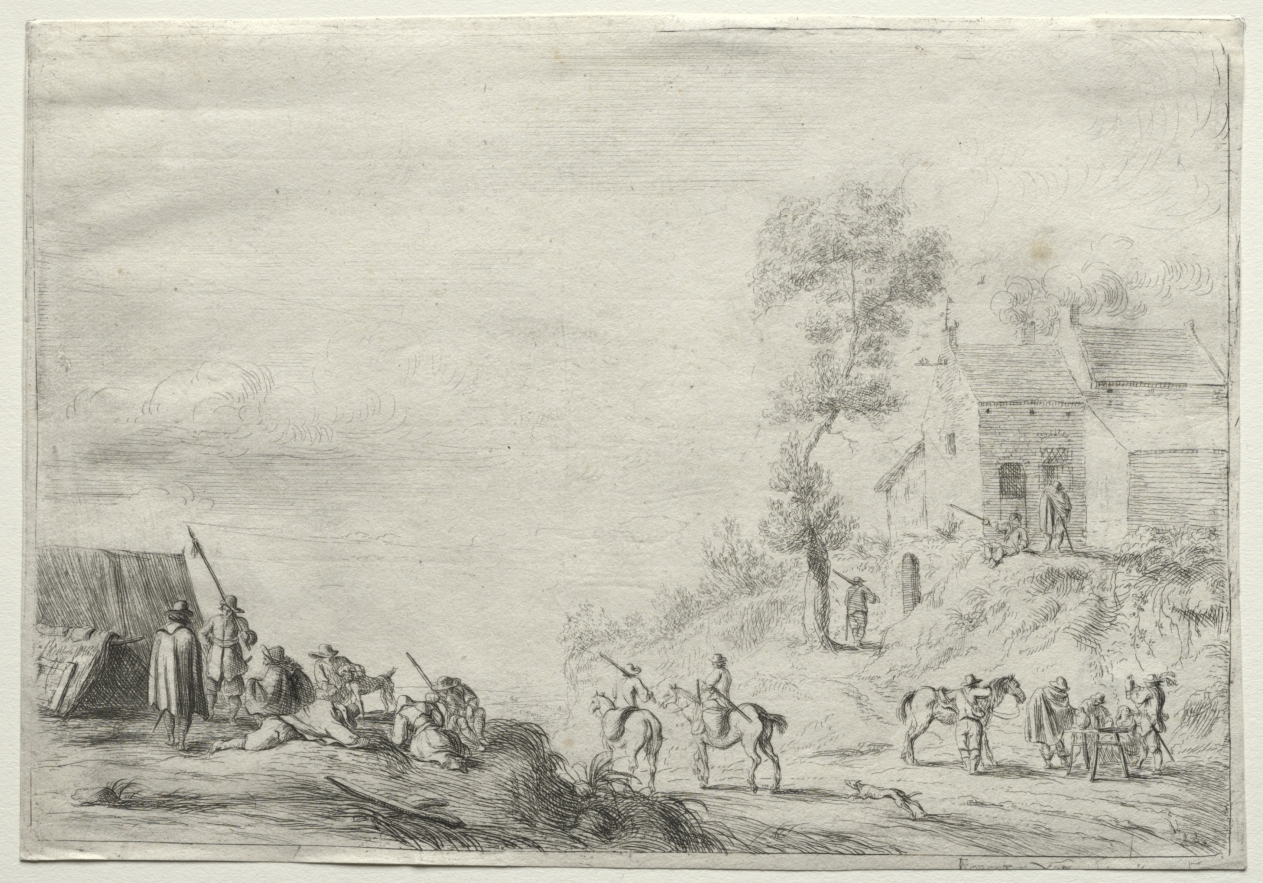 Robert van den Hoecke (Flemish, 1622–1668) — The Outpost
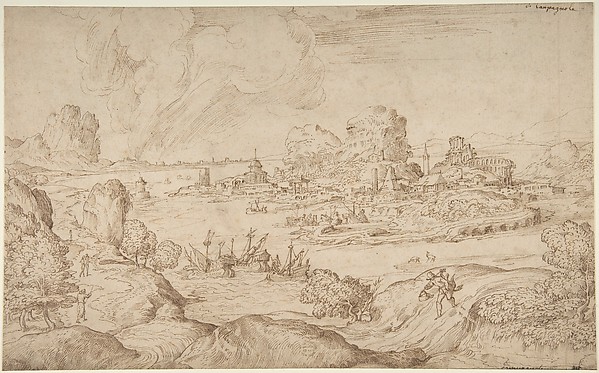 Domenico Campagnola — Imaginary Coastal Landscape with Ruins
 Isaak Major — Landscape