FROM THE CLEVELAND MUSEUM OF ART’S CATALOG
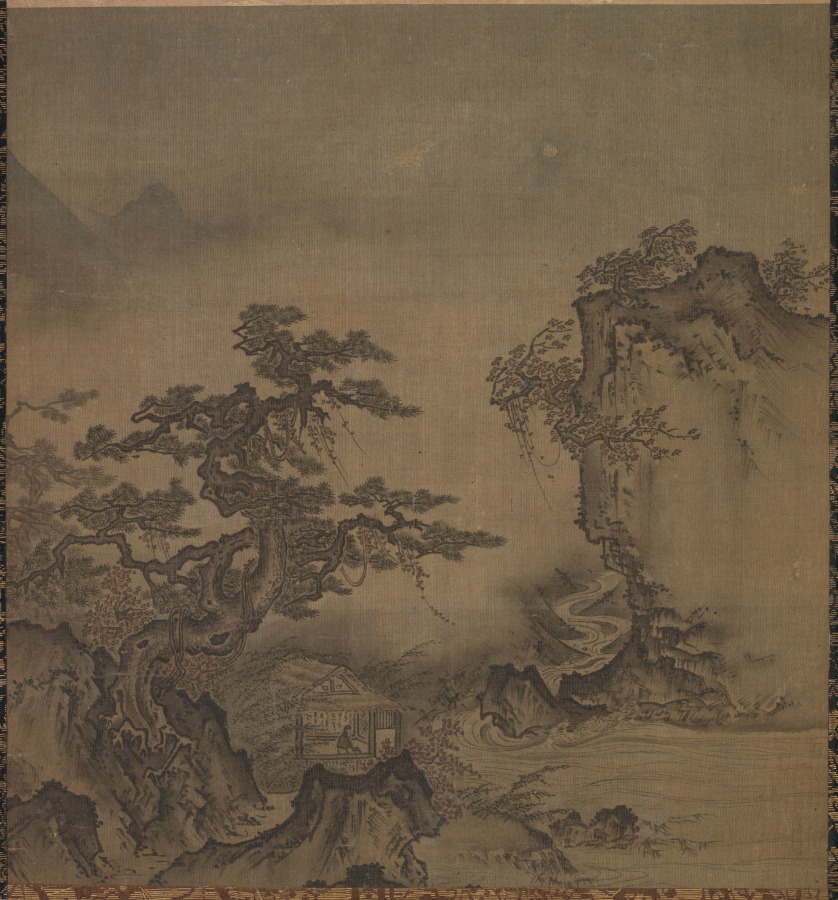
This painting bears a seal reading Shōkei. The style of the seal resembles that used by Kenkō Shōkei (active about 1470–after 1523), a monk and painter at the Zen temple Kenchōji in Kamakura who studied in Kyoto for three years with Geiami (1431–1485?), painter to the shogun as well as curator of the shogun’s collection of art. However, the seal was carved to look like Shōkei’s and added to the painting at a later date by someone who thought the unsigned landscape was similar to his work. The painting has compositional and some stylistic similarities to images by other Kanto-based artists like Maejima Sōyū (active mid-1500s), who trained with Kano school artists. Specifically, the pines clinging to the massive boulder in front of a pavilion with mountains receding into atmospheric space—in a composition weighted in a single corner of the painting—is a Kanto-inflected derivation of the painting of the Zen monk-painter Tenshō Shūbun (active about 1414), whose work was a major inspiration for Kano school painters.
Source ↗︎
Be the first to share your thoughts.
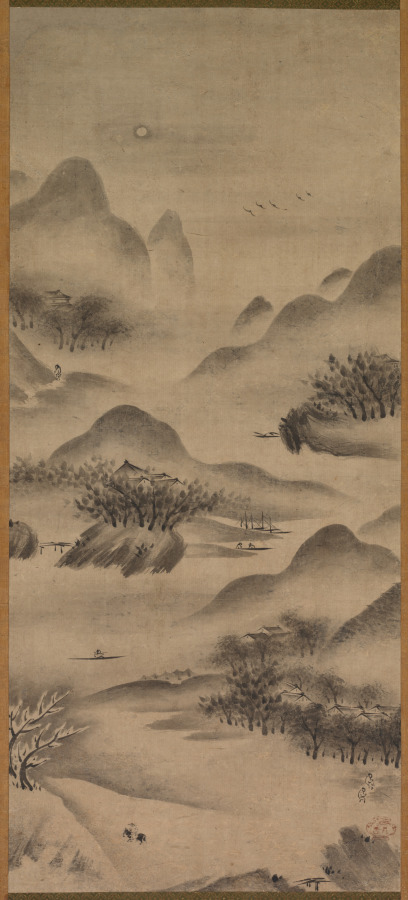 Landscape
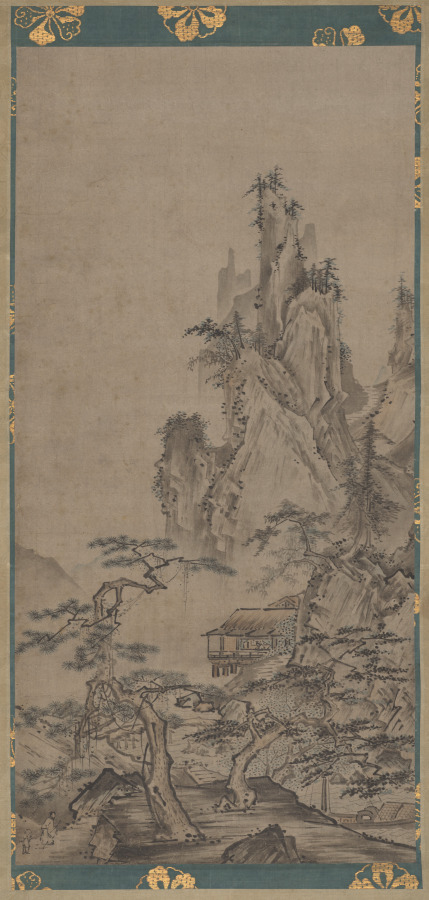 Scholar's Visit
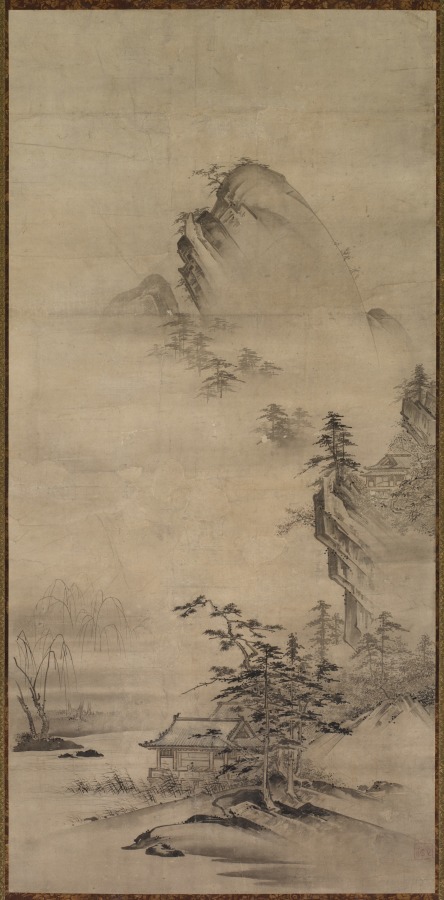 Landscape with a Pavilion
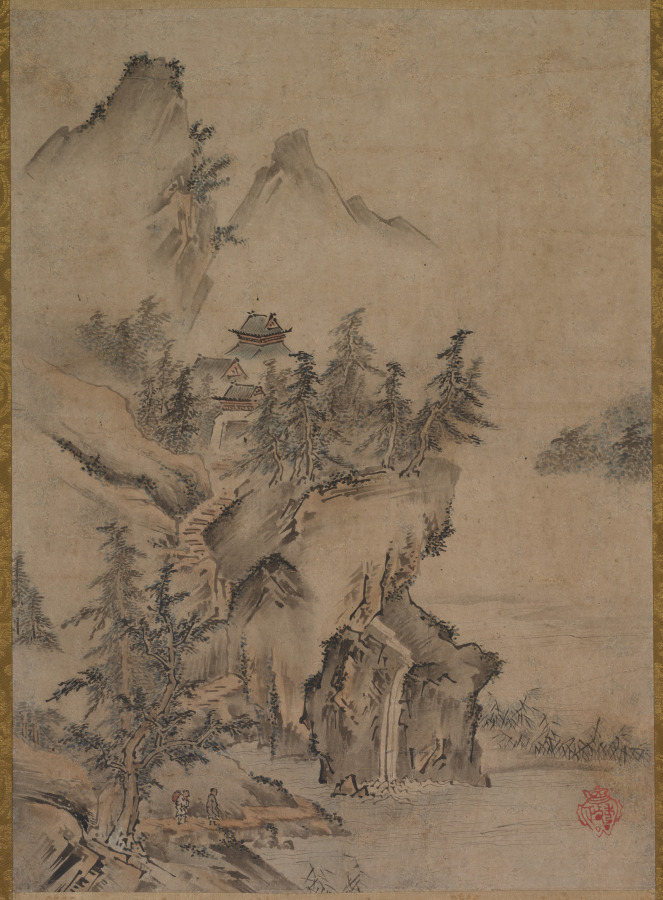 Kano Hidemasa (Japanese, active late 1500s) — Chinese Litera
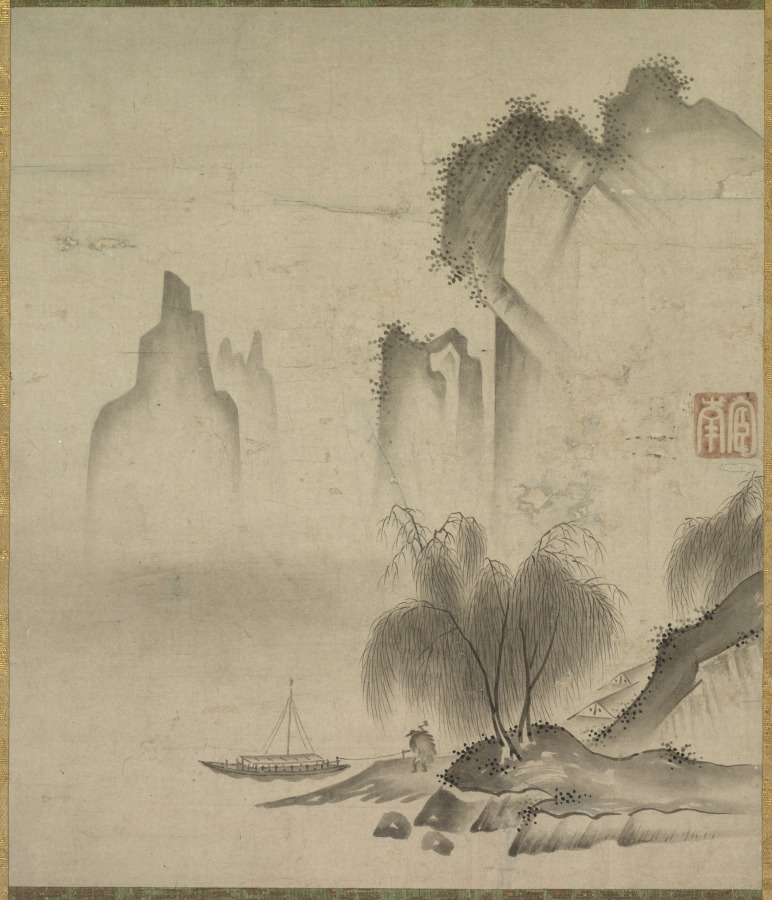 Kannan (Japanese, active mid-1500s) — Figure Mooring a Boat
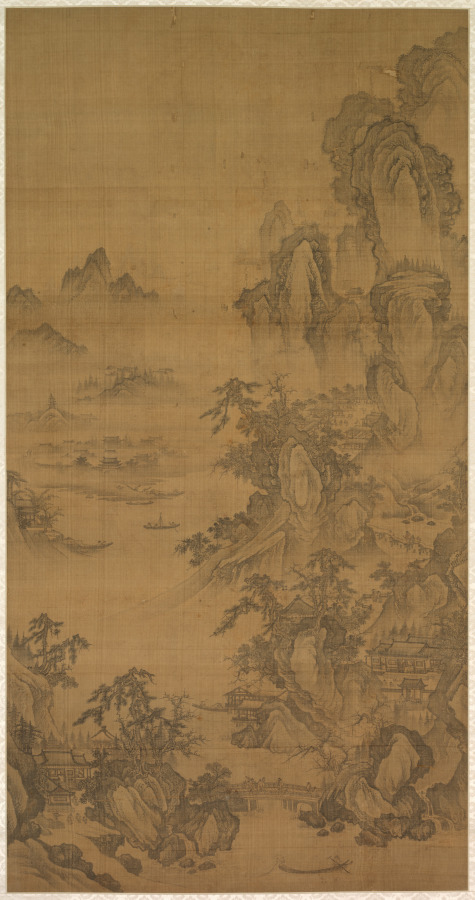 Mountain Market, Clear with Rising Mist
 Ishō Tokugan (Japanese, c. 1359–1437) — Landscape
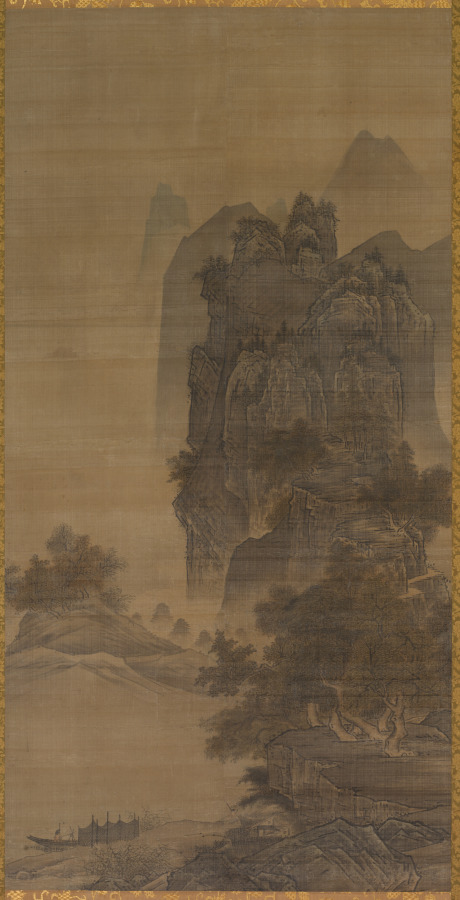 Sesshū Tōyō (Japanese, 1420–1506) — Sunset Glow over a Fishi
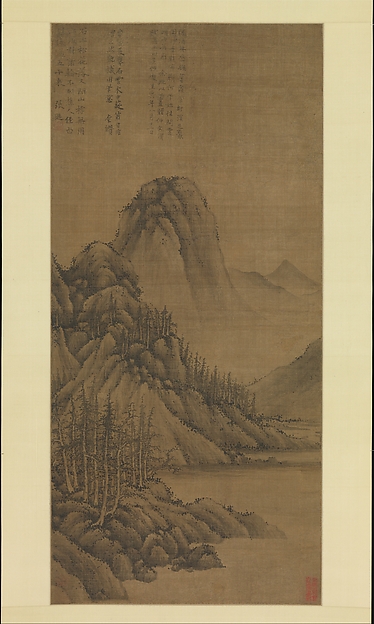 Zhang Xun — 元 張遜 石上松花圖 軸|Rocky Landscape with Pines
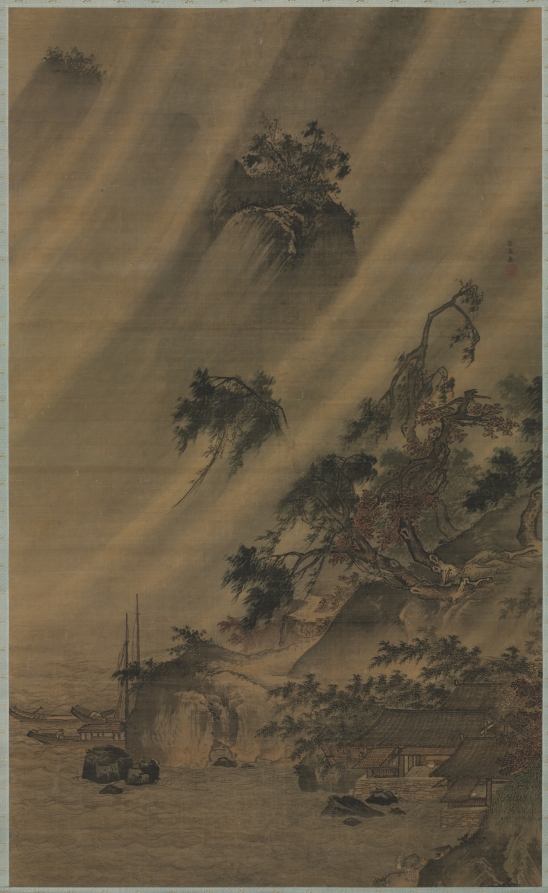 Lu Wenying (Chinese) — River Village in a Rainstorm
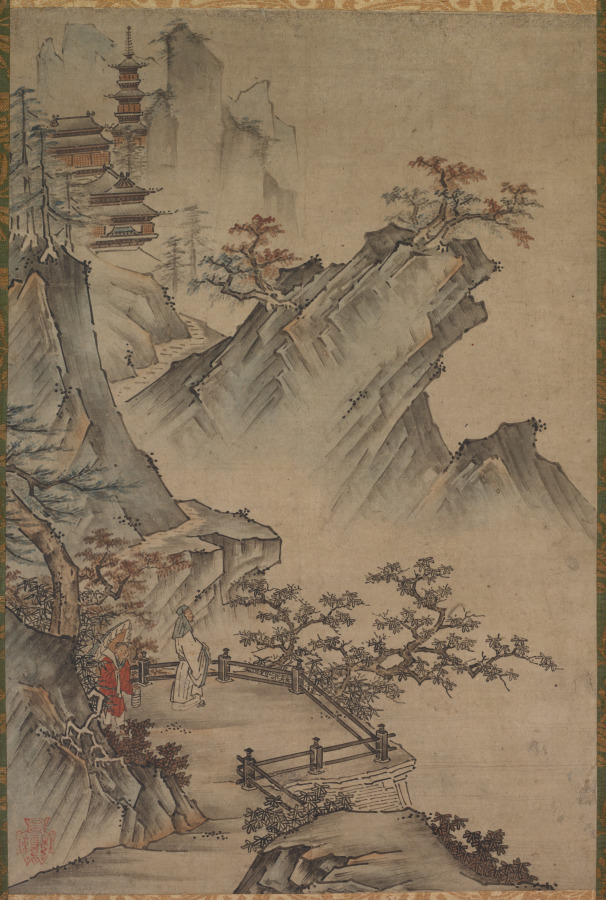 Chinese Literatus Viewing a Valley
 Kano Chikanobu (Japanese, 1660–1728) — Chinese Landscape