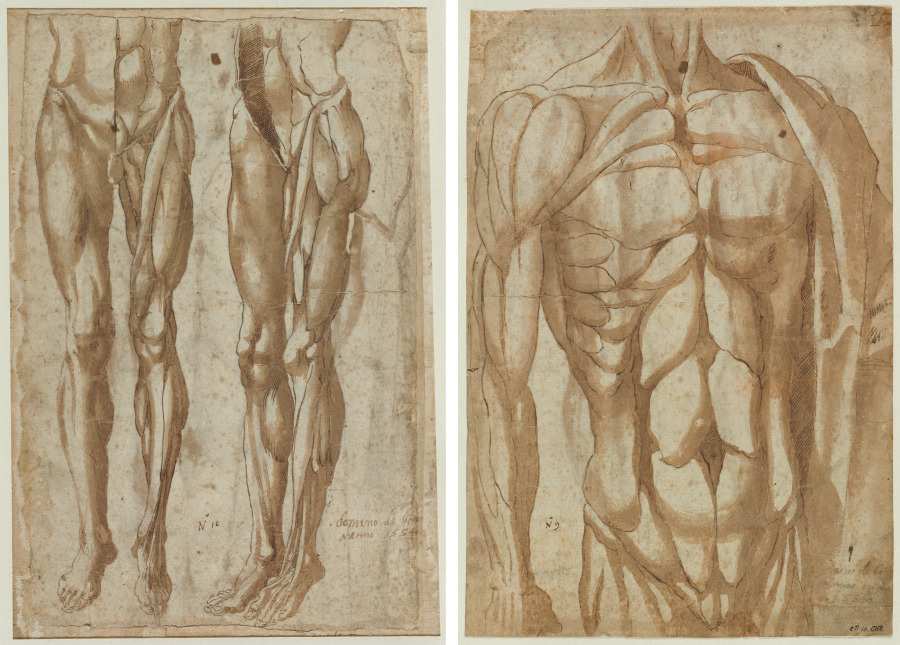
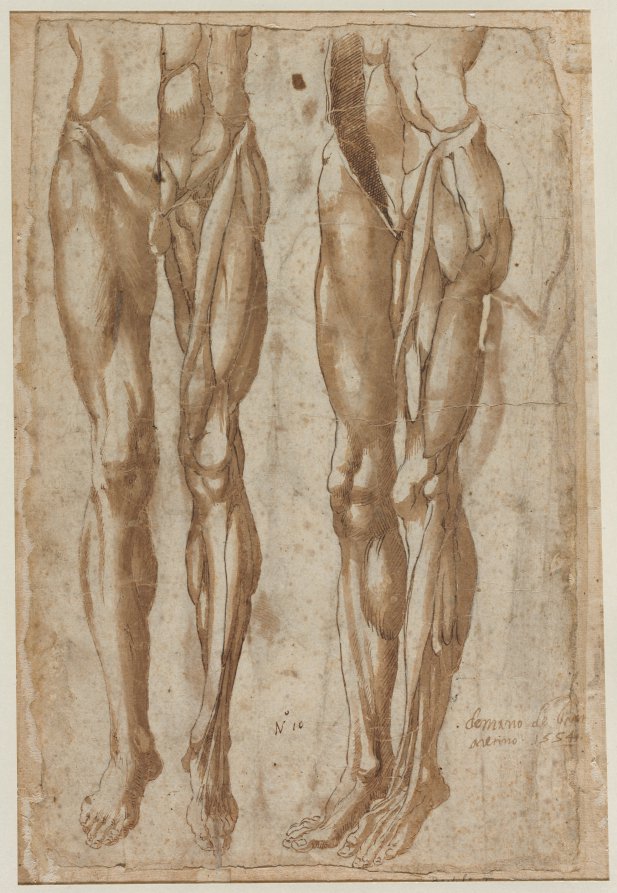
In the collection of Cleveland Museum of Art, Cleveland — check current display status with the museum.
FROM THE CLEVELAND MUSEUM OF ART’S CATALOG
In order to understand the movement of the human form, Michelangelo was known to have studied flayed bodies (cadavers with their skin removed) and in fact made several drawings of them. Bartolommeo da Arezzo—a follower of Michelangelo working a generation after the master—became obsessed with studying corpses, even stealing them from local graveyards. On one side of this sheet (verso), he drew a flayed torso.
Be the first to share your thoughts.
Sign in to join the discussion.
 Anonymous, Italian, 16th to early 17th century — Study of An
 Central Italian — Studies of the Leg of a Man and a Horse's
  Gasparo Diziani — Staande Neptunus met drietand in de rechte
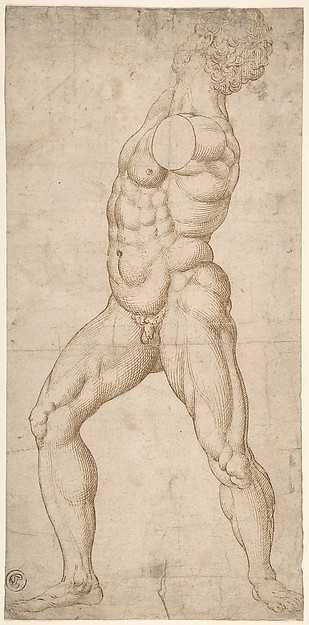 Anonymous, Netherlandish, 16th century — Study of a Standing
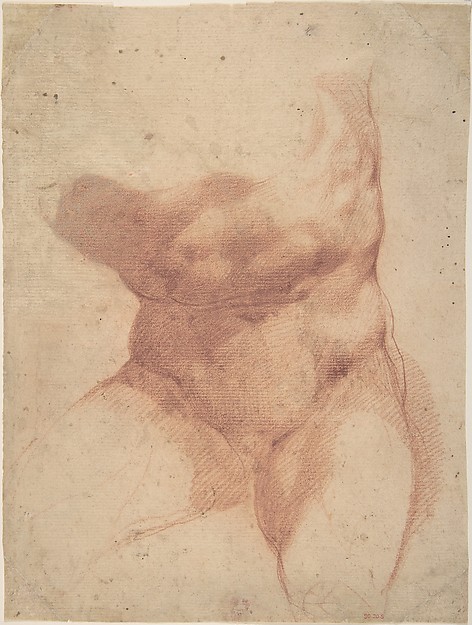 Cavaliere d'Arpino (Giuseppe Cesari) — Study after the Belve
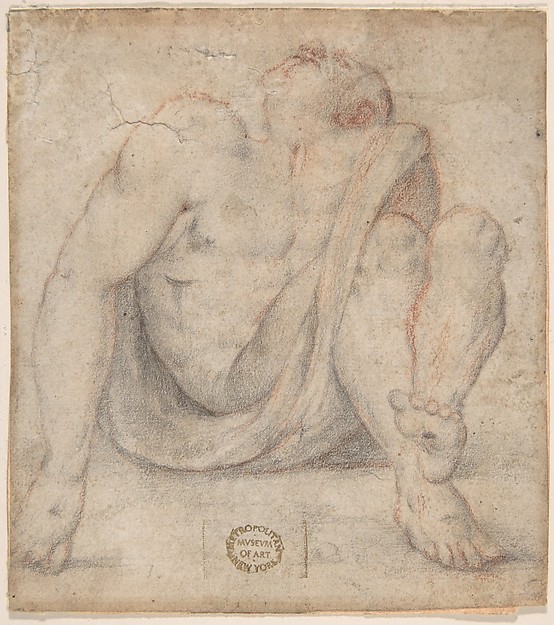 Anonymous, Italian, Roman-Bolognese, 17th century — The Dead
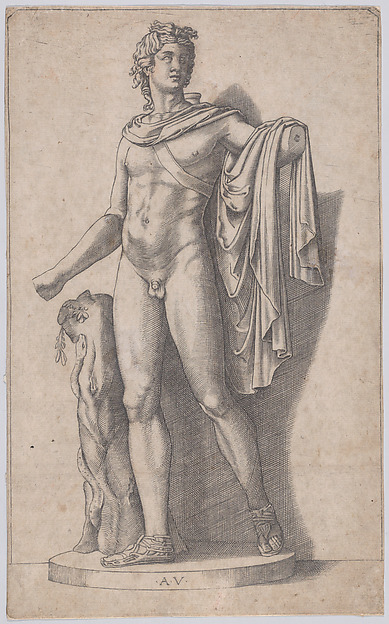 Agostino Veneziano (Agostino dei Musi) — Apollo
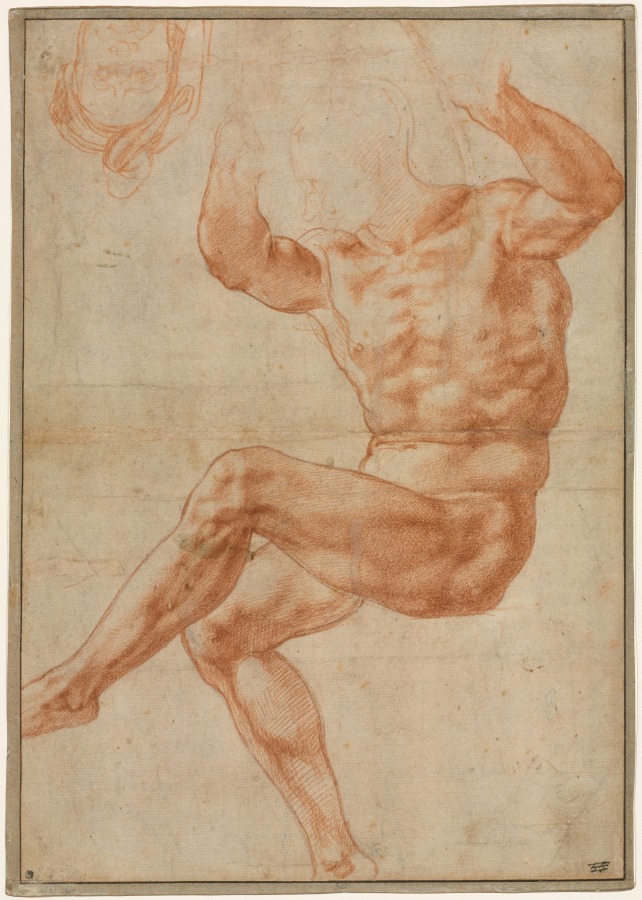 Michelangelo Buonarroti (Italian, 1475–1564) — Study for the
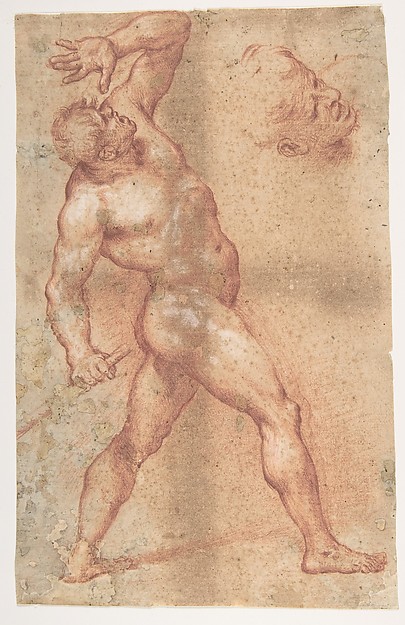 Aniello Falcone — Male Nude with Left Arm Upraised, and a Fu
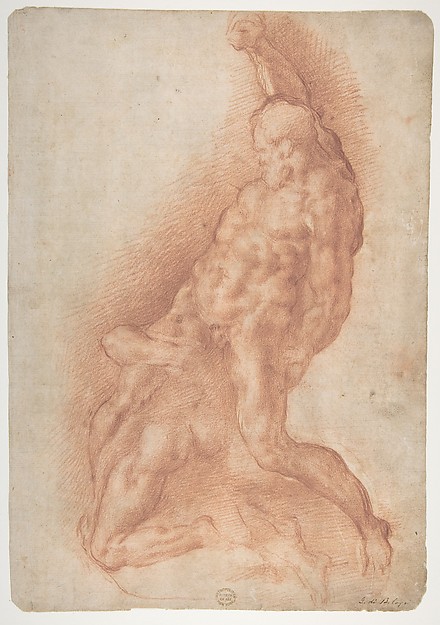 Giovanni Battista Naldini — Samson Slaying the Philistine, a
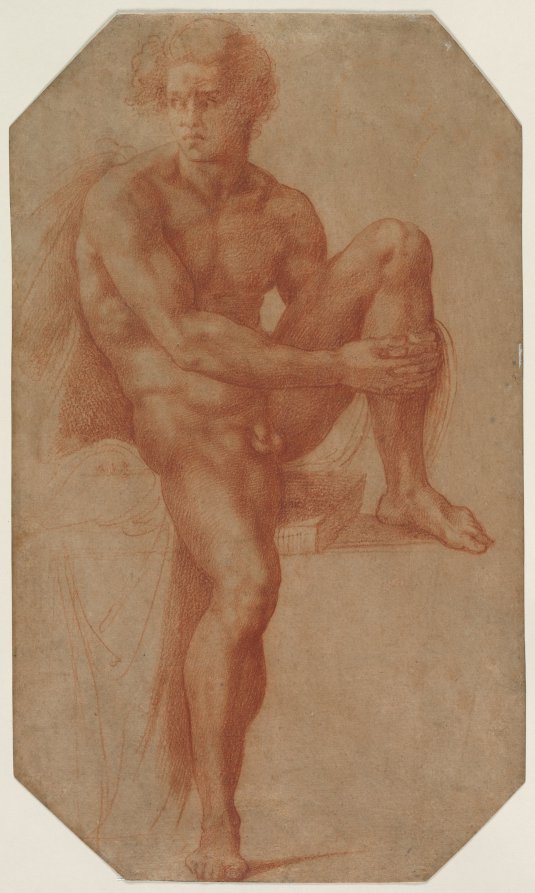 Baccio Bandinelli (Italian, 1493–1560) — Seated Male Nude
 Michelangelo Buonarroti — Studies for the Libyan Sibyl (rect