Untitled (Dog)
SEE IT IN PERSON
Not currently on view
In the collection of Art Institute of Chicago, Chicago · as of July 2026
Discussion
FROM THE ART INSTITUTE OF CHICAGO’S CATALOG
The advent of photography enabled people of all classes to afford pictures of family and loved ones for the first time. The daguerreotype, the first commercial photographic process, became known as the “democratic art,” replacing large-scale portrait oils and painted miniatures. Even more affordable than the daguerreotype was the tintype, a relatively quick process patented in 1856 and especially widespread from the American Civil War through the 1930s. The tintype was taken up by itinerant portraitists as well as amusement park photographers. This unusually large image of a dog illustrates one way in which people explored new modes of portraiture in the early years of photography, treating a pet, for example, as they might a member of the family.
Be the first to share your thoughts.
Sign in to join the discussion.
More by Unknown


![[Union Army Officer]](https://images.metmuseum.org/CRDImages/ph/web-large/DP257700.jpg)
More like this
 Allen & Ginter — From the Dogs series (N47) for Virginia Bri
 Allen & Ginter — From the Dogs series (N47) for Virginia Bri
 Allen & Ginter — From the Dogs series (N47) for Virginia Bri
 Alfred Capel Cure — "Peter"
 Nicolas Toussaint Charlet — Hondenkop
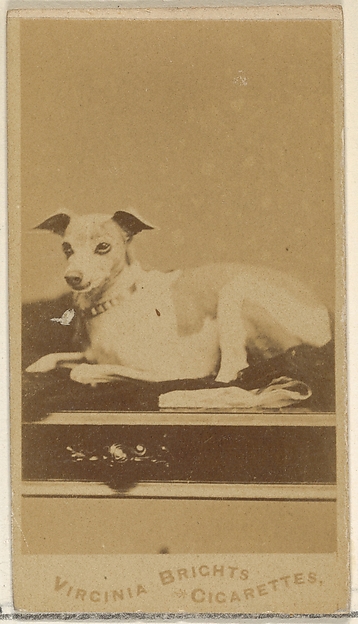 Allen & Ginter — From the Dogs series (N47) for Virginia Bri
![[Dog Posing for Portrait in Photographer's Studio Chair]](https://images.metmuseum.org/CRDImages/ph/web-large/DP120344.jpg) Rufus Anson — [Dog Posing for Portrait in Photographer's Stu
Rufus Anson — [Dog Posing for Portrait in Photographer's Stu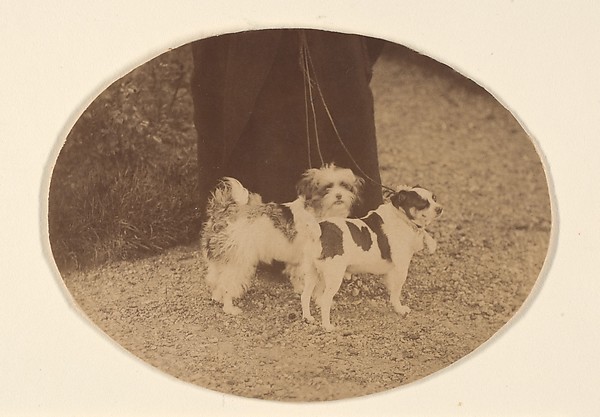 Pierre-Louis Pierson — Les Chiens
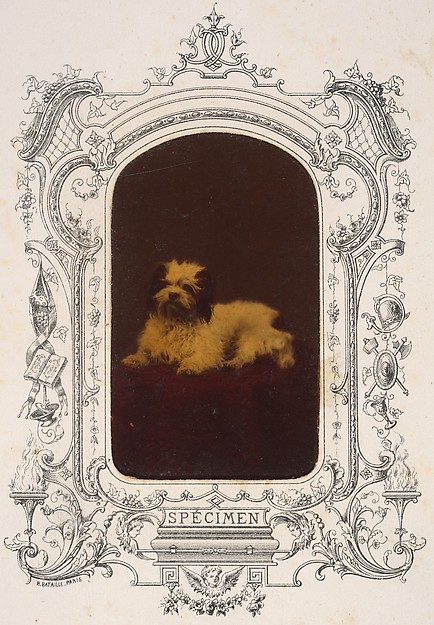 Pierre-Louis Pierson — Les Chiens
![[Empress Eugénie's Poodle]](https://images.metmuseum.org/CRDImages/ph/web-large/DP163234.jpg) André-Adolphe-Eugène Disdéri — [Empress Eugénie's Poodle]
André-Adolphe-Eugène Disdéri — [Empress Eugénie's Poodle]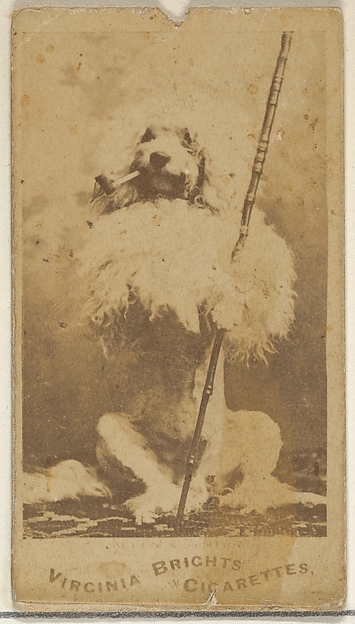 Allen & Ginter — From the Dogs series (N47) for Virginia Bri
![[Sleeping Cat]](https://images.metmuseum.org/CRDImages/ph/web-large/DP262091.jpg) Calvert Richard Jones — [Sleeping Cat]
Calvert Richard Jones — [Sleeping Cat]