A Peasant Woman Digging in Front of Her Cottage
SEE IT IN PERSON
● On view now — Gallery 241
Art Institute of Chicago, Chicago · verified July 2026
Discussion
FROM THE ART INSTITUTE OF CHICAGO’S CATALOG
Driven by the loneliness and poverty he had experienced living in the Hague, Vincent van Gogh returned to his parents’ home in Nuenen, the Netherlands, in late 1883 and devoted himself entirely to painting. In Nuenen, the artist also returned to the more monochromatic palette of browns, greens, and grays that he had used in his early years in the Netherlands. He painted a series of cottages— including this painting—based on his walks through the village. He described this series to his brother: “I feel for the brood and the nests—particularly those human nests, those cottages on the heath and their inhabitants.” Van Gogh carefully infused the woman, the cottage, and the setting with the same earthy tones and the loose, directional texture of the brushstrokes. In doing so, he emphasized the way she belonged to this place, and it to her.
Be the first to share your thoughts.
Sign in to join the discussion.
More by Vincent van Gogh


More like this
 Paul Joseph Constantin Gabriël — Farm in the Open Field
 Lambert Doomer — An Inn in the Neighborhood of Nantes
 Jan van der Linde — Landscape with Farmhouses
 Anton Mauve — Huisje aan de zandweg
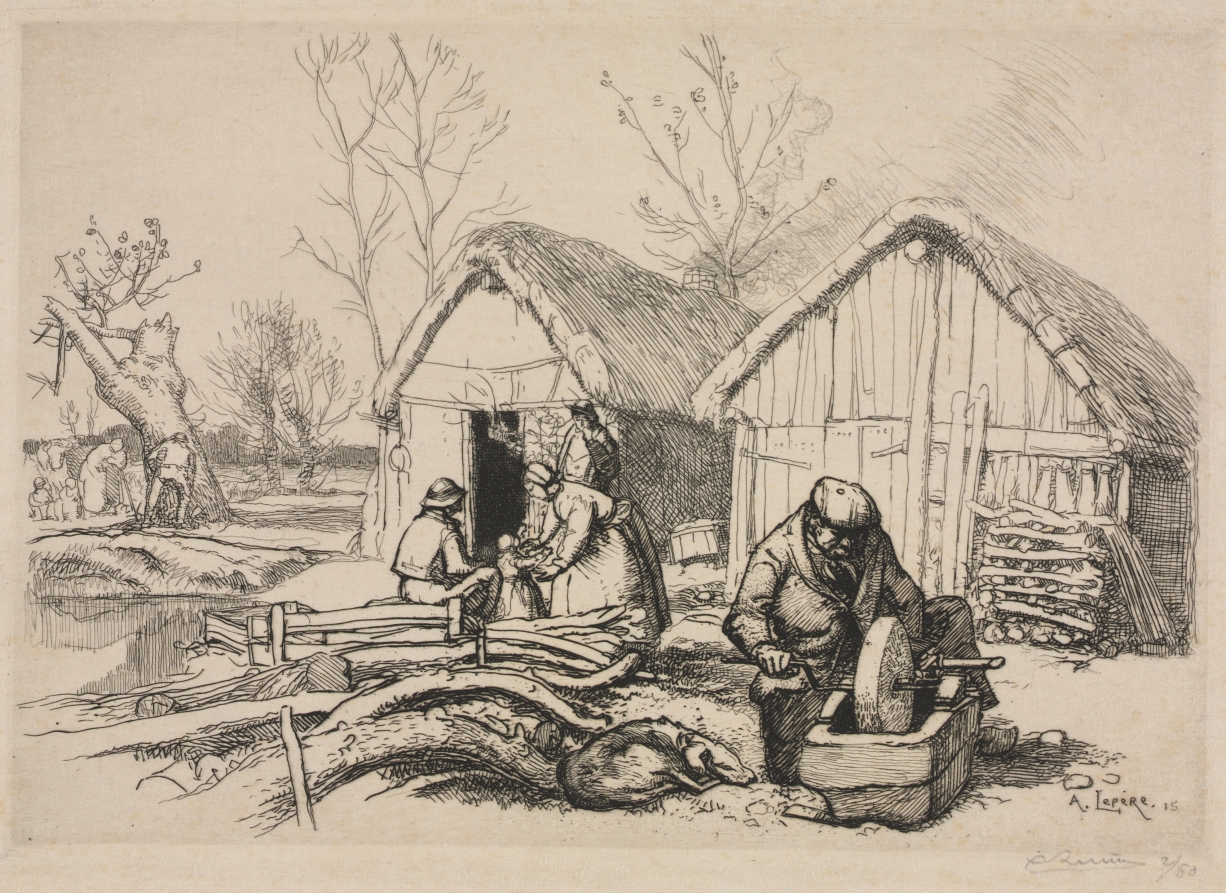 Auguste Louis Lepère (French, 1849–1918) — The Woodcutter’s
  Pieter Pietersz. Barbiers — Farmhouse near Helvoirt
 Jacob Simon Hendrik Kever — Woman Peeling Potatoes
 Théophile de Bock — A Sheepfold at Nightfall
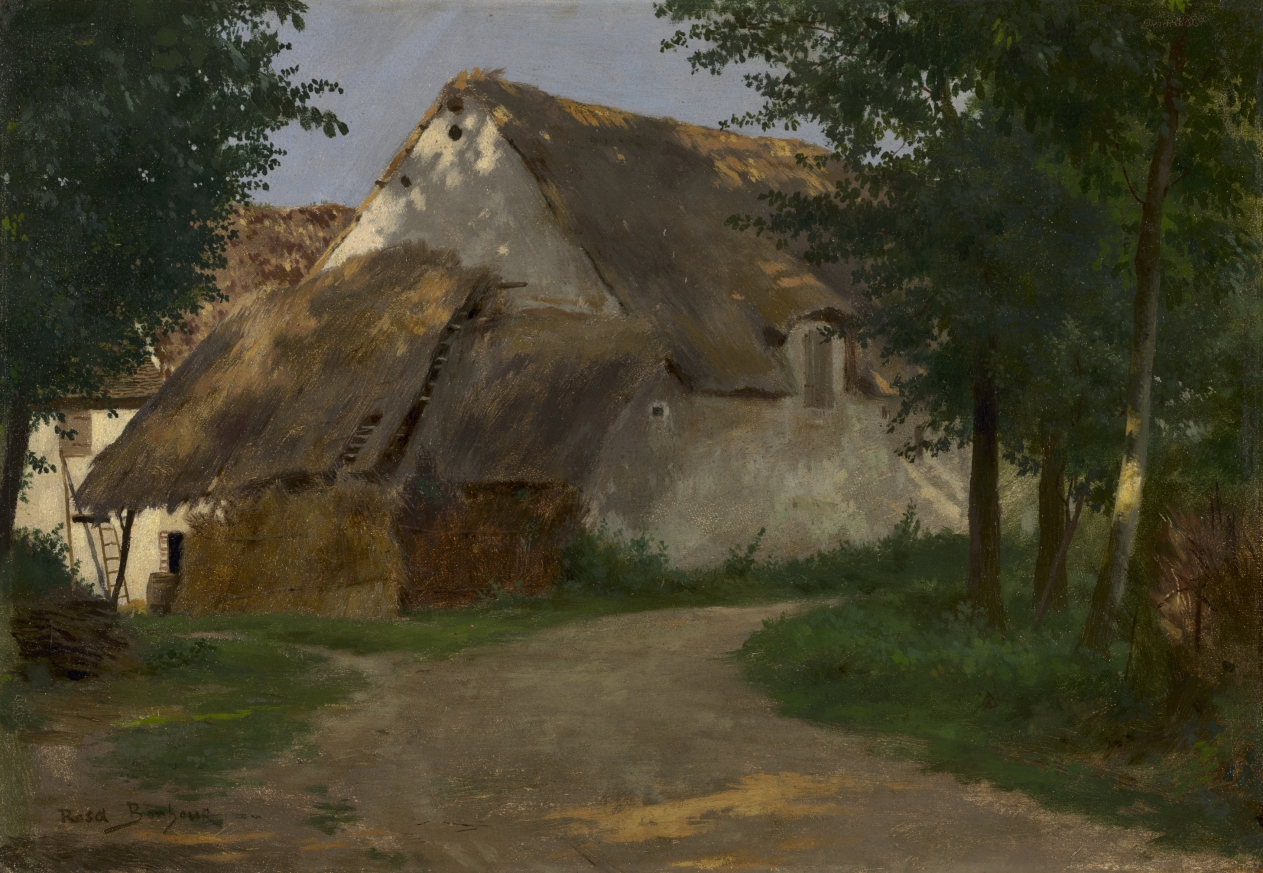 Rosa Bonheur (French, 1822–1899) — The Farm at the Entrance
  Johan Hendrik Weissenbruch — Boerenhuis aan een vaart
 Eugène Louis Boudin — Washerwomen at the Edge of the Pond
 Egbert Lievensz. van der Poel — Interior of a barn