FROM THE CLEVELAND MUSEUM OF ART’S CATALOG
After the five Pandava brothers defeated their cousins, the oldest, who became king, performed an ancient Vedic ritual known as the horse sacrifice in order to determine the physical extent of his rule. For one year a horse wanders freely around the country, attended by warriors, and every land through which the horse passes becomes part of the king’s territory. The warriors go to battle with any local resistance. In this case, the warrior following the horse is Arjuna, one of the five Pandava brothers. He has encountered the son-in-law of the god of fire, Agni, who creates a river of fire to block the warriors. In a dramatic composition set on the banks of the swirling golden river of fire, running diagonally down the page between multicolored rocky outcrops, Arjuna, dark-skinned and crowned, pleads with Agni, the god of fire. He prays that the horse be allowed to pass, saying that the horse sacrifice is in accordance with sacred Vedic injunctions, and that at the end of the year, the horse will be sacrificed to him, the god of fire himself.
Source ↗︎
Be the first to share your thoughts.
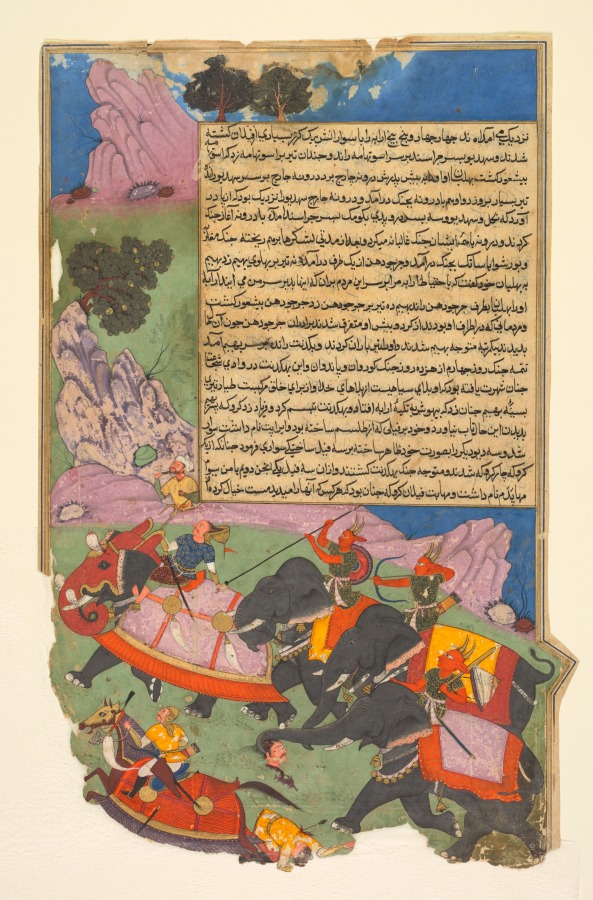 Fazl (Indian, active early 1600s) — Ghatotkacha and three de
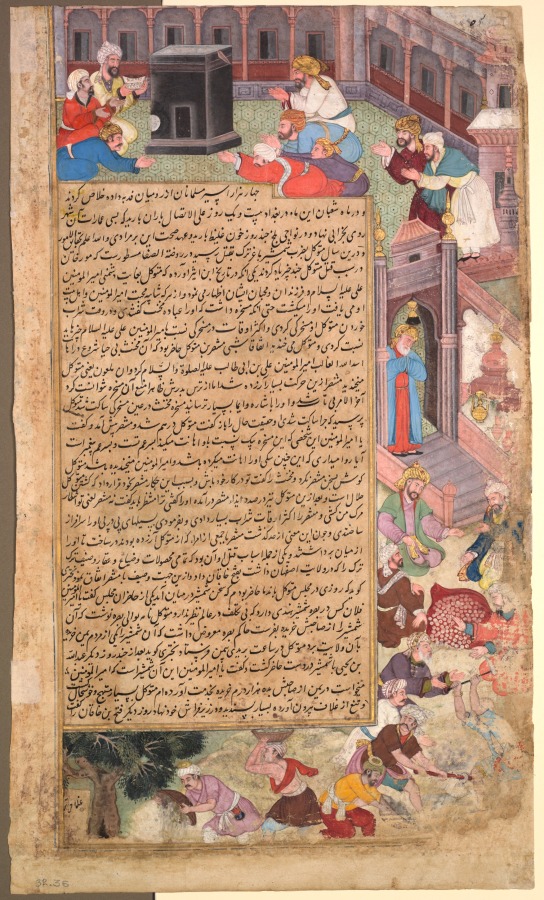 Page of disasters, from the Tarikh-i Alfi (History of a Thou
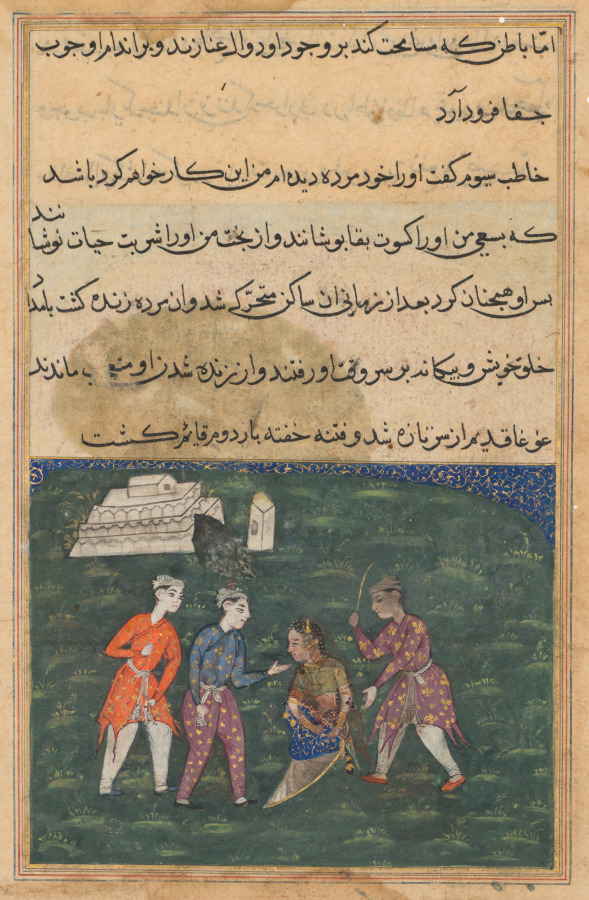 The third suitor strikes the devotee’s daughter and thus res
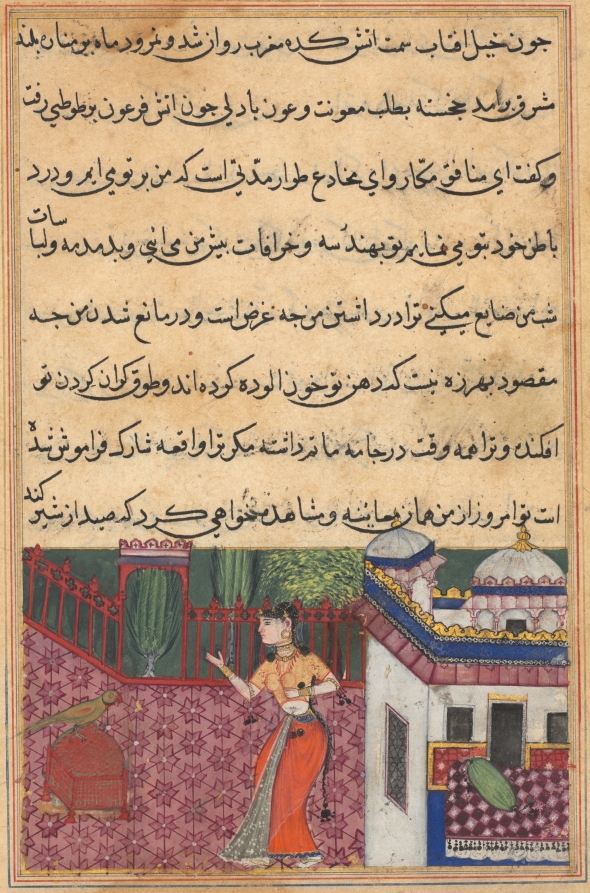 The parrot addresses Khujasta at the beginning of the thirty
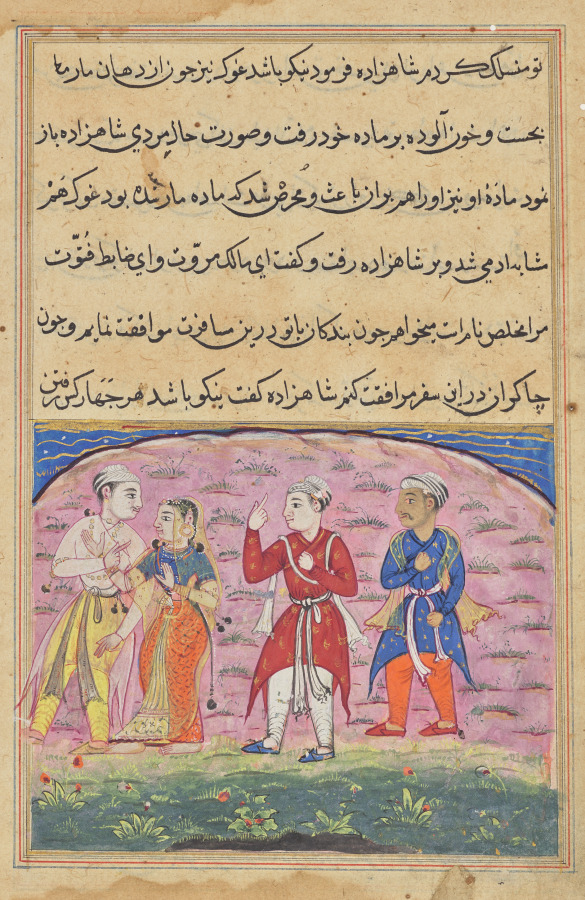 The prince and Nikfal are joined by Khalis and the Mukhlis w
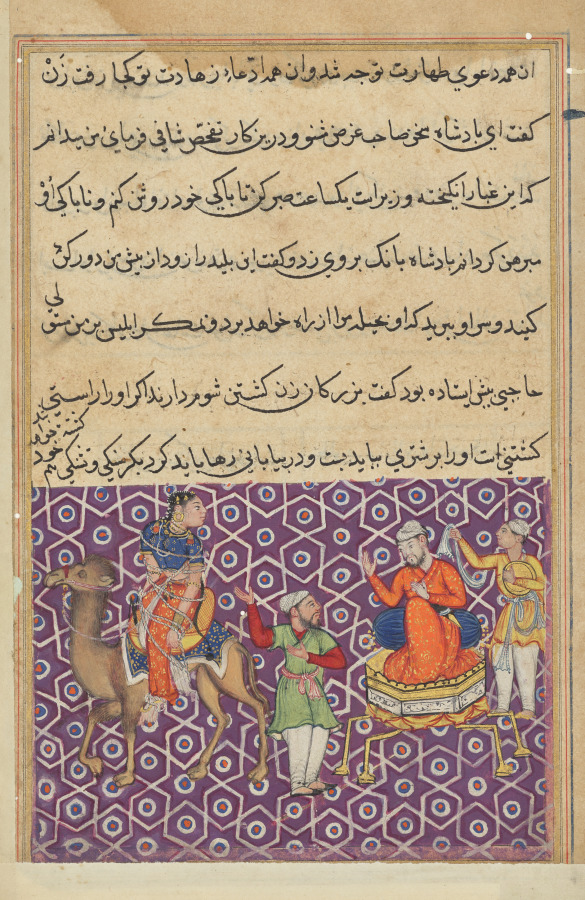 King Bahram, who has married Khassa’s daughter, has her tied
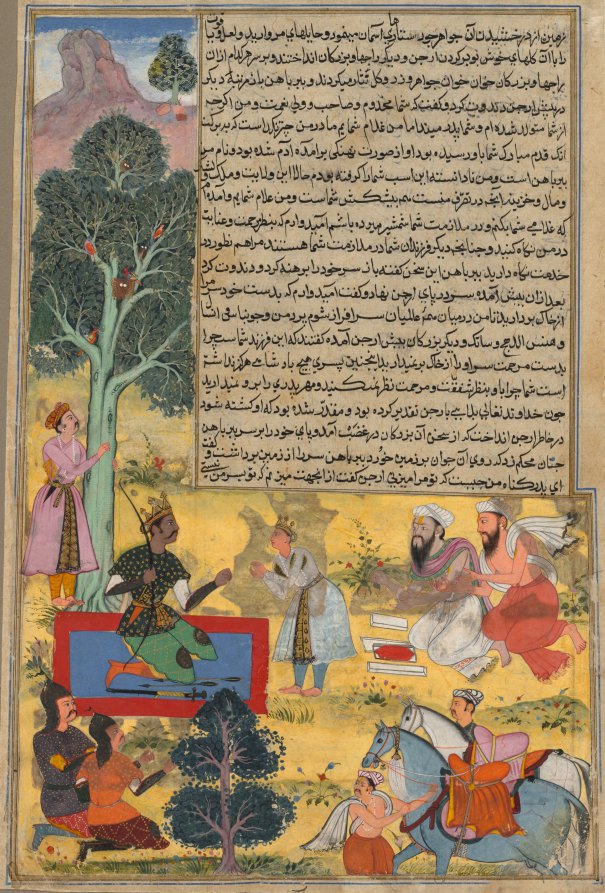 Sur Das Gujarati (Indian, active 16th century) — Vabhruvahan
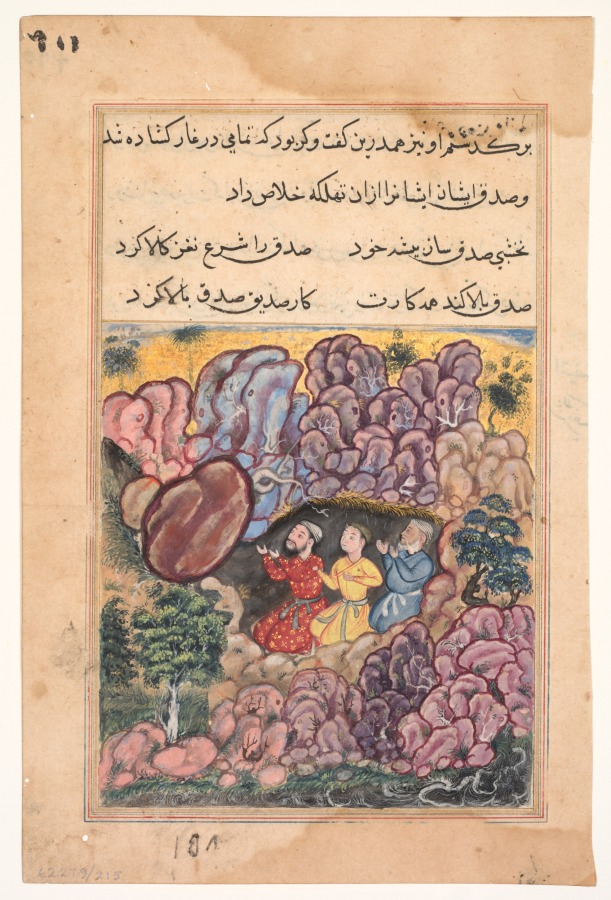 Bihzad (Persian, active in India mid-1500s) — The tale of th
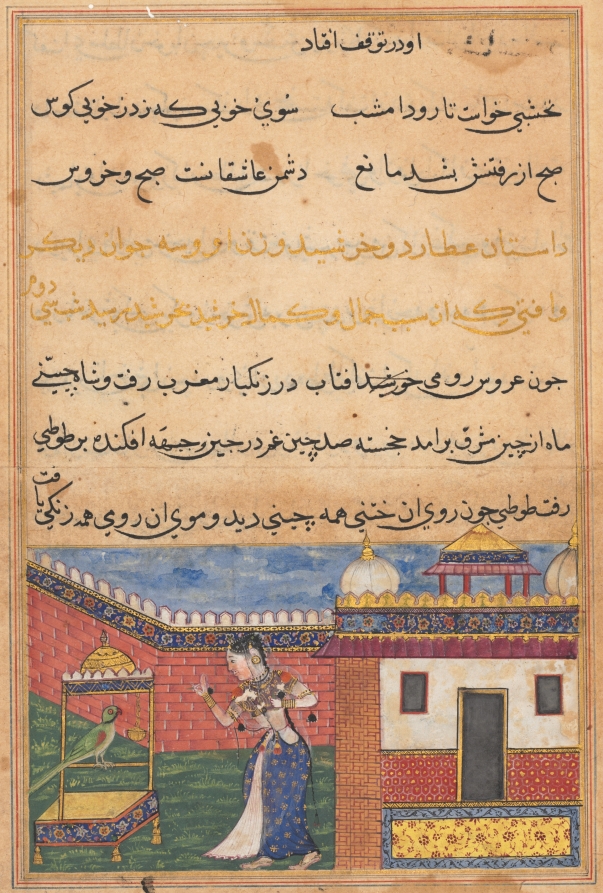 The parrot addresses Khujasta at the beginning of the thirty
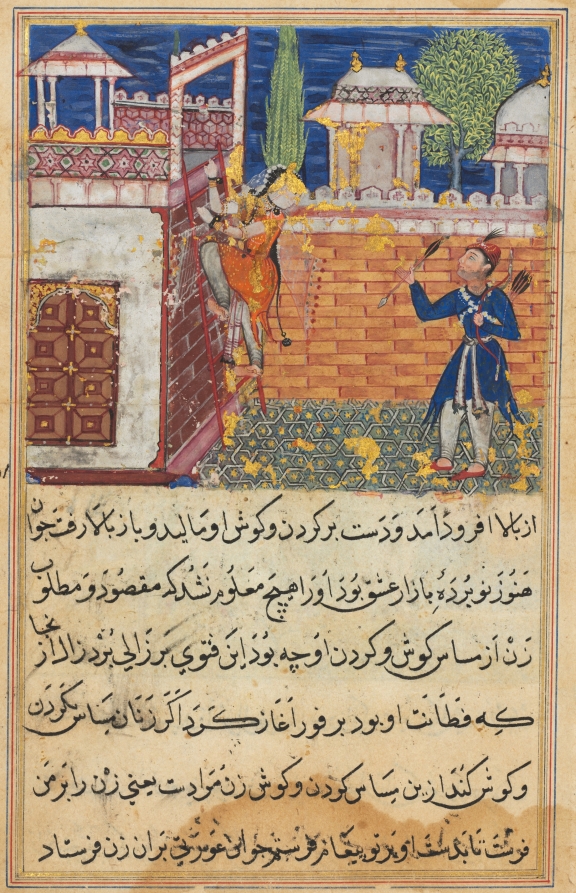 Shravana (Indian, active 1550s–c.1600) — The deceitful wife
 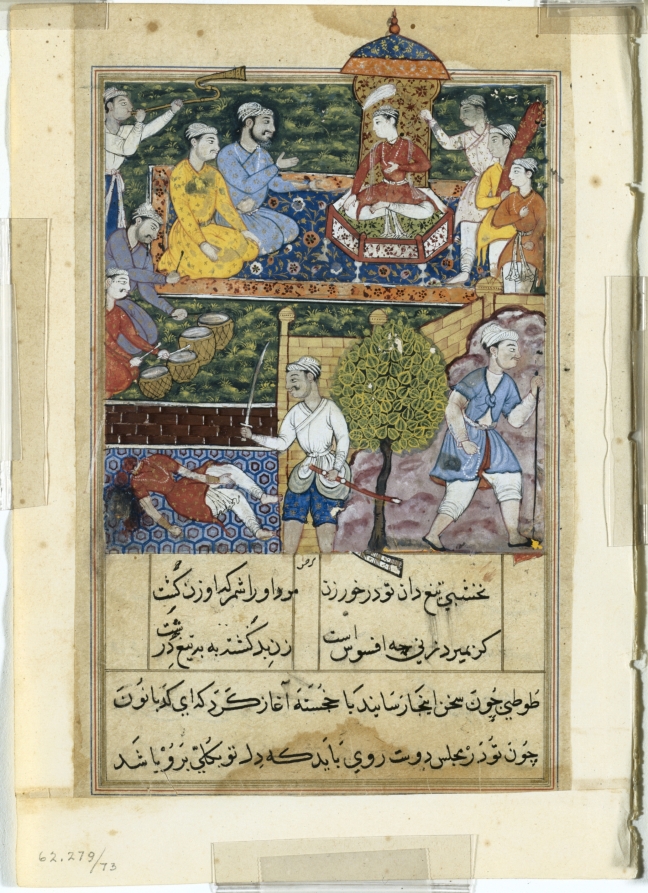 Suraju (Indian) — The young prince is crowned and the wicked
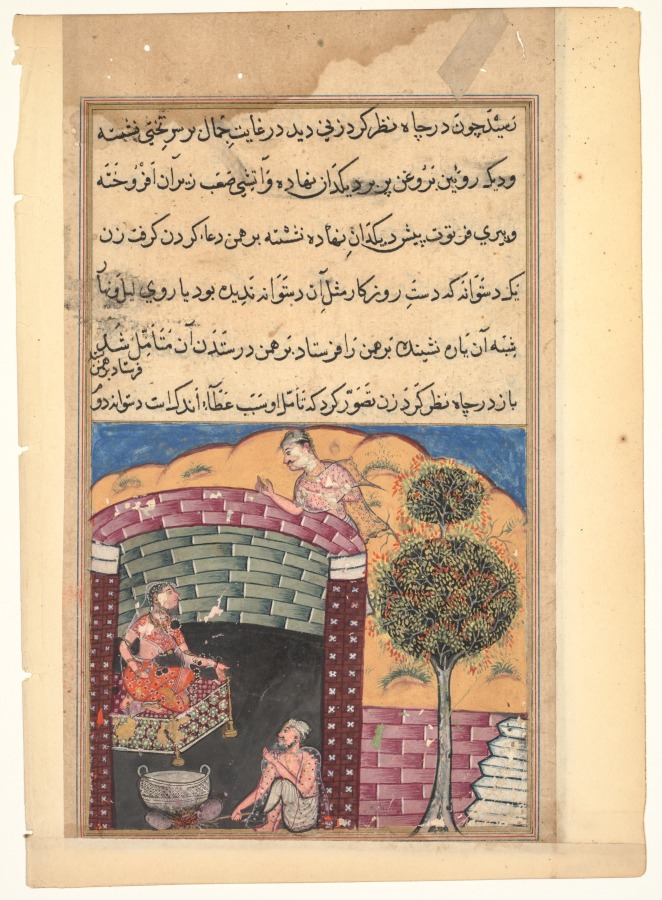 The Brahman gambler sees the daughter of the king of the jin