More like this
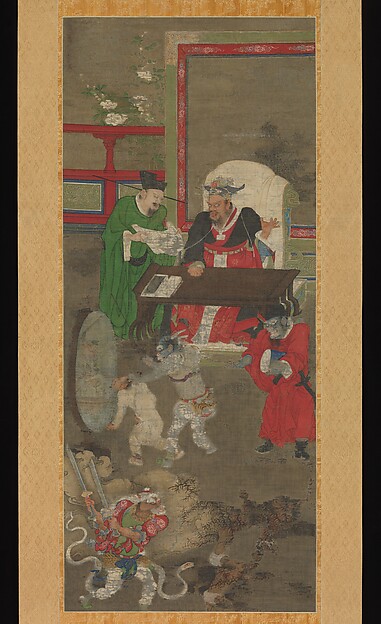 Jin Chushi — 金處士筆 十王図の内|Ten Kings of Hell
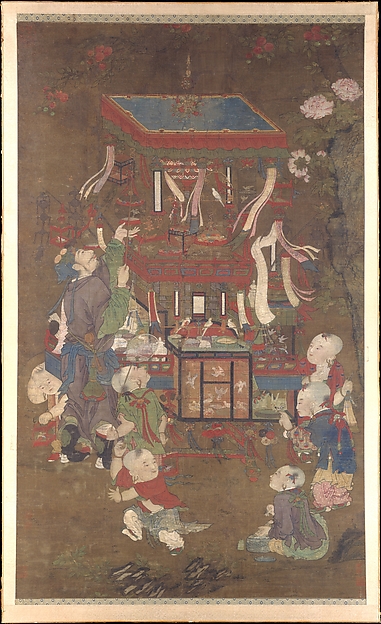 Unidentified artist — 明 佚名 絹本設色 鳥販圖 軸|Bird peddler
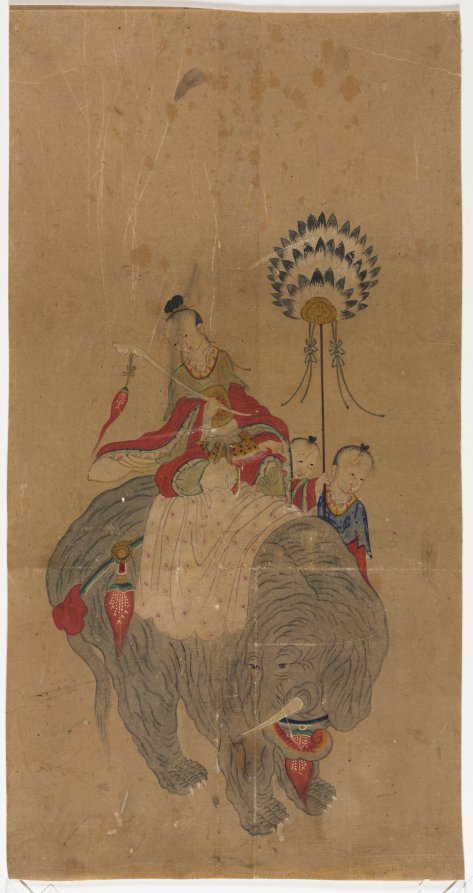 Samantabhadra on an Elephant with Two Attendants
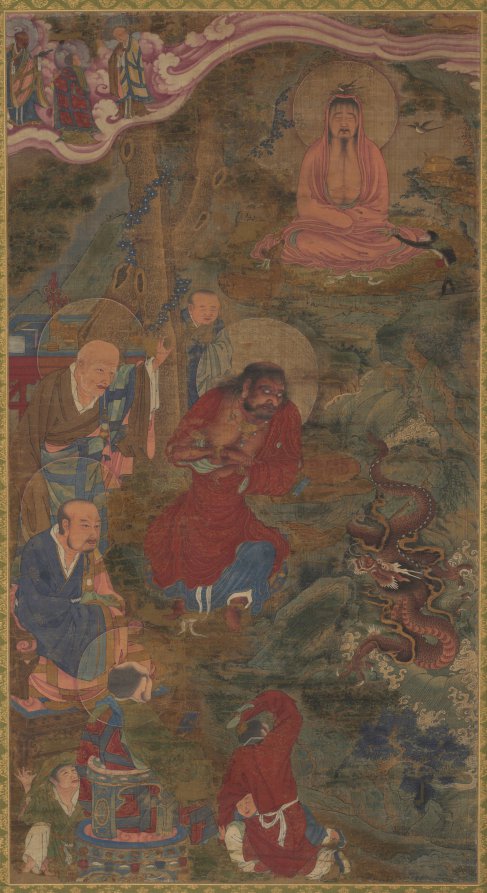 Miracle of the Dragon
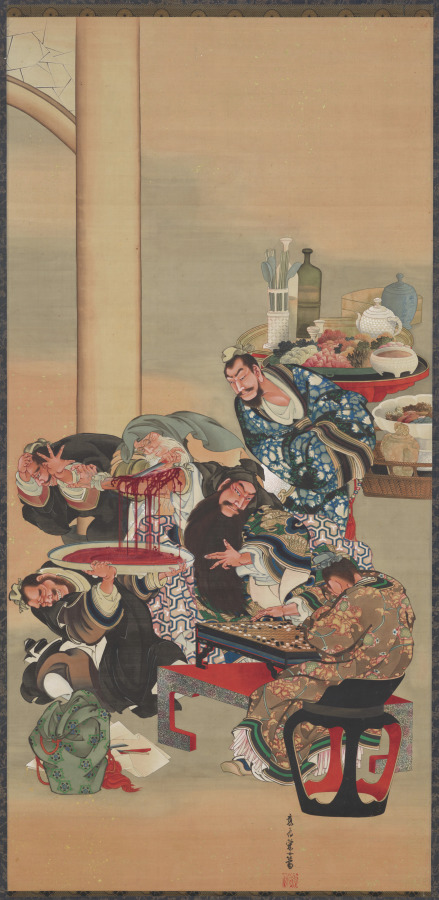 Katsushika Ōi (Japanese, c. 1800-after 1857) — Operating on
 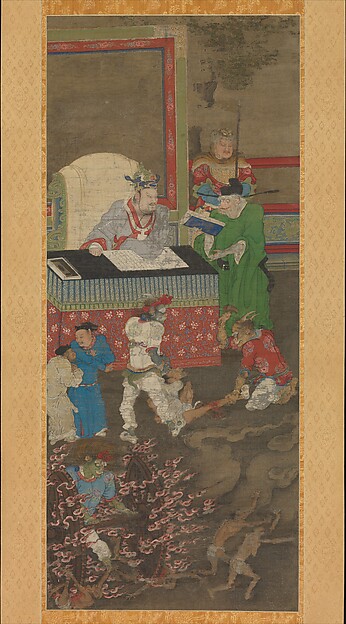 Jin Chushi — 金處士筆 十王図の内|Ten Kings of Hell
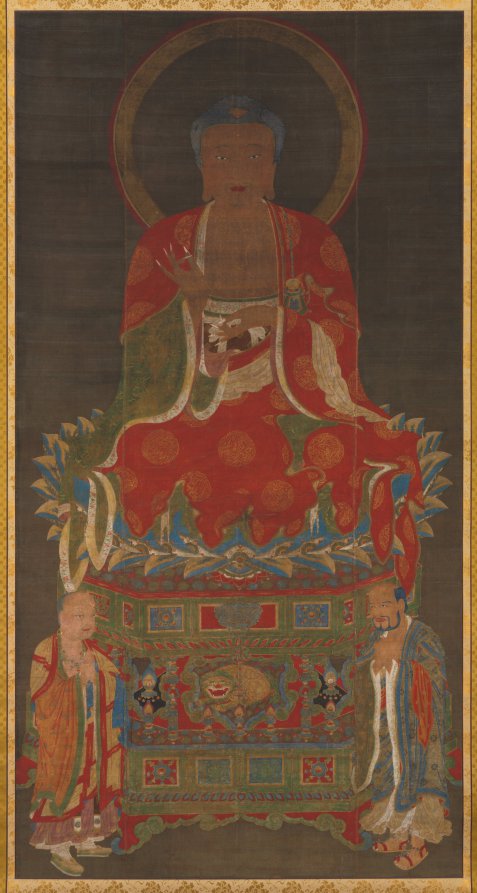 Shakyamuni with two attendants
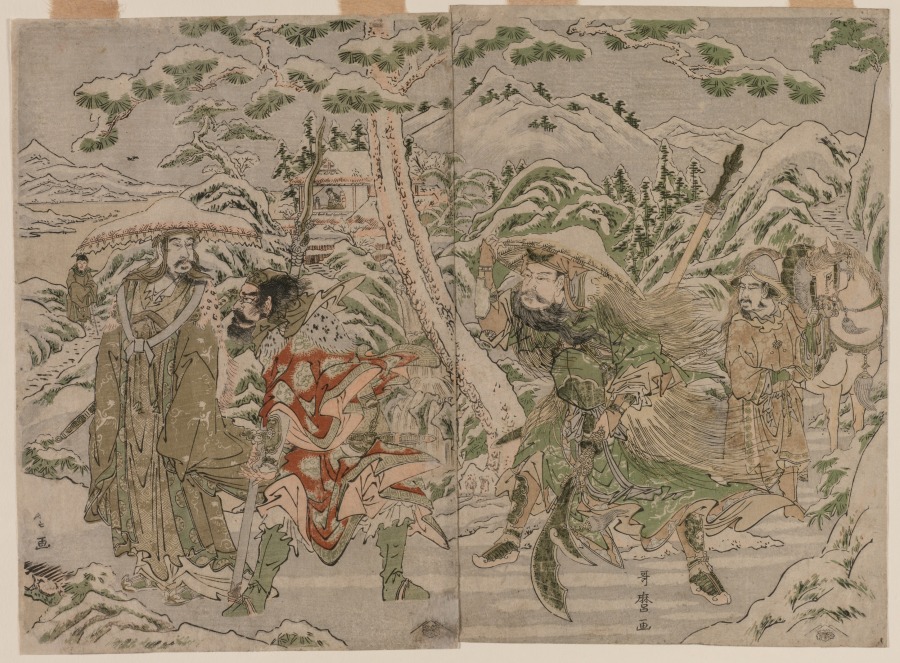 Kitagawa Utamaro (Japanese, c. 1754–1806) — Winter Scene fro
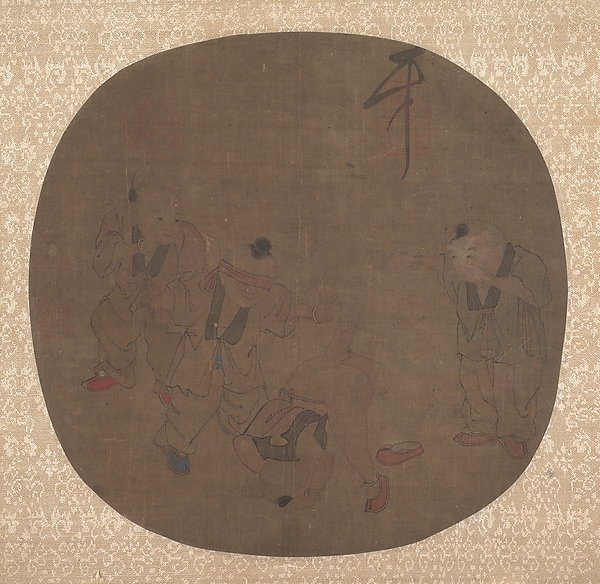 Unidentified artist|Emperor Huizong
 Kaigetsudō Ando — Shoki Fighting for a Courtesan
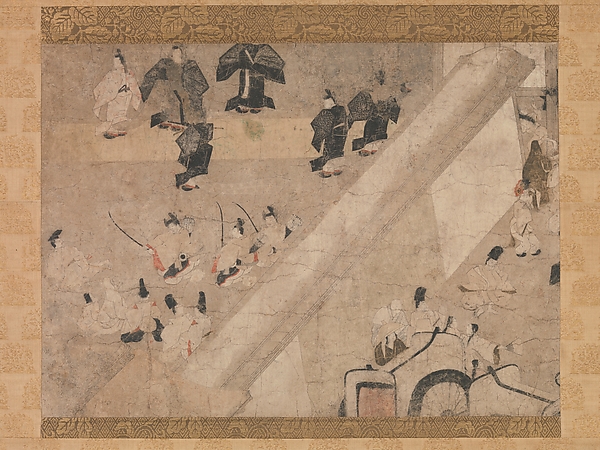 「高陽院駒競行幸絵巻」『栄花物語』 断簡|"Imperial Visit to the Great Horse Rac
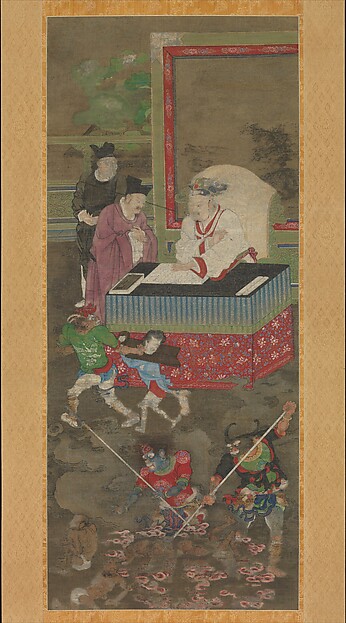 Jin Chushi — 南宋 金處士 十王圖 軸|Ten Kings of Hell