The Small Woodcut Passion
SEE IT IN PERSON
Not currently on view
In the collection of Art Institute of Chicago, Chicago · as of July 2026
Discussion
FROM THE ART INSTITUTE OF CHICAGO’S CATALOG
Opposite Dürer’s woodcut The Crucifixion (folio C viii verso), a sixteenth-century viewer honed in on this sacred event. He inscribed several lines personalizing his experience of the print below the monk Benedict Cheledonius’s text, where there was room: In Cruce pendentem / rogo te Deum omnipotentem / ut mihi des mentem / te semper amare volentem (I ask you, omnipotent God, hanging on the Cross, that you grant me a mind wishing always to love you). This seems like an intimately pious, original outburst, as it addresses Christ directly, but it actually quotes a well-known Latin prayer from the Hours of the Cross.
Be the first to share your thoughts.
Sign in to join the discussion.
More by Albrecht Dürer

More like this
 Anonymous, Italian, Florentine, 15th century — The Martyrdom
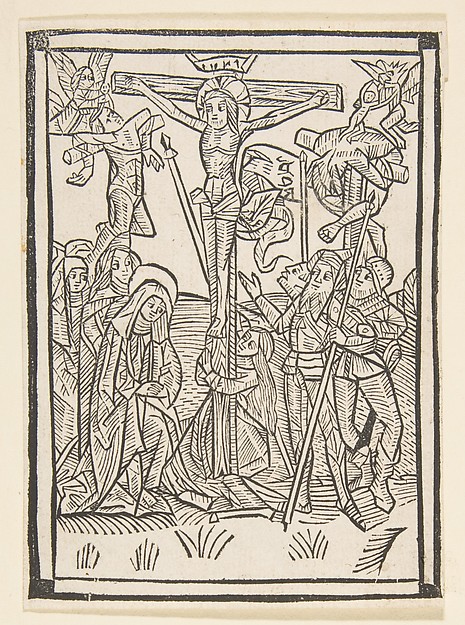 Anonymous, German, 15th century — The Crucifixion (Schr. 486
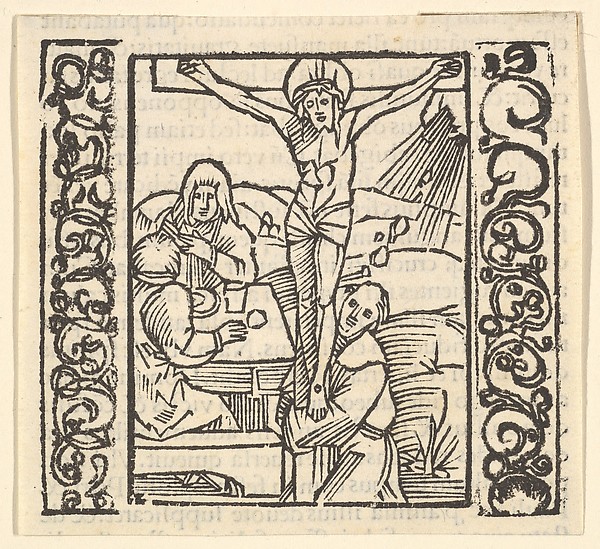 Hans Baldung (called Hans Baldung Grien) — Crucifixion by a
 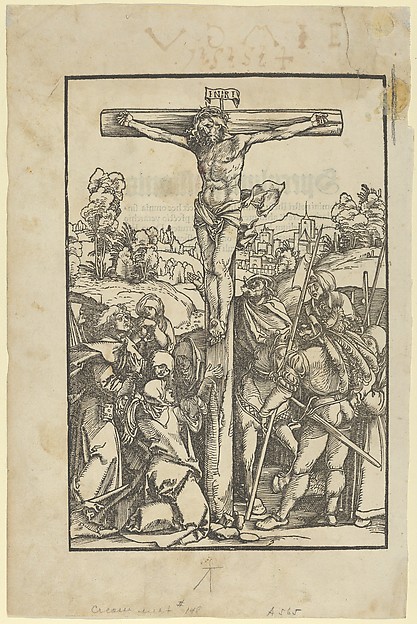 Hans Schäufelein|Ulrich Pinder|Friedrich Peypus — The Crucif
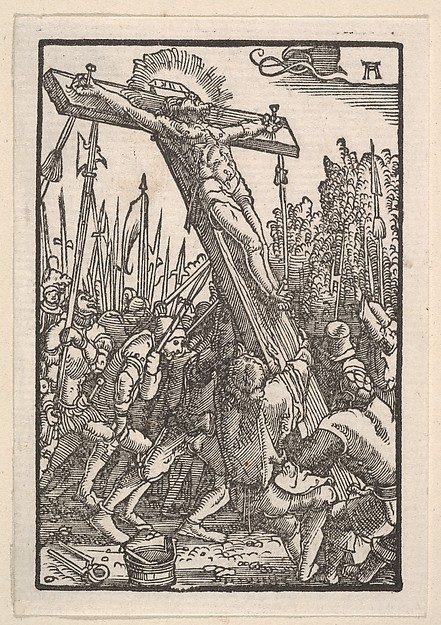 Albrecht Altdorfer — Raising of the Cross, from The Fall and
 Monogrammist G.Z. — The Crucifixion
 Hans Springinklee (German, 1540) — St. Mary and St. John Bef
 Christus aan het kruis
 anonymous — De kruisiging
 Lucas Cranach the Younger and Workshop — Book-Plate of Chris
 Hieronymus (Jerome) Wierix|Albrecht Dürer — The Crucifixion
 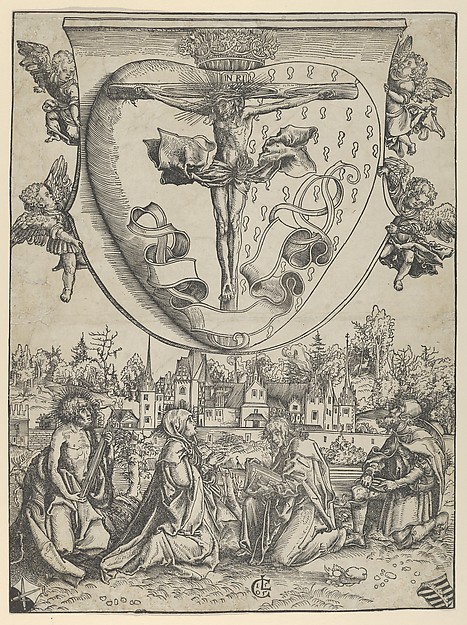 Lucas Cranach the Elder — Four Saints Adoring Christ Crucifi