FROM THE CLEVELAND MUSEUM OF ART’S CATALOG
Before the use of paper, Indian books were written on palm leaves, bound by a string passed through the hole in the middle of the pages, which were turned horizontally. Often the paintings do not reference the story of the text because they may have functioned as adornments rather than illustrations. Virtuous scenes, such as a layman venerating a Jain monk, as seen on this page, were apparently thought to beautify a sacred text and made it more costly and visually appealing. By adding painted adornments, a donor can accrue greater religious merit.
Source ↗︎
Be the first to share your thoughts.
 Devachandra (Indian) — Folio (recto) from a Kalpa-sutra and
 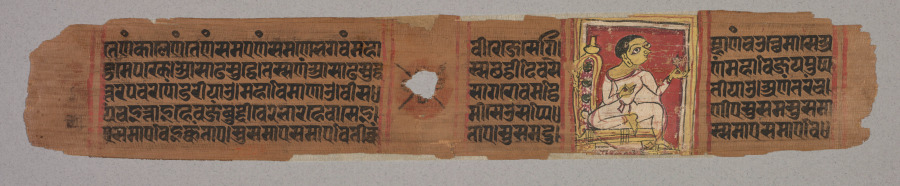 Monk Holding a Flower: Folio 2 (recto), from a Kalpa-sutra a
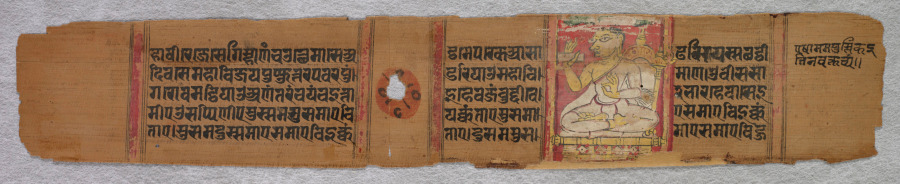 A Monk Preaching: Folio 2 (recto), from a Kalpa-sutra
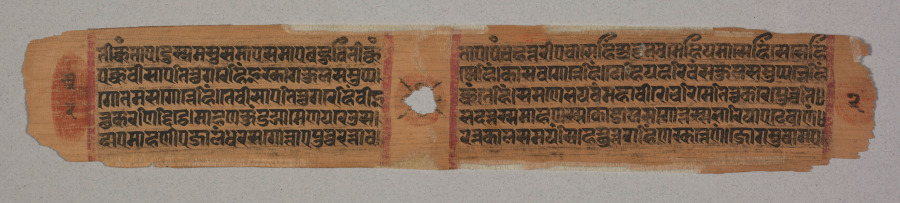 Folio 2 (verso), from a Kalpa-sutra and Story of Kalakachary
 Devachandra (Indian) — Brahmanshanti Yaksha: Folio (verso),
  The Monk Gautama, Enthroned: Folio 2 (recto), from a Kalpa-s
 Two nuns teaching lay women, colophon page of folio 167 (rec
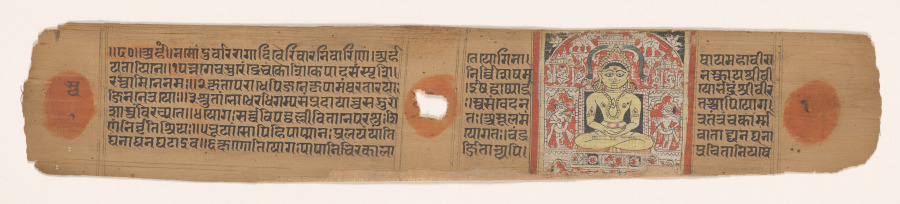 Rishabha enthroned, folio 1 (verso) from a Yoga-shastra of H
 Genealogical text, folio 167 (verso) from a Kalpa-sutra and
 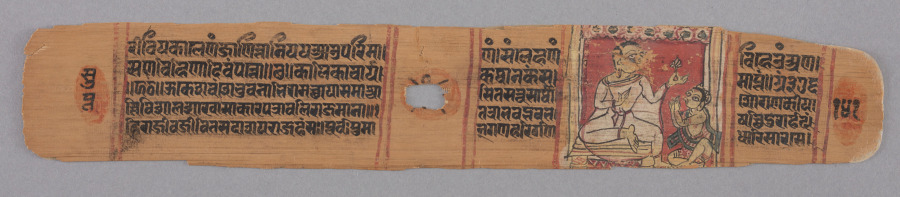 Devachandra (Indian) — Monk Holding a Flower Venerated by a
 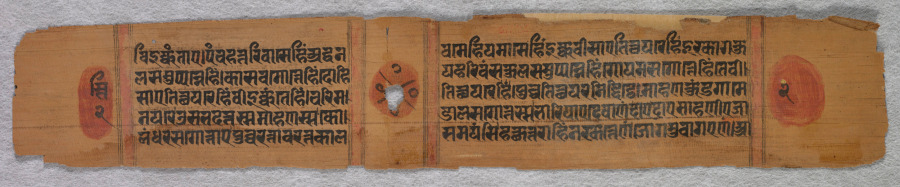 Text: Folio 2 (verso), from a Kalpa-sutra
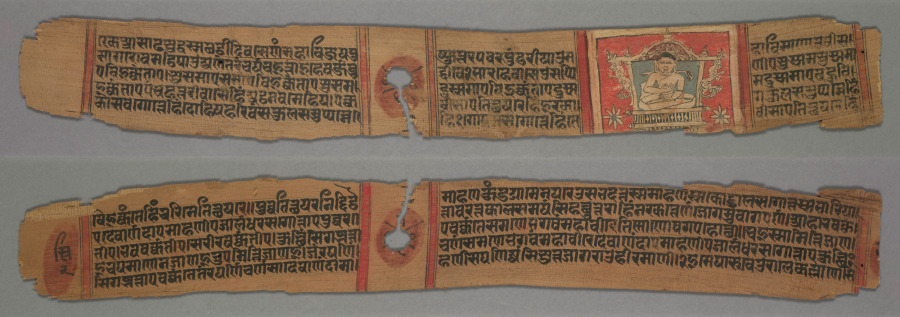 Folio 2, from a Kalpa-sutra and Story of Kalakacharya of Dev