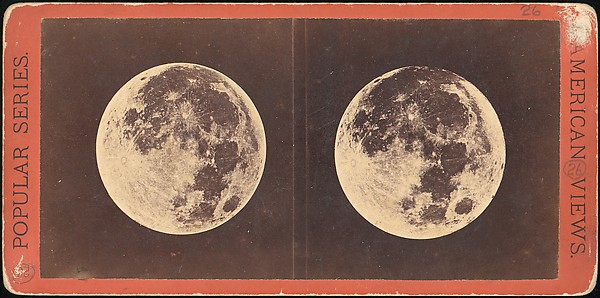
Full Moon
SEE IT IN PERSON
Not currently on view
In the collection of Art Institute of Chicago, Chicago · as of July 2026
Discussion
FROM THE ART INSTITUTE OF CHICAGO’S CATALOG
Stereographs were made by taking two photographs of the same scene with lenses about two and a half inches apart to match the distance between human eyes; viewed through a stereoscope, the images combine to give the illusion of depth. Enormously popular from around 1850 to 1930, stereographs documented disasters, expeditions, monuments, and exotic locations by the millions. Nathan Pease, based in New Hampshire, was one of many photographers who ran a brisk trade in stereographic landscapes for tourists and armchair travelers. This stereo image of a full moon was made in an unusual way: because of the distance to the subject, the two standard lenses on a stereographic camera would not be able to render a binocular effect. Instead, the photographer made two images at different times, so that the moon would be in a different orbital location.
Be the first to share your thoughts.
Sign in to join the discussion.
More by N. W. Pease


More like this
 E. & H. T. Anthony|Lewis Morris Rutherfurd — Full Moon: The
  Benjamin West Kilburn — Full Moon
 John Adams Whipple|James Wallace Black — The Moon
 John Adams Whipple|James Wallace Black — The Moon
 John Adams Whipple|James Wallace Black — The Moon
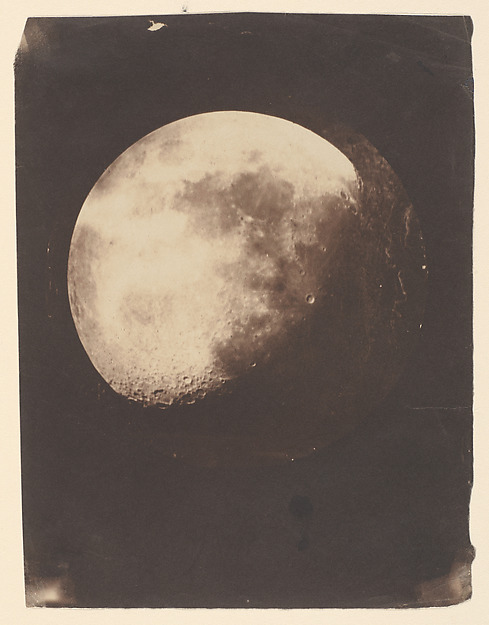 John Adams Whipple|James Wallace Black — The Moon
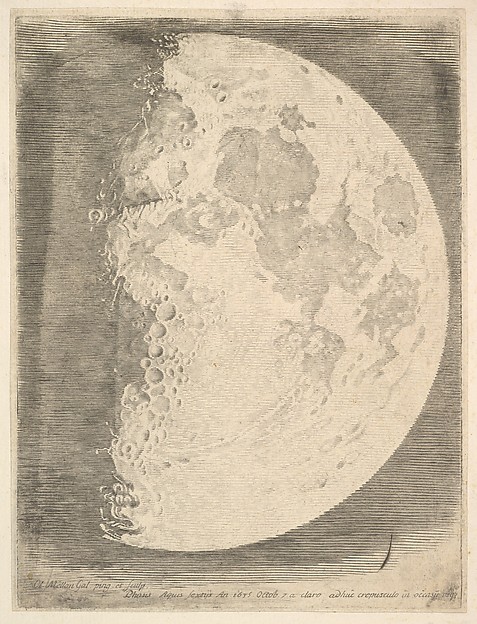 Claude Mellan — The Moon in its First Quarter
 Claude Mellan — Full Moon
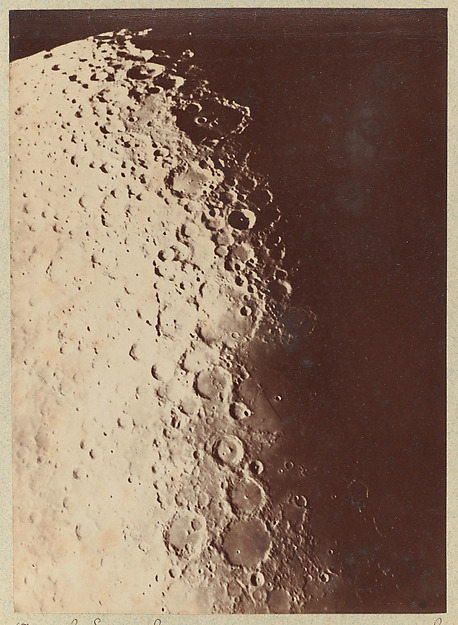 Paul Henry|Prosper Henry — Lunar Photograph, South Pole
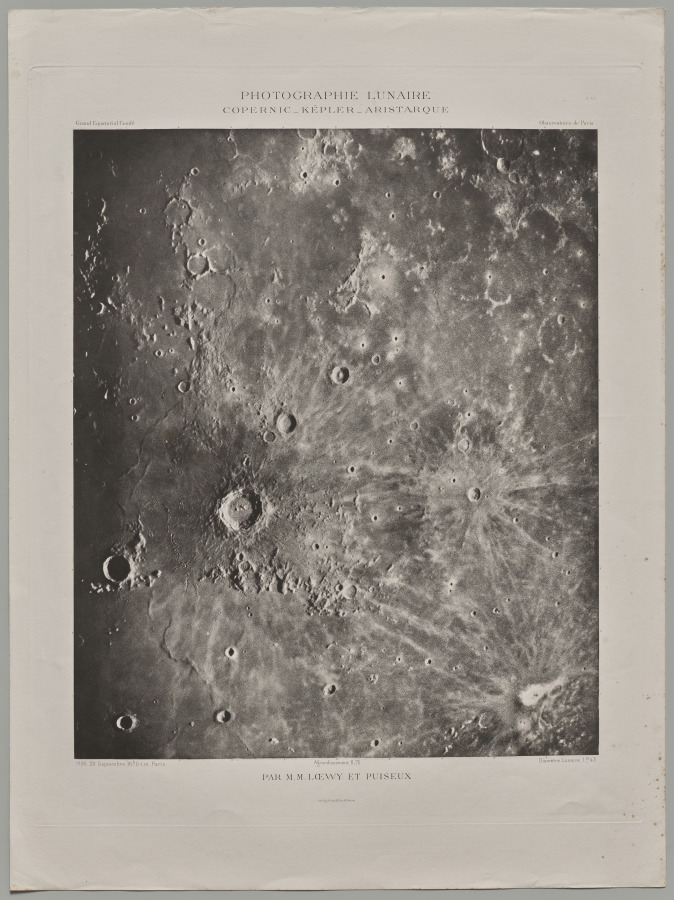 Maurice Loewy (French, 1833–1907) — Photographie Lunaire: Co
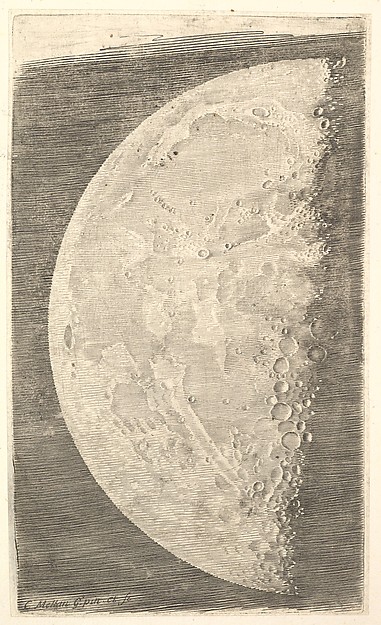 Claude Mellan — The Moon in its Final Quarter