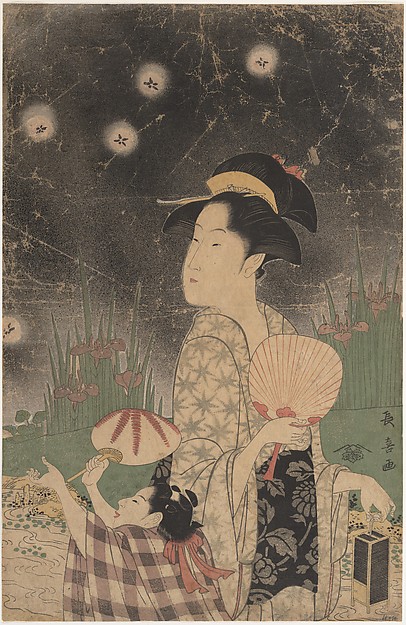
Catching Fireflies
SEE IT IN PERSON
Not currently on view
In the collection of Art Institute of Chicago, Chicago · as of July 2026
Discussion
FROM THE ART INSTITUTE OF CHICAGO’S CATALOG
Ground mica powder, now worn and cracked, originally made the night sky of this print luminous, providing a fitting backdrop to the glow of the fireflies. Artists used mica intermittently from the 1790s into the early 1800s in order to create more luxurious prints. From time to time, the government employed sumptuary laws—laws preventing extravagance—to ban the use of mica because it made prints too expensive. Even when it was legal to do so, artists likely produced mica backgrounds in limited numbers. Probably fewer than 20 prints with this design have survived, and most of them are now in museum collections.
Be the first to share your thoughts.
Sign in to join the discussion.
More by Eishosai Choki
 Kan, a waitress of the Izutsuya, and the geisha Fuseya of th
 Kan, a waitress of the Izutsuya, and the geisha Fuseya of th
 Untitled
 Moon viewing
 Osumi, a Tayu of the Tsuchiya in the Shinmachi Quarter in Os
 Good and Evil Influences (Zendama akudama)
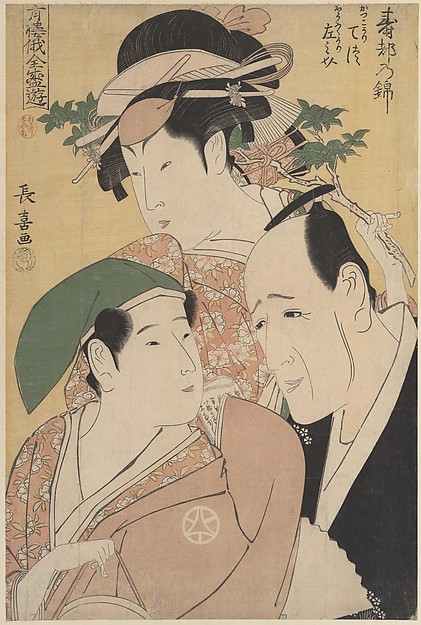 青楼俄全盛遊|The New Year Niwaka Festival in the Pleasure Quarters
 The Cock Fight - Ohisa of the Takashimaya and Okita of the N
More like this
Eishōsai Chōki Suzuki Harunobu — Searching for Fireflies
 Kitagawa Utamaro — Two Girls, from the series "Twelve Physio
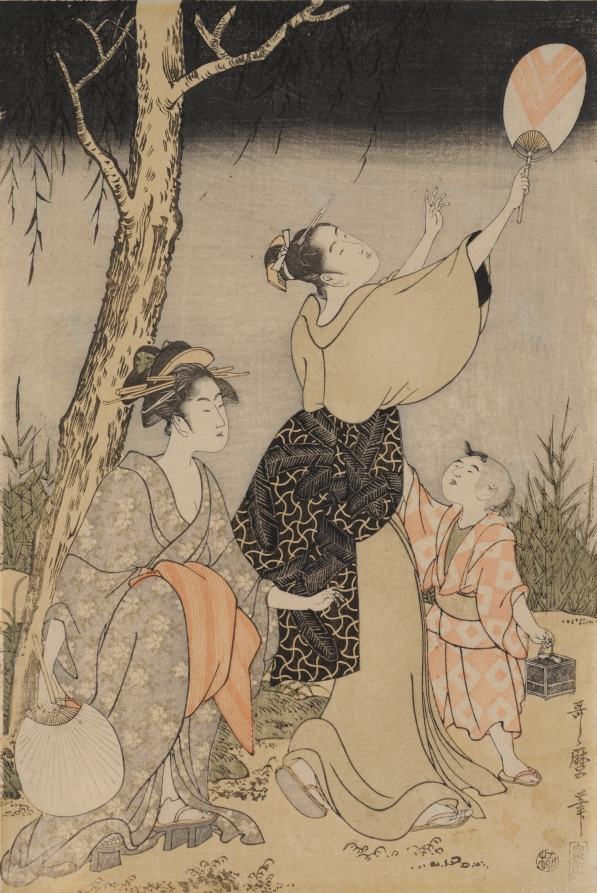 Kitagawa Utamaro (Japanese, c. 1754–1806) — Catching Firefli
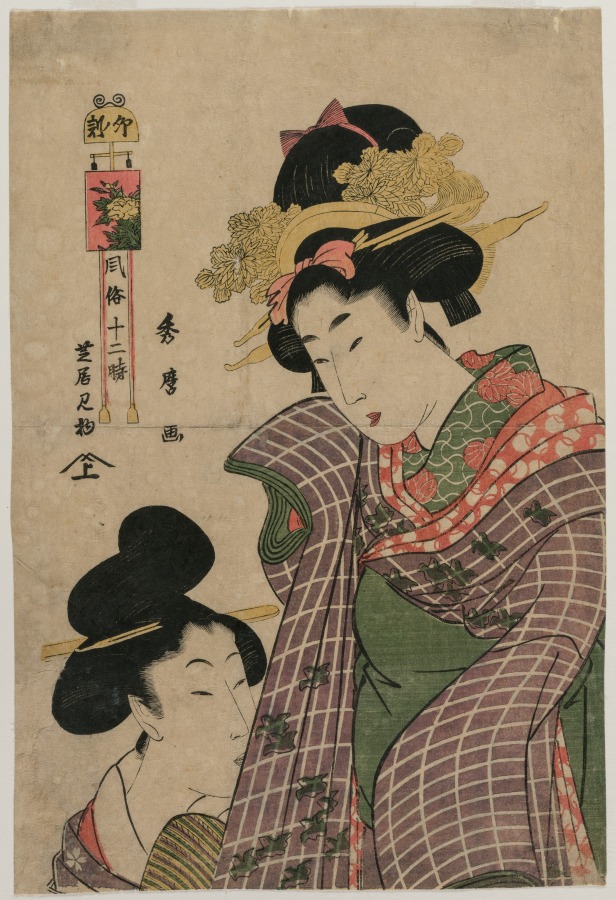 Kitagawa Hidemaro (Japanese) — Going to the Kabuki Theater i
 Suzuki Harunobu — Evening Rain at Nihonzutsumi (Nihonzutsumi
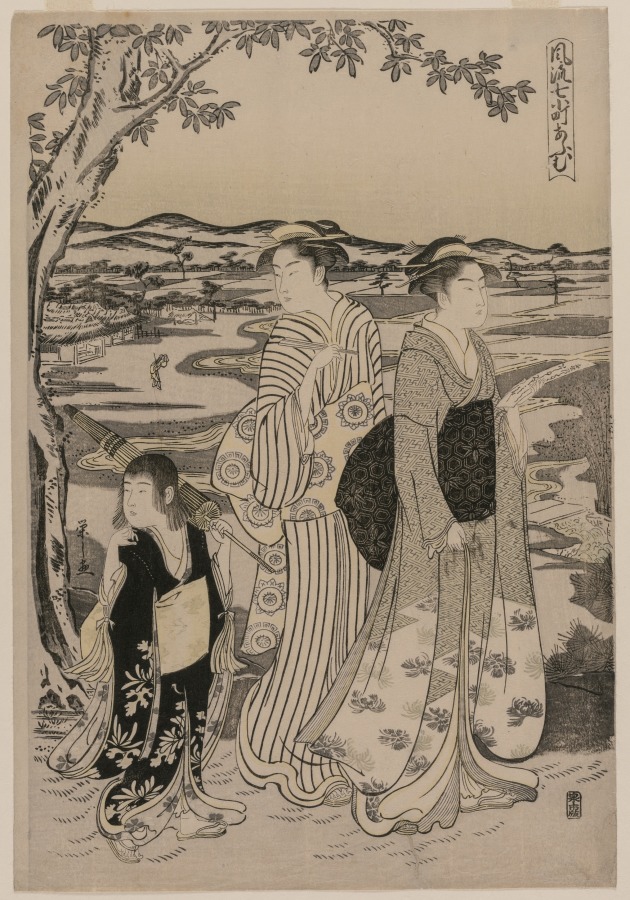 Chōbunsai Eishi (Japanese, 1756–1829) — Omu the Parrot (from
 Kitagawa Utamaro — Obvious Love (Arawaruru koi), from the se
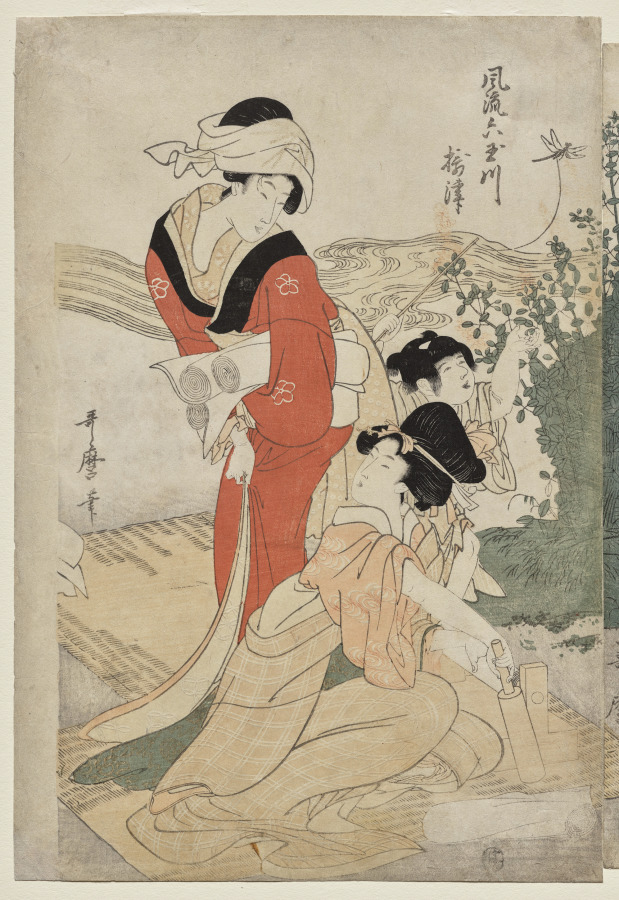 Kitagawa Utamaro (Japanese, c. 1754–1806) — Musashi Provinc
 Katsukawa Shunsho — The Actors Ichikawa Monnosuke II and Seg
 Suzuki Harunobu — Visiting (Kayoi), from the series "The Sev
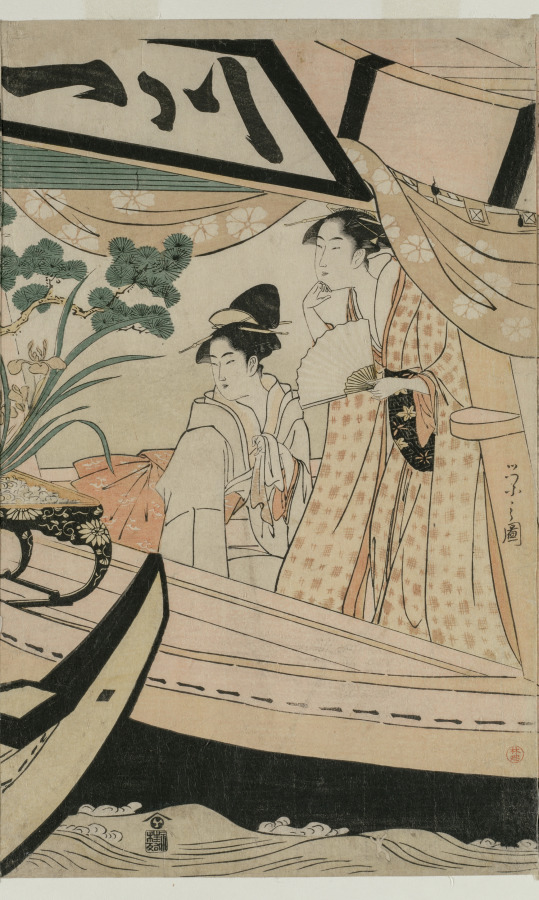 Chōbunsai Eishi (Japanese, 1756–1829) — Party on the Pleasur