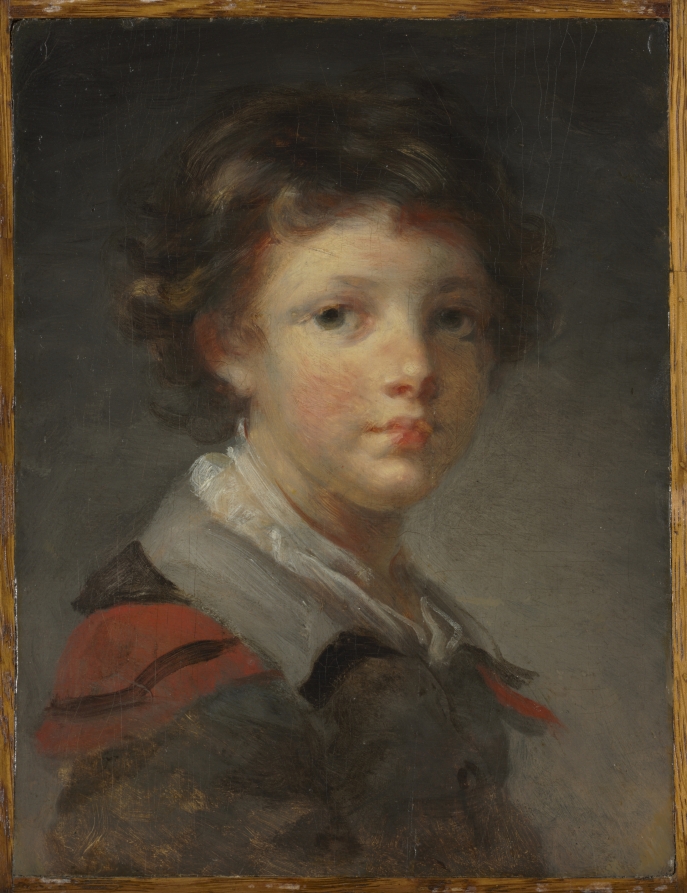
In the collection of Cleveland Museum of Art, Cleveland — check current display status with the museum.
FROM THE CLEVELAND MUSEUM OF ART’S CATALOG
The set of Bacchanales was made two years after Fragonard returned from a trip to Italy where he studied Roman antiquities. However, these light-hearted vignettes owe more to the effervescent aspects of the 18th-century Rococo period than to a serious understanding of antiquity and Roman art. Fragonard's black chalk drawing for Nymph Supported by Two Satyrs —after a marble bas-relief then in the Villa Mattei in Rome—and two other studies for these etchings still exist. Although this is one of Fragonard's earliest prints, it shows that he had already mastered the process: the etched lines effectively suggest the weight and movement of the figures and also provide a uniform system of light and shading for the decorative backdrop of foliage.
Be the first to share your thoughts.
Sign in to join the discussion.
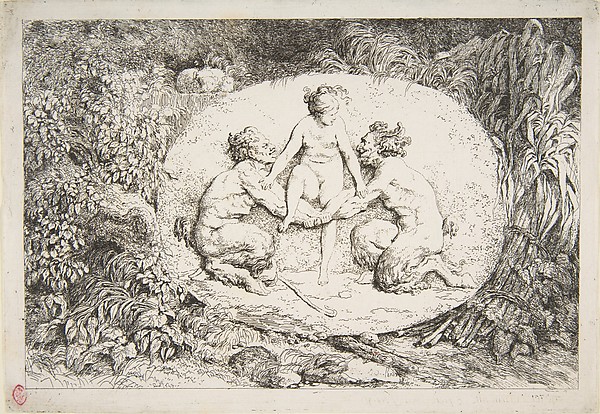 Jean Honoré Fragonard — Nymph Supported by Two Satyrs
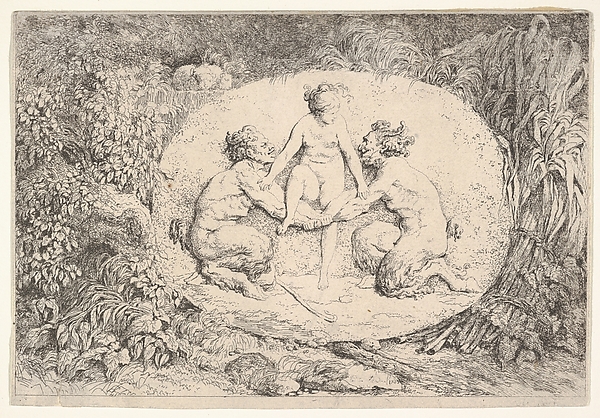 Jean Honoré Fragonard — Nymph Supported by Two Satyrs
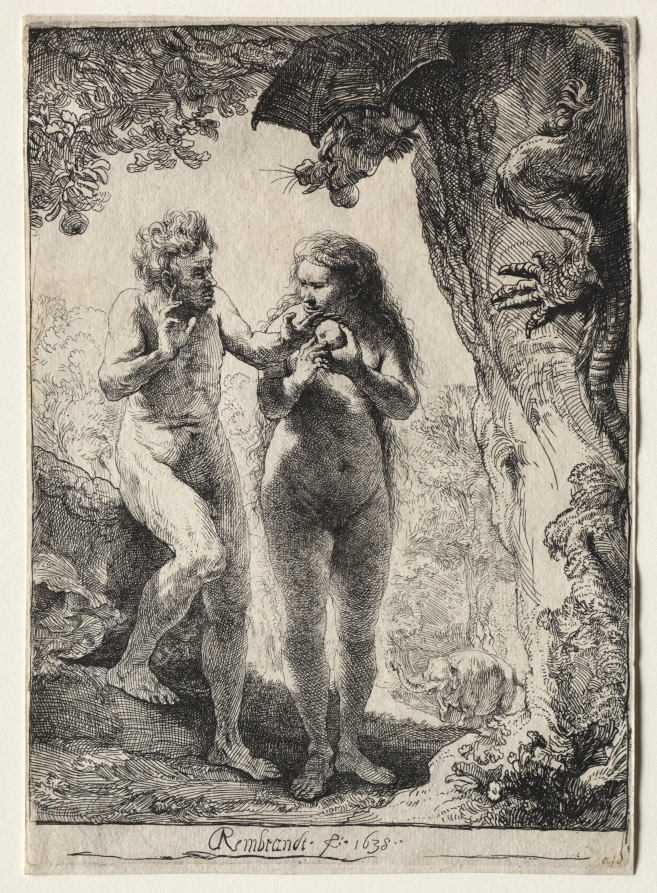 Rembrandt van Rijn (Dutch, 1606–1669) — Adam and Eve
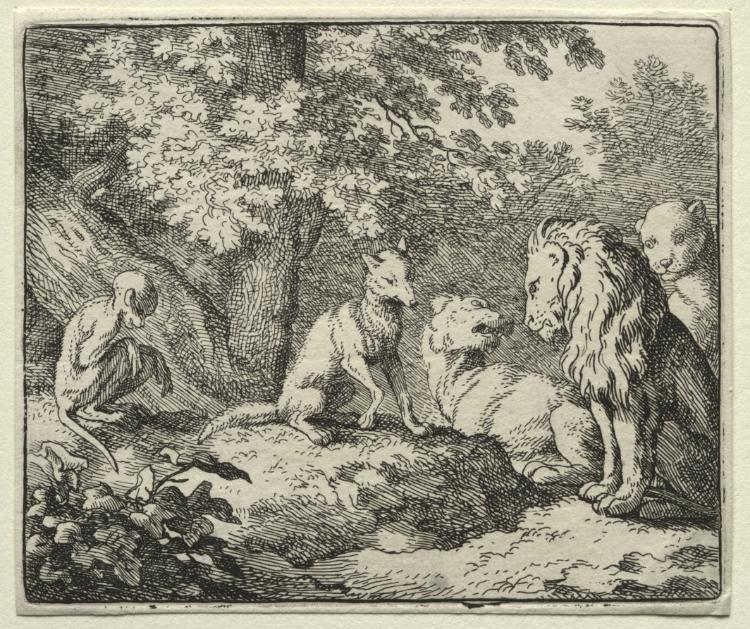 Allart van Everdingen (Dutch, 1621–1675) — Reynard the Fox:
 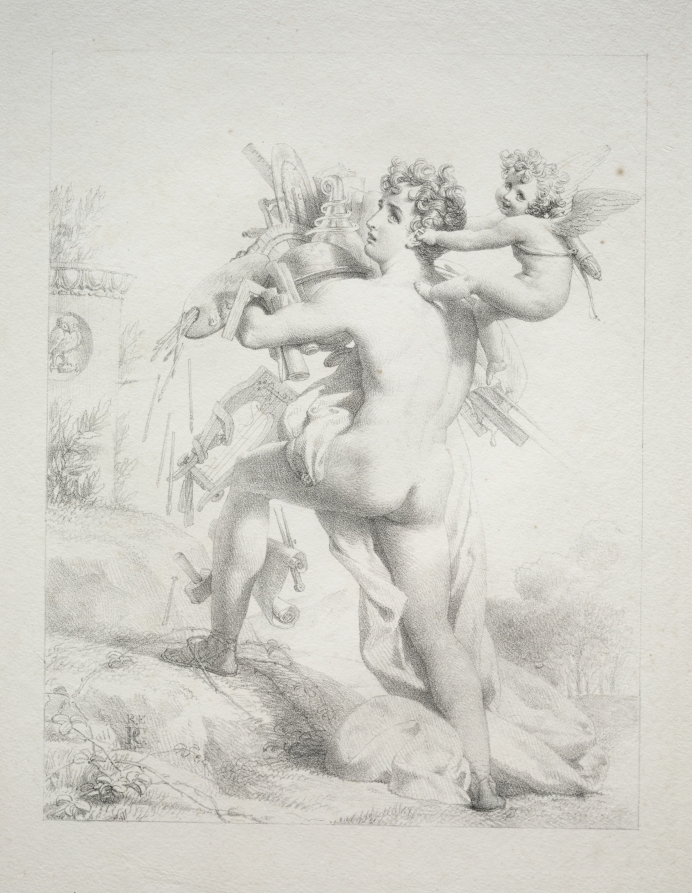 Pierre Guérin (French, 1774–1833) — Grasp All, Lose All
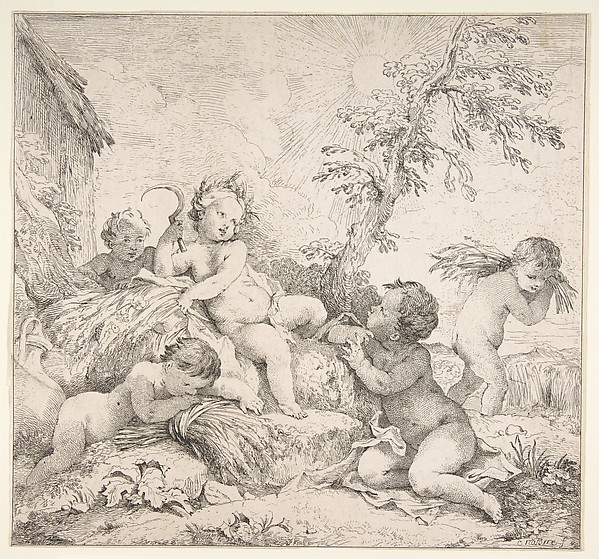 Charles Joseph Natoire — Summer (L'Été)
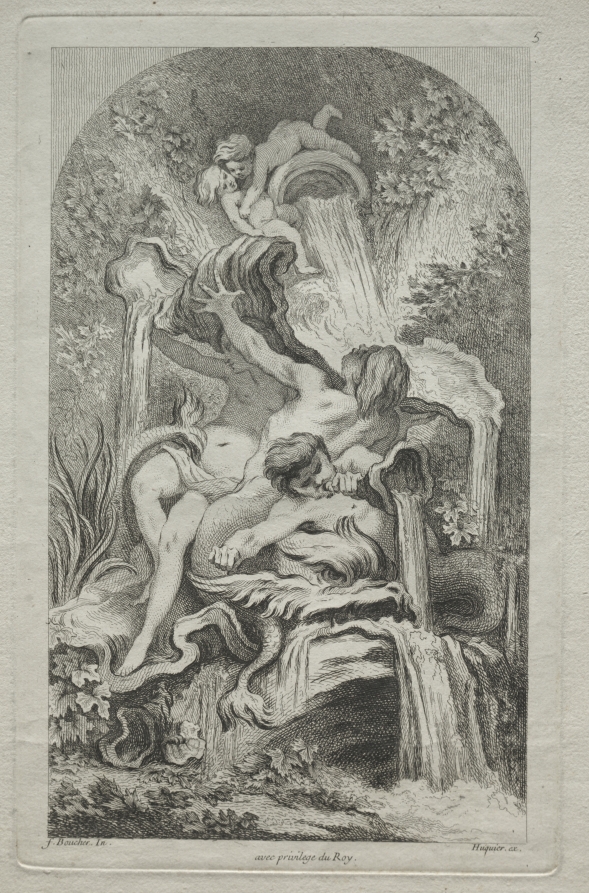 Gabriel Huquier (French, 1695–1772) — Book of Fountains: No
 Jean Honoré Fragonard — Nymph Supported by Two Satyrs
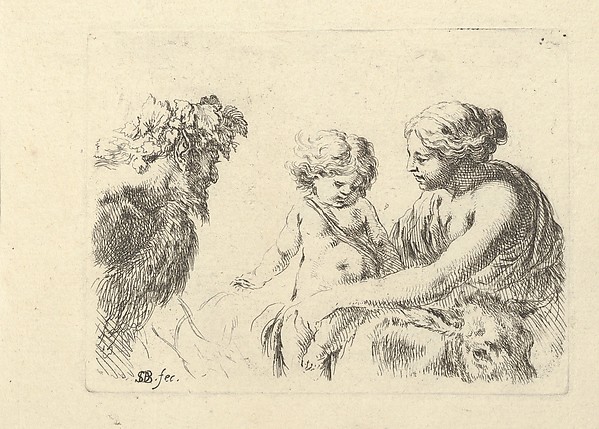 Stefano della Bella — Plate 6: a woman at right holding her
 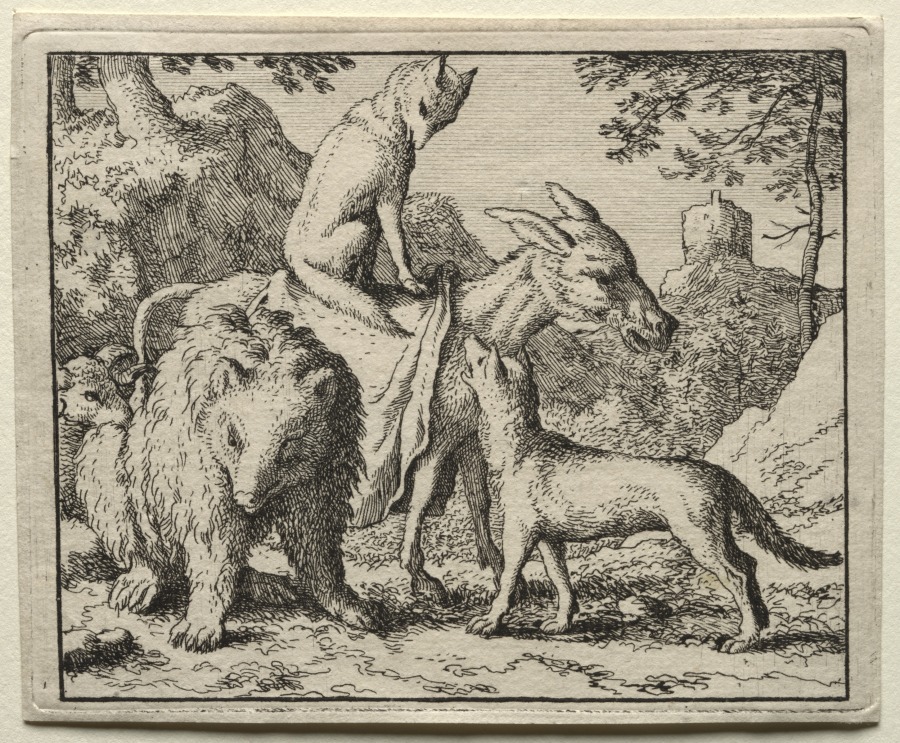 Allart van Everdingen (Dutch, 1621–1675) — Reynard the Fox
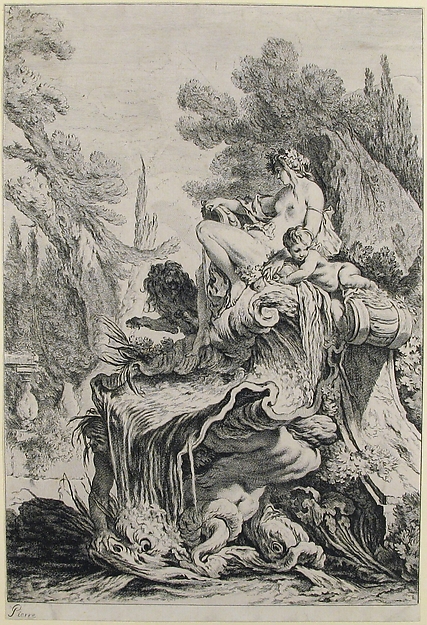 Jean-Baptiste Marie Pierre — Fountain with a Naiad Seated on
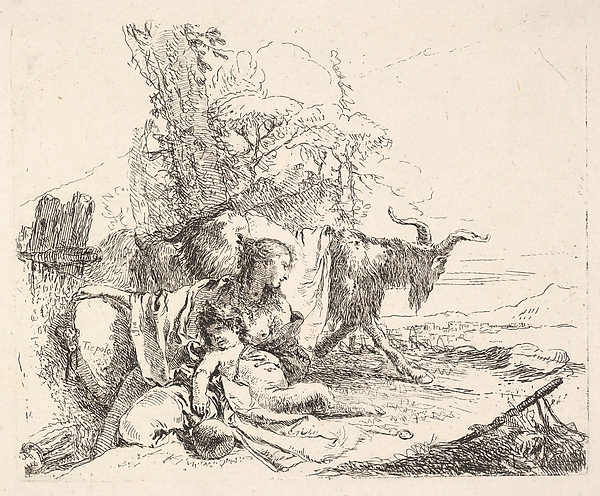 Giovanni Battista Tiepolo — Woman and infant satyr in a land