FROM THE CLEVELAND MUSEUM OF ART’S CATALOG
The source story of this painting remains enigmatic to scholars, but it includes a range of depictions of the “other”––from the foreign to the demonic. A prince kneeling in front of his horse addresses a lady; the moon in front of her face may identify her as Mahliqa (“moonlike” in Arabic), the Chinese princess identified by inscription on the adjacent page. A group of men whose eyes hang vertically stand behind her. Horned figures with grass skirts lie slain behind them, presumably killed by the kneeling prince conspicuously holding a bow. The city in the background, at the top of the painting, is populated solely by women, and its eight surrounding walls are interspersed with slain composite creatures wearing leaf skirts, which may identify them as bands of forest-dwellers, or tribal groups.
Source ↗︎
Be the first to share your thoughts.
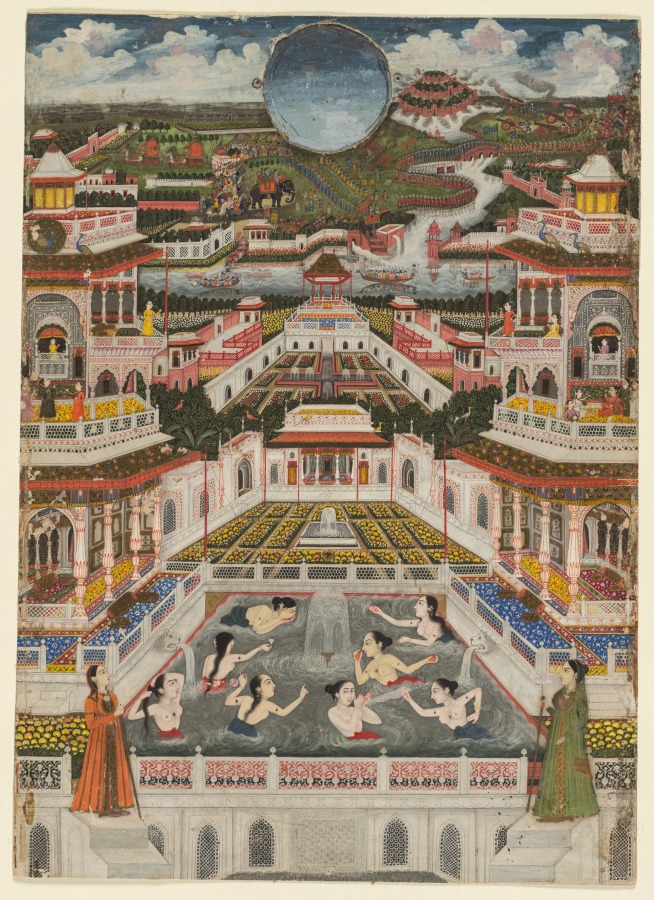 Fayzullah (Indian, active c. 1730–1765) — Women bathing befo
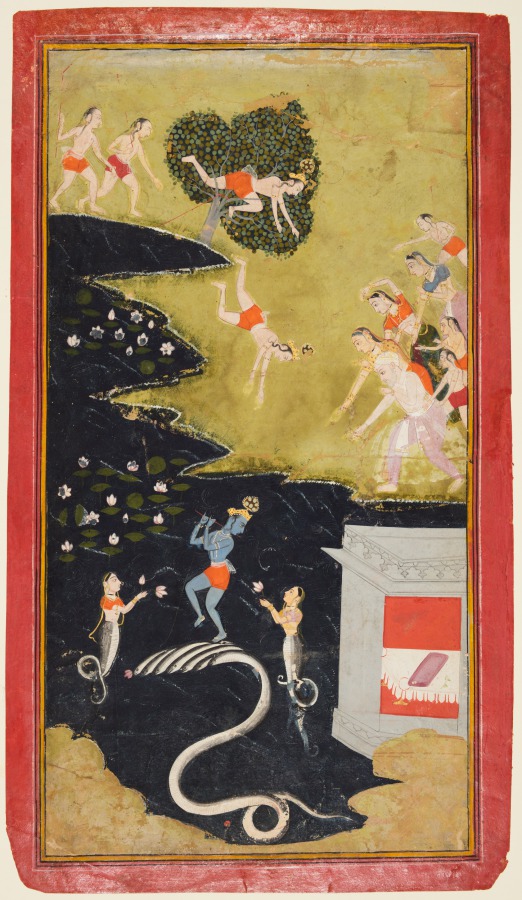 Krishna Quells the Serpent Kaliya, from a Bhagavata Purana
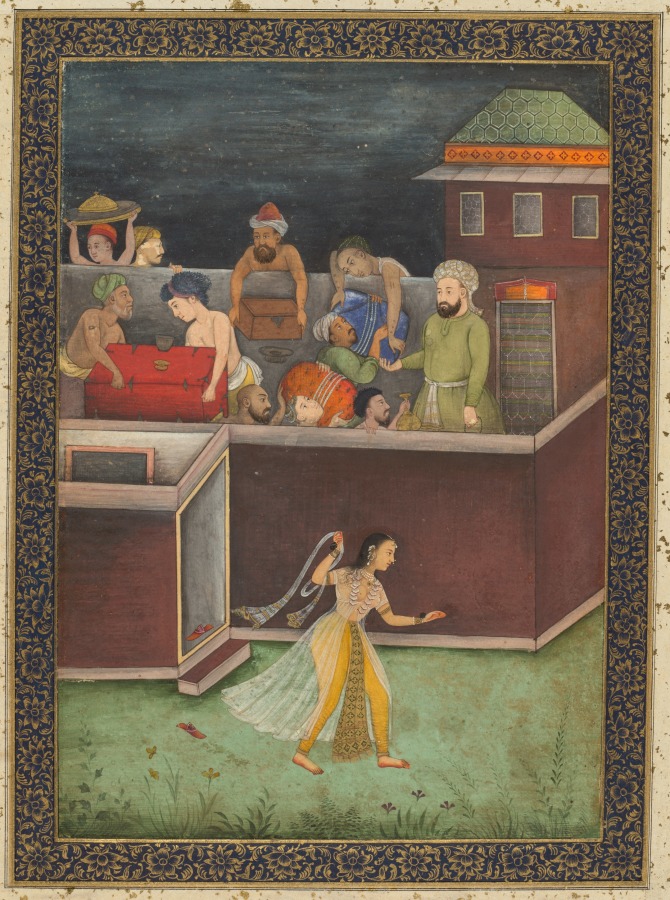 A House Burgled at Night
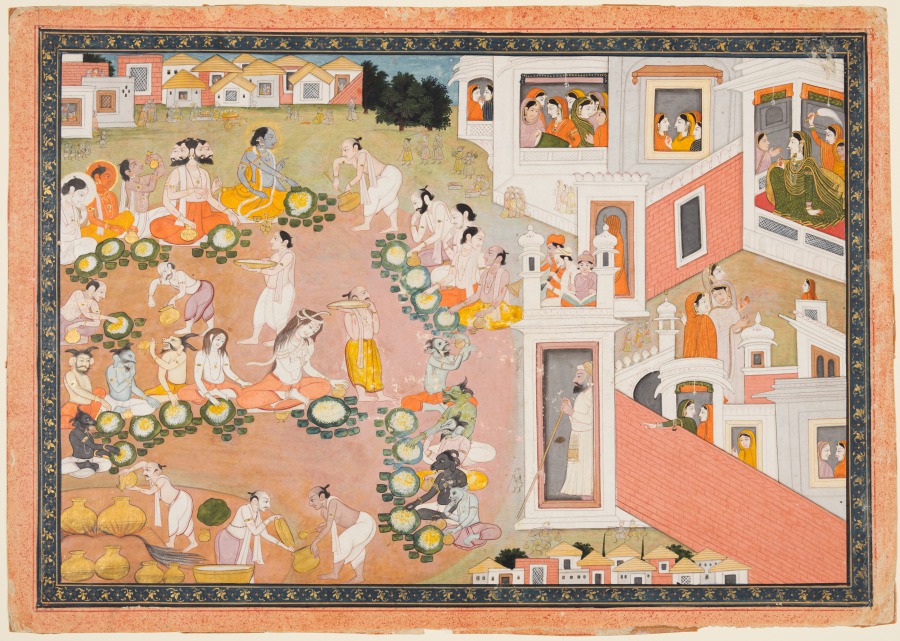 Feast where Vishnu decides he will incarnate as King Dashara
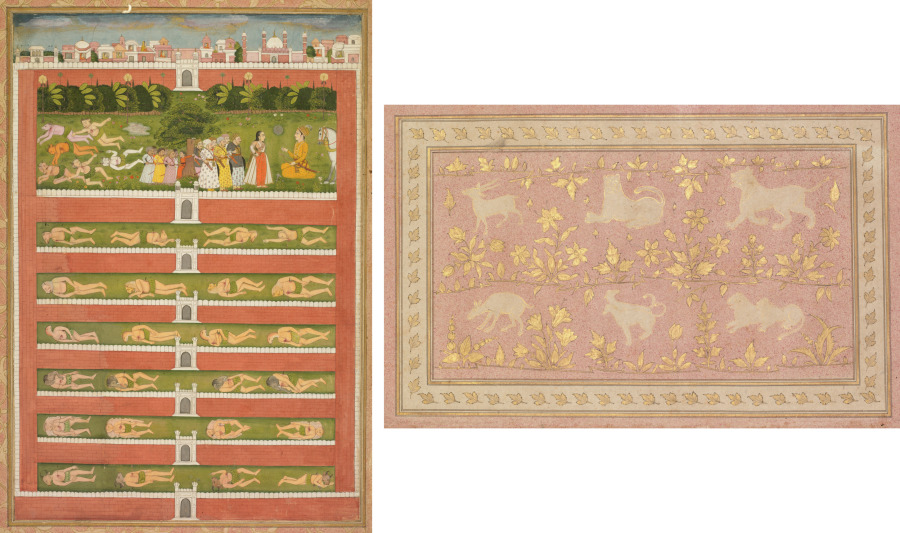 A Princess and Demons before a Nobleman: A Leaf from a Poeti
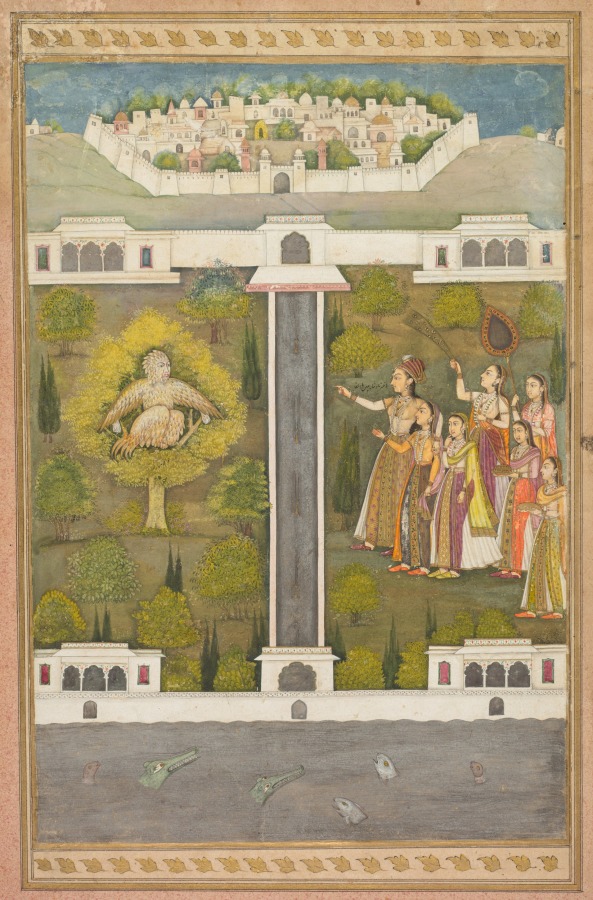 Mahliqa, Daughter of the Emperor of China, Pointing at the B
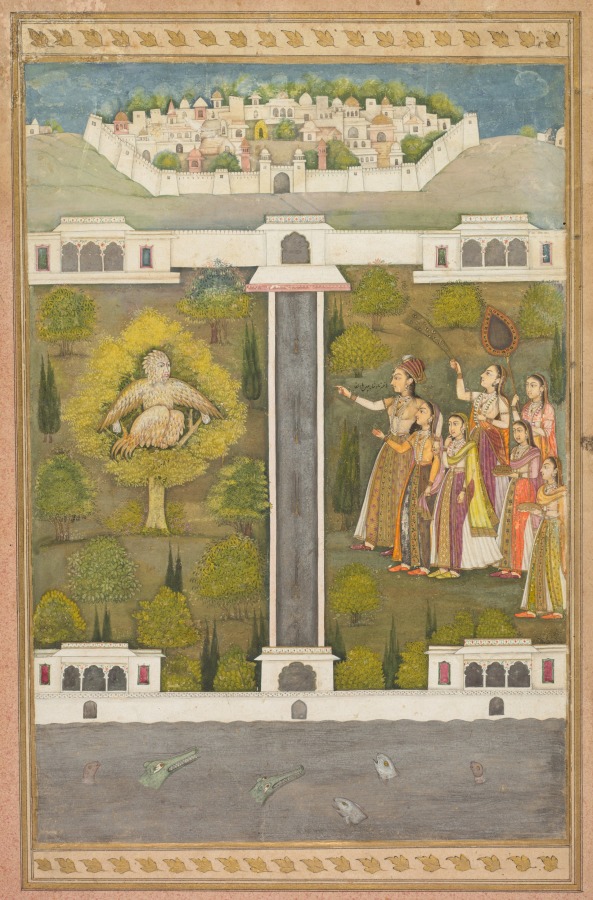 Mahliqa, Daughter of the Emperor of China, Pointing at the B
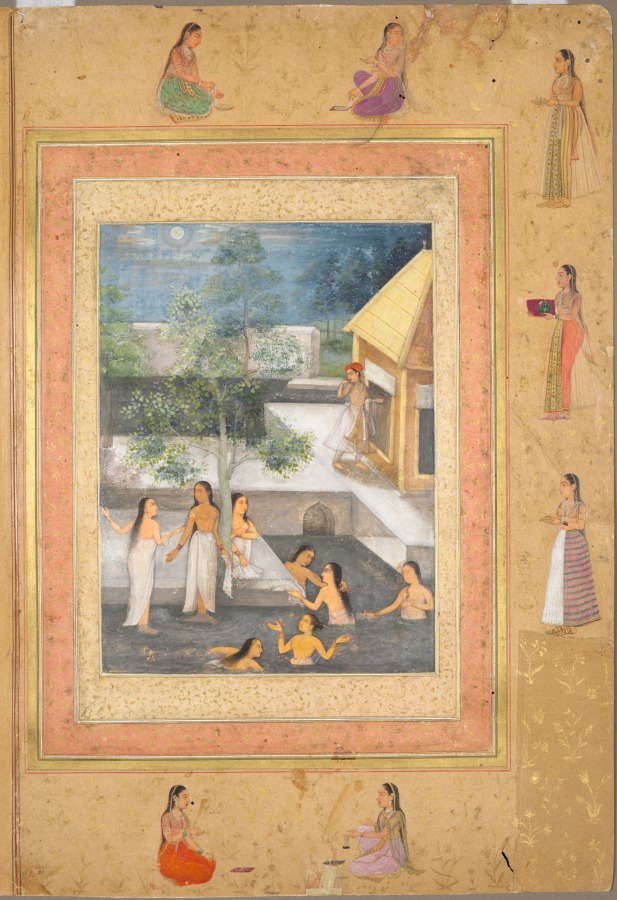 Harem night-bathing scene, from the Late Shah Jahan Album (r
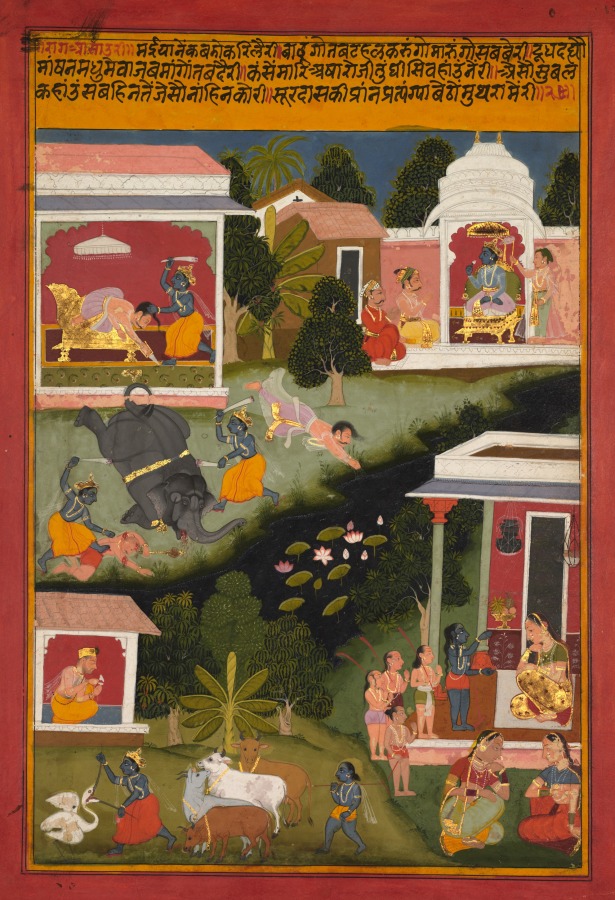 Krishna asks for sweets, from a Sursagar of Surdas (Indian,
 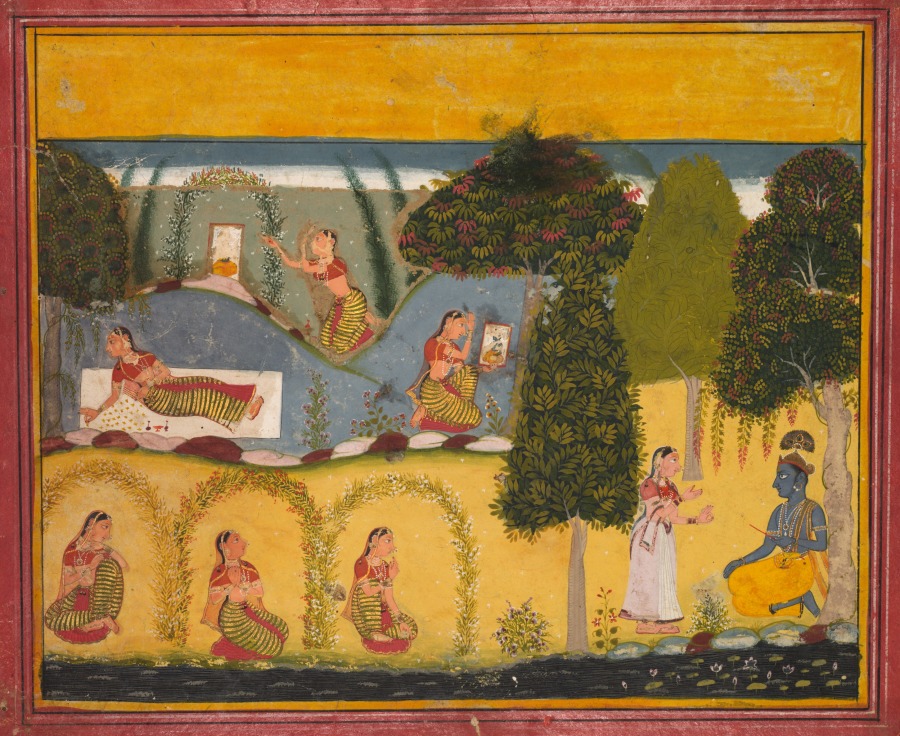 Radha Awaiting Reconciliation with Krishna, from a Gita Govi
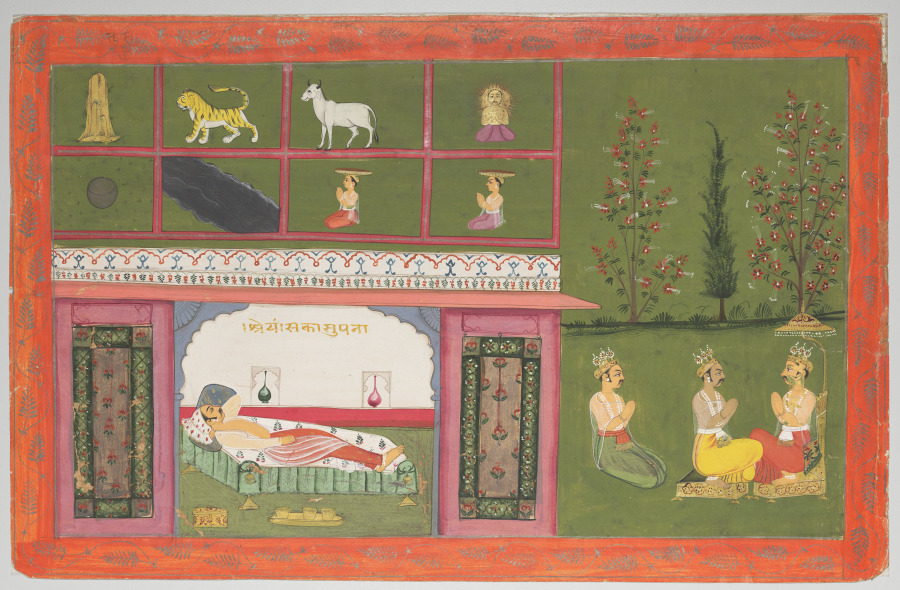 Prince Shreyamsa dreams of the coming of Rishabha, from a Pa
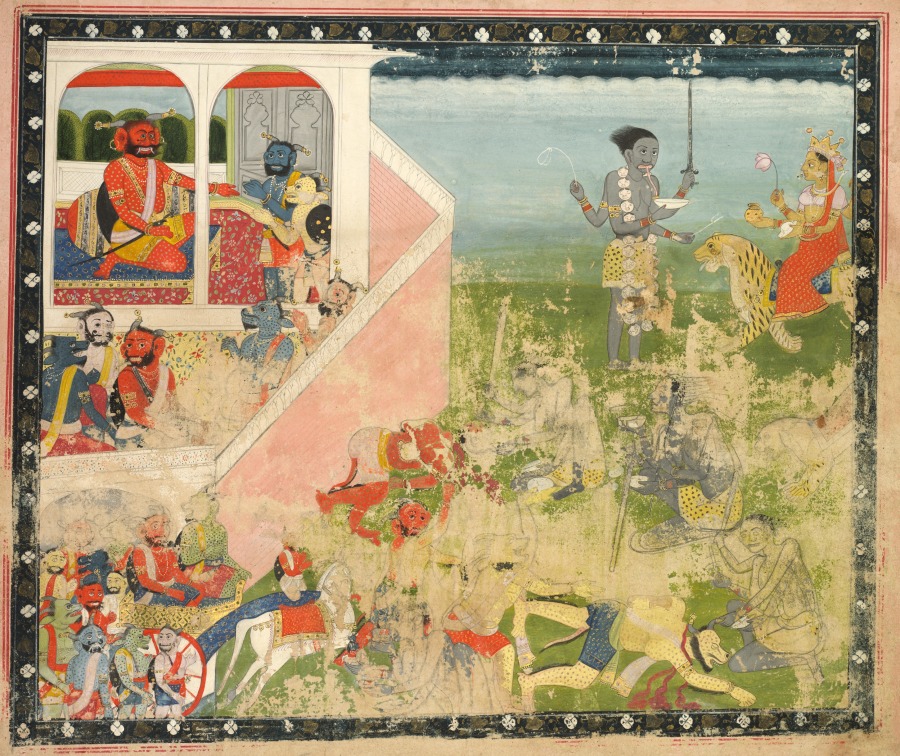 Kali and Devi attack, from a Devi Mahatmya