The Wangchuan Villa
SEE IT IN PERSON
Not currently on view
In the collection of Art Institute of Chicago, Chicago · as of July 2026
Discussion
FROM THE ART INSTITUTE OF CHICAGO’S CATALOG
Wangchuan Villa was the retreat of the famous poet Wang Wei (699–759); the site was located on the outskirts of Chang’an (now Xi’an), capital of the Tang dynasty (618–970). Wang Wei converted part of his estate into a Buddhist temple after his mother’s death and painted a panoramic view of the Wang-chuan Villa on its walls. Although the temple was destroyed during the Huichang Persecution of Buddhism (841–45), the original mural has inspired artists for more than a thousand years. This handscroll painting is based on a stone engraving from 1617, the image that became the most widely accepted model for representations of Wangchuan Villa.
Be the first to share your thoughts.
Sign in to join the discussion.
More by Artist unknown


More like this
 Landscape
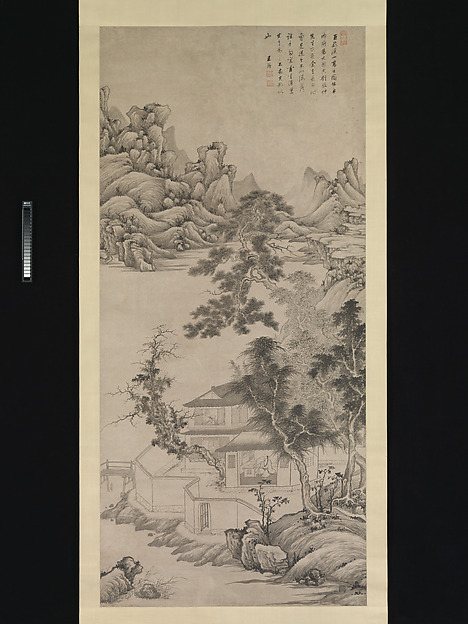 Wang Jian — 清 王鑑 倣巨然《溪山高士圖》 軸|Lofty Scholar among Stre
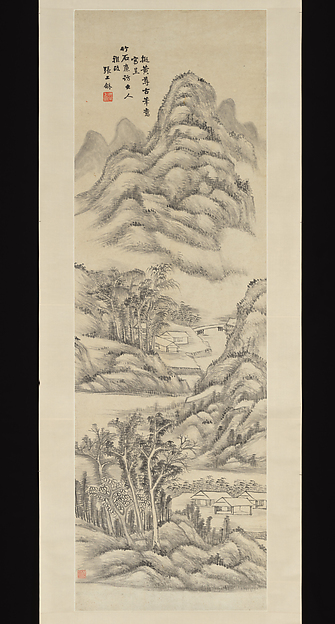 Zhang Shanghe — 清 張上龢 山水 軸|Landscape
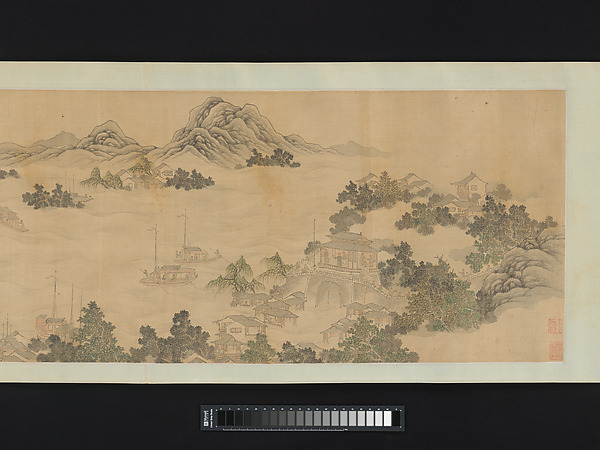 Wang Gai — 清 王概 金陵感舊圖 卷|Reminiscence of Jinling
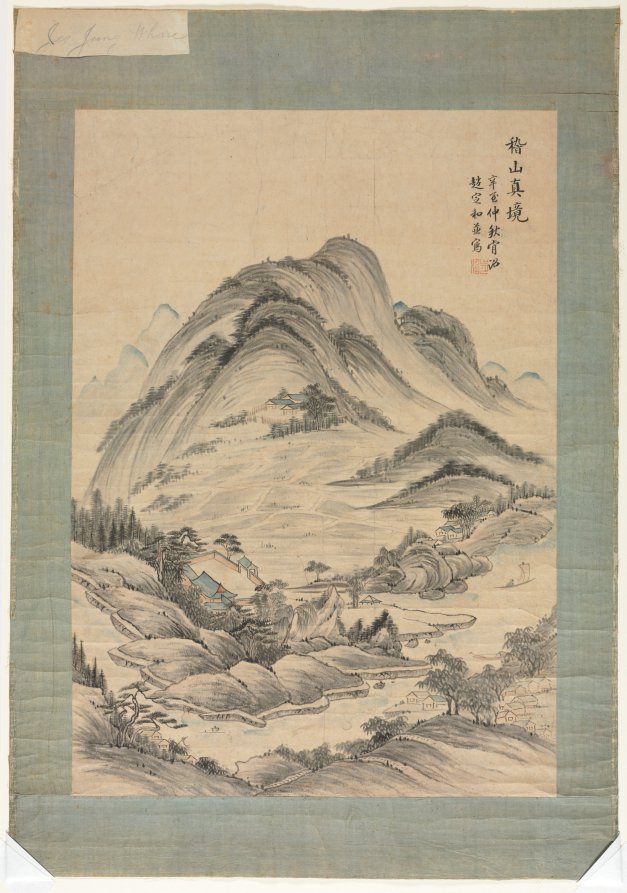 Landscape with Streams and Mountains
 Kano Chikanobu (Japanese, 1660–1728) — Chinese Landscape
 Unidentified artist|Li Zhaodao|Qiu Ying
 Dong Yuan — 五代 傳董元 溪岸圖 軸|Riverbank
 Palace Landscape
 Unidentified artist|Guo Xi — 明/清 佚名 舊傳郭煕 關山行旅圖 卷|Tra
 Unidentified artist — 元 佚名 倣夏永 呂洞賓過岳陽樓 冊頁|明
  Landscape