In the collection of Cleveland Museum of Art, Cleveland — check current display status with the museum.
FROM THE CLEVELAND MUSEUM OF ART’S CATALOG
Prior to the early 1600s, Dutch artists typically painted landscapes as idealized or artificial backdrops to decorate the more important religious or mythological narratives they included. A revolution in landscape painting occurred in Haarlem in the 1610s when artists like Esaias van de Velde started to paint the humble and everyday subjects of the land and people of the Netherlands in convincingly naturalistic detail. The river view was a subject that van de Velde developed in the 1620s. While the water is subordinate to the other elements, its stillness reinforces the serenity of the environment, as do the figures and ruins that exist in in harmony with the natural world. Although van de Velde would have made sketches outdoors, the painting itself was not a copy of these sketches. Rather, as was the common practice, van de Velde would carefully construct paintings in his studio, using a combination of sketches and memories as his inspiration. For its owner, this picture would have satisfied an urban patron's nostalgia for the humble countryside, particularly in light of the rapid urbanization of Dutch society after their independence from Spain in 1609.
Be the first to share your thoughts.
Sign in to join the discussion.
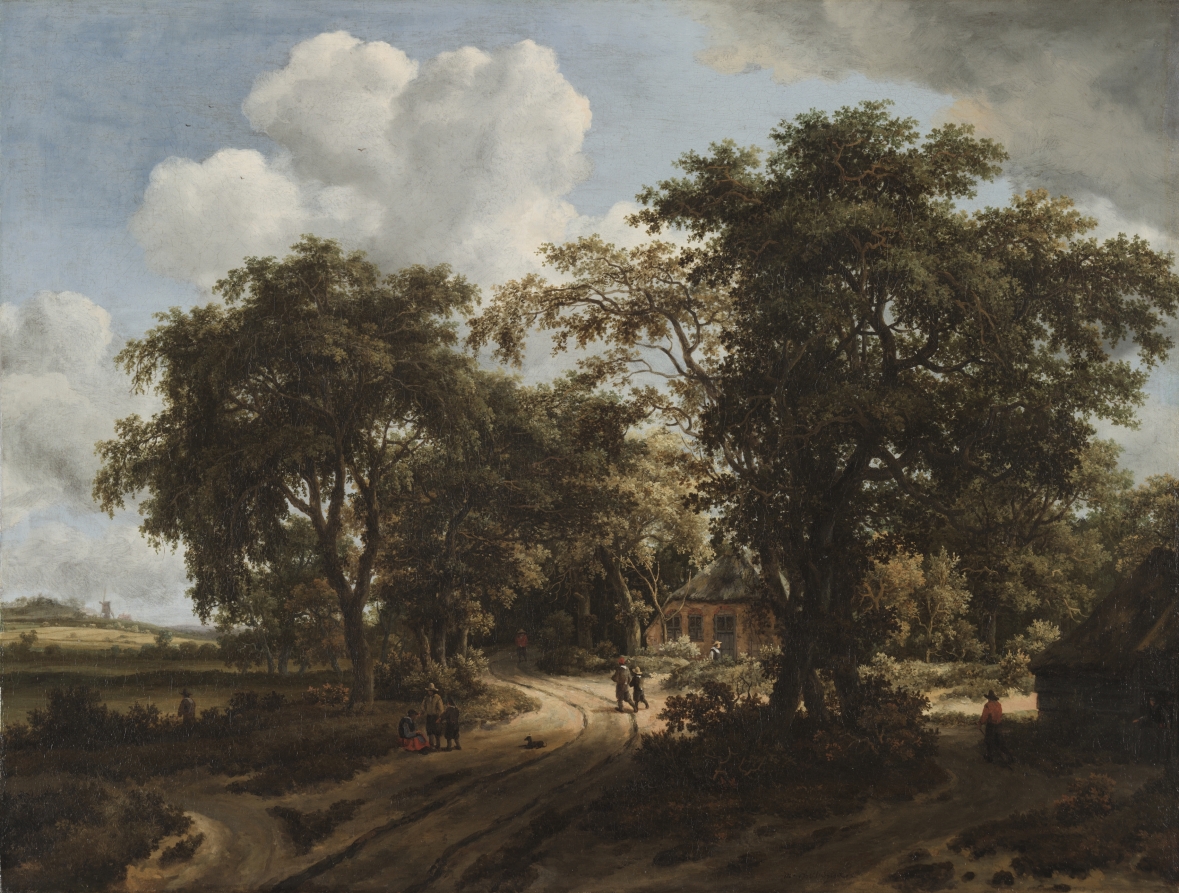 Meindert Hobbema (Dutch, 1638–1709) — A Cottage in the Woods
 Jacob Isaacksz van Ruisdael — The ford
 Meindert Hobbema — Landscape with Anglers and a Distant Town
 Jan Hackaert — Hunters in the Woods
 Pieter Jansz van Asch — Wooded Landscape
 Sebastiaen Vrancx — A Woman Mounts her Robber’s Horse: ‘De G
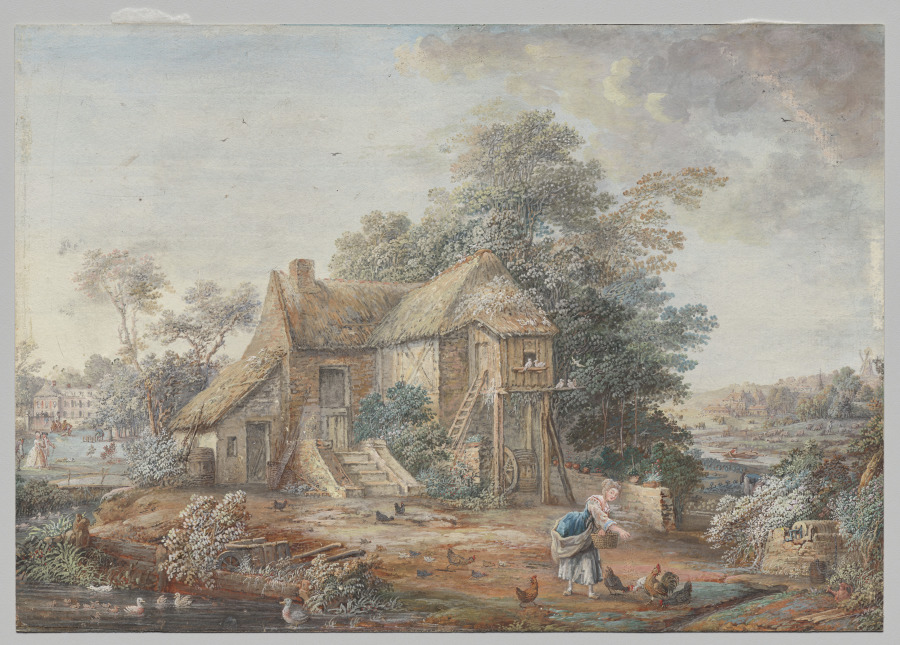 Louis-Nicolas van Blarenberghe (French, 1716–1812) — Le Peti
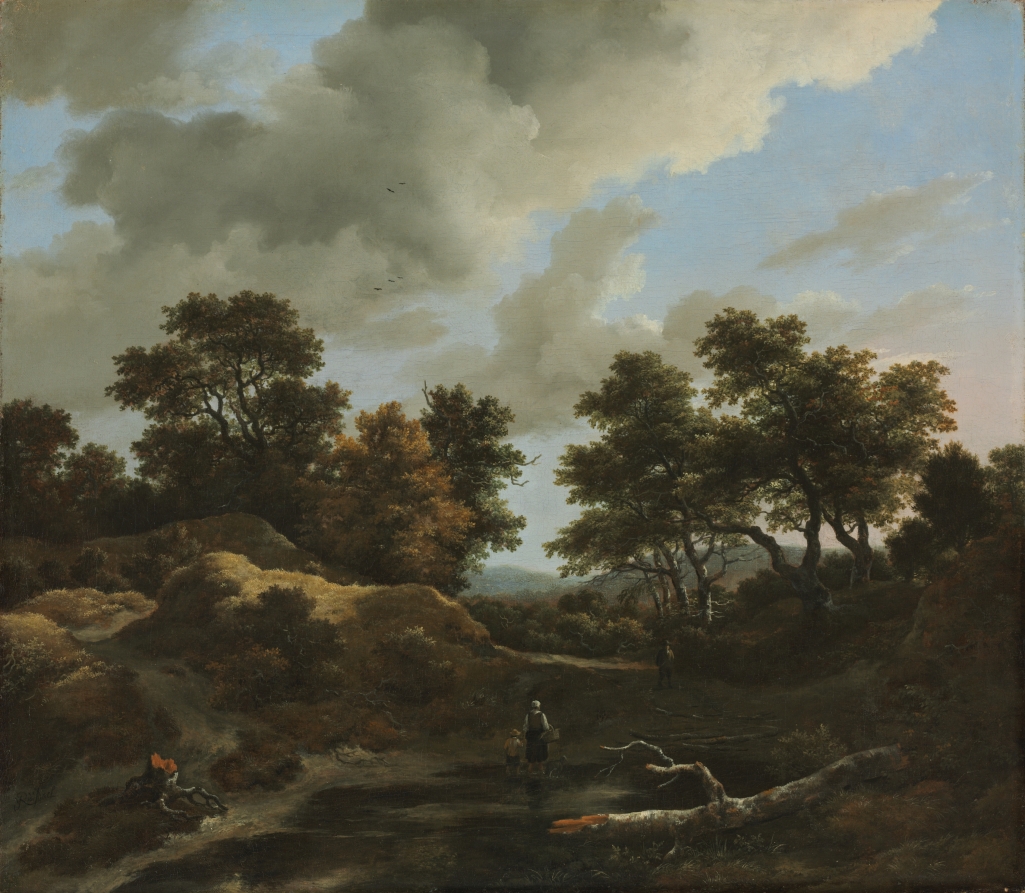 Jacob van Ruisdael (Dutch, 1628/29–1682) — Wooded and Hilly
  Esaias van de Velde — Dorfszene mit Brücke und Kirche
 Esaias van de Velde — Landschaft mit Gehöft und Landweg
 Salomon van Ruysdael — Village View with Romani and Other Fi
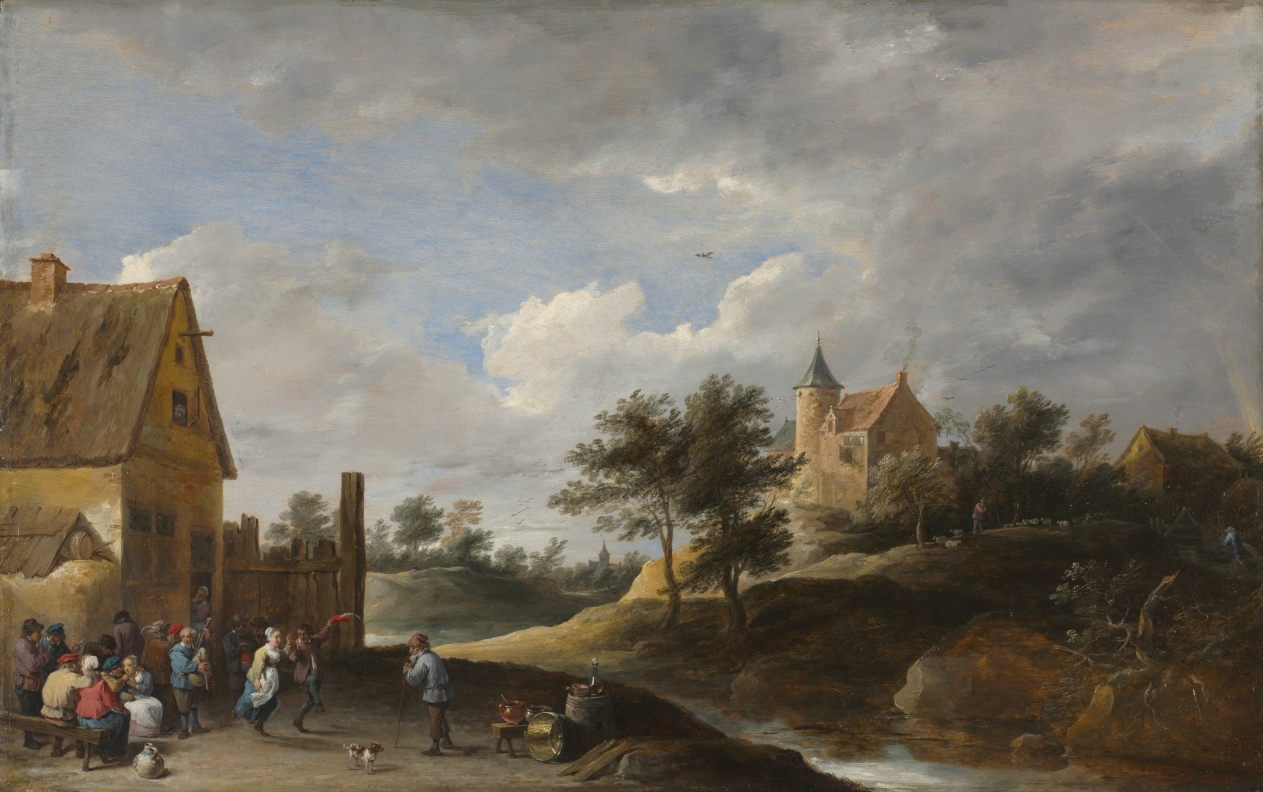 David Teniers (Flemish, 1610–1690) — Landscape with Peasants


