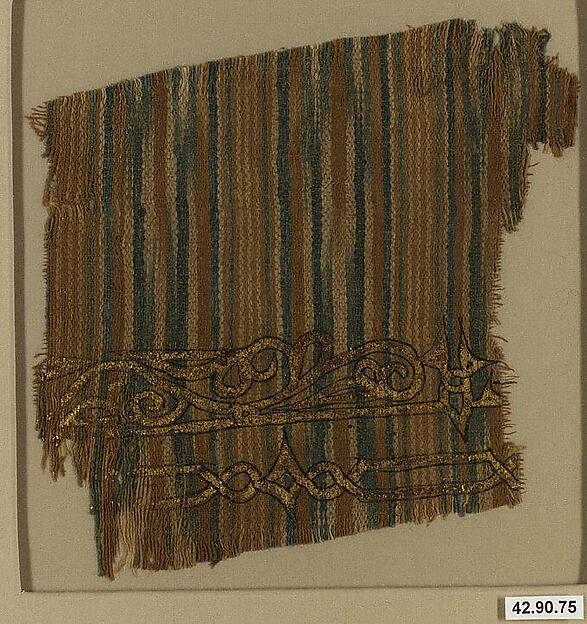
Fragment
Arab period (641–969)/Fatimid period (969–1171)/Ayyubid period (1171–1250)/ Mamluk period (1250–1517), 9th/13th century
21.6 × 12.7 cm (8.5 × 5 in)
SEE IT IN PERSON
Not currently on view
In the collection of Art Institute of Chicago, Chicago · as of July 2026
Discussion
FROM THE ART INSTITUTE OF CHICAGO’S CATALOG
In the late 1800s and early 1900s, dealers in Egyptian cities including Alexandria and Cairo would often cut up ancient and antique textiles into many pieces in order sell them to multiple buyers, maximizing their profits. Fragments helped private collectors and museums at the time to build large collections that included as many different textiles as possible. This fragment was cut from the larger cloth in the collection of the National Museums in Berlin, Museum für Islamische Kunst.
Be the first to share your thoughts.
Sign in to join the discussion.