Evil
published September 2, 1816
Engraving on ivory China paper, laid down on ivory laid paper (chine collé)
30.9 × 22.3 cm (12.2 × 8.8 in)
SEE IT IN PERSON
Not currently on view
In the collection of Art Institute of Chicago, Chicago · as of July 2026
Discussion
FROM THE ART INSTITUTE OF CHICAGO’S CATALOG
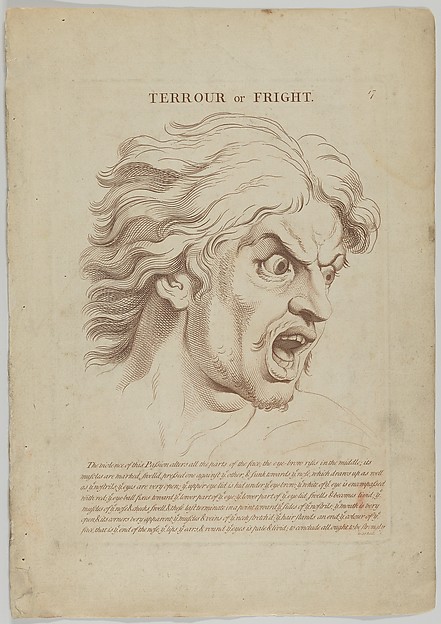
Sharp transcended Le Brun’s codified expressions of fear and hate when he reproduced the unhinged expression of Michelangelo’s ultimate fiend. Despite the figure’s inhuman screams, Sharp suggested the wicked would not prevail forever, for, according to Psalm 37 (cited on the print’s final state): “The wicked plot against the righteous; and gnash their teeth at them; but the Lord laughs at the wicked, for he knows their day is coming.”
Be the first to share your thoughts.
Sign in to join the discussion.
More by William Sharp


More like this
 John Downman — Fright
 A. J. Defehrt — Design: Study, from Encyclopédie
 John Hamilton Mortimer|William Shakespeare — Caliban (from "
 Eduardus Jacobus — Hatred or Jealousy
 Eduardus Jacobus — Terrour (sic) or Fright
 François Boucher|Gilles Demarteau — Tête de faune
 Eduardus Jacobus — Simple Bodily Pain
 Circle of Peter Paul Rubens — Male Nude Tied to Tree
 Thomas Worlidge — Head of an Old Man Sleeping
 Jan Harmensz. Muller — Chilon of Sparta
 Eduardus Jacobus — Compassion
 Charles Le Brun|Robert Sayer|Anonymous, British, 18th centur