In the collection of Cleveland Museum of Art, Cleveland — check current display status with the museum.
FROM THE CLEVELAND MUSEUM OF ART’S CATALOG
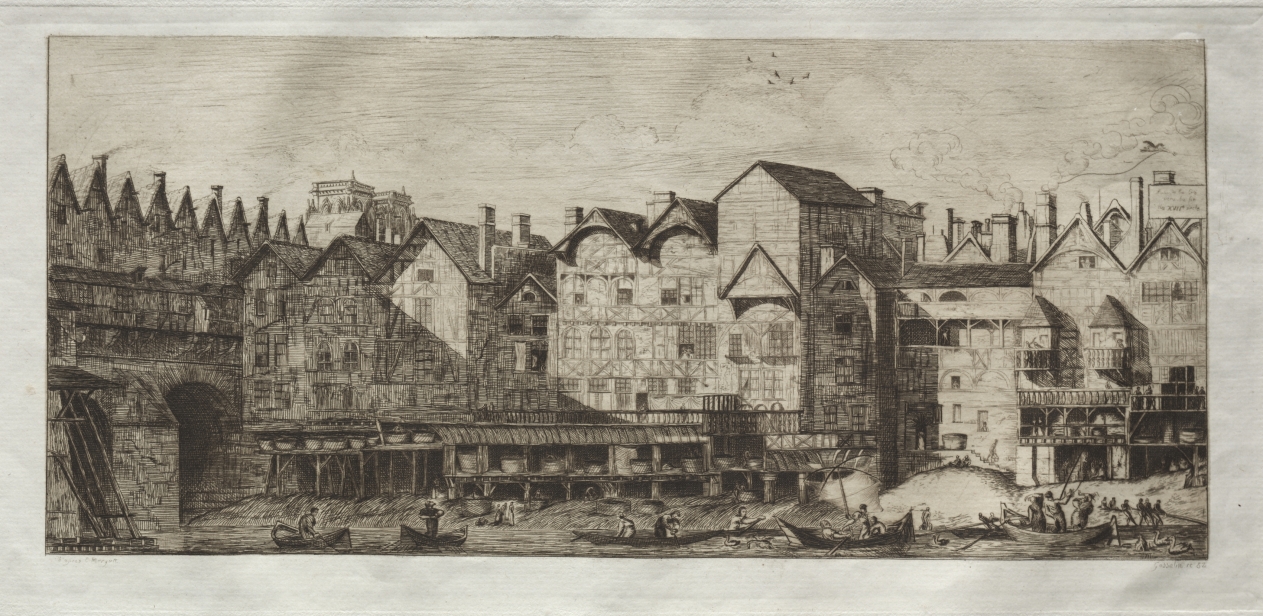
Charles Meryon used etching—a technique that involves drawing on a printing plate with a needle’s point—to create minutely detailed images of Paris that imaginatively present recognizable sites. This print features bateaux-lavoirs (wash boats) on the Seine River, where laundresses could purchase a spot to do their washing. The boats appealed to Meryon, who was fascinated by Paris’s gradual transformation. Since they attracted crowds of working-class women, administrators considered the boats unsightly and unhygienic, repeatedly pushing them closer to the city’s outskirts until few remained by the end of the 1800s.
Be the first to share your thoughts.
Sign in to join the discussion.
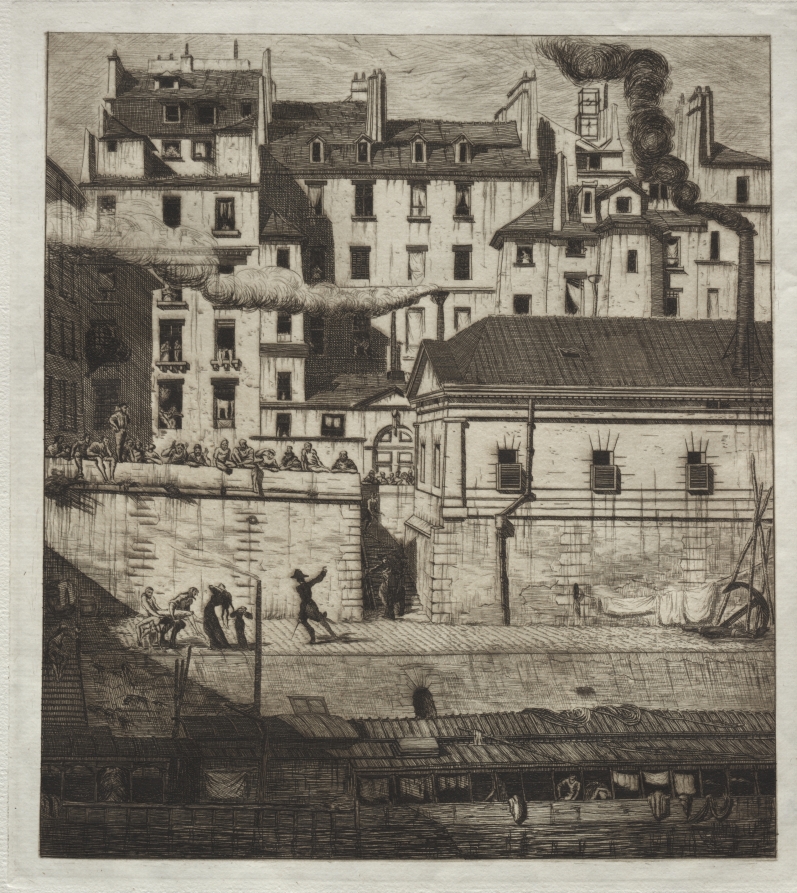 Edmond Gosselin (French) — La Morgue
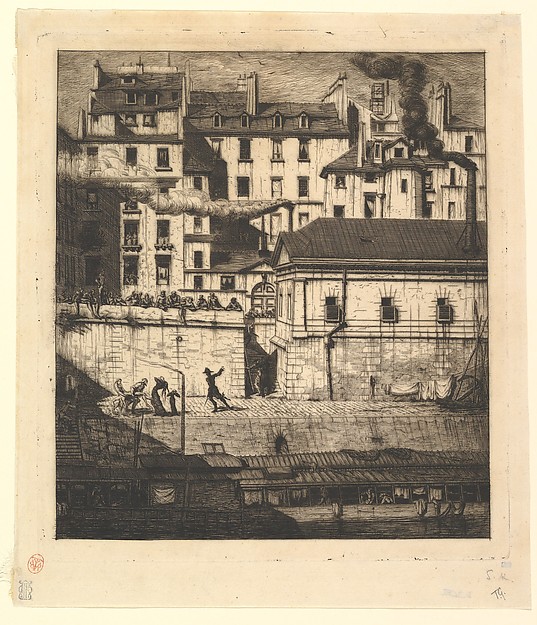 Charles Meryon — The Mortuary, Paris (La Morgue)
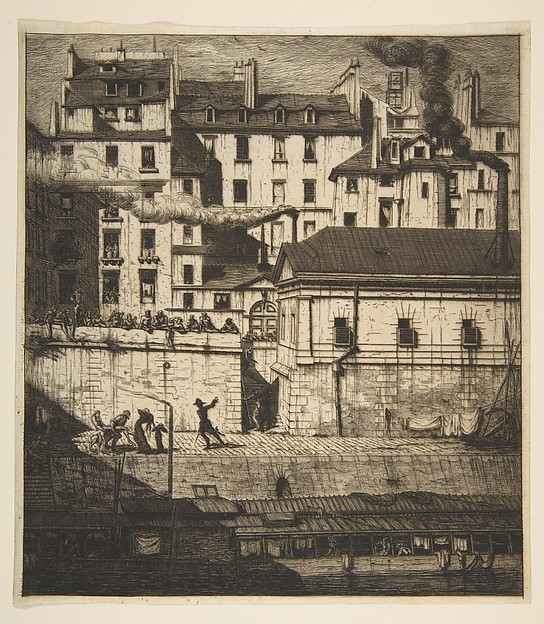 Charles Meryon — The Mortuary, Paris (La Morgue)
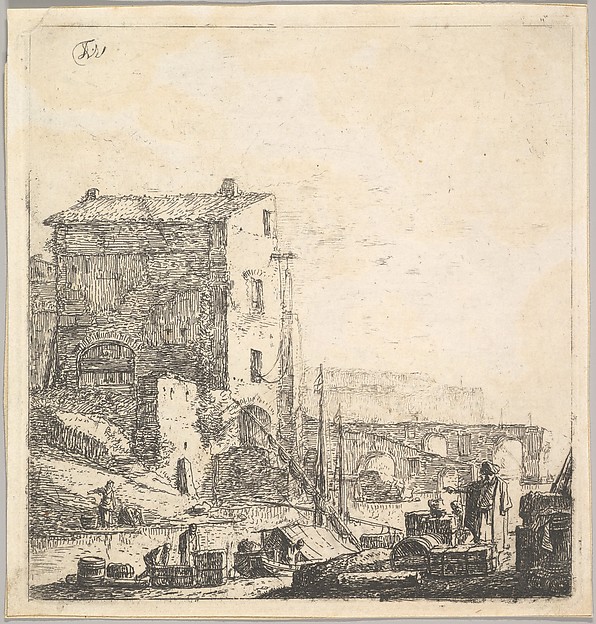 Thomas Wijck — An Oriental Merchant with Merchandise at Rive
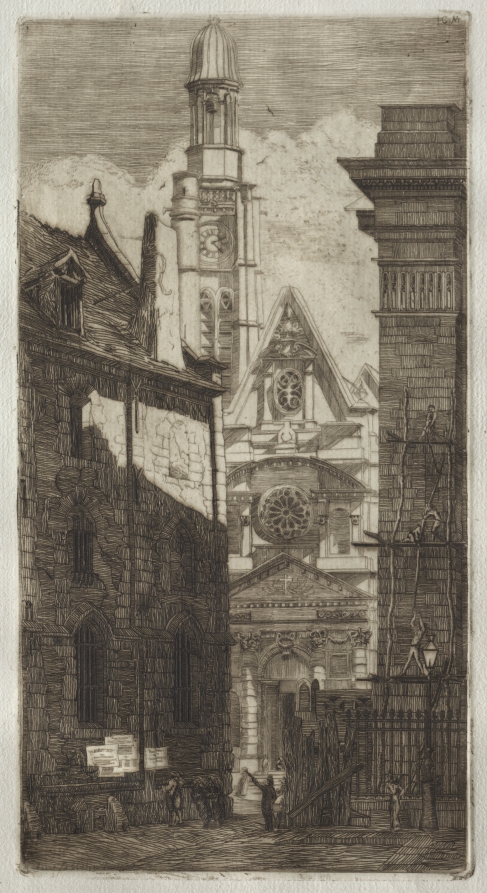 Edmond Gosselin (French) — Saint-Etienne-du-Mont
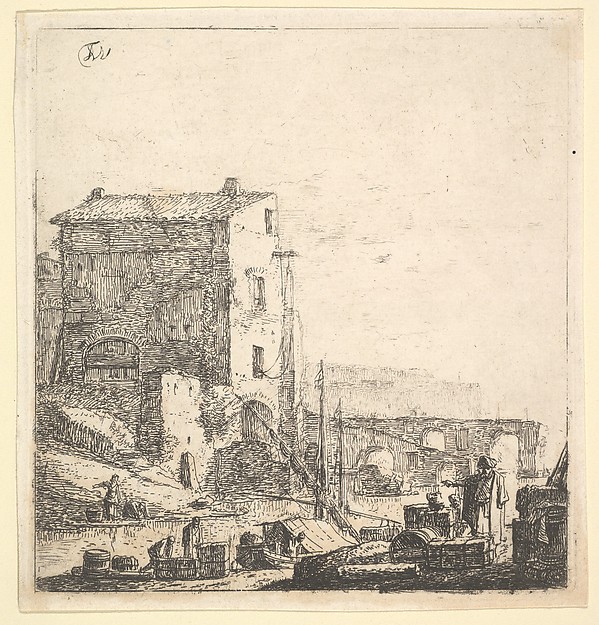 Thomas Wijck — An Oriental Merchant with Merchandise at Rive
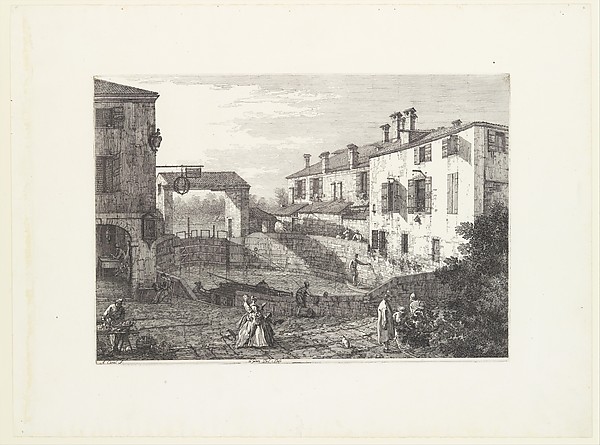 Joseph Smith|Canaletto (Giovanni Antonio Canal) — The Locks
 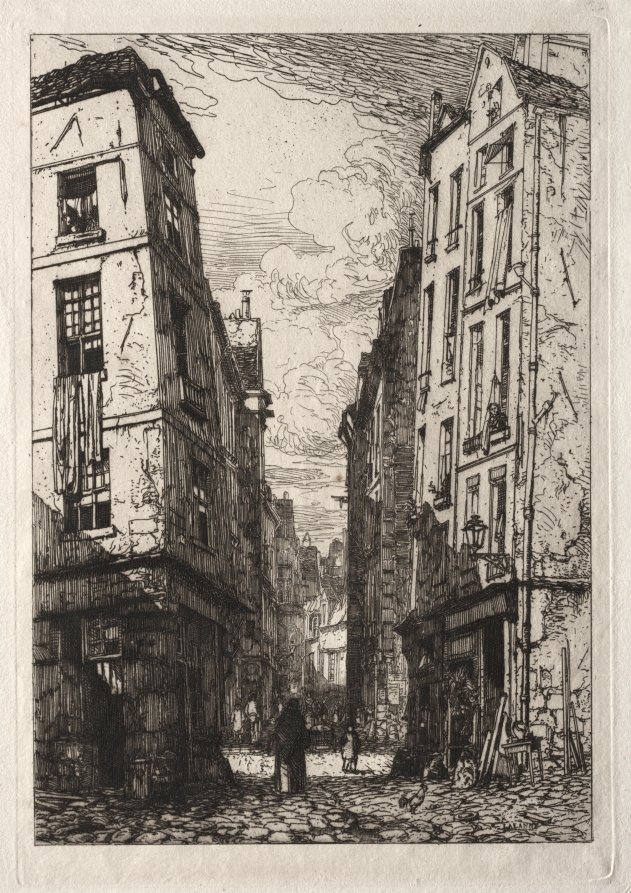 Maxime Lalanne (French, 1827–1886) — Rue des Marmousets (Old
 Edmond Gosselin (French) — Partie de la cité vers la fin du
  Charles Meryon|Louis-Marie Laurence — Rue Pirouette aux Hall
 Thomas Wijck — A Woman Standing by a Seated Man
 Antonio Canaletto (Italian, 1697–1768) — Views: La Maison a