In the collection of Cleveland Museum of Art, Cleveland — check current display status with the museum.
FROM THE CLEVELAND MUSEUM OF ART’S CATALOG
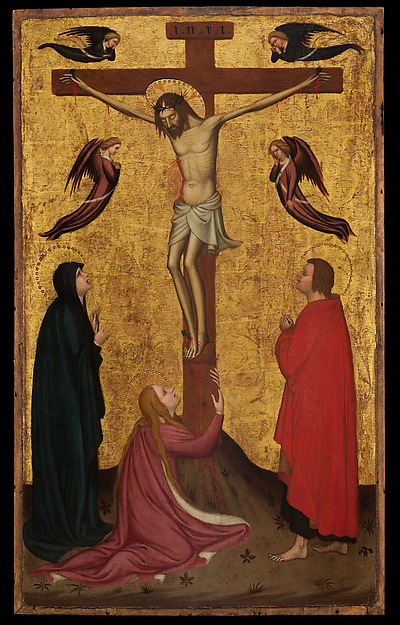
Because of his simplicity, piety, and devotion to all living creatures, Saint Francis (1181–1226) has remained among the most revered and popular saints. Born to wealthy parents in Assisi, he first lived a life of spendthrift luxury. However, Francis later gave up all worldly goods and embraced an existence of utter poverty. Throughout his adult life, the saint experienced mystical trances and visions of Christ. Atop the cross here is a leafy tree and a nest of pelicans. Fifteenth-century viewers would have recognized the tree as a reference to the cross, which is often described as a tree, symbolizing Christ's role as the source of eternal life. The pelican, shown nourishing its young with its own blood, symbolizes Christ, who sacrifices himself for the salvation of mankind. This painting was the center pinnacle on the back of a double-sided altarpiece made for the church of San Francesco in Borgo Sansepolcro (near Arezzo).
Be the first to share your thoughts.
Sign in to join the discussion.
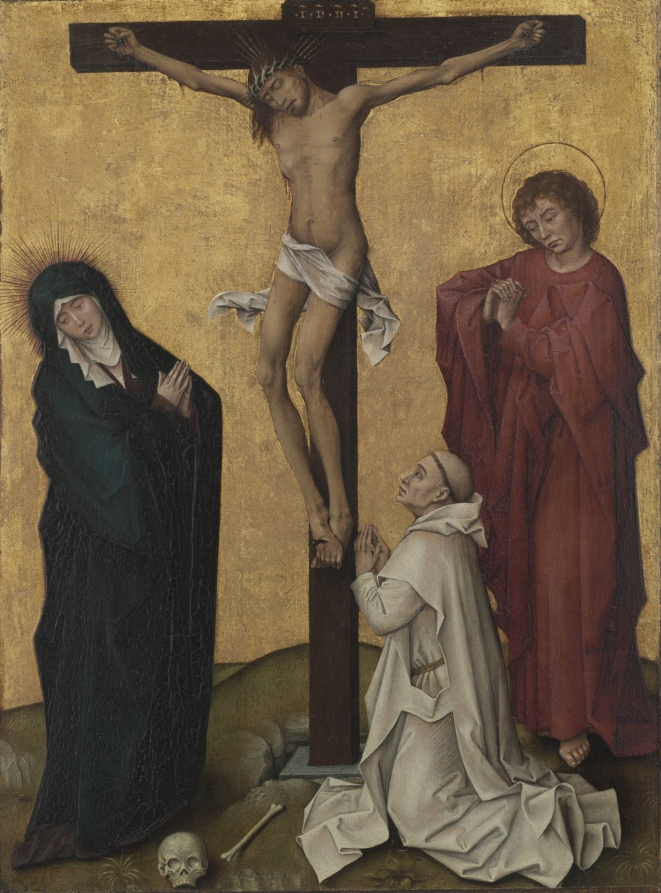 Rogier van der Weyden (Flemish, c. 1399–1464) — The Crucifix
 Christus aan het kruis, met Maria en Johannes
 Master of the Heisterbach Altar — Crucifixion
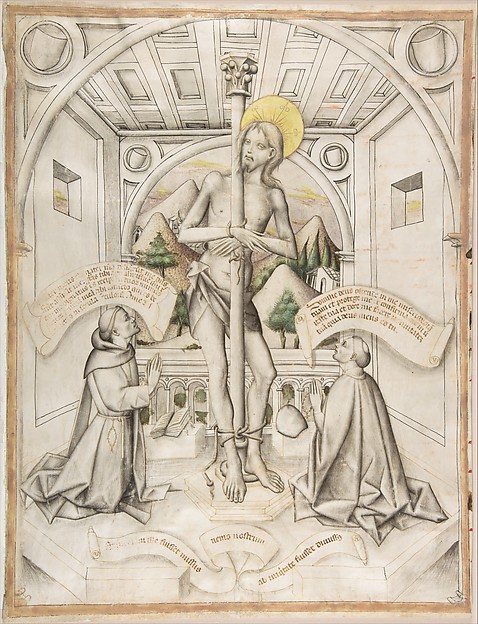 Delli brothers — Christ at the Column
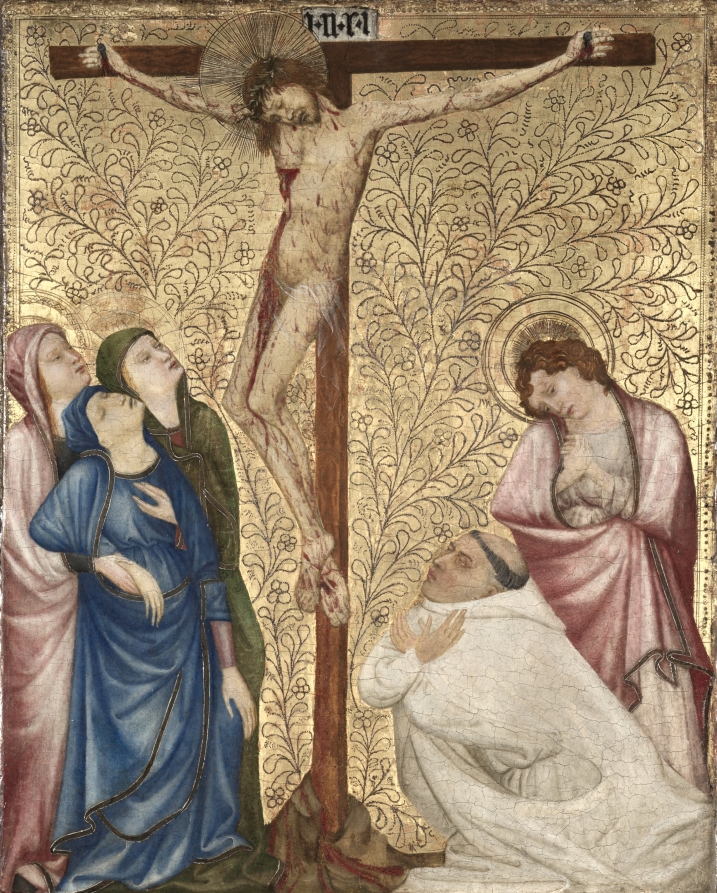 Jean de Beaumetz (French, c. 1335–1396) — Calvary with a Car
 Pesellino — The Crucifixion with Saint Jerome and Saint Fran
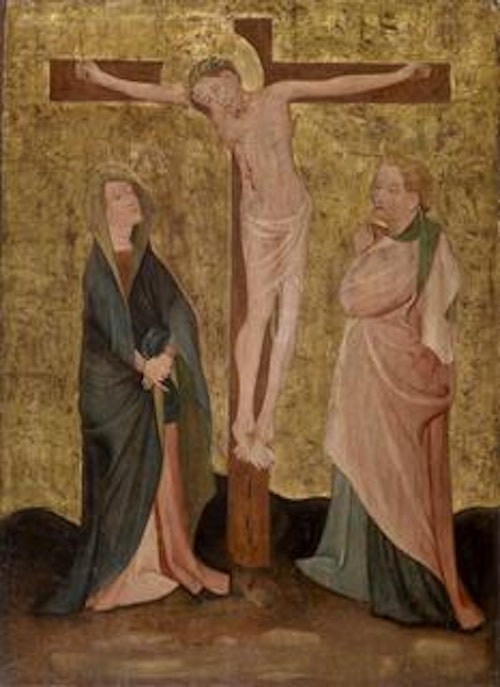 Crucifixion
 De kruisiging
 Lorenzo d'Alessandro — Christ on the Cross Adored by Saints
 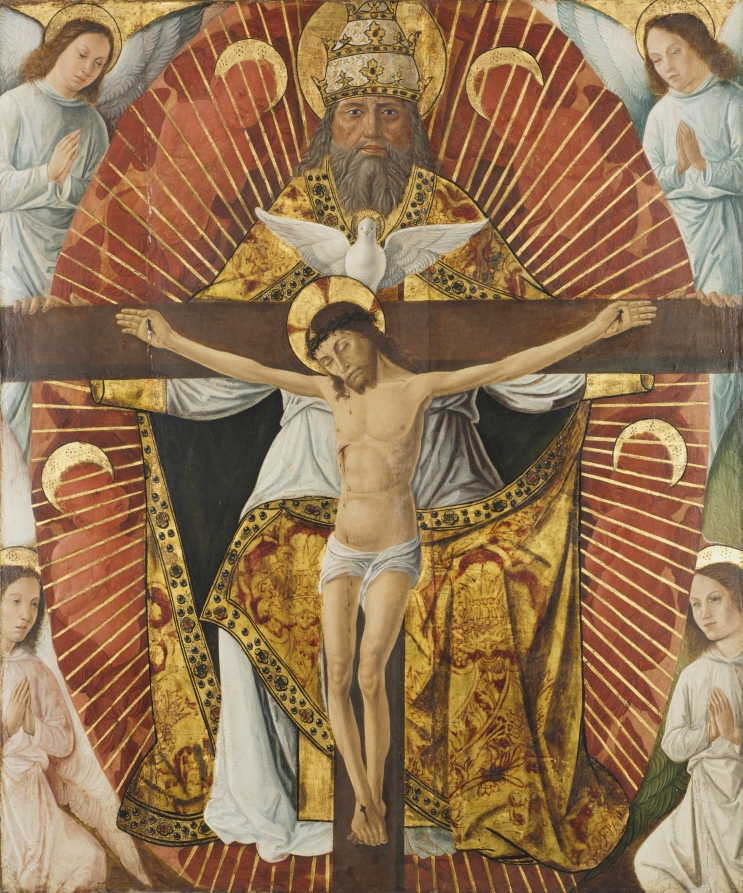 Laurent Girardin (French, 1478) — The Trinity
 Stefano da Verona (Stefano di Giovanni d'Arbosio di Francia)
 Hieronymus Bosch — Crucifixion with a Donor